May 15, 2026
The Industrial Decarbonisation Gap That Green Hydrogen Must Fill
Across the global energy transition, one problem resists easy solutions: how do you decarbonise industries where electricity simply cannot do the job alone? Steel furnaces, chemical reactors, alumina refineries, and long-haul shipping fleets share a common challenge. They require either extremely high-temperature heat, specific chemical feedstocks, or energy-dense fuels that batteries and direct electrification cannot yet supply at commercial scale. This is the structural gap that green hydrogen is designed to address, and it is precisely why production subsidy programs like Australia Hydrogen Headstart shortlisted projects exist.
The policy logic is straightforward: renewable electricity can produce green hydrogen through electrolysis, that hydrogen can then be converted into ammonia, methanol, or urea, and those derivatives can substitute for fossil-fuel-derived equivalents in industrial processes. The challenge lies in making this chain commercially viable when green hydrogen currently costs significantly more than natural gas-derived hydrogen. Without production subsidies bridging that cost gap, developers cannot secure the offtake agreements that lenders require to finance construction.
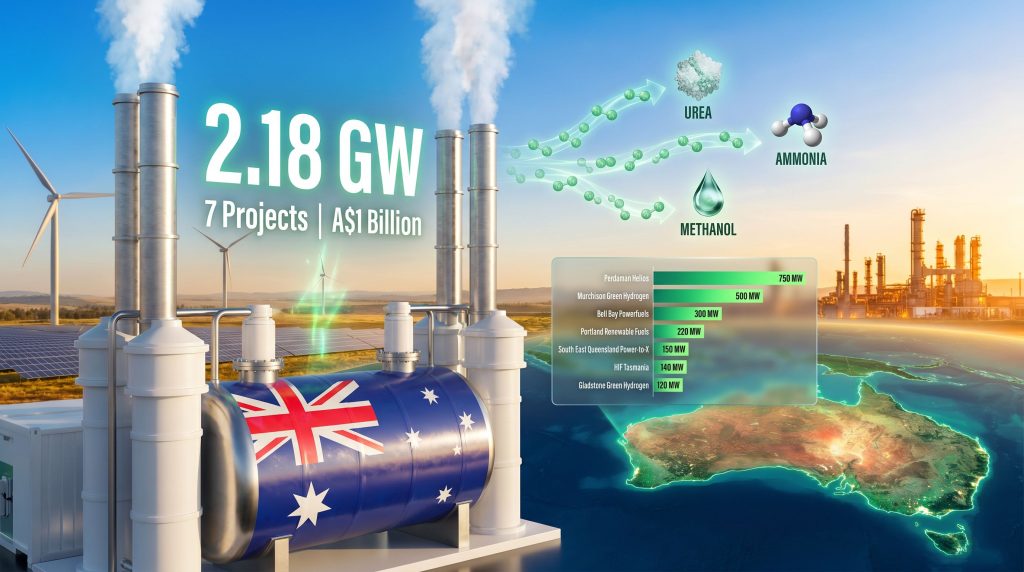
Australia's Hydrogen Headstart program operates within this precise dynamic. Its second round, which has now shortlisted seven projects representing 2.18 gigawatts of combined electrolysis capacity, reflects both the ambition and the hard-won realism that comes from watching an earlier round of projects stumble against softer-than-expected demand.
When big ASX news breaks, our subscribers know first
Seven Projects, 2.18GW, and a Recalibrated Budget
What the Program Actually Offers Developers
Hydrogen Headstart is administered by the Australian Renewable Energy Agency (ARENA) and operates through a 10-year production credit mechanism, which is fundamentally different from a one-off capital grant. Rather than reducing upfront construction costs, a production credit provides ongoing financial support tied to actual hydrogen derivative output over a decade of operations. This design means government support scales with real-world production rather than simply subsidising infrastructure that may never operate efficiently.
The seven shortlisted projects have now been invited to prepare full applications, with submissions due in early September 2026. Final funding decisions will follow a ministerial assessment process evaluating commercial viability, offtake security, and verified emissions reduction potential. Importantly, the exact credit rates per unit of production have not yet been disclosed, meaning developers are preparing detailed applications without knowing the precise quantum of ongoing support they will receive.
Round 1 vs Round 2: What Changed and Why
The transition between rounds represents more than an administrative update. Round 1, launched in 2023, shortlisted six projects but only two ultimately received funding commitments, totalling A$1.2 billion (approximately USD $868 million). Several developers withdrew after realising that hydrogen demand from prospective buyers was materialising more slowly than initial forecasts projected.
Round 2 has been recalibrated in several important ways:
| Metric | Round 1 | Round 2 |
|---|---|---|
| Original Budget | A$2 billion | A$2 billion |
| Revised Budget | A$1.2B committed | A$1 billion allocated |
| Projects Shortlisted | 6 | 7 |
| Projects Receiving Final Funding | 2 | TBC (post September 2026) |
| Total Electrolysis Capacity | Not disclosed | 2.18 GW |
The budget reduction from A$2 billion to A$1 billion is part of Australia's broader fiscal consolidation measures and should not be interpreted in isolation as evidence of weakening hydrogen policy commitment. The program has simultaneously become more selective, with stricter commercial viability requirements designed to avoid a repeat of the Round 1 withdrawal problem.
Furthermore, the Australian Hydrogen Council has publicly congratulated the shortlisted projects, signalling broad industry support for the program's direction and the credibility of the selected developers.
ARENA Chief Executive Darren Miller has described renewable hydrogen as a complex, capital-intensive industry where progress requires patience, characterising it as a critical enabler of decarbonisation for sectors where other clean energy technologies face fundamental limitations. This framing positions the program as a long-term industrial transformation tool rather than a short-cycle technology deployment exercise.
The Full Shortlist: Geographic and Sectoral Breakdown
Which Projects Made the Cut
The seven shortlisted projects span four Australian states and cover a diverse range of hydrogen derivative outputs, from green ammonia and urea to multiple methanol variants and direct hydrogen supply for industrial heat applications.
| Project Name | Developer | Capacity | State | Primary Output |
|---|---|---|---|---|
| Perdaman Helios | Perdaman Chemicals and Fertilisers | 750 MW | WA | Low-carbon urea |
| Murchison Green Hydrogen Stage 1B | Copenhagen Infrastructure Partners subsidiary | 500 MW | WA | Green ammonia |
| Bell Bay Powerfuels | Abel Energy (Bell Bay Powerfuels Pty Ltd) | 300 MW | TAS | Methanol |
| Portland Renewable Fuels | HAMR Energy Ltd | 220 MW | VIC | Methanol / SAF |
| South East Queensland Power-to-X | European Energy Australia | 150 MW | QLD | Methanol |
| HIF Tasmania e-Fuel Facility | HIF Asia Pacific Limited | 140 MW | TAS | e-Methanol |
| Gladstone Green Hydrogen | Summit Hydro (Sumitomo / Rio Tinto JV) | 120 MW | QLD | Alumina refining |
Western Australia's Dominant Position
Western Australia accounts for 1,250 MW, or approximately 57% of total shortlisted capacity, driven entirely by the two largest projects on the list. This geographic concentration reflects WA's structural advantages: abundant land for renewable energy generation, existing industrial infrastructure in the Pilbara and Mid West regions, and established export logistics through major port facilities.
The state has also been positioning itself as a hydrogen export hub targeting Asian markets, particularly Japan and South Korea, both of which have published national hydrogen strategies requiring large-scale imports. In addition, the broader push for green iron production in the region underscores how hydrogen is becoming central to Western Australia's long-term industrial strategy.
Tasmania's Emergence as a Dual Hydrogen Hub
A less anticipated development is Tasmania's presence as a two-project state, with Bell Bay Powerfuels (300 MW) and HIF Tasmania's e-Fuel facility at Burnie (140 MW) together representing 440 MW or just over 20% of total shortlisted capacity. Tasmania's appeal for hydrogen projects stems from its access to some of Australia's lowest-cost and highest-reliability hydroelectric power, its deep-water port infrastructure suitable for bulk fuel exports, and relatively straightforward environmental permitting compared to mainland greenfield sites.
The HIF project carries particular credibility because its parent company, HIF Global, operates what is recognised as one of the world's first commercial-scale synthetic fuel plants in Haru Oni, Chile. Having an operational international precedent substantially de-risks the technology validation component of the project assessment.
Methanol as the Dominant Output: Why Four Projects Chose the Same Molecule
The most striking pattern in the Round 2 shortlist is the concentration of methanol-targeting projects. Four of the seven shortlisted developments — Bell Bay Powerfuels, Portland Renewable Fuels, HIF Tasmania, and South East Queensland Power-to-X — are pursuing methanol as their primary output. This is not coincidental.
Why methanol has become the preferred hydrogen carrier for export and industrial use:
- Methanol can be synthesised by combining green hydrogen with captured carbon dioxide, making it a direct decarbonisation pathway for both the hydrogen and carbon streams
- It is liquid at ambient temperatures, meaning it requires no cryogenic storage infrastructure unlike liquid hydrogen or liquefied natural gas
- The international shipping industry is actively pursuing methanol as a transition fuel, with major shipping companies including Maersk having commissioned methanol-capable vessels and signed offtake agreements with methanol producers globally
- Sustainable Aviation Fuel (SAF) mandates in Europe are creating regulatory-driven demand for low-carbon methanol as a SAF feedstock via the methanol-to-jet pathway
- Methanol infrastructure (storage tanks, port terminals, distribution networks) already exists globally at industrial scale, reducing the enabling investment required for market entry
The shipping sector's shift toward methanol is accelerating faster than many energy analysts anticipated. The International Maritime Organization's 2023 revised greenhouse gas strategy committed to achieving net-zero emissions from international shipping by or around 2050, with intermediate targets requiring meaningful emissions reductions by 2030 and 2040. This regulatory timeline is pulling forward demand for low-carbon methanol at exactly the moment these Australian projects are seeking to establish production.
Portland Renewable Fuels takes a technically differentiated approach by combining electrolytic green hydrogen with biomass-derived syngas, creating a hybrid pathway that incorporates biogenic carbon rather than relying solely on captured atmospheric or industrial carbon dioxide. This approach potentially qualifies the resulting methanol under stricter lifecycle emissions accounting frameworks, which matters for SAF certification under European Union regulatory standards.
Project-by-Project Analysis: Scale, Technology, and Strategic Logic
Perdaman Helios, Karratha WA: 750MW Low-Carbon Urea at Global Scale
The Perdaman Helios project is the largest single project on the shortlist by a significant margin, representing 34.4% of total shortlisted capacity. Targeting production of more than two million tonnes of low-carbon urea annually, this would position the facility among the world's largest hydrogen-to-fertiliser operations at development stage. Urea is the world's most widely traded nitrogen fertiliser, and conventional urea production is heavily dependent on natural gas as both feedstock and energy source.
The agricultural decarbonisation pathway this project represents is strategically significant: global food production depends on nitrogen fertilisers, nitrogen fertilisers are predominantly produced from fossil-fuel-derived hydrogen, and there are very few commercially deployed alternatives at meaningful scale. A 750 MW green hydrogen-to-urea facility would demonstrate that the agricultural supply chain's fossil fuel dependency can be commercially addressed.
Murchison Green Hydrogen Stage 1B, WA: 500MW Ammonia Expansion
The Murchison project, developed by a subsidiary of Copenhagen Infrastructure Partners — a major Danish infrastructure investment fund — represents the second phase of a planned 1.5 GW total green ammonia project. Stage 1B adds 500 MW to the initial development phase, with the longer-term vision extending to 3 GW of total electrolysis capacity as the project scales.
Green ammonia occupies a unique position in the hydrogen derivative hierarchy: it can function as both a fertiliser feedstock (converted to urea or ammonium nitrate) and as a direct fuel for shipping (ammonia-fuelled engines are under active development by major marine engine manufacturers). This dual-use optionality provides commercial flexibility that pure methanol or pure urea projects lack. Consequently, green iron projects and ammonia ventures alike are increasingly viewed as complementary pillars of Australia's export-oriented clean energy future.
Gladstone Green Hydrogen, QLD: 120MW Into the Aluminium Value Chain
At 120 MW and targeting approximately 200,000 tonnes of hydrogen annually, the Gladstone project is the smallest on the shortlist by capacity but arguably the most strategically significant for Australian industrial decarbonisation. Developed by Summit Hydro, a joint venture involving Sumitomo Corporation and a Rio Tinto subsidiary, the project directly targets hydrogen supply to Rio Tinto's alumina refinery operations.
This matters because alumina refining is one of Australia's most carbon-intensive industrial processes. The Bayer process used to refine bauxite into alumina requires substantial high-temperature heat, currently supplied predominantly by natural gas combustion. Replacing that gas with green hydrogen addresses emissions at the point of production rather than through carbon offsetting or end-of-life efficiency improvements.
Carbon intensity context for alumina refining:
- Alumina production typically generates 1 to 2 tonnes of CO2 per tonne of alumina depending on the energy source mix and process efficiency
- Australia produces approximately 20 million tonnes of alumina annually, making the sector a material contributor to national industrial emissions
- Rio Tinto has publicly committed to reaching net-zero Scope 1 and 2 emissions by 2050, with interim targets requiring substantial decarbonisation of its refining operations
- Green hydrogen substitution in the calcination and digestion stages represents one of the most technically viable pathways, though it requires significant process modifications and capital investment
The Gladstone project essentially functions as a proof-of-concept for decarbonising Australian alumina refining at industrial scale. If it secures funding and achieves its production targets, it could establish a replicable template for Australia's other alumina refineries, several of which are currently operating on coal or gas and facing increasing pressure from both regulatory carbon pricing and customer-driven supply chain decarbonisation requirements.
The Risk Landscape: What Could Prevent These Projects From Reaching Financial Close
Demand Uncertainty and the Round 1 Warning
The single most important risk signal embedded in this program's history is the Round 1 withdrawal pattern. Several developers walked away from shortlisted positions not because of construction challenges or technology risk, but because they could not secure sufficient offtake commitments from buyers. A 10-year production credit reduces operating cost risk for producers but does not create demand where buyers are unwilling to commit to purchase agreements at prices that cover total project costs.
Green hydrogen derivatives currently carry a significant price premium over fossil fuel alternatives. Low-carbon methanol produced via electrolysis is estimated to cost substantially more per tonne than conventional methanol, and unless end-users either face regulatory requirements to purchase low-carbon alternatives or are willing to pay voluntary green premiums, offtake agreements remain elusive. However, the role of renewable energy in mining and heavy industry is expanding rapidly, which may accelerate demand-side uptake in the years ahead.
Cost Competitiveness Dynamics in 2026
The cost trajectory for green hydrogen has been moving in the right direction but more slowly than many 2020-era projections suggested. Electrolyser costs have declined as manufacturing scale has increased, and renewable electricity costs in favourable locations like Western Australia and Tasmania have continued to fall. However, the delivered cost of green hydrogen remains well above the cost of natural gas-derived hydrogen in most markets.
Key cost factors affecting project viability include:
- Electrolyser capital costs per megawatt of installed capacity
- Renewable electricity input costs, including the cost of firming intermittent solar and wind generation
- Carbon dioxide capture costs for methanol synthesis projects
- Transport and infrastructure costs for export-oriented projects
- The quantum of the production credit, which has not yet been disclosed for Round 2
Regulatory and Permitting Complexity
Projects spanning multiple jurisdictions face different environmental approvals, water access requirements, grid connection agreements, and planning frameworks depending on state-level regulatory environments. Western Australian projects must navigate both Commonwealth and State environmental processes, while Tasmanian projects involve different renewable energy regulatory frameworks given the state's hydro-dominant grid structure.
The next major ASX story will hit our subscribers first
Australia's Approach in International Context
How does Hydrogen Headstart compare to equivalent programs in competing jurisdictions?
| Country / Region | Program | Mechanism | Scale |
|---|---|---|---|
| Australia | Hydrogen Headstart | 10-year production credit | A$1B (Round 2) |
| European Union | EU Hydrogen Bank | Competitive auction subsidy | EUR 800M+ (pilot) |
| United States | IRA Section 45V | Production tax credit (per kg H2) | Multi-billion USD over decade |
| Japan | Green Transformation (GX) | Contracts for Difference | JPY 20 trillion (15-year commitment) |
The US Inflation Reduction Act's Section 45V production tax credit is widely regarded as the most commercially powerful hydrogen support mechanism currently deployed, offering up to USD $3 per kilogram of clean hydrogen depending on lifecycle emissions intensity. This per-kilogram structure creates a direct and calculable incentive that developers can model into project economics with precision. Australia's undisclosed credit rate is a meaningful informational gap that prevents direct comparison until September 2026 application materials are published.
Japan's approach is notable for its duration: a 15-year Contract for Difference structure provides longer revenue certainty than Australia's 10-year production credit, which matters significantly for projects requiring 20-25 year debt financing. The longer the government support window, the more readily commercial lenders can underwrite construction debt against predictable revenue streams. These dynamics are closely tied to the broader critical minerals energy transition, as nations compete to secure clean fuel supply chains that underpin long-term industrial competitiveness.
Frequently Asked Questions: Australia Hydrogen Headstart Round 2
What is the Hydrogen Headstart Program?
Hydrogen Headstart is an Australian government program administered by ARENA that provides 10-year production subsidies to commercial-scale green hydrogen derivative projects. It is designed to bridge the cost gap between green hydrogen and fossil-fuel alternatives during the current phase of the industry's commercial development.
How Many Projects Were Shortlisted in Round 2?
Seven projects were shortlisted across four states: Western Australia, Tasmania, Victoria, and Queensland.
What is the Total Electrolysis Capacity of the Shortlisted Projects?
The combined electrolysis capacity of all seven shortlisted projects is 2.18 GW.
When Will Final Funding Decisions Be Made?
Full applications are due in early September 2026. Final funding decisions will follow ministerial review, with the timeline for financial close and construction commencement dependent on the assessment process.
What is the Difference Between a Production Credit and a Capital Grant?
A capital grant reduces the upfront cost of building infrastructure. A production credit provides ongoing payments tied to actual production output, meaning government support flows only when a project is generating the intended hydrogen derivatives. Production credits reward operational success rather than construction completion.
Why Was the Round 2 Budget Reduced?
The reduction from A$2 billion to A$1 billion reflects broader Australian government fiscal consolidation measures, combined with lessons from Round 1 where several projects withdrew due to weaker-than-expected demand. The revised budget is designed to fund a smaller number of projects that can demonstrate stronger commercial viability. Furthermore, the mining decarbonisation benefits associated with these projects reinforce the economic rationale for maintaining targeted, well-structured government support.
Key Milestones: What Happens Before Final Approval
The pathway from shortlisting to funded project involves several distinct stages:
- Full application submission closing in early September 2026, requiring detailed commercial, technical, and environmental documentation
- ARENA assessment process evaluating applications against commercial viability, emissions reduction potential, and security of offtake arrangements
- Ministerial review by the Minister for Climate Change and Energy, providing final approval authority over funding commitments
- Negotiation of funding agreements specifying credit rates, performance milestones, and compliance requirements
- Financial close requiring project developers to secure private co-investment alongside government production credits
- Construction commencement subject to all regulatory approvals, grid connections, and supply chain procurement
The September 2026 deadline means final funding decisions are unlikely before late 2026 or early 2027, with construction timelines for projects of this scale typically running three to five years from financial close. According to analysis of Australia's shortlisted hydrogen projects, the scaled-down subsidy plan reflects a deliberate effort to prioritise commercial rigour over headline capacity figures.
What the Round 2 Shortlist Reveals About Australia's Industrial Strategy
The pattern embedded in the Australia Hydrogen Headstart shortlisted projects tells a more nuanced story than a simple list of developments. Several strategic signals are worth noting for industry observers and investors:
- Methanol dominance across four of seven projects reflects alignment with near-term demand signals from international shipping and aviation rather than speculative future markets
- Western Australia's 57% capacity share reinforces the state's positioning as Australia's primary hydrogen export corridor, likely targeting Japan, South Korea, and potentially Southeast Asian importers
- Alumina refining's direct inclusion through the Gladstone project marks an important policy moment: hydrogen is no longer being discussed abstractly as a future industrial input but is being actively piloted within Australia's existing heavy industrial base
- The Round 1 to Round 2 evolution represents genuine policy learning rather than policy retreat, with tighter commercial criteria likely to produce a smaller number of more viable funded projects
- Tasmania's dual-project presence confirms that small states with reliable renewable energy and port infrastructure can compete meaningfully with larger states for hydrogen investment despite lower absolute capacity
Disclaimer: This article is intended for informational purposes only and does not constitute financial advice or an investment recommendation. Green hydrogen project economics involve significant uncertainties, including technology costs, offtake agreement availability, regulatory outcomes, and commodity price movements. Readers should conduct independent due diligence before making any investment decisions related to companies or projects mentioned in this article. Forward-looking statements regarding project timelines, production volumes, and funding outcomes are subject to material risks and uncertainties.
Want to Track the ASX Stocks Powering Australia's Green Hydrogen Future?
As green hydrogen projects reshape Australia's industrial landscape, the mining and resources companies supplying critical minerals and energy infrastructure stand to benefit significantly — and Discovery Alert's proprietary Discovery IQ model delivers real-time alerts the moment significant ASX mineral discoveries are announced, ensuring subscribers can act on emerging opportunities ahead of the broader market. Explore historic examples of major discovery returns and begin your 14-day free trial today to position yourself at the forefront of Australia's clean energy transition.