
June 15, 2026
Understanding Australia's Iron Ore Export Infrastructure During Weather Disruptions
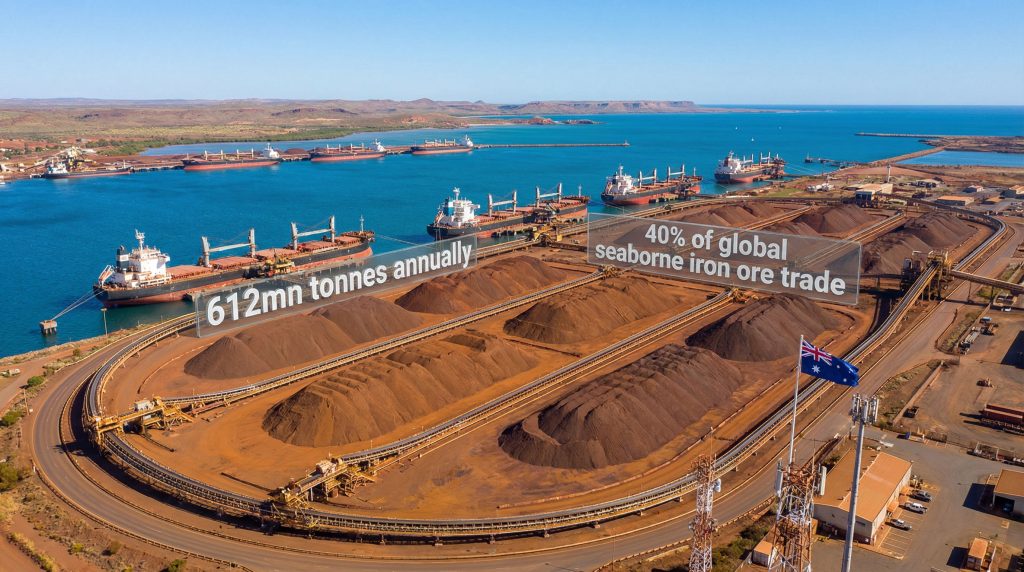
The intricate balance between natural forces and industrial operations becomes starkly evident when examining how Australia's mining infrastructure responds to tropical weather systems. Western Australia's Pilbara region operates as the nerve center of global iron ore supply chains, where sophisticated weather management protocols intersect with massive industrial capacity to maintain export flows worth billions of dollars annually.
The recent reopening of Australia's Pilbara Ports reopens Port Hedland following Cyclone Mitchell demonstrates the complex operational framework that governs the world's largest iron ore export hub during severe weather events. Furthermore, these developments highlight the evolving mining evolution trends shaping the industry's response to extreme weather patterns.
When big ASX news breaks, our subscribers know first
The Pilbara's Integrated Port Network Architecture
Strategic Distribution Across Western Australia's Coastline
The Pilbara Ports Authority operates an extensive network of specialised facilities designed to handle different commodity streams with remarkable efficiency. Port Hedland stands as the cornerstone facility, processing approximately 51 million tonnes of iron ore monthly during peak operational periods, while Dampier maintains capacity for 15 million tonnes monthly alongside significant liquefied natural gas handling capabilities.
This geographic distribution strategy ensures operational redundancy across the region's mining export infrastructure. Each facility serves specific commodity specialisations, with Port Hedland focused primarily on iron ore exports while Dampier balances both iron ore and LNG operations. In addition, these facilities represent some of the largest iron ore mines infrastructure in the global market.
Weather Resilience Through Advanced Alert Systems
The operational framework includes sophisticated cyclone response protocols utilising a multi-level alert classification system. Cyclone Alert 2 represents the threshold where vessel evacuation procedures commence, requiring all ships to clear berths within specified timeframes.
Port Hedland's recent closure lasted approximately 14.5 hours, demonstrating the precision of these weather management systems. The facility ceased operations at 9:30 PM local time on February 6, 2026, and resumed at 12 PM on February 8, 2026, following Cyclone Mitchell's passage. Consequently, this iron haulage safety boost demonstrates improved operational protocols.
"The rapid response capabilities demonstrate decades of experience managing tropical weather disruptions in one of the world's most valuable commodity export regions."
Port Hedland's Position in Global Iron Ore Markets
Throughput Capacity and Annual Performance Metrics
| Performance Metric | Port Hedland Data |
|---|---|
| December 2025 Exports | 51 million tonnes |
| Year-on-Year Growth | 9.1% increase |
| Monthly Peak Capacity | 55 million tonnes |
| Vessel Queue During Closure | 15 ships |
The facility's December 2025 performance reflects sustained growth in iron ore export volumes, driven primarily by increased demand from Chinese and South Korean steel mills. This growth trajectory positions Port Hedland as an increasingly critical component of global steel production supply chains. Moreover, understanding iron ore price trends provides crucial context for these performance metrics.
Major Mining Company Operations and Allocations
Three primary mining companies dominate Port Hedland's throughput capacity. BHP Group maintains the largest operational presence, utilising approximately 40% of port allocation. Fortescue Metals Group follows with 35% of operational capacity, while Hancock Prospecting and various joint ventures account for the remaining 25% of port utilisation.
These allocations reflect long-term infrastructure investments and rail network integration connecting mining sites across the Pilbara to port facilities. The 173,986 tonnes of BHP ore loaded onto the Japanese-flagged Midnight Dream during the post-cyclone reopening exemplifies the scale of individual shipments moving through the facility.
Market Impact Dynamics During Port Closures
Supply Chain Disruption Assessment
Brief weather-related closures create immediate logistical challenges for global iron ore markets. The 15-vessel backlog accumulated during Port Hedland's 14.5-hour closure demonstrates how quickly shipping schedules can be affected, even during relatively short disruptions.
Chinese steel mills, which consume approximately 70% of global seaborne iron ore, maintain sophisticated inventory management strategies to accommodate weather-related supply interruptions. These facilities typically operate with 30-45 days of raw material stockpiles to buffer against delivery delays. For instance, analysing iron ore demand insights reveals the strategic importance of these stockpiling strategies.
Historical Weather Pattern Analysis
The January-February cyclone season represents the highest risk period for Pilbara port operations. Previous weather events have resulted in production impacts of 8-12% for major mining companies during the first quarter of affected years, highlighting the seasonal vulnerability of global iron ore supply chains.
Port closures lasting 24-48 hours can generate price volatility in commodity markets, though the impact varies significantly based on global steel production cycles and existing inventory levels at major consuming facilities.
Post-Cyclone Operational Recovery Procedures
Infrastructure Assessment and Reopening Protocols
Port Hedland's reopening sequence follows established safety protocols coordinated with Australia's Bureau of Meteorology. The facility resumed operations when sustained wind speeds dropped below operational thresholds and infrastructure assessments confirmed no significant damage to loading equipment.
The 9:50 PM departure of the Midnight Dream on February 8, 2026, approximately nine hours after port reopening, demonstrates the efficiency of cargo handling operations during recovery periods. This vessel carried 173,986 tonnes of BHP ore, representing a typical large-scale shipment departing the facility.
According to Mining Weekly's coverage, the coordinated response demonstrated exceptional operational efficiency during challenging weather conditions.
Vessel Traffic Management During Restart Operations
Coordinating the departure of 15 accumulated vessels requires sophisticated logistics planning. Priority loading systems ensure time-sensitive contracts receive precedence, while rail delivery schedules from mine sites must align with available berth capacity.
The systematic approach to vessel queue management prevents congestion while maximising throughput efficiency during the critical post-reopening period.
Regional Port Status Assessment
Continued Closure Analysis Across Facilities
| Port Facility | Primary Function | Closure Duration | Operational Status |
|---|---|---|---|
| Port Hedland | Iron ore exports | 14.5 hours | Reopened February 8 |
| Dampier | Iron ore and LNG | Extended closure | Weather-dependent |
| Ashburton | Iron ore | Extended closure | Assessment ongoing |
| Cape Preston West | Iron ore/magnetite | Extended closure | Infrastructure review |
Dampier's continued closure significantly impacts LNG operations, given its 1.4 million tonnes monthly capacity. The facility handled 15 million tonnes of iron ore in December 2025, representing a 9% year-on-year increase, making its extended closure economically significant.
Geographic Impact of Cyclone Mitchell's Path
Cyclone Mitchell's southward trajectory toward Perth created varying impact zones across the Pilbara region. Port Hedland's relatively northern position allowed for earlier reopening, while southern facilities like Dampier remained within the cyclone's extended influence zone.
Wind speed differentials across the region determine individual facility reopening timelines, with each port conducting independent safety assessments before resuming operations. The Pilbara Ports Authority maintains detailed protocols for these assessment procedures.
The next major ASX story will hit our subscribers first
Mining Company Supply Chain Management Strategies
Inventory Buffer Systems and Stockpile Management
Major mining companies maintain strategic stockpile capacity at port facilities equivalent to 30-45 days of production output. These inventory buffers provide operational flexibility during weather-related disruptions and allow for continued loading operations when rail transport from mine sites experiences delays.
BHP Group and Rio Tinto have developed particularly sophisticated inventory management systems that coordinate mine production schedules with shipping commitments and weather forecasts.
Technology Integration for Weather Preparedness
Real-time weather monitoring systems enable mining companies to adjust production and shipping schedules up to 72 hours in advance of potential disruptions. These systems integrate:
- Automated vessel tracking and positioning data
- Predictive cyclone path modelling
- Rail transport capacity optimisation
- Contract delivery flexibility mechanisms
Advanced analytics platforms process multiple data streams to optimise operational decisions during weather events, minimising both production impacts and customer delivery delays.
Economic Implications of Infrastructure Disruptions
Revenue Impact Calculations
Port Hedland's daily export operations typically generate $180-220 million AUD in commodity value based on current iron ore pricing and throughput volumes. The facility's 14.5-hour closure represented minimal economic impact relative to annual export values exceeding $60 billion AUD.
However, the accumulated vessel delays create secondary cost impacts through:
- Demurrage charges for extended vessel waiting periods
- Rescheduled delivery commitments to international buyers
- Increased operational costs during recovery periods
- Insurance considerations for weather-related cargo delays
Infrastructure Investment in Weather Resilience
The rapid reopening of Australia's Pilbara Ports reopens Port Hedland demonstrates the value of substantial investments in weather-resistant port infrastructure. These facilities incorporate:
- Reinforced loading equipment designed for tropical conditions
- Advanced drainage systems for heavy rainfall events
- Redundant power systems for critical operations
- Emergency response coordination capabilities
Such infrastructure investments, while requiring significant capital expenditure, provide measurable returns through reduced downtime and faster recovery periods following severe weather events.
Strategic Infrastructure Resilience Planning
Diversification Across Multiple Export Hubs
The Pilbara region's multiple port facilities provide natural hedging against weather-related disruptions. While Port Hedland dominates iron ore exports, facilities like Dampier and Cape Preston West offer alternative routing capabilities during extended closures.
This diversification strategy becomes increasingly valuable as global steel production continues expanding and supply chain security gains importance for international buyers.
Emergency Response Coordination Improvements
Recent weather events have driven continuous improvements in emergency response protocols. Enhanced coordination between the Bureau of Meteorology, Pilbara Ports Authority, and individual mining companies has reduced average closure durations and improved recovery times.
These operational improvements translate directly into reduced economic impacts and enhanced reliability for global iron ore supply chains.
Balancing Natural Forces with Industrial Requirements
The efficient management of Cyclone Mitchell's impact on Australia's Pilbara Ports reopens Port Hedland demonstrates the sophisticated operational frameworks developed to maintain global commodity supply chains during severe weather events. Port Hedland's rapid 14.5-hour closure and systematic reopening process highlights decades of experience optimising the balance between safety requirements and economic necessities.
While individual weather events create temporary disruptions, the broader infrastructure resilience of the Pilbara region ensures continued reliability for international steel production. The facility's ability to process over 50 million tonnes monthly positions it as an irreplaceable component of global iron ore markets.
The incident reinforces the critical importance of continued investment in weather-resistant infrastructure and advanced operational protocols as extreme weather events become increasingly frequent due to climate change patterns affecting Australia's Pilbara Ports reopens Port Hedland and surrounding facilities.
Disclaimer: This analysis is based on publicly available information and should not be construed as investment advice. Commodity markets are subject to significant volatility and various risk factors including weather, geopolitical events, and global economic conditions.
Looking to Capitalise on Mining Infrastructure Opportunities?
Discovery Alert's proprietary Discovery IQ model delivers real-time alerts on significant ASX mineral discoveries, instantly empowering subscribers to identify actionable opportunities in mining and infrastructure investments ahead of the broader market. Begin your 14-day free trial today and secure your market-leading advantage in this dynamic sector.