July 21, 2026
Australia's lithium processing landscape has undergone a fundamental transformation as global supply chains pivot away from China-dominated refining operations. This strategic shift reflects broader geopolitical tensions around critical minerals in energy transition, while simultaneously addressing the urgent need for diversified battery material sources. The emergence of domestic processing capabilities represents more than industrial development; it signals a comprehensive restructuring of how Western nations approach energy transition material sovereignty.
Understanding this transformation requires examining the technical complexities of converting hard-rock spodumene into battery-grade lithium compounds, the economics of integrated mining operations, and the strategic implications for allied supply chains. The convergence of these factors has created unique investment opportunities while simultaneously exposing the vulnerabilities inherent in concentrated processing networks.
Technical Infrastructure and Production Capabilities
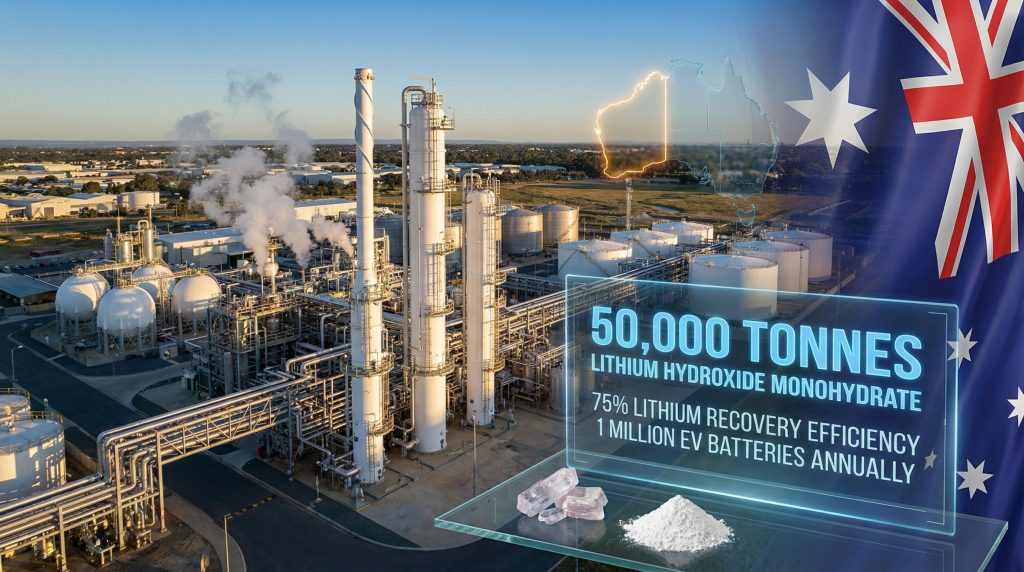
The Covalent lithium refinery represents a significant milestone in Australia's downstream processing ambitions, featuring an annual production capacity of 50,000 tonnes of lithium hydroxide monohydrate. Located within Western Australia's established Kwinana Industrial Area, this facility operates under a 50:50 joint venture structure between Wesfarmers and SQM (Sociedad Química y Minera de Chile), combining Australian operational expertise with Chilean lithium processing experience.
The facility's strategic positioning enables direct integration with the Mount Holland spodumene mine, creating a fully integrated mine-to-refinery operation that eliminates intermediate handling and transportation costs. This vertical integration model provides several competitive advantages:
- Supply chain control: Direct feedstock sourcing reduces dependency on third-party concentrate suppliers
- Quality assurance: Consistent spodumene grades enable optimised processing parameters
- Cost efficiency: Elimination of concentrate marketing margins and logistics premiums
- Technical optimisation: Continuous feedback loops between mining and processing operations
The refinery's production metrics target a 75% lithium recovery efficiency from spodumene concentrate, though this figure requires verification against actual operational performance. Industry benchmarks for sulfuric acid roasting processes typically range from 70-80% recovery rates, depending on ore characteristics and process optimisation levels. The facility's output provides sufficient lithium hydroxide to support approximately 1 million electric vehicle batteries annually, based on standard battery chemistry requirements.
Processing specifications include handling high-grade spodumene concentrate containing 6-7% Li₂O content, which aligns with typical hard-rock lithium concentrate specifications. The final product meets battery-grade lithium hydroxide monohydrate standards, requiring purity levels exceeding 99.5% lithium content with minimal sodium and potassium impurities.
When big ASX news breaks, our subscribers know first
Advanced Processing Methodology and Technical Systems
The Covalent facility employs sulfuric acid roasting technology, representing the most established commercial pathway for converting spodumene concentrate into lithium compounds. This process involves several critical stages that determine both recovery efficiency and product quality:
Primary Processing Stages:
- Thermal Conversion: α-spodumene transforms to β-spodumene at approximately 1,000°C, making lithium more accessible for chemical extraction
- Acid Roasting: Sulfuric acid reacts with β-spodumene to form lithium sulfate and aluminium sulfate compounds
- Water Leaching: Lithium sulfate dissolves in water, creating lithium-rich solution streams
- Purification: Multi-stage precipitation removes iron, aluminium, magnesium, and other impurities
- Crystallisation: Final precipitation produces battery-grade lithium hydroxide monohydrate crystals
The operational ramp-up strategy follows a structured three-phase approach designed to minimise technical risks while optimising production efficiency. Furthermore, this approach enables systematic capacity increases while maintaining product quality standards.
Commercial sampling programmes run parallel to production ramp-up, enabling battery manufacturers to qualify Covalent's lithium hydroxide for use in their specific cathode chemistries. This qualification process typically requires 12-18 months of consistent product delivery and performance validation across multiple production batches.
Quality control systems monitor critical parameters including particle size distribution, moisture content, trace metal concentrations, and crystalline structure. These specifications must remain within narrow tolerance ranges to meet automotive battery manufacturer requirements.
Economic Value Creation and Cost Competitiveness
Domestic lithium processing captures significant value-added premiums compared to raw concentrate exports, though specific multiplier rates require careful analysis of market conditions and operational costs. Lithium hydroxide typically trades at 2-4x the price of spodumene concentrate on a lithium-equivalent basis, reflecting the substantial processing costs and technical complexity involved in chemical conversion.
The economic advantages of integrated operations extend beyond simple price premiums:
Cost Structure Benefits:
- Freight cost elimination: Domestic processing avoids concentrate shipping costs to Asian refineries (typically $30-50 per tonne)
- Processing margin capture: Refineries typically capture 40-60% of end-product value through processing margins
- Working capital optimisation: Shorter supply chains reduce inventory carrying costs and payment terms
- Currency risk reduction: Domestic operations eliminate foreign exchange exposure on processing fees
Operational Leverage Considerations:
Lithium refineries exhibit high operational leverage characteristics, with fixed costs representing approximately 30-40% of total operating expenses. This cost structure requires consistent high-capacity utilisation to achieve competitive unit costs. The facility must maintain production rates near nameplate capacity to optimise economic performance.
Global competitiveness depends on several factors including energy costs, labour productivity, environmental compliance expenses, and raw material feed costs. Western Australian operations benefit from relatively stable electricity supply and established industrial infrastructure, though labour costs typically exceed those in competing jurisdictions.
Strategic Supply Chain Implications for Battery Industries
The Covalent lithium refinery addresses critical supply chain vulnerabilities in global lithium processing, where China controls approximately 60-70% of global refining capacity. This concentration creates strategic dependencies for battery manufacturers and automotive companies seeking to diversify their raw material sources.
Australia's emergence as a processing hub aligns with several key policy initiatives:
- Future Made in Australia: Federal government support for domestic value-added manufacturing
- Western Australia Battery Strategy: State-level incentives for critical minerals processing
- QUAD Alliance Cooperation: Trilateral supply chain security discussions with Japan, South Korea, and the United States
- Allied Nation Diversification: Reduced dependency on single-source processing networks
The facility provides alternative sourcing options for major battery manufacturers across multiple geographic regions. In addition, the developments in Australian lithium innovations strengthen the sector's technological competitiveness.
Regional Market Access:
- Japanese Battery Makers: CATL, Panasonic, and other manufacturers seeking non-Chinese lithium sources
- Korean Companies: LG Energy Solution, SK Innovation, and Samsung SDI diversification strategies
- North American Gigafactories: Tesla, Ford, and GM domestic battery production facilities
- European Manufacturing: Northvolt and other European battery companies reducing Asian dependencies
Supply security benefits extend beyond simple geographic diversification. Australian operations provide regulatory predictability, environmental compliance standards, and labour practices that align with Western ESG requirements. These factors become increasingly important as automotive companies face scrutiny over their supply chain sustainability practices.
Technical Challenges and Commissioning Complexities
The commissioning process revealed several technical challenges common to lithium processing facilities, particularly those employing sulfuric acid roasting methodologies. Initial operations encountered exhaust gas odour problems requiring additional environmental control systems and process modifications.
Environmental Compliance Solutions:
The odour issues likely stemmed from hydrogen sulfide (H₂S) emissions generated during the roasting process, a common challenge in sulfuric acid-based lithium processing. Resolution required installation of enhanced scrubbing systems designed to capture sulfur compounds before atmospheric release.
Environmental regulators in Western Australia maintain strict air quality standards, requiring comprehensive emissions monitoring and control systems for industrial operations.
Operational Learning Curve Elements:
- Equipment Optimisation: Fine-tuning roasting temperatures and residence times for maximum lithium recovery
- Product Consistency: Achieving battery-grade specifications across all production batches
- Throughput Efficiency: Balancing recovery rates with production speed requirements
- Maintenance Protocols: Establishing preventive maintenance schedules for acid-resistant equipment
The commissioning timeline extended beyond initial projections due to these technical adjustments, highlighting the complexity of transitioning from pilot-scale testing to full commercial production. Process optimisation typically requires 6-12 months of continuous operation to achieve design specifications consistently.
Furthermore, the waste stream management requires sophisticated handling systems. Sulfuric acid roasting generates substantial gypsum (calcium sulfate) byproducts, requiring dedicated handling and disposal systems. Gypsum management represents both an environmental challenge and potential revenue opportunity, as high-purity gypsum finds applications in construction materials and agricultural soil amendments.
Competitive Landscape Analysis and Market Positioning
The Australian lithium refining sector features several operational and planned facilities, creating a competitive environment that extends beyond simple capacity comparisons. The Tianqi Lithium Kwinana facility represents the primary existing competitor, with 48,000 tonnes per annum capacity operational since 2019.
Competitive Differentiation Factors:
The ownership structure differences create distinct strategic advantages for each facility. Covalent's Wesfarmers-SQM partnership combines Australian operational expertise with Chilean lithium industry experience, while Tianqi's structure provides access to Chinese battery manufacturer relationships and Asian market networks.
Both facilities employ sulfuric acid roasting, representing the most proven commercial technology for spodumene processing. Alternative technologies including direct lithium extraction (DLE) and salt roasting remain under development but have not achieved commercial scale for hard-rock processing applications.
The integration model provides Covalent with strategic advantages in feedstock security and cost optimisation. Tianqi's facility operates as both an integrated processor and toll processing service provider, offering greater operational flexibility but potentially higher feedstock costs during periods of tight concentrate supply.
The next major ASX story will hit our subscribers first
Long-Term Growth Prospects and Expansion Potential
The global lithium hydroxide market faces substantial growth driven by electric vehicle adoption and stationary energy storage deployment. Demand projections indicate significant supply gaps emerging through 2030, creating opportunities for capacity expansion and new facility development.
Expansion potential for the Covalent lithium refinery includes several pathways:
Phase 2 Development Options:
- Capacity Doubling: Expansion to 100,000 tpa through additional processing lines
- Technology Enhancement: Implementation of improved recovery processes and automation systems
- Product Diversification: Addition of lithium carbonate production capabilities for different battery chemistries
- Downstream Integration: Development of battery precursor manufacturing capabilities
The expansion economics depend on several factors including concentrate feed availability, market pricing dynamics, and competitive capacity additions globally. Western Australia's spodumene resources provide adequate feedstock for substantial processing capacity increases, though individual project economics require detailed feasibility analysis.
Technology Improvement Opportunities:
- Recovery Rate Enhancement: Process optimisation targeting 80-85% lithium recovery efficiency
- Energy Efficiency: Implementation of heat recovery and process integration systems
- Automation Integration: Advanced process control and robotics for operational optimisation
- Byproduct Monetisation: Commercial development of gypsum and other process byproducts
Investment Implications and Sector Transformation
The Covalent lithium refinery's development validates the investment thesis for Australian downstream processing capabilities, demonstrating technical feasibility and commercial viability for integrated lithium operations. This validation carries broader implications for mining industry evolution toward value-added manufacturing.
Wesfarmers Strategic Positioning:
The investment represents significant diversification for Wesfarmers, traditionally focused on retail and industrial services operations. Lithium processing exposure provides leverage to the energy transition mega-trend while utilising the company's industrial project management capabilities.
Key investment characteristics include:
- High Capital Intensity: Substantial initial investment requirements with long asset life cycles
- Operational Leverage: Significant earnings sensitivity to utilisation rates and lithium pricing
- Strategic Value: Integration benefits and supply chain control premiums
- ESG Alignment: Domestic processing supports sustainability objectives and supply chain transparency
Broader Sector Investment Catalyst:
Successful commissioning creates demonstration effects for other potential lithium processing projects across Australia. Financial markets gain confidence in technical execution capabilities and regulatory approval processes, potentially reducing financing costs for subsequent developments.
The facility's performance will influence investment decisions across multiple stakeholder groups. Moreover, developments in battery recycling breakthrough technologies complement primary processing capabilities.
Industry Transformation and Future Manufacturing Ecosystem
The operational success of domestic lithium processing represents more than individual project achievement; it demonstrates the foundation for comprehensive battery materials manufacturing ecosystems. Australia's evolution from raw material exporter to value-added processor creates templates for other critical minerals development.
Manufacturing Ecosystem Development:
Successful lithium processing enables downstream manufacturing opportunities including:
- Cathode Precursor Manufacturing: Further value-added processing of lithium compounds
- Battery Component Production: Integration with nickel and cobalt processing capabilities
- Research and Development Centers: Technical innovation hubs for battery materials advancement
- Skilled Workforce Development: Training programmes supporting advanced manufacturing employment
Regulatory Framework Evolution:
The project's environmental compliance and operational success inform regulatory approaches for future critical minerals processing developments. Successful navigation of Western Australian environmental approval processes creates precedents for similar facilities while demonstrating effective emissions control technologies.
Government policy frameworks continue evolving to support domestic processing capabilities through fiscal incentives, regulatory streamlining, and international trade relationships. However, the complexity of US–China trade strategies continues to influence global supply chain decisions.
The facility's performance provides empirical evidence supporting these policy directions and their economic effectiveness. Consequently, this success validates the strategic importance of domestic processing capabilities in maintaining supply chain security and competitive positioning in the global energy transition.
This analysis is based on publicly available information and industry data. Forward-looking statements involve uncertainties including commodity price volatility, technical operational risks, and changing market conditions. Investors should conduct independent research and consider professional advice before making investment decisions.
Want to Profit From Australia's Lithium Processing Revolution?
Discovery Alert's proprietary Discovery IQ model identifies emerging opportunities in lithium processing and critical minerals sectors through real-time ASX announcement analysis, delivering actionable insights on companies developing the next generation of Australian battery materials infrastructure. Explore Discovery Alert's historic discovery returns and begin your 14-day free trial today to position yourself ahead of the evolving energy transition investment landscape.