
August 23, 2026
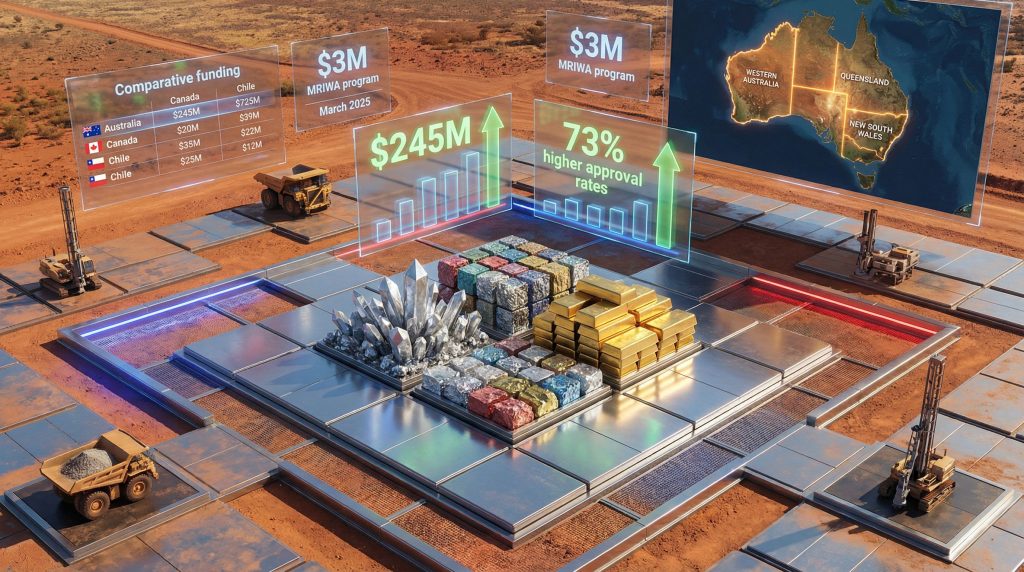
The Australian mining sector stands at a pivotal inflection point where technological advancement intersects with unprecedented government investment in innovation programs. The convergence of critical minerals demand surges, environmental regulatory pressures, and global supply chain vulnerabilities has created a unique funding environment that demands strategic navigation by mining companies seeking competitive advantages through australian mining innovation funding initiatives.
What Drives Australia's Mining Innovation Funding Landscape in 2026?
Market Forces Reshaping Investment Priorities
The Australian mining innovation ecosystem has undergone substantial transformation driven by several key market dynamics. Critical minerals demand has emerged as the primary catalyst for funding program expansion, with specialised programs targeting lithium, rare earth elements, and battery metals experiencing increased government allocation priorities. This shift reflects global recognition of Australia's strategic position in supplying materials essential for renewable energy infrastructure and advanced manufacturing.
Environmental, social, and governance compliance requirements have created entirely new categories of technology investment support. Mining companies face increasing pressure to demonstrate measurable reductions in carbon emissions, water usage optimisation, and community impact minimisation. These regulatory frameworks have spawned dedicated funding streams for clean technology adoption, renewable energy integration in mining operations, and advanced environmental monitoring systems.
Supply chain resilience has become a national security priority following recent global disruptions. Government agencies have identified mining technology self-sufficiency as critical infrastructure, leading to increased domestic capability building initiatives. This strategic focus has resulted in preferential funding treatment for technologies that reduce dependence on international suppliers and strengthen Australian mining equipment and services sectors.
Furthermore, the critical minerals energy transition has created new opportunities for companies developing extraction and processing technologies. The $725 million funding package announced by the Australian government specifically targets innovation in mining technology, reflecting unprecedented commitment to sector transformation.
Government Policy Framework Analysis
Federal and state coordination mechanisms have evolved to eliminate duplicate funding applications and streamline innovation support delivery. The National Cabinet has established mining innovation as a cross-jurisdictional priority, enabling companies to access multiple funding sources through coordinated application processes. This approach reduces administrative burden while maximising funding accessibility for qualifying projects.
Innovation tax incentive structures now complement direct grant funding through enhanced R&D tax offset provisions specifically targeting mining technology development. Companies can combine immediate grant support with long-term tax benefits, creating favourable cash flow profiles for extended research projects. The interaction between these mechanisms requires careful financial planning to optimise overall project economics.
Regulatory alignment between funding criteria and industry operational requirements has improved significantly through stakeholder consultation processes. Program administrators now engage directly with mining companies to ensure funding priorities match real-world operational challenges and commercial viability requirements. In addition, the government's commitment to industry tax breaks 2025 further enhances the investment landscape for mining innovation.
When big ASX news breaks, our subscribers know first
How Do Australian Mining Innovation Grants Compare Globally?
Funding Scale and Accessibility Benchmarking
Australia's position within the global mining innovation funding landscape reveals both competitive advantages and areas for improvement. The country's program structure emphasises collaborative research partnerships and commercial pathway development, distinguishing it from purely academic-focused international alternatives.
Processing timeframes in Australia typically extend longer than comparable programs in other mining jurisdictions due to comprehensive due diligence requirements and stakeholder consultation processes. However, this extended evaluation period often results in higher project success rates and more robust commercial outcomes for approved initiatives.
Co-contribution requirements in Australian programs generally align with international standards, though the flexibility in meeting these requirements through in-kind contributions and equipment access provides advantages for companies with limited cash resources but substantial operational assets.
Competitive Advantage Assessment
Australia's mining innovation programs demonstrate particular strength in supporting technology commercialisation pathways compared to research-heavy international alternatives. The emphasis on industry partnership requirements ensures developed technologies have clear adoption routes within operational mining environments.
Technology focus area alignment with global mining innovation trends positions Australian programs advantageously for companies developing solutions applicable across multiple international markets. This global relevance increases the commercial value of funded research outcomes and enhances export potential for successful technologies.
Success rate metrics across different program categories indicate that applications demonstrating clear industry collaboration and commercial potential achieve significantly higher approval rates than purely technical research proposals, reflecting the practical orientation of Australian funding priorities.
Which Funding Programs Deliver Maximum ROI for Mining Companies?
Tier 1 Programs: High-Impact Strategic Initiatives
Cooperative Research Centre programs represent the most substantial long-term funding opportunities available to mining companies in Australia. These initiatives support comprehensive research programs addressing industry-wide challenges through multi-institution collaboration. The extended timeframes and substantial funding levels make these programs particularly suitable for breakthrough technology development requiring sustained investment over multiple years.
Mining Equipment Technology Services innovation programs focus specifically on advancing Australia's position as a global leader in mining technology development and export. These programs prioritise technologies with clear commercial applications and strong export potential, making them attractive for companies seeking to develop competitive advantages in international markets.
Critical minerals acceleration initiatives have emerged as priority funding areas reflecting national strategic interests in securing supply chains for advanced manufacturing and renewable energy sectors. These programs offer expedited processing for qualifying projects and enhanced funding levels for technologies addressing specific mineral processing or extraction challenges.
Tier 2 Programs: Operational Excellence Focus
Exploration enhancement grants provide targeted support for companies seeking to improve discovery rates and reduce exploration costs through advanced geophysical and geochemical techniques. These programs typically offer moderate funding levels with relatively short implementation timeframes, making them accessible for companies seeking incremental operational improvements.
Waste-to-resource conversion programs reflect growing emphasis on circular economy principles within mining operations. These initiatives support technologies that transform mining waste streams into valuable products or enable more complete resource extraction from existing ore bodies.
Digital transformation accelerators specifically target automation, artificial intelligence, and data analytics applications within mining operations. These programs recognise the rapid technological change occurring within the sector and provide support for companies adapting to digital mining methodologies.
Application Success Factor Analysis
"Mining companies that demonstrate established industry partnerships and clearly defined commercial pathways for their proposed technologies achieve substantially higher approval rates across all program categories, reflecting the practical focus of Australian funding priorities."
Successful applications typically include detailed implementation timelines with specific milestones tied to operational outcomes rather than purely research objectives. This approach aligns with program administrator preferences for measurable commercial results from funded initiatives.
Financial structure optimisation often involves leveraging equipment access and operational testing opportunities as part of co-contribution requirements, reducing cash outlay while providing valuable real-world validation for developed technologies.
What Are the Emerging Technology Investment Priorities?
Green Metals and Decarbonisation Technologies
Decarbonisation technology development has become a central focus area for australian mining innovation funding as the industry works toward net-zero emissions targets. Programs prioritise technologies that can demonstrate measurable carbon footprint reductions while maintaining or improving operational efficiency.
Low-emissions mining equipment development receives particular attention from funding programs, especially technologies that can retrofit existing mining fleets rather than requiring complete equipment replacement. This approach recognises the substantial capital investments mining companies have in existing equipment and the practical constraints on rapid fleet turnover.
Carbon capture and utilisation technologies specifically adapted for mining operations represent an emerging funding priority. These programs support research into methods for capturing and processing carbon emissions from mining activities, potentially creating revenue streams from carbon transformation processes.
Precision Mining and Resource Optimisation
Underground safety technology advancement remains a critical funding priority, with particular emphasis on systems that can improve worker safety while increasing operational efficiency. Recent focus has included advanced mesh systems for underground operations, reflecting ongoing commitment to mining safety innovation.
AI in drilling & blasting applications have attracted increased funding support as companies seek to maximise resource recovery while minimising environmental impact. These technologies offer potential for significant operational efficiency improvements through more precise mining operations.
Autonomous equipment integration support recognises the industry's movement toward remote and automated operations. Funding programs prioritise technologies that can integrate with existing mining infrastructure while providing clear safety and efficiency benefits.
Critical Minerals Processing Innovation
Rare earth element separation technology development has emerged as a strategic funding priority reflecting Australia's substantial rare earth deposits and the global supply chain importance of these materials. Programs support research into more efficient and environmentally sustainable separation processes.
Battery metal refining capability enhancement aligns with Australia's position as a major lithium producer and the growing global demand for battery materials. Funding programs prioritise technologies that can add value to raw materials within Australia rather than exporting unprocessed ores.
Alternative extraction methodologies for complex ore bodies receive targeted funding support as mining companies face declining ore grades and increasingly challenging extraction environments. These programs focus on technologies that can economically extract valuable materials from previously uneconomic ore bodies.
How Should Mining Companies Structure Their Funding Applications?
Strategic Partnership Requirements
Industry collaboration mandates across major funding programs require careful partner selection and relationship management. Successful applications typically include established partnerships with complementary organisations rather than hastily assembled application-specific collaborations.
Research institution involvement optimisation involves identifying academic partners with demonstrated expertise in relevant technology areas and established relationships with mining companies. The most successful partnerships combine academic research capabilities with practical industry experience and operational testing opportunities.
International partnership leverage through programs designed to enhance global collaboration can provide access to additional funding sources and expanded research capabilities. These partnerships are particularly valuable for technologies with global commercial potential.
Financial Structure Optimisation
Equipment leasing arrangements and in-kind research contributions often provide more favourable cash flow profiles than direct cash co-contributions while meeting program requirements. Mining companies can leverage existing operational assets to satisfy funding program requirements while preserving cash for other business priorities.
Staged funding approaches allow companies to demonstrate proof-of-concept before committing to full-scale development programs. This risk management strategy provides flexibility to adjust project scope based on early results while maintaining access to continued funding support.
Multi-program coordination can enable companies to combine funding from various sources for comprehensive technology development initiatives, though this approach requires careful management to ensure compliance with each program's specific requirements.
Timeline and Milestone Planning
Program-specific delivery expectations vary significantly across different funding sources, requiring careful alignment between project timelines and program requirements. Successful applications include detailed milestone structures that demonstrate progress toward commercial outcomes throughout the funding period.
Intellectual property ownership frameworks must be clearly defined in applications to avoid conflicts between funding recipients, research partners, and program administrators. Clear IP arrangements protect commercial interests while ensuring compliance with program requirements for knowledge sharing and publication.
Commercial exploitation pathway documentation should demonstrate realistic market opportunities for developed technologies and clear strategies for achieving commercial adoption within reasonable timeframes following research completion.
What Regional Variations Exist in Australian Mining Innovation Support?
Western Australia's METS Focus
Western Australia's mining innovation programs emphasise the state's position as a global leader in mining equipment, technology, and services development. State programs prioritise technologies that can enhance WA's competitive position in international mining markets while supporting local industry development.
Industry-led research project prioritisation ensures funding allocation aligns with practical mining challenges facing operations within the state. This approach combines industry expertise with research capabilities to address real-world operational requirements.
Precision mining and tailings management represent particular focus areas for WA programs, reflecting the state's leadership in large-scale mining operations and the ongoing challenges of managing substantial tailings volumes in an environmentally responsible manner.
Queensland's Critical Minerals Strategy
Queensland's comprehensive approach to critical minerals strategy encompasses the entire value chain from exploration through processing and manufacturing. State programs support technology development across multiple stages of mineral development rather than focusing on individual aspects.
Battery technology integration with mining operations reflects Queensland's substantial lithium resources and the state's ambitions to capture value-added processing opportunities. Programs support technologies that can integrate battery mineral processing with renewable energy systems for sustainable operations.
Exploration discovery collaborative programs combine government geological expertise with private sector exploration capabilities to accelerate discovery of new mineral resources while developing innovative exploration technologies.
New South Wales Exploration Enhancement
New South Wales exploration programs focus specifically on advanced geochemical and geophysical techniques that can improve discovery rates for high-tech metals essential for renewable energy and advanced manufacturing applications.
High-tech metals exploration prioritisation reflects the state's geological potential for critical minerals and the global strategic importance of these resources. Programs support both traditional exploration methods and advanced technologies for identifying and evaluating mineral deposits.
Geophysical and geochemical funding streams provide targeted support for companies using innovative techniques to identify mineral deposits in challenging geological environments or to reassess previously explored areas with advanced methodologies.
The next major ASX story will hit our subscribers first
How Do Innovation Funding Trends Align with Industry Transformation?
Digital Mining Revolution Investment Patterns
Automation technology adoption has accelerated through targeted grant programs that reduce the financial barriers to implementing advanced mining systems. This support recognises the substantial capital requirements for automation while encouraging industry-wide technological advancement.
Data analytics and machine learning integration support reflects the mining industry's growing recognition of data as a valuable operational asset. Funding programs prioritise technologies that can extract actionable insights from operational data to improve safety, efficiency, and environmental performance.
Cybersecurity enhancement for connected mining operations has emerged as a critical funding priority as mining companies increase their reliance on networked systems and remote operations. These programs address the growing security risks associated with digital mining transformation.
Sustainability and ESG Compliance Funding
Environmental impact reduction technology development receives substantial funding support as mining companies work to meet increasingly stringent environmental regulations and stakeholder expectations. Programs prioritise technologies with measurable environmental benefits and clear implementation pathways.
Community engagement and social licence innovation funding reflects the mining industry's recognition that operational success requires ongoing community support. These programs support technologies and methodologies that enhance community benefits from mining operations.
Circular economy principles in mining waste management have become central to many funding programs, supporting technologies that can transform waste streams into valuable products or significantly reduce environmental impact from mining operations.
Future Investment Trajectory Analysis
Long-term funding allocation trends suggest continued emphasis on technologies that address climate change, resource efficiency, and social licence requirements. These priorities reflect both regulatory requirements and industry recognition of changing stakeholder expectations.
International collaboration expansion opportunities are likely to increase as Australian mining companies seek to leverage domestic technology development for global competitive advantage. Funding programs increasingly support technologies with clear export potential.
Emerging technology categories receiving increased attention include biotechnology applications in mining, advanced materials for mining equipment, and integrated renewable energy systems specifically designed for mining operations. Moreover, mining industry decarbonisation initiatives continue gaining momentum through targeted investment programs.
What Success Metrics Define Effective Mining Innovation Investment?
Quantitative Performance Indicators
Technology adoption rates across mining operations provide clear measures of innovation program effectiveness, though tracking these metrics requires ongoing engagement with funding recipients beyond the initial research period. Successful programs demonstrate measurable increases in technology adoption within the broader mining industry.
Cost reduction achievements through innovation implementation offer tangible evidence of program value, particularly when measured across multiple mining operations adopting similar technologies. These metrics require careful baseline establishment and ongoing monitoring to accurately assess impact.
Production efficiency improvements and safety enhancement metrics provide comprehensive measures of innovation program success that align with mining industry operational priorities while demonstrating broader economic benefits from government investment.
Strategic Value Creation Assessment
Intellectual property development and commercialisation outcomes represent important measures of long-term program value, particularly for programs aimed at developing Australia's position in global mining technology markets. Successful programs generate valuable IP that can support ongoing commercial development.
Market positioning enhancement through technological differentiation provides strategic benefits that extend beyond individual companies to strengthen Australia's overall competitive position in global mining markets.
Supply chain resilience improvement through domestic capability building offers national strategic benefits that justify continued government investment in australian mining innovation funding programs, particularly for technologies addressing critical minerals processing and advanced mining equipment.
Long-term Industry Impact Evaluation
Skills development and workforce transformation outcomes ensure that innovation programs contribute to ongoing industry sustainability through enhanced human capital development. These benefits extend beyond individual projects to strengthen the broader mining workforce.
Regional economic development through innovation cluster creation provides broader economic benefits that justify public investment while supporting mining industry development in multiple regions across Australia.
Global competitiveness enhancement in mining technology exports represents a key strategic outcome that transforms Australia from a raw materials exporter to a technology and services provider for global mining markets.
What Financial Incentives Complement Direct Funding Programs?
Research and Development Tax Incentives
The Research and Development Tax Incentive scheme provides substantial additional support for mining companies investing in innovation beyond direct grant funding. Companies can claim enhanced tax deductions for qualifying R&D activities, effectively reducing the net cost of innovation investment.
Eligibility criteria for R&D tax incentives specifically include mining technology development, geological exploration techniques, and environmental impact reduction technologies. This alignment with mining innovation priorities creates opportunities for companies to optimise their overall innovation investment returns.
Cash flow timing advantages from R&D tax incentives allow companies to structure innovation investments more favourably by receiving tax benefits in subsequent financial years while accessing immediate grant funding for project initiation.
Accelerated Depreciation Provisions
Mining equipment technology investments often qualify for accelerated depreciation provisions that complement innovation funding programs. These provisions allow companies to write off technology investments more rapidly, improving project economics and encouraging adoption of funded innovations.
Digital infrastructure investments supporting mining operations can access instant asset write-offs and accelerated depreciation schedules, making technology adoption more attractive when combined with innovation grant funding.
Export Market Development Grants
Mining technology companies can access export market development grants to commercialise technologies initially developed through domestic innovation programs. This pathway provides continuation funding for successful innovations seeking international markets.
International market validation support helps Australian mining technology companies demonstrate commercial viability in global markets, creating sustainable business models beyond initial innovation funding periods.
Frequently Asked Questions About Australian Mining Innovation Funding
What size companies qualify for major innovation grants?
australian mining innovation funding programs generally welcome applications from companies across all size categories, from early-stage technology developers to major mining operations. Program administrators recognise that innovation can originate from any size organisation and evaluate applications based on technological merit and commercial potential rather than company size. However, larger companies often have advantages in meeting co-contribution requirements and demonstrating implementation capacity.
How long does the typical application and approval process take?
Application processing timeframes vary significantly across different programs, ranging from three months for smaller operational improvement grants to twelve months or more for major collaborative research initiatives. The comprehensive evaluation process includes technical assessment, commercial viability review, and stakeholder consultation, contributing to extended processing times but generally resulting in higher project success rates.
Can international companies access Australian mining innovation funding?
International companies can participate in Australian mining innovation programs, though most programs require Australian incorporation and substantial local operations or partnerships. The emphasis on domestic capability building means international applicants must demonstrate how their projects will benefit Australian mining industry development and create local employment or intellectual property ownership.
What co-contribution arrangements are most commonly accepted?
Program administrators typically accept various co-contribution structures including cash investment, equipment access, personnel time, facility usage, and intellectual property contributions. The most successful arrangements combine multiple contribution types to meet program requirements while optimising cash flow for participating companies. Equipment access and operational testing facilities often provide significant value toward co-contribution requirements.
How do intellectual property rights work with government-funded research?
Intellectual property arrangements vary across programs but generally allow participating companies to retain commercial rights to developed technologies while ensuring research outcomes remain accessible for broader industry benefit. Background IP brought to projects typically remains with original owners, while foreground IP developed during funded research may be shared among project participants according to contribution levels and commercial agreements.
What happens if innovation projects don't meet commercial milestones?
Most Australian mining innovation programs include milestone review processes that allow for project modification or early termination if commercial objectives appear unattainable. Program administrators generally work with funding recipients to identify alternative applications for research outcomes or modified commercial pathways rather than simply requiring repayment of funding. However, repeated failure to meet milestones may impact eligibility for future funding opportunities.
The Australian mining innovation funding landscape continues evolving in response to global market dynamics and technological advancement. Mining companies that strategically engage with available programs while maintaining focus on commercial outcomes and industry collaboration will be best positioned to benefit from the substantial public investment in mining technology development. Success requires understanding program requirements, building appropriate partnerships, and aligning innovation objectives with broader industry transformation priorities.
Ready to Capitalise on the Next Major Mining Discovery?
Discovery Alert instantly alerts investors to significant ASX mineral discoveries using its proprietary Discovery IQ model, transforming complex mineral data into actionable insights that power smart investment decisions. Begin your 14-day free trial today and explore historic examples of exceptional mining discovery returns to position yourself ahead of the market.