June 14, 2026
Large-scale industrial transactions across commodity sectors represent fundamental shifts in how capital-intensive businesses adapt to evolving market dynamics. Within Australia's manufacturing landscape, steel production has undergone significant transformation over the past two decades, driven by supply chain optimisation, technological advancement, and strategic portfolio rationalisation. These macro-economic forces create opportunities for sophisticated investors to unlock value through operational restructuring and geographic specialisation.
The convergence of private equity capital with established industrial assets reflects broader trends in risk-adjusted return optimisation, where acquirers seek to apply specialised management expertise to underperforming operations while simultaneously reducing cyclical exposure through strategic asset allocation.
Industrial Consolidation as a Value Creation Mechanism
Australia's steel manufacturing sector has experienced unprecedented consolidation pressure as companies navigate complex global supply chains, volatile commodity pricing, and evolving demand patterns across key export markets. The BlueScope Steel takeover proposal exemplifies how industrial consolidation can address these structural challenges through focused operational management and strategic risk allocation.
The proposed transaction structure reveals sophisticated capital allocation thinking. SGH's acquisition strategy specifically targets businesses requiring operational discipline, capital efficiency, and hands-on management to unlock latent value. This approach contrasts sharply with financial engineering models that rely primarily on leverage optimisation.
Key consolidation drivers in capital-intensive manufacturing include:
• Asset utilisation optimisation through elimination of duplicative functions and organisational complexity
• Geographic risk specialisation allowing management teams to focus on specific market dynamics
• Supply chain integration reducing intermediary costs and improving margin stability
• Technology deployment at scale across multiple facilities and regions
The transaction's multi-party structure demonstrates how complex industrial assets can be disaggregated to match operational expertise with specific geographic markets. Furthermore, this approach to mining consolidation deals has become increasingly common across Australia's resource sectors. By divesting North American operations to Steel Dynamics while retaining Asia-Pacific assets, SGH can apply specialised management models to each region's distinct competitive dynamics.
Private Equity's Role in Australian Industrial Assets
Private equity involvement in Australia's heavy industry reflects a broader investment thesis around operational value creation in mature, capital-intensive sectors. Unlike traditional leveraged buyout models, industrial consolidation strategies emphasise long-term operational improvements rather than short-term financial optimisation.
The BlueScope Steel takeover proposal illustrates several key principles of industrial private equity investment:
- Operational complexity reduction through organisational streamlining
- Capital allocation discipline focused on highest-return projects
- Risk specialisation matching management expertise with specific market exposures
- Performance measurement emphasising return on invested capital over revenue growth
SGH's stated investment philosophy explicitly avoids growth-focused strategies, instead concentrating on improving returns through long-term operational discipline. This approach recognises that many established industrial businesses operate below their optimal efficiency levels due to organisational complexity, geographic dispersion, or inadequate capital allocation processes.
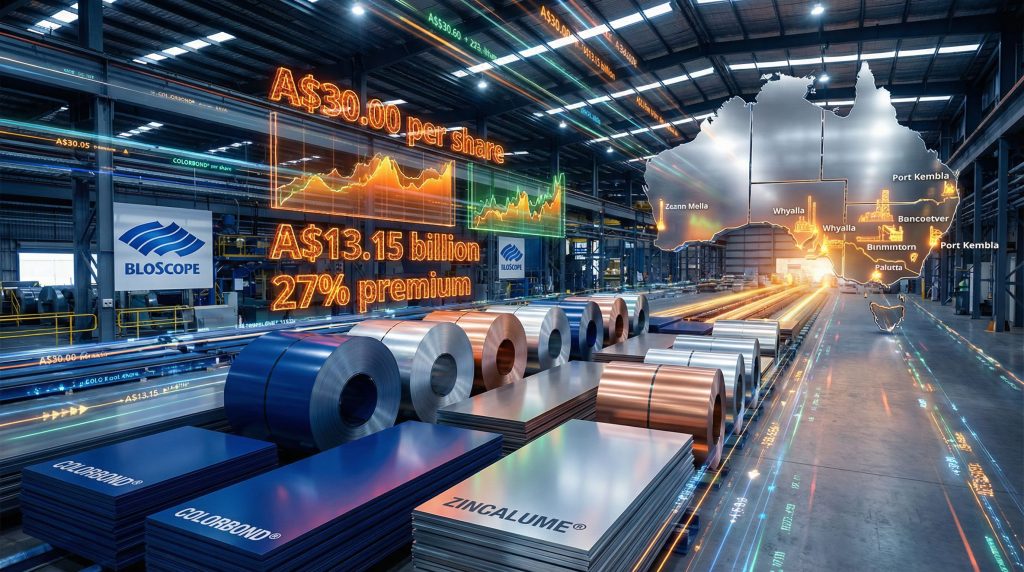
The proposed A$30.00 per share offer, representing a 27% premium to pre-announcement pricing, reflects confidence in operational improvement potential rather than speculative market positioning. This premium structure suggests that acquirers have identified specific value creation opportunities through management intervention and organisational restructuring.
When big ASX news breaks, our subscribers know first
Strategic Advantages of Australian Steel Manufacturing
Australia's steel production capabilities offer unique competitive advantages that attract international investors seeking exposure to Asia-Pacific growth markets while maintaining access to secure raw material supplies. These structural benefits create sustainable competitive moats that justify premium valuations in consolidation scenarios.
Geographic and Resource Integration Benefits
Australia's steel manufacturing sector benefits from several fundamental advantages:
• Raw material security through domestic iron ore and coking coal reserves
• Geographic proximity to high-growth Asian construction markets
• Established infrastructure including port facilities and transportation networks
• Regulatory stability providing predictable operating environments for long-term capital investment
BlueScope's operations across North America, Australia, New Zealand, Pacific Islands, and Asia demonstrate the complexity of managing geographically dispersed manufacturing assets. Each region presents distinct operational challenges, from cyclical demand volatility in North American flat-rolled steel markets to infrastructure development opportunities across Asia-Pacific regions.
The proposed divestiture structure recognises these geographic distinctions. North American operations, characterised as highly cyclical and sensitive to shifts in demand and pricing conditions, require different management approaches compared to Australia's more stable construction-focused markets.
BlueScope's Competitive Market Position
BlueScope's competitive positioning stems from several key factors that create sustainable barriers to entry:
| Competitive Factor | Strategic Advantage | Market Impact |
|---|---|---|
| Brand Portfolio | COLORBOND® and ZINCALUME® market recognition | Premium pricing power in construction materials |
| Vertical Integration | Control across steel production value chain | Cost optimisation and supply security |
| Distribution Network | Established relationships across multiple regions | Market access and customer retention |
| Technical Expertise | Specialised coating and processing capabilities | Product differentiation and margin protection |
The company's global footprint, scale, and earnings base represent accumulated competitive advantages that justify the A$13.15 billion enterprise value implied by the takeover proposal. These assets cannot be easily replicated by new entrants, creating sustainable competitive moats that support premium valuations.
Regulatory Complexity in Cross-Border Steel Transactions
Large-scale industrial acquisitions involving Australian assets require navigation of sophisticated regulatory frameworks designed to protect national interests while facilitating efficient capital allocation. The BlueScope Steel takeover proposal must address multiple jurisdictional considerations across Australia, the United States, and Asia-Pacific markets.
Foreign Investment Review Board Assessment Framework
Australia's Foreign Investment Review Board evaluates transactions based on national interest criteria, particularly for assets deemed critical to economic security or industrial capability. Steel manufacturing represents strategic infrastructure that supports construction, manufacturing, and defence industries across the economy.
Key FIRB assessment considerations include:
• National security implications of foreign ownership in strategic industrial sectors
• Employment impact across regional communities dependent on manufacturing operations
• Supply chain security for construction materials and industrial inputs
• Competition effects on domestic market structure and pricing dynamics
The proposed transaction's complexity extends beyond simple foreign ownership questions. The multi-party structure, involving SGH acquisition followed by Steel Dynamics divestiture of North American assets, requires careful regulatory coordination across multiple jurisdictions with potentially conflicting policy objectives.
In addition, the global trade environment adds further complexity, particularly considering recent US‑China trade impacts on commodity sectors.
Multi-Jurisdictional Transaction Mechanics
The BlueScope takeover proposal demonstrates sophisticated transaction structuring designed to optimise regulatory approval prospects while maximising operational synergies. The three-phase approach reflects practical recognition of different regulatory environments:
Phase 1: Initial Acquisition
- SGH acquires 100% of BlueScope Steel shares
- Triggers FIRB review for Australian operations
- Requires shareholder approval and standard takeover procedures
Phase 2: Asset Divestiture
- North American operations transferred to Steel Dynamics
- Addresses US foreign investment considerations
- Reduces operational complexity for remaining assets
Phase 3: Operational Integration
- SGH retains Australia and Asia-Pacific operations
- Applies specialised management model to core assets
- Focuses capital allocation on highest-return opportunities
This structure allows regulators in each jurisdiction to evaluate specific aspects of the transaction relevant to their policy frameworks while enabling the commercial parties to optimise operational outcomes.
Valuation Analysis and Premium Justification
The A$30.00 per share offer price represents a 27% premium to BlueScope's pre-announcement share price, requiring careful analysis to understand the economic justification for this significant valuation uplift. Premium analysis in industrial takeover scenarios typically reflects operational improvement potential, synergy realisation, and strategic value to specialised operators.
Market Efficiency and Premium Analysis
The immediate 18% surge in BlueScope's share price following the takeover announcement suggests market validation of the premium level while indicating that the full offer price incorporates additional value creation expectations beyond current operations.
| Valuation Component | Amount | Rationale |
|---|---|---|
| Pre-announcement Price | A$23.62 | Market valuation based on standalone operations |
| Immediate Market Response | +18% (A$27.87) | Market validation of strategic value |
| Offer Premium | Additional 7.6% to market price | Operational improvement and control premium |
| Total Offer Price | A$30.00 | Reflects full value creation potential |
The premium structure reflects several value creation mechanisms:
• Operational synergies from SGH's management model application
• Risk reduction through elimination of North American cyclical exposure
• Capital allocation optimisation across remaining geographic operations
• Strategic value to Steel Dynamics for North American vertical integration
Market reception of the premium suggests investor confidence that the proposed operational improvements can justify the valuation uplift. However, the non-binding nature of the current proposal creates ongoing uncertainty around deal completion and final terms.
Board Fiduciary Considerations and Shareholder Protection
BlueScope's board faces complex fiduciary responsibilities in evaluating the takeover proposal against alternative value creation strategies. The board must assess whether the long-term standalone value exceeds the offer price, considering both current operational performance and potential improvement under existing management.
Key board evaluation criteria include:
- Independent valuation analysis comparing offer price to discounted cash flow projections
- Operational improvement assessment evaluating internal versus external management capabilities
- Strategic alternative evaluation including potential partnering or asset rationalisation options
- Shareholder protection mechanisms ensuring minority interests receive fair treatment
The non-binding proposal status provides the board with negotiating leverage while allowing detailed due diligence on both the acquirer's capabilities and the proposed operational improvements. This process protects shareholder interests while enabling thorough evaluation of value maximisation alternatives.
Geographic Risk Allocation and Operational Specialisation
The proposed transaction structure demonstrates sophisticated understanding of how geographic risk allocation can optimise returns in cyclical commodity businesses. By separating North American operations from Asia-Pacific assets, the transaction enables specialised management approaches tailored to each region's distinct market dynamics.
North American Market Dynamics and Steel Dynamics Integration
BlueScope's North American operations face significant cyclical volatility due to exposure to flat-rolled steel pricing, which experiences dramatic swings based on construction demand, automotive production, and industrial capacity utilisation. This volatility creates operational complexity that may not align with SGH's investment model focused on stable, predictable returns.
Steel Dynamics brings several competitive advantages to North American operations:
• Vertically integrated production model reducing input cost volatility
• Scrap metal access and processing capabilities providing raw material cost advantages
• Scale benefits across multiple regional production facilities
• Established customer relationships in construction and industrial markets
The divestiture to Steel Dynamics represents strategic recognition that operational expertise matters significantly in cyclical commodity businesses. Rather than attempting to manage unfamiliar market dynamics, SGH can focus resources on Asia-Pacific operations where growth trends and market structures align better with long-term value creation strategies.
Asia-Pacific Growth Market Positioning
SGH's retention of Australian and Asia-Pacific operations reflects confidence in long-term regional growth trends and the ability to optimise operations within more predictable regulatory and market environments. Australia's construction sector provides stable demand for steel products, while Asia-Pacific infrastructure development creates expansion opportunities.
Key advantages of Australia-focused operations include:
• Market proximity to high-growth Asian construction and infrastructure projects
• Raw material integration with domestic iron ore and coking coal supplies
• Brand recognition through COLORBOND® and ZINCALUME® market positioning
• Regulatory predictability enabling long-term capital planning and investment
This geographic focus allows SGH to apply proven operational improvement methodologies while avoiding the complexity of managing operations across dramatically different regulatory and market environments.
Investment Decision Framework for Shareholders
Shareholders evaluating the BlueScope Steel takeover proposal must weigh immediate liquidity benefits against potential long-term value creation under alternative ownership structures. This analysis requires careful consideration of execution risks, operational improvement prospects, and market timing factors.
Risk-Adjusted Return Considerations
The takeover proposal presents shareholders with several competing considerations:
Immediate Benefits:
- 27% premium to pre-announcement share price providing immediate value realisation
- All-cash consideration eliminating future operational and market risks
- Execution certainty subject to regulatory approvals and due diligence completion
Alternative Value Scenarios:
- Standalone operational improvements under existing management potentially exceeding offer price
- Alternative strategic partnerships or asset rationalisation creating superior returns
- Market timing considerations regarding cyclical positioning and future steel demand trends
The non-binding proposal status creates additional complexity, as shareholders must assess both the likelihood of deal completion and the potential for improved terms through negotiation or competitive bidding processes.
Due Diligence and Execution Risk Assessment
Complex multi-party transactions involving regulatory approvals across multiple jurisdictions carry inherent execution risks that shareholders must carefully evaluate. Furthermore, investors should consider potential management red flags that could signal underlying operational challenges beyond what public disclosures reveal.
| Risk Category | Specific Considerations | Mitigation Factors |
|---|---|---|
| Regulatory Approval | FIRB assessment timeline and conditions | Structured approach with precedent transactions |
| Due Diligence | Operational improvement validation | SGH's track record in similar businesses |
| Integration Complexity | Multi-party asset transfers | Steel Dynamics' existing North American operations |
| Market Conditions | Steel sector cyclical positioning | Transaction structure reduces cyclical exposure |
Shareholders must evaluate whether the proposed premium adequately compensates for these execution risks while considering the probability of alternative value creation pathways under continued public ownership.
The next major ASX story will hit our subscribers first
Broader Implications for Australian Industrial Policy
The BlueScope Steel takeover proposal raises important questions about strategic asset ownership, manufacturing capability retention, and the balance between foreign investment benefits and national economic interests. These considerations extend beyond immediate shareholder returns to encompass broader economic policy objectives.
Strategic Asset Considerations and National Interests
Steel manufacturing represents critical infrastructure supporting construction, automotive, defence, and general manufacturing sectors across the Australian economy. Foreign ownership of such assets requires careful evaluation of long-term implications for industrial capability and supply security.
Key policy considerations include:
• Manufacturing capability retention ensuring continued domestic steel production capacity
• Employment impact assessment across regional communities dependent on steel operations
• Supply chain security for critical construction materials and industrial inputs
• Technology transfer and innovation development within Australian manufacturing
The proposed transaction structure, retaining Australian operations under SGH ownership while divesting North American assets, may address some national interest concerns by maintaining domestic manufacturing capability while optimising operational efficiency.
Foreign Investment Trends and Industrial Ownership
The BlueScope proposal reflects broader trends in foreign investment patterns within Australian heavy industry, where international capital seeks exposure to Asia-Pacific growth markets while leveraging Australia's resource advantages and regulatory stability.
Recent foreign investment activity in Australian manufacturing demonstrates several key patterns:
- Operational improvement focus rather than financial engineering strategies
- Long-term investment horizons aligned with infrastructure and manufacturing requirements
- Geographic specialisation leveraging Australia's Asia-Pacific positioning
- Regulatory compliance with national interest assessment frameworks
These trends suggest that well-structured foreign investment can contribute to Australian manufacturing competitiveness while maintaining strategic asset control through appropriate regulatory oversight.
Long-Term Outlook and Strategic Implications
The BlueScope takeover proposal occurs within a broader context of global steel industry restructuring, Asia-Pacific infrastructure development, and evolving trade relationships that will influence long-term value creation prospects regardless of transaction outcomes.
Global Steel Industry Transformation
Steel manufacturing worldwide faces several structural challenges that drive consolidation and operational optimisation. Consequently, these trends form part of a broader pattern of mining industry evolution affecting resource and manufacturing sectors across Australia.
• Environmental regulations requiring significant capital investment in cleaner production technologies
• Trade policy uncertainty affecting global supply chain optimisation strategies
• Demand pattern shifts from traditional construction toward renewable energy infrastructure
• Technology adoption including digitalisation and automation across production processes
Australian steel operations benefit from several competitive advantages in this evolving landscape, including secure raw material access, proximity to growth markets, and established regulatory frameworks supporting long-term capital investment. However, potential tariff impact analysis could significantly affect competitive positioning in global markets.
Investment Strategy Implications
The BlueScope transaction provides several lessons for investors evaluating industrial consolidation opportunities:
Operational Focus Creates Value: SGH's emphasis on operational improvement rather than financial engineering reflects recognition that sustainable returns in capital-intensive industries require hands-on management expertise and long-term operational discipline.
Geographic Specialisation Reduces Risk: The proposed divestiture structure demonstrates how complex industrial businesses can be optimised through geographic focus, allowing management teams to concentrate on specific market dynamics rather than managing diverse operational environments.
Regulatory Navigation Requires Sophistication: Multi-jurisdictional transactions involving strategic assets demand careful regulatory planning and stakeholder management to achieve successful outcomes while maintaining policy compliance.
"Industrial consolidation transactions succeed when they address fundamental operational challenges rather than relying solely on financial optimization. The BlueScope proposal's focus on geographic specialisation and operational improvement reflects sophisticated understanding of value creation in capital-intensive manufacturing sectors."
The broader implications extend beyond immediate transaction outcomes to encompass evolving patterns of industrial ownership, international capital allocation, and regulatory frameworks governing foreign investment in strategic Australian assets. For additional context on this proposal, Bloomberg reports provide comprehensive coverage of market reactions and analyst perspectives. These developments will significantly influence future investment opportunities and policy approaches within the manufacturing sector.
Furthermore, investors can find detailed analysis and insights about BlueScope's market position through Stocks Down Under's research coverage, which offers comprehensive evaluation of the company's operational metrics and competitive positioning.
Disclaimer: This analysis is based on publicly available information and should not be considered as investment advice. Steel sector investments involve significant risks including commodity price volatility, regulatory changes, and operational complexity. Potential investors should conduct independent research and consult qualified financial advisors before making investment decisions.
Ready to Capitalise on Industrial Consolidation Opportunities?
Discovery Alert's proprietary Discovery IQ model delivers real-time notifications on significant ASX mineral discoveries and industrial developments, empowering subscribers to identify actionable opportunities ahead of the broader market. Understand why major consolidation events can lead to substantial market returns by exploring Discovery Alert's dedicated discoveries page, showcasing historic examples of exceptional outcomes, and begin your 30-day free trial today to position yourself ahead of the market.