August 14, 2026
Australia's Resources Sector Faces Revolutionary Industrial Relations Shift
Climate extremes and evolving workplace legislation are converging to reshape mining operations across Australia's most productive regions. As unions turn up the heat on Pilbara miners and temperature records continue climbing alongside federal labor laws expanding union access rights, the traditional balance between productivity demands and worker protections faces unprecedented scrutiny. The Pilbara, which generates over half of Western Australia's export revenue, now sits at the epicenter of debates that could fundamentally alter how mining companies manage their workforce and operational strategies.
These industrial relations tensions emerge against a backdrop of global supply chain vulnerabilities and intensifying competition from international mining jurisdictions. Furthermore, understanding the forces driving this transformation requires examining multiple intersecting factors: regulatory changes implemented since 2024, medical research on occupational heat exposure, union organizing strategies leveraging digital platforms, and corporate responses involving accelerated automation deployment.
When big ASX news breaks, our subscribers know first
Economic Pressures Driving Contemporary Worker Demands
Skills Shortage Creating Negotiation Leverage
Specialised mining roles, particularly high-voltage electrical technicians and equipment maintenance specialists, have become increasingly scarce across Australian operations. These workers represent approximately 15-20% of total workforce but maintain critical responsibility for continuous operation systems that cannot be easily automated or outsourced.
The Australian Bureau of Statistics reports that mining sector wages have grown by 8-12% annually since 2024. However, inflation pressures in remote mining communities have created cost-of-living challenges that traditional compensation packages struggle to address. Housing costs in mining towns have increased by 25-35% over the past two years, while essential services and goods command premium prices due to logistics complexities.
Global Commodity Volatility Affecting Employment Security
Iron ore trends fluctuations create ongoing uncertainty for mining workforce planning. Australia's iron ore export value reached AUD $97 billion in 2025, representing approximately 35-40% of global supply. Consequently, this market dominance creates both leverage and vulnerability for Australian operations when unions turn up the heat on Pilbara miners and threaten production continuity.
Market volatility patterns show that iron ore prices typically exhibit 5-15% fluctuation during announced strike periods. Additionally, recovery timelines extend 2-4 weeks post-resolution depending on underlying demand insights. For workers, this volatility translates to employment insecurity that strengthens collective bargaining positions during peak production periods.
Federal Workplace Legislation Impact on Mining Access Rights
Fair Work Amendment Implementation Effects
The October 2024 Fair Work Amendment (Closing Loopholes) Act fundamentally altered union access protocols across Australian mining operations. These changes removed previous restrictions on workplace communication and expanded multi-employer bargaining capabilities that had been limited under earlier legislation.
Key regulatory modifications include:
- Enhanced workplace access for union representatives during non-work hours
- Simplified multi-employer bargaining processes across contractor networks
- Expanded communication rights for union members in designated mine site areas
- Reduced barriers to collective action coordination across multiple operations
Union membership in Australia's mining sector has remained stable at approximately 25-30% across major operations. However, targeted campaigns in specialised trades show increased organising activity following the legislative changes.
State Government Economic Dependency Considerations
Western Australia's revenue structure creates complex political dynamics around mining labour relations. Approximately 50-55% of state government revenue derives directly or indirectly from mining activities. For instance, this makes labour stability a critical economic priority that extends beyond individual company interests.
The Pilbara region employs approximately 47,000-50,000 workers in mining operations, representing the largest employment base in the region. This economic concentration means that extended industrial action could create regional economic disruption extending far beyond mining companies themselves.
Medical Research Supporting Temperature-Based Safety Protocols
Scientific Evidence for Heat Stress Intervention Thresholds
Occupational medicine research consistently identifies 36°C ambient temperature as an elevated threshold for heat stress risk in physically demanding outdoor work. Furthermore, the National Institute for Occupational Safety and Health (NIOSH) and international equivalents recommend graduated intervention protocols beginning at 32°C for outdoor industrial environments.
Heat-related illness progression follows predictable patterns:
- Heat cramps (mild): muscle spasms from electrolyte depletion
- Heat exhaustion (moderate): elevated core temperature with intact thermoregulation
- Heat stroke (severe): life-threatening thermoregulatory failure
Multiple factors influence heat stress vulnerability in mining operations. These include hydration status, acclimatisation level, work intensity, protective equipment requirements, ambient humidity levels, and radiant heat exposure from heavy machinery.
Pilbara Regional Climate Data Analysis
Temperature records from the Pilbara demonstrate the scope of extreme heat exposure for mining operations. During summer months (December-March), maximum temperatures regularly exceed 40°C. Additionally, historical data shows average peak temperatures of 38-42°C during January-February periods.
Extreme Heat Exposure Analysis (2015-2025)
| Month | Average Maximum (°C) | Extreme Days (>40°C) | Peak Recorded (°C) |
|---|---|---|---|
| December | 38-40 | 12-18 days | 46°C |
| January | 40-42 | 20-25 days | 48°C |
| February | 39-41 | 15-22 days | 47°C |
| March | 37-39 | 8-15 days | 45°C |
During peak mining seasons, when maintenance activities intensify, extreme heat days occur on average 15-25 days per month. This creates sustained occupational hazard exposure that international safety protocols suggest requires systematic intervention.
Production Impact Assessment and Economic Risk Modelling
Historical Strike Analysis and Output Consequences
Major mining strikes remain relatively rare in the Pilbara. The last significant industrial action occurred during 2011-2012 rostering disputes that resulted in production losses estimated at 5-8% during active periods. However, the concentrated nature of Australian iron ore production amplifies the potential economic impact when unions turn up the heat on Pilbara miners through coordinated labour action.
The Pilbara produces approximately 370 million tonnes of iron ore annually, representing roughly 95% of Australia's total iron ore exports. This production concentration means that coordinated industrial action affecting multiple operations simultaneously could create global supply shortages lasting weeks to months.
Supply Chain Disruption Scenarios
Iron ore production complexity involves integrated systems from extraction through beneficiation, rail transport, and port facilities. Disruption at any single point affects entire export corridors, creating cascading economic effects that extend beyond immediate production losses.
Specialised workforce dependency creates particular vulnerability points:
- High-voltage electrical workers: Essential for continuous power system maintenance
- Equipment technicians: Required for haul truck and processing equipment operations
- Process control operators: Critical for beneficiation and quality control systems
- Rail and port specialists: Necessary for export logistics coordination
These roles cannot be easily substituted during labour disputes. Consequently, they create operational bottlenecks that can halt production despite availability of general mining workforce.
Corporate Strategic Responses to Labour Pressure
BHP's Automation and Workforce Management Approach
As Australia's largest mining company by output, BHP operates three major Pilbara iron ore operations producing approximately 260 million tonnes annually through a combined workforce of 11,000-12,000 employees and contractors. The company's response strategy involves balancing immediate labour relations management with long-term automation deployment.
BHP's automation initiatives include:
- Autonomous haul truck deployment at select Pilbara operations using Komatsu and Caterpillar systems
- Remote operation capabilities for reducing on-site operator requirements during extreme conditions
- Predictive maintenance systems to minimise emergency repair requirements during heat events
- Skills transition programs for workforce adaptation to technological changes
However, full autonomous mining deployment across all Pilbara operations remains estimated at 10-15 years given technical, regulatory, and workforce transition requirements.
Industry-Wide Technology Deployment Patterns
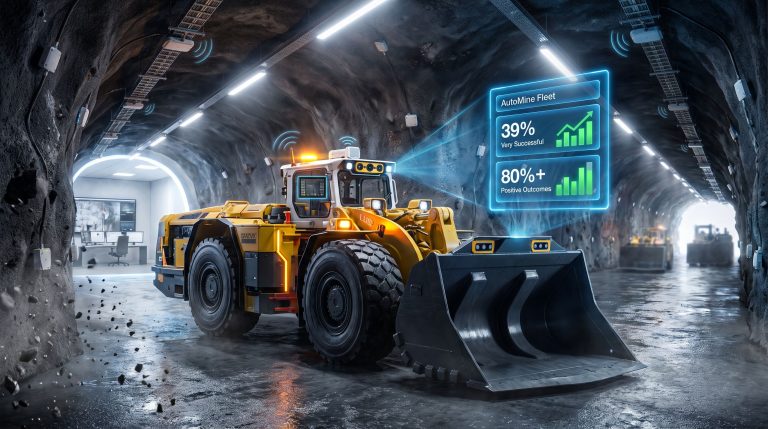
Autonomous haul truck deployment across the Australian mining sector has reached approximately 600-700 units as of 2025. Moreover, Pilbara iron ore operations represent 20-25% of this fleet. Capital investment in mining automation technology totalled approximately AUD $4.2 billion in 2024-2025, with projections of 8-12% annual growth through 2028.
"Mining automation serves dual strategic functions: productivity enhancement through cost reduction per tonne, while simultaneously reducing workforce dependency and limiting exposure to labour action leverage during peak production periods."
Remote operation technology requires sophisticated infrastructure. This includes high-bandwidth communications networks, redundant control systems with automatic failsafe protocols, and highly trained remote operators requiring 6-12 months training compared to 2-4 weeks for traditional operators.
The next major ASX story will hit our subscribers first
Digital Organising and Modern Union Campaign Strategies
Technology-Enhanced Labour Coordination
Contemporary union organising has evolved beyond traditional workplace communication methods to leverage digital platforms for member coordination and public opinion campaigns. Union organisations utilise social media platforms including Facebook, Instagram, LinkedIn, and TikTok for member communication, particularly targeting younger workers and broader public sentiment.
Data analytics applications enable union strategists to optimise strike timing based on:
- Commodity price cycles to maximise economic pressure
- Company financial calendars targeting quarterly reporting periods
- Seasonal production patterns during peak export demand
- Weather forecasting to coordinate with extreme heat events
Public Opinion Campaign Effectiveness
Digital organising allows unions to frame labour disputes within broader public interest narratives, particularly around worker safety and extreme weather adaptation. This approach shifts traditional employer-employee negotiations into public policy discussions that engage community stakeholders beyond mining operations.
In addition, union campaigns increasingly emphasise climate change adaptation and worker protection rather than traditional wage-focused messaging. This creates broader coalition potential with environmental and community organisations as industry transformation trends continue to evolve.
Proposed Regulatory Framework and Implementation Challenges
Temperature-Based Work Stoppage Legislation Timeline
As of March 2026, no federally enacted legislation specifically mandating temperature-based work stoppages at 36°C has been implemented. Current workplace health and safety legislation establishes general employer duties for heat stress management but does not specify temperature thresholds or mandatory work cessation protocols.
Regulatory development timelines for major workplace safety reforms typically require 12-24 months from proposal to legislative enactment. This suggests that heat-specific regulations discussed in 2026 may not achieve implementation until 2027-2028.
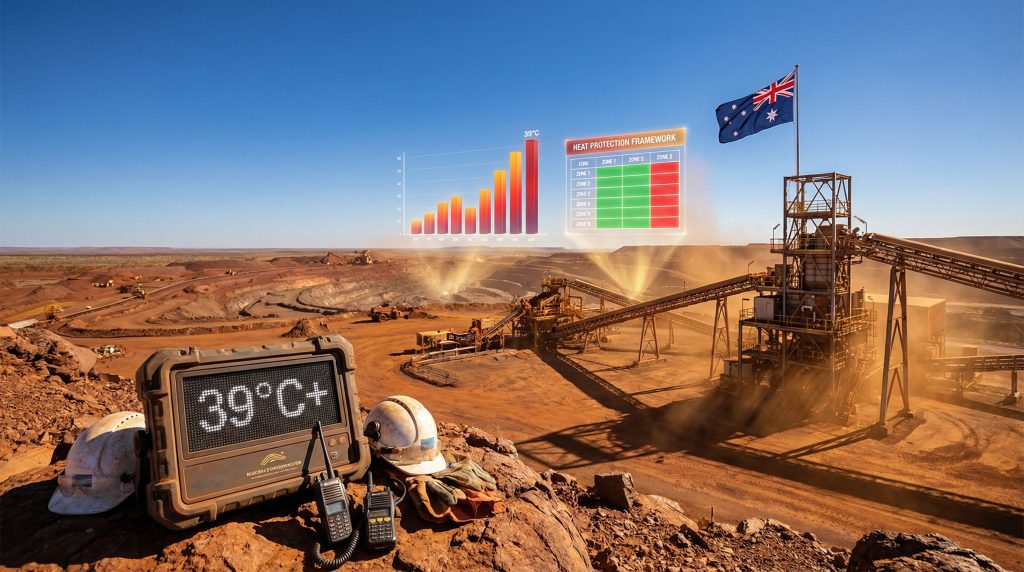
Proposed Heat Protection Implementation Framework
| Temperature Range | Intervention Level | Implementation Timeline | Industry Compliance Cost |
|---|---|---|---|
| 32-35°C | Enhanced hydration protocols | 6 months | Low (existing protocols) |
| 36-38°C | Mandatory work stoppages | 12-18 months | High (productivity loss) |
| 39°C+ | Complete site evacuation | Immediate | Very High (safety systems) |
Enforcement Complexity and Compliance Requirements
Temperature-based work stoppage regulations would require comprehensive implementation frameworks addressing multiple technical and administrative challenges:
Measurement Standards:
- Standardised thermometer placement and calibration protocols
- Wet Bulb Globe Temperature versus ambient temperature considerations
- Real-time monitoring infrastructure across dispersed mining operations
- Quality assurance systems for temperature measurement accuracy
Operational Protocols:
- Emergency situation exemption criteria and approval processes
- Dispute resolution mechanisms for borderline temperature conditions
- Worker notification systems for temperature threshold breaches
- Compliance verification and audit procedures
Penalty Structures:
- Financial penalties for non-compliance with temperature protocols
- Operational licence implications for repeated violations
- Worker compensation frameworks for heat-related health incidents
International Mining Jurisdiction Comparative Analysis
Canadian Mining Labour Relations Stability
Canada's iron ore production, primarily concentrated in Quebec and Labrador, totals approximately 50 million tonnes annually. This represents 4-5% of global supply. Canadian mining industry union representation reaches approximately 35-40% across major operations, higher than Australian levels.
Work stoppages in Canadian mining occur approximately every 5-7 years at major operations, with typical duration of 4-12 weeks. This pattern demonstrates higher tolerance for extended labour disputes compared to Australia's emphasis on continuous production stability.
Chilean Mining Heat Management Protocols
Chile's copper production of approximately 5.5 million tonnes annually makes it the world's largest producer. Operations in the Atacama region routinely operate under extreme heat conditions where 40-50°C temperatures are common.
Chilean mining companies have developed comprehensive heat mitigation protocols without mandatory temperature-based work stoppages. Instead, they rely on:
- Employer-provided cooling systems and climate-controlled rest areas
- Shift scheduling optimisation to minimise exposure during peak heat periods
- Enhanced hydration programmes with electrolyte monitoring
- Personal protective equipment designed for extreme temperature conditions
South African Mining Labour Relations Context
South Africa's mining sector has experienced significant labour unrest in recent years. Major strikes have affected platinum, gold, and coal operations. However, extreme heat management has received less regulatory attention compared to other safety concerns including underground ventilation and seismic activity management.
Long-Term Scenario Analysis and Market Implications
Scenario 1: Negotiated Settlement Framework Development
A collaborative resolution pathway might involve structured agreements incorporating multiple stakeholder interests:
Wage and Benefits Framework:
- Productivity-linked wage increases tied to measurable output metrics
- Enhanced compensation for extreme weather work periods
- Improved accommodation and lifestyle benefits in remote mining communities
Safety Protocol Integration:
- Graduated heat protection implementation over 2-3 year timeline
- Investment in cooling infrastructure and personal protection technology
- Joint employer-union safety monitoring systems
Technology Transition Support:
- Workforce retraining programmes for automation-affected roles
- Employment guarantees during technology deployment phases
- Skills development funding for emerging technical positions
Scenario 2: Escalated Industrial Conflict Pathway
Unresolved tensions could lead to prolonged industrial disputes with significant economic ramifications when unions turn up the heat on Pilbara miners through extended action:
Production Impact Assessment:
- Extended work stoppages affecting 15-25% of Australian iron ore output
- Global steel production delays due to supply shortages
- Iron ore price volatility of 20-30% during peak conflict periods
Government Intervention Mechanisms:
- Emergency legislation declaring mining operations essential services
- Mediation requirements before strike action authorisation
- Economic impact assessments for major industrial disputes
International Market Response:
- Accelerated development of Brazilian and African iron ore capacity
- Supply diversification strategies by major steel producers
- Long-term market share erosion for Australian producers alongside export challenges
Scenario 3: Accelerated Automation and Workforce Transformation
Technological deployment could fundamentally reshape mining employment patterns through data-driven operations:
Automation Timeline Acceleration:
- 5-8 year timeline for major automation deployment across Pilbara operations
- Remote operation capabilities eliminating 30-40% of on-site workforce requirements
- Specialised technical roles increasing while general mining positions decline
Economic Efficiency Improvements:
- Production cost reductions of 15-25% through automation deployment
- Enhanced weather resilience reducing heat-related production interruptions
- Competitive advantage maintenance versus international mining jurisdictions
Workforce Transition Implications:
- Natural attrition managing workforce reduction over 8-10 year period
- Retraining programmes for technical and supervisory roles
- Regional economic diversification requirements as mining employment contracts
Frequently Asked Questions: Australia's Mining Labour Transformation
How do extreme heat regulations in other mining countries compare to Australian proposals?
International mining jurisdictions typically implement graduated response systems rather than mandatory work stoppages. Chilean operations in the Atacama Desert use comprehensive cooling infrastructure and shift optimisation. Meanwhile, Canadian operations focus on cold weather protections. Few countries mandate complete work cessation at specific temperatures.
What percentage of Australia's iron ore production could be affected by coordinated labour action?
The Pilbara produces approximately 95% of Australia's iron ore exports, totalling 370 million tonnes annually. Coordinated action targeting electrical and maintenance specialists could potentially affect 60-80% of production. This occurs despite these workers representing only 15-20% of total workforce.
How long would automation deployment take to reduce labour dispute vulnerability?
Full autonomous mining deployment across Pilbara operations is estimated at 10-15 years under current technology development trajectories. However, partial automation focusing on high-risk functions could achieve 30-40% vulnerability reduction within 5-8 years.
What temperature thresholds do international safety organisations recommend for outdoor industrial work?
The National Institute for Occupational Safety and Health (NIOSH) recommends graduated intervention beginning at 32°C ambient temperature. Enhanced protocols apply at 36°C. However, specific mandatory work stoppage temperatures vary by industry and are not universally standardised across international jurisdictions.
Which Australian mining companies face the greatest exposure to specialised worker industrial action?
Companies with older infrastructure requiring intensive maintenance operations face higher vulnerability. BHP, Rio Tinto, and Fortescue Metals Group all operate legacy Pilbara facilities. These facilities have significant electrical and mechanical systems requiring specialised workforce maintenance that cannot be easily automated or substituted during labour disputes.
The transformation of Australia's mining labour relations represents a complex intersection of climate adaptation, technological advancement, and evolving workplace rights. This will significantly influence the sector's competitive position in global markets. Understanding these dynamics requires ongoing analysis of regulatory developments, corporate strategic responses, and international mining jurisdiction comparisons to anticipate future operational and investment implications.
Looking to Capitalise on Mining Sector Volatility?
Discovery Alert's proprietary Discovery IQ model delivers real-time alerts on significant ASX mineral discoveries, instantly empowering subscribers to identify actionable opportunities ahead of the broader market during periods of industrial uncertainty and sectoral transformation. Begin your 14-day free trial today at Discovery Alert and secure your market-leading advantage.