August 7, 2026
The Technological Foundation Transforming Brazil's Resource Extraction Landscape
The convergence of artificial intelligence, robotics, and precision engineering has fundamentally altered resource extraction methodologies worldwide. Brazil's mining and energy sectors stand at the forefront of this technological revolution, where autonomous drilling technology in Brazil represents more than an operational upgrade—it embodies a strategic transformation that positions the nation as a global innovation laboratory for extractive industries.
Complex geological formations spanning tropical rainforests to offshore deepwater environments create unique operational challenges that traditional drilling methods struggle to address efficiently. The integration of autonomous drilling systems across Brazil's diverse resource extraction operations demonstrates how advanced automation technologies can overcome geographical constraints while simultaneously improving safety protocols, operational efficiency, and environmental compliance standards. Furthermore, the ai drilling transformation exemplifies how technology revolutionises traditional extraction methods.
When big ASX news breaks, our subscribers know first
Geographic and Geological Advantages Driving Automation Innovation
Brazil's position as a premier testing ground for autonomous drilling technology in Brazil stems from its extraordinary geological diversity and operational complexity. The nation's mineral-rich territories encompass multiple climate zones, from tropical coastal regions to high-altitude plateau formations, creating natural laboratories for technological validation across diverse environmental conditions.
The Carajás mineral complex alone spans thousands of square kilometers, containing some of the world's highest-grade iron ore deposits alongside significant copper, nickel, and manganese reserves. These massive open-pit operations require thousands of precision blast holes annually, each demanding consistent drilling parameters to optimize explosive placement and ore fragmentation efficiency. However, implementing drilling investment strategies requires careful consideration of technological capabilities.
Geological Complexity Creating Technological Demand
Brazil's geological formations present drilling challenges that push autonomous technology capabilities to their limits. The presalt offshore petroleum reserves, located beneath more than 2,000 metres of water depth and additional kilometres of salt formations, demand trajectory precision that exceeds human operational capabilities. These deepwater formations require continuous real-time adjustments to drilling parameters based on geological conditions that change within individual wellbores.
The complexity extends to surface mining operations where ore body geometries vary significantly across mining districts. Copper deposits at Sossego and Salobo mines present different rock hardness characteristics, fault structures, and blast hole requirements compared to iron ore operations at Carajás or Itabira.
This geological diversity necessitates adaptable autonomous systems capable of optimising performance across multiple rock types and mining methodologies. Remote operational locations throughout Brazil's interior regions compound these technical challenges. Many mining operations exist hundreds of kilometres from major population centres, making traditional workforce deployment expensive and logistically complex.
Autonomous drilling technology in Brazil eliminates the need for specialised drilling operators at remote sites while maintaining consistent operational performance regardless of location accessibility.
Regulatory Framework Supporting Advanced Automation
Brazil's regulatory environment increasingly favours autonomous drilling technology adoption through Industry 4.0 promotion initiatives and enhanced safety requirements. Environmental compliance regulations demand precise drilling practices that minimise overburden disturbance and reduce operational footprints in sensitive ecological areas.
Autonomous systems achieve superior precision compared to manual operations, enabling mining companies to meet increasingly strict environmental standards. Safety regulations requiring reduced personnel exposure in hazardous mining environments align directly with autonomous technology capabilities.
The elimination of human operators from blast zones, unstable ground conditions, and equipment interaction hazards supports regulatory compliance while reducing insurance costs and liability exposure for mining companies. Consequently, industry evolution trends indicate accelerated adoption of these technologies.
Current Autonomous Drilling Technology Deployments in Brazilian Operations
As of early 2026, Brazil's autonomous drilling technology in Brazil deployment centres primarily on Sandvik's AutoMine platform, representing one of Latin America's most significant autonomous mining technology investments. Vale's commitment to deploy sixteen autonomous drilling units across its copper and iron ore operations demonstrates the technology's proven viability in Brazilian geological conditions.
Surface Mining Autonomous Systems
| Technology Provider | Equipment Model | Deployment Status | Primary Applications |
|---|---|---|---|
| Sandvik AutoMine | DR416i Rotary Drills | 9 units ordered (2026) | Copper mining blast holes |
| Sandvik AutoMine | DI650i DTH Systems | Multiple units ordered | High-penetration drilling |
| Sandvik AutoMine | Trial Equipment | Operational since 2021 | Sossego mine validation |
The Sandvik DR416i represents rotary drilling technology optimised for large-diameter blast hole creation in surface mining applications. This equipment employs rotation and weight-on-bit mechanisms to advance drill strings through various rock formations, making it particularly suitable for the copper ore characteristics encountered at Sossego and Salobo mines.
The autonomous drilling technology integration enables remote operation from centralised control centres located hundreds of kilometres from actual drilling sites. Down-the-hole drilling systems included in Vale's equipment order utilise pneumatic percussion mechanisms to achieve rapid penetration rates in specific geological conditions.
Integration Platform Capabilities
Sandvik's AutoMine platform extends beyond individual autonomous drill units to encompass integrated fleet management systems. Multiple autonomous drilling rigs coordinate operations through centralised control architecture, enabling optimisation across entire drilling campaigns rather than focusing solely on individual equipment performance.
This integrated approach allows mining operations to sequence drilling activities based on production schedules, blast timing requirements, and ore body development priorities. The system automatically adjusts drilling parameters based on real-time geological conditions while coordinating with other autonomous mining equipment to maximise overall operational efficiency.
Real-time trajectory guidance systems maintain planned drilling paths within sub-metre tolerances across drilling depths exceeding hundreds of metres. Magnetometer surveys and gyroscopic measurement-while-drilling systems provide continuous position feedback, enabling autonomous algorithms to adjust drilling parameters millisecond-by-millisecond to maintain precision trajectories. Moreover, data-driven operations form the foundation of these sophisticated control systems.
Operational Efficiency Improvements Through Autonomous Systems
Autonomous drilling technology fundamentally transforms mining operational economics through measurable efficiency improvements across multiple performance dimensions. The elimination of human operator variability combined with extended operational capabilities creates substantial productivity gains that justify significant capital investments in autonomous systems.
Productivity Enhancement Metrics
Autonomous drilling systems achieve consistent operational performance that eliminates productivity variations caused by operator skill differences, fatigue, and shift-based scheduling constraints. Traditional drilling operations typically operate 8-10 hours daily across multiple shifts, with performance variations between individual operators significantly impacting overall drilling productivity.
Key Performance Indicators demonstrate substantial improvements:
• Drilling Precision: Autonomous systems maintain trajectory accuracy within one-metre tolerances across extended drilling depths
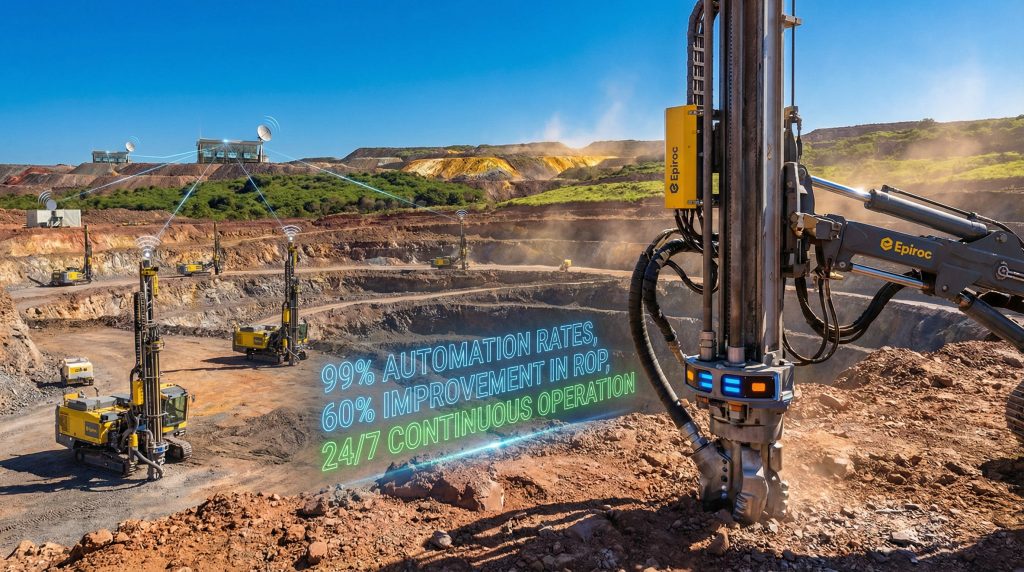
• Operational Continuity: 24/7 operation capabilities when properly maintained, effectively doubling or tripling drilling hours compared to traditional shift-based operations
• Parameter Optimisation: Real-time adjustment of drilling parameters based on geological conditions detected through downhole sensors
• Fleet Coordination: Centralised control systems managing multiple drilling units simultaneously to optimise site-wide drilling sequences
Rate of penetration improvements result from continuous optimisation of weight-on-bit, rotational speed, and drilling fluid circulation parameters. Autonomous systems process sensor data faster than human operators can respond to changing drilling conditions, maintaining optimal drilling efficiency regardless of geological variations encountered during drilling operations.
Cost Reduction Through Automation Implementation
The financial benefits of autonomous drilling technology extend beyond productivity improvements to encompass multiple cost reduction categories. Labour cost elimination represents the most obvious benefit, as autonomous systems eliminate the need for specialised drilling operators at remote mining locations.
Transportation and accommodation costs for drilling personnel can represent significant operational expenses, particularly for remote mining operations in Brazil's interior regions. Autonomous systems eliminate these recurring costs while providing more consistent operational performance than traditional crew-based operations.
Equipment maintenance costs often decrease through optimised operational parameters that reduce mechanical wear on drilling components. Autonomous systems avoid operational practices that cause excessive equipment stress, such as inappropriate drilling parameter combinations or operator-induced equipment abuse that commonly occurs in traditional operations.
Fuel consumption optimisation through AI-driven route planning and operational sequencing reduces operational costs while supporting environmental compliance objectives. Autonomous systems calculate optimal drilling sequences that minimise equipment repositioning and idle time between drilling locations. Additionally, ai mining efficiency continues to drive cost reductions across multiple operational parameters.
Safety Advantages and Risk Mitigation Benefits
Autonomous drilling technology delivers quantifiable safety improvements that extend beyond worker protection to encompass comprehensive risk mitigation across mining operations. The complete elimination of human operators from hazardous drilling environments represents the most significant safety advancement, particularly in blast mining applications where personnel traditionally work in proximity to explosive materials.
Hazardous Environment Risk Elimination
Traditional surface mining drilling operations expose personnel to multiple simultaneous hazards including blast zone proximity, equipment interaction dangers, and unstable ground conditions. Autonomous systems eliminate these exposure categories entirely by removing human operators from active drilling locations while maintaining operational effectiveness through remote supervision.
Primary safety hazard elimination includes:
• Blast Zone Exposure: Complete removal of personnel from areas containing loaded explosives
• Equipment Interaction Hazards: Elimination of operator contact with rotating drill strings and high-pressure hydraulic systems
• Ground Instability Risks: Remote operation capabilities allowing drilling in unstable geological conditions without personnel exposure
• Environmental Hazards: Protection from toxic gases, extreme weather conditions, and remote location emergency response challenges
Remote operation centres enable comprehensive hazard monitoring through multiple sensor inputs including video surveillance, real-time drilling parameter displays, geological sensors, and equipment status indicators. This monitoring capability often provides superior hazard recognition compared to on-site personnel who may have limited visibility of developing dangerous conditions.
Emergency Response Enhancement
Autonomous systems incorporate programmable safety limiting parameters that automatically prevent dangerous operational conditions before they develop into emergency situations. Maximum weight-on-bit limits, rotational speed restrictions, and trajectory deviation boundaries provide automated safety management that responds faster than human operators could manually intervene.
Emergency stop capabilities accessible from remote operation centres enable immediate drilling cessation when hazardous conditions develop. This remote intervention capability proves particularly valuable in situations where on-site personnel evacuation would be required before traditional drilling operations could safely cease.
Environmental monitoring integration allows autonomous systems to detect and respond to atmospheric hazards, ground stability changes, and weather conditions that could compromise operational safety. Automated responses to these conditions protect both equipment and personnel while maintaining operational continuity when conditions improve.
Major Mining Companies Leading Autonomous Technology Adoption
Vale's strategic commitment to autonomous drilling technology represents Brazil's most significant deployment of advanced mining automation systems. The company's comprehensive automation strategy encompasses multiple mining operations across different commodities and geological environments, providing extensive operational validation for autonomous drilling applications.
Vale's Autonomous Fleet Expansion Strategy
Vale's autonomous drilling implementation follows a systematic validation and scaling approach that began with trial operations at the Sossego copper mine in 2021. This five-year validation period provided comprehensive operational data supporting the company's 2026 decision to deploy sixteen additional autonomous drilling units across its major mining operations.
Implementation Timeline and Scope:
• 2021-2025: Comprehensive trials at Sossego copper mine validating autonomous drilling performance
• January 2026: Order placement for 9 Sandvik DR416i rotary drills and additional DTH drilling equipment
• 2026-2029: Phased delivery and deployment across Sossego, Salobo, Carajás, Brucutu, and Itabira operations
• Strategic Objective: Integration of autonomous drilling across Vale's primary copper and iron ore operations
The geographic distribution of Vale's autonomous drilling deployment encompasses multiple Brazilian states and geological formations. Sossego and Salobo copper mines in Pará state provide initial deployment sites, with expansion planned to iron ore operations including the massive Carajás complex and the Brucutu and Itabira mines in Minas Gerais state.
This multi-site deployment strategy enables Vale to validate autonomous drilling technology performance across diverse geological conditions while building internal expertise in autonomous system operation and maintenance. The phased implementation approach manages deployment risks while allowing systematic optimisation of autonomous drilling procedures across different mining environments.
International Technology Partnerships
Brazil's autonomous drilling technology adoption benefits from international partnerships that bring advanced automation capabilities to Brazilian operations. Sandvik's collaborative efforts with Brazilian mining companies demonstrate successful technology transfer initiatives.
The technology transfer inherent in these partnerships enhances Brazil's domestic automation capabilities while providing international suppliers with valuable operational data from diverse geological environments. This knowledge exchange accelerates autonomous technology development while building local technical expertise in advanced mining automation systems.
Service and support infrastructure development accompanies technology deployment, creating domestic expertise in autonomous system maintenance, troubleshooting, and optimisation. This capability development ensures long-term operational sustainability while reducing dependence on international technical support for routine autonomous system management.
The next major ASX story will hit our subscribers first
Offshore Autonomous Drilling Supporting Brazil's Energy Sector
Brazil's offshore petroleum industry increasingly relies on autonomous drilling technology to access deepwater presalt formations that represent some of the world's most challenging drilling environments. These geological conditions demand precision and operational consistency that autonomous systems provide more reliably than traditional manual drilling operations.
Presalt Formation Drilling Challenges
Presalt petroleum reserves exist beneath thousands of metres of ocean depth and additional kilometres of complex salt formations that create extreme drilling conditions. Temperatures, pressures, and geological complexity in these formations require continuous real-time adjustment of drilling parameters to maintain wellbore stability and trajectory accuracy.
Technical drilling challenges include:
• Trajectory Precision: Maintaining planned wellbore paths through complex fault structures and varying rock properties
• Real-time Optimisation: Continuous adjustment of drilling parameters based on downhole geological conditions
• Operational Continuity: 24/7 drilling operations in remote offshore locations with limited personnel support
• Emergency Response: Rapid intervention capabilities when drilling conditions become hazardous
Autonomous drilling systems address these challenges through integrated sensor networks, AI-driven parameter optimisation, and remote operation capabilities that eliminate human limitations in complex drilling environments. The technology enables continuous drilling operations with precision levels that exceed manual drilling capabilities.
Advanced Offshore Automation Technologies
Offshore autonomous drilling technology encompasses multiple integrated systems that coordinate drilling operations from surface equipment through downhole trajectory guidance. These systems process vast amounts of real-time data to optimise drilling performance while maintaining safety standards in challenging offshore environments.
DrillPilot automated drilling systems optimise drilling parameters continuously based on real-time geological conditions detected through measurement-while-drilling sensors. This automated optimisation maintains efficient drilling rates while preventing costly drilling problems such as stuck pipe, wellbore instability, or trajectory deviation.
DrillOps integrated surface automation coordinates multiple drilling functions including mud circulation, rotary systems, and pipe handling equipment. This integration enables automated drilling sequences that improve efficiency while reducing human error potential in complex offshore operations.
Neuro machine learning systems analyse historical drilling data to predict optimal drilling parameters for specific geological conditions. These predictive capabilities enable proactive drilling parameter adjustment rather than reactive responses to drilling problems. Furthermore, SLB's autonomous drilling developments demonstrate the technology's growing maturity in Brazilian waters.
Implementation Challenges and Technical Integration Complexities
Autonomous drilling technology deployment in Brazil faces multiple technical and operational challenges that require systematic solutions to achieve successful implementation. These challenges encompass technology integration, infrastructure development, workforce transition, and cybersecurity considerations that affect autonomous system effectiveness.
Technology Integration and Standardisation Issues
Compatibility between different autonomous drilling platforms presents significant technical challenges, particularly as mining operations seek to integrate multiple equipment suppliers within single mining sites. Standardisation of communication protocols, data formats, and control interfaces remains essential for effective fleet coordination across multi-vendor autonomous systems.
Communication infrastructure requirements in remote Brazilian mining locations often exceed existing capabilities, necessitating substantial investments in cellular networks, satellite communication systems, or dedicated wireless infrastructure. Reliable high-bandwidth communication proves essential for real-time control and monitoring of autonomous drilling operations from centralised control centres.
Critical integration challenges include:
• Multi-platform Compatibility: Ensuring seamless operation between different manufacturer's autonomous systems
• Communication Reliability: Maintaining consistent connectivity in remote mining locations
• Data Standardisation: Establishing common protocols for sensor data and system control interfaces
• Cybersecurity Protection: Securing autonomous systems against potential cyber threats that could compromise operational safety
Workforce Transition and Skills Development
The transition from traditional drilling operations to autonomous drilling technology requires comprehensive workforce development programmes that address both displaced drilling operators and new technical roles required for autonomous system operation and maintenance.
Traditional drilling operators possess valuable geological knowledge and equipment understanding that remains relevant in autonomous operations, though their roles transition from direct equipment operation to supervisory monitoring and troubleshooting functions. Retraining programmes must leverage existing operator expertise while developing new technical skills required for autonomous system management.
Remote operation centre staffing requires different skill sets compared to traditional on-site drilling operations. Personnel must understand multiple autonomous systems simultaneously while interpreting real-time data displays, geological conditions, and equipment status indicators across multiple drilling locations.
Maintenance expertise for sophisticated autonomous systems demands advanced technical training in electronics, hydraulic systems, and software troubleshooting. This maintenance capability proves essential for maximising autonomous system availability and operational effectiveness in remote mining environments.
Economic Impact and Investment Analysis
Autonomous drilling technology implementation in Brazil represents substantial capital investments that generate measurable economic returns through operational efficiency improvements, cost reductions, and enhanced competitive positioning in global commodity markets.
Capital Investment Requirements and Financial Returns
Vale's autonomous drilling equipment order represents investments in the hundreds of millions of dollars range, though specific financial details have not been publicly disclosed. These capital commitments reflect expected operational benefits that justify substantial upfront investments through long-term cost savings and productivity improvements.
Investment categories encompass:
• Equipment Acquisition: Purchase costs for autonomous drilling rigs and associated support systems
• Infrastructure Development: Communication networks, remote operation centres, and maintenance facilities
• Training and Development: Workforce retraining and skills development programmes
• Integration Costs: System integration, commissioning, and operational optimisation expenses
Return on investment calculations must consider multiple benefit categories including labour cost elimination, productivity improvements, safety cost reductions, and enhanced operational flexibility. The elimination of on-site drilling operators generates immediate labour cost savings while productivity improvements increase mining output without proportional equipment investment increases.
Supply Chain and Economic Development Effects
Autonomous drilling technology deployment creates economic development opportunities through local manufacturing partnerships, service industry growth, and technology transfer initiatives that enhance Brazil's domestic automation capabilities.
Service industry expansion accompanies autonomous technology deployment, creating opportunities for local companies to provide maintenance, training, and technical support services for autonomous drilling operations. This service industry growth generates employment opportunities that partially offset job displacement from traditional drilling operations.
Technology transfer agreements with international equipment suppliers can enhance domestic manufacturing capabilities while reducing long-term dependence on imported autonomous systems. Local manufacturing partnerships create opportunities for Brazilian companies to participate in autonomous technology supply chains while developing exportable expertise.
Export potential for Brazilian-adapted autonomous drilling solutions may emerge as other Latin American countries evaluate similar technology deployments. Brazil's experience with diverse geological conditions and remote operational environments could create competitive advantages in autonomous technology applications for similar international markets.
Future Evolution and Technology Development Roadmap
Autonomous drilling technology in Brazil continues evolving through artificial intelligence advancement, communication infrastructure development, and integration with broader mining automation ecosystems that will fundamentally transform resource extraction operations over the coming decade.
Emerging Technology Integration Pathways
Artificial intelligence capabilities in autonomous drilling systems continue advancing through machine learning applications that analyse vast datasets from multiple drilling operations. These AI improvements enhance predictive capabilities for geological conditions, equipment maintenance requirements, and operational optimisation opportunities.
5G network deployment across Brazil's mining regions will enable enhanced real-time control capabilities and comprehensive sensor data transmission from autonomous drilling operations. Higher bandwidth communication capabilities support more sophisticated autonomous functions including high-definition video monitoring, detailed geological analysis, and rapid emergency response coordination.
Technology development priorities include:
• AI Enhancement: Advanced machine learning algorithms for predictive drilling optimisation
• Communication Advancement: 5G and satellite communication integration for improved connectivity
• Sensor Technology: Enhanced geological sensing and real-time formation evaluation capabilities
• Integration Platforms: Comprehensive mining automation ecosystems encompassing multiple equipment types
Predictive maintenance systems utilising IoT sensors and data analytics will reduce autonomous system downtime while optimising maintenance scheduling and parts inventory management. These predictive capabilities prove particularly valuable in remote mining locations where equipment failures can cause extended operational disruptions.
Market Expansion and Growth Projections
Brazil's autonomous drilling technology market expansion trajectory indicates substantial growth across multiple sectors over the next decade. Current deployments in copper and iron ore mining represent initial implementations that will expand to additional commodities and geological environments as technology validation continues.
Growth indicators suggest:
• 2026-2028: Expansion from pilot implementations to commercial-scale deployments across major mining operations
• 2029-2031: Cross-sector adoption extending from mining to construction and infrastructure development applications
• Beyond 2031: Integration with comprehensive smart mining ecosystems incorporating autonomous haulage, processing, and logistics systems
International market expansion potential emerges as Brazilian companies develop autonomous drilling expertise and operational experience that could prove valuable in similar geological and operational environments throughout Latin America and other emerging mining regions.
Strategic Competitive Advantages Through Drilling Automation
Brazil's early adoption of autonomous drilling technology creates strategic competitive advantages that extend beyond immediate operational benefits to encompass enhanced international market positioning and attraction of foreign investment in advanced mining technologies.
Global Market Positioning Benefits
Autonomous drilling technology implementation provides measurable competitive advantages in international commodity markets through reduced production costs, improved operational reliability, and enhanced safety performance. These operational improvements translate directly into better profit margins during commodity price cycles while providing operational flexibility during market downturns.
Technology leadership in Latin American mining positions Brazil as a preferred destination for international mining investment and partnerships. Companies seeking to deploy advanced mining technologies often prefer jurisdictions with demonstrated experience and supporting infrastructure for autonomous operations.
Enhanced operational efficiency through autonomous systems enables Brazilian mining operations to remain competitive during commodity price downturns that force higher-cost operations to cease production. This competitive resilience proves particularly valuable in cyclical commodity markets where operational efficiency determines survival during challenging market conditions.
Strategic Resource Development Capabilities
Autonomous drilling technology enables access to previously uneconomical mineral deposits through improved operational efficiency and reduced extraction costs. Precision drilling capabilities combined with reduced operational costs can make marginal deposits economically viable while improving recovery rates from existing operations.
Enhanced precision in exploration and resource evaluation through autonomous drilling systems provides better geological data for mine planning and resource modelling. This improved geological understanding enables more efficient extraction sequences while reducing operational risks associated with unexpected geological conditions.
Environmental compliance advantages through precise drilling operations support sustainable mining practices that increasingly influence international investment decisions and commodity market access. Autonomous systems' reduced environmental footprints align with evolving environmental standards while maintaining operational effectiveness.
Disclaimer: This analysis contains forward-looking statements and projections based on current industry trends and available data. Actual technological development, market adoption rates, and economic impacts may differ from projections presented. Investment decisions should consider multiple factors beyond technological capabilities, including commodity price volatility, regulatory changes, and broader economic conditions affecting mining and energy sectors.
Are You Watching Brazil's Mining Revolution?
Brazil's autonomous drilling transformation demonstrates how technological innovation unlocks substantial returns in resource extraction. Discovery Alert's proprietary Discovery IQ model provides instant notifications on significant ASX mineral discoveries, delivering real-time alerts that position subscribers ahead of market-moving announcements in mining technology and resource development. Begin your 30-day free trial today to capitalise on emerging opportunities in the evolving mining sector.