July 30, 2026
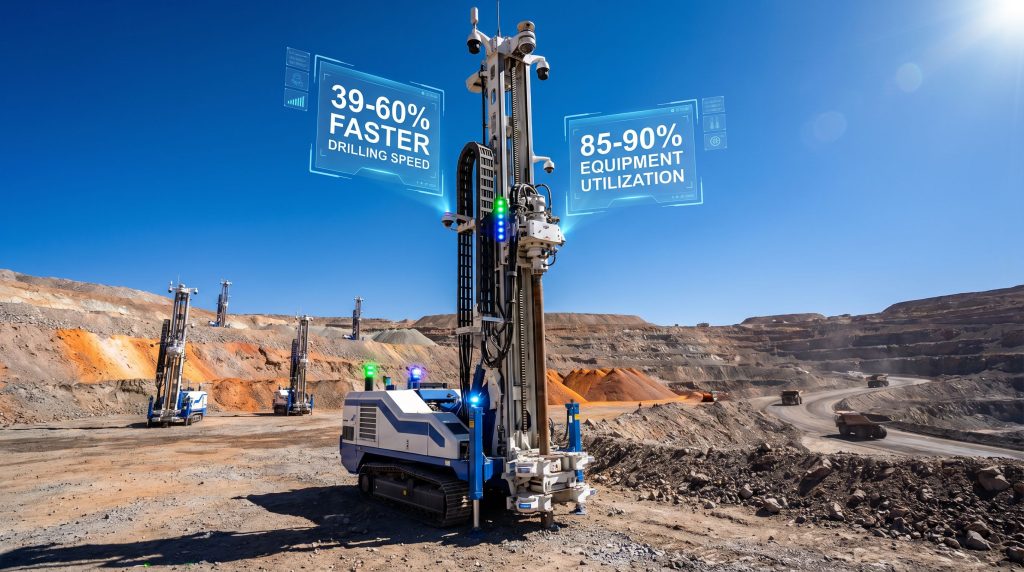
The mining industry stands at a technological crossroads where traditional extraction methods increasingly clash with the demands of modern operational efficiency. As global mineral demand surges and labour shortages intensify across remote mining locations, operators face mounting pressure to reimagine their fundamental approaches to resource extraction. This convergence of market forces has accelerated the adoption of sophisticated automation technologies that promise to transform not just drilling operations, but the entire mining value chain through AI drilling innovation.
What Is Autonomous Drilling Technology and Why Does It Matter?
Autonomous drilling technology represents a paradigm shift from conventional drilling operations, where human operators directly control equipment, to systems capable of independent decision-making and adaptive responses to changing geological conditions. This transformation extends far beyond simple automation, encompassing sophisticated integration of artificial intelligence, machine learning algorithms, and real-time sensor networks that create unified operational ecosystems.
Core Components of Modern Autonomous Drilling Systems
The foundation of autonomous drilling lies in the distinction between basic automation and true operational autonomy. While automation executes pre-programmed tasks, autonomous systems demonstrate adaptive decision-making capabilities that respond to real-time conditions without human intervention.
Furthermore, the mining industry evolution drives these technological advances. Key technological components include:
• Advanced artificial intelligence processors that analyse geological data in real-time
• Machine learning algorithms that improve drilling efficiency through pattern recognition
• Internet of Things (IoT) connectivity enabling seamless data exchange across mining operations
• Predictive analytics engines that optimise drilling parameters based on subsurface conditions
Recent implementations demonstrate how these components work synergistically. At Mariana Minerals' Copper One operation in southeastern Utah, Turner Caldwell, the company's CEO, explains this integration philosophy: when drilling becomes part of an operating system, it transforms from simply executing plans to informing and improving subsequent mining activities.
The Technology Stack Behind Autonomous Operations
Modern autonomous drilling systems rely on sophisticated positioning technologies that function effectively in GPS-denied underground environments. These systems utilise inertial navigation, laser guidance, and magnetic positioning to maintain precise drilling accuracy regardless of satellite connectivity limitations.
In addition, underground mining tech plays a crucial role in these developments. Critical technology stack elements include:
• Advanced positioning systems utilising multiple navigation methods
• Real-time geological data processing capabilities that interpret subsurface conditions
• Predictive maintenance algorithms monitoring equipment health continuously
• Equipment health monitoring systems preventing unexpected failures
The integration of these technologies creates operational capabilities that extend beyond traditional drilling metrics. As Mats Eriksson, Sandvik Mining President, observes, autonomous systems deliver safer, more productive, and crucially, more insightful drilling operations that generate actionable intelligence for mine-wide optimisation.
When big ASX news breaks, our subscribers know first
How Do Autonomous Drilling Systems Actually Work in Practice?
The operational reality of autonomous drilling involves complex coordination between multiple technological systems working in harmony to execute precise drilling programmes while adapting to changing conditions. Understanding these practical workflows reveals how theoretical capabilities translate into measurable operational improvements.
Surface Mining Applications and Operational Workflows
Surface autonomous drilling operations centre on fleet coordination protocols that manage multiple drilling units simultaneously. Rather than operating individual machines in isolation, modern systems coordinate entire fleets through centralised software platforms that optimise positioning, drilling sequences, and resource allocation across the mining site.
Moreover, next-generation automation technologies are revolutionising these processes. Operational workflow components:
- Fleet positioning optimisation – Software algorithms determine optimal drilling unit placement based on geological surveys and production schedules
- Blast design integration – Drilling data feeds directly into blast design software, refining explosive placement and timing
- Material routing coordination – Drilling outcomes inform haul truck routing and processing plant scheduling
- Real-time adaptation protocols – Systems adjust drilling parameters automatically when encountering geological variations
The Mariana Minerals implementation at Copper One demonstrates this integrated approach. Their MarianaOS platform processes continuous streams of drill activity, machine telemetry, and geological data, enabling decision-making across the entire mining operation rather than treating drilling as an isolated function.
Underground Mining Challenges and Solutions
Underground autonomous drilling presents unique technical challenges that surface operations rarely encounter. Navigation in complex underground environments requires sophisticated positioning technologies that function without GPS signals, while battery-electric systems must incorporate autonomous charging protocols to maintain operational continuity.
Consequently, autonomous drilling solutions address these specific challenges. Underground-specific solutions include:
• Navigation technologies utilising laser scanning and magnetic compass systems for precise positioning
• Battery-electric autonomous systems with predictive charging algorithms that optimise power management
• Safety protocols establishing human-machine interaction zones with automatic shutdown procedures
• Ventilation integration coordinating drilling operations with underground air quality management systems
Recent advances in autonomous drilling technology include Sandvik's DD423i, a next-generation automated development drill rig launched in April 2026, which represents significant advancement in underground mining technology capabilities.
What Are the Measurable Benefits of Implementing Autonomous Drilling?
The transition to autonomous drilling technology delivers quantifiable improvements across multiple operational dimensions, extending far beyond simple productivity metrics to encompass safety, environmental impact, and strategic operational capabilities that compound throughout the mining value chain.
Productivity and Efficiency Metrics
Additionally, the data-driven mining future relies heavily on these technological advances. Operational transformation benefits include:
• Enhanced drilling precision reducing waste and optimising blast outcomes
• Continuous operation capabilities minimising downtime between shifts
• Predictive maintenance scheduling preventing unplanned equipment failures
• Data-driven optimisation improving drilling parameters through machine learning
The strategic value of autonomous drilling extends beyond immediate productivity gains. As Turner Caldwell emphasises, integrated autonomous drilling systems inform and improve everything that follows in the mining process, creating compounding benefits throughout the operational chain.
Safety and Environmental Impact Improvements
Autonomous drilling significantly reduces personnel exposure to hazardous drilling environments while delivering measurable environmental benefits through optimised operational patterns. These systems minimise human presence in dangerous zones while maintaining precise control over drilling operations.
Key safety and environmental advantages:
• Reduced personnel exposure to hazardous drilling environments and heavy machinery
• Lower carbon emissions through optimised drilling patterns and reduced equipment idle time
• Enhanced precision reducing environmental disturbance and waste generation
• Improved dust control through automated drilling parameter optimisation
Environmental benefits compound through improved blast design accuracy, which reduces overburden disturbance and minimises waste rock generation, supporting more sustainable mining practices.
Which Mining Companies Are Leading the Autonomous Drilling Revolution?
The autonomous drilling landscape features strategic partnerships between technology providers and mining operators, with implementations focusing on integrated systems rather than standalone equipment deployments. These collaborations demonstrate how autonomous drilling technology transforms entire mining operations rather than simply automating individual processes.
Major Technology Providers and Their Platforms
Sandvik emerges as a leading autonomous drilling technology provider with multiple platform offerings:
• AutoMine Surface Drilling – Integrated platform deployed at Mariana Minerals' Copper One operation
• DD423i – Next-generation automated development drill rig for underground operations
• Full-power drilling capabilities with automated pipe handling and fleet coordination
• Third-party software integration enabling compatibility with proprietary mining software systems
Sandvik's approach emphasises system integration rather than equipment replacement. Their AutoMine technology performs essential mechanical functions including full-power drilling and pipe handling while integrating with customer software platforms to create unified operational ecosystems.
Implementation Case Studies and Real-World Results
Mariana Minerals – Copper One Mine represents a comprehensive autonomous drilling implementation:
| Implementation Aspect | Details |
|---|---|
| Location | Southeastern Utah, United States |
| Commodity | Copper |
| Technology Platform | Sandvik AutoMine Surface Drilling |
| Integration Software | MarianaOS (proprietary) |
| Implementation Model | Full system integration |
| Strategic Objective | Fully autonomous mining operation |
| Data Integration | Drill activity, machine telemetry, geological data |
This implementation demonstrates the transition from manual machine handling to coordinated, software-led fleet management. The system introduces new technical roles focused on enhancing system performance, ensuring data quality, and optimising operations while allowing teams to concentrate on strategic decisions.
What Challenges Must Mining Companies Overcome for Successful Implementation?
Implementing autonomous drilling technology requires mining companies to navigate complex technical integration challenges while managing workforce transformation and addressing cybersecurity considerations that emerge from connected mining operations.
Technical Integration Complexities
The primary technical challenge involves integrating autonomous drilling systems with existing mining infrastructure and software platforms. The Mariana Minerals implementation illustrates this complexity, where Sandvik's AutoMine must function seamlessly with MarianaOS as part of a unified system rather than operating independently.
However, drill results interpretation becomes crucial in this context. Critical integration challenges include:
• Legacy equipment compatibility requiring retrofitting or replacement of existing systems
• Data standardisation across different manufacturer platforms and software systems
• API development enabling communication between autonomous drilling and mine management systems
• Cybersecurity protocols protecting connected mining operations from potential threats
Successful integration requires comprehensive planning that addresses both technical compatibility and operational workflow disruption during implementation phases.
Workforce Transformation and Skills Development
The transition to autonomous drilling technology fundamentally alters workforce requirements, shifting from equipment operation roles to system supervision and optimisation positions. This transformation demands comprehensive training programmes and strategic workforce planning.
Workforce transition elements:
• Role transformation from equipment operators to system supervisors and fleet managers
• New technical positions in data analysis, system optimisation, and predictive maintenance
• Training programme development for autonomous system management and troubleshooting
• Strategic decision focus allowing experienced personnel to concentrate on optimisation rather than routine operations
The Copper One implementation demonstrates this transition, where operators shift from manually handling machines to managing coordinated, software-led fleets while retaining oversight responsibilities and strategic decision-making authority.
How Will Autonomous Drilling Technology Evolve Over the Next Decade?
The trajectory of autonomous drilling technology points toward increasingly sophisticated AI capabilities, enhanced machine learning algorithms, and deeper integration with comprehensive mine-wide autonomous ecosystems that transform entire mining operations rather than individual processes.
Emerging Technology Trends and Capabilities
Future autonomous drilling developments focus on advanced AI models capable of predictive geological analysis that anticipates subsurface conditions before drilling encounters them. These capabilities will enable proactive optimisation rather than reactive adjustments.
Anticipated technological advances include:
• Predictive geological modelling using AI to anticipate subsurface conditions
• Enhanced machine learning for real-time drilling parameter optimisation
• Integrated mine ecosystems coordinating drilling with autonomous hauling and processing
• Advanced sensor networks providing comprehensive operational visibility
These developments will enable autonomous drilling systems to function as integral components of fully autonomous mining operations, where drilling intelligence informs every subsequent mining activity.
Market Projections and Investment Outlook
Market demand for autonomous drilling technology is driven by specific industry pressures, particularly in strategic markets like copper production. The United States currently imports approximately 50% of refined copper, with domestic demand expected to double by 2035 due to technological advancements.
Market drivers influencing adoption include:
• Supply chain security concerns driving domestic production capacity expansion
• Labour shortage mitigation in remote mining locations
• Operational efficiency requirements to compete in global markets
• Environmental compliance demands requiring precise operational control
These factors accelerate autonomous drilling adoption as mining companies seek technologies that address multiple operational challenges simultaneously.
The next major ASX story will hit our subscribers first
What Should Mining Executives Consider Before Implementing Autonomous Drilling?
Successful autonomous drilling technology implementation requires comprehensive strategic planning that addresses technology selection, phased deployment approaches, and long-term operational transformation objectives. Executive decision-making must balance immediate operational improvements with strategic positioning for future mining industry evolution.
Strategic Planning Framework for Autonomous Integration
Mining executives should approach autonomous drilling implementation through phased strategies that minimise operational disruption while building toward comprehensive autonomous capabilities. The Mariana Minerals approach demonstrates this philosophy through integrated system design rather than equipment replacement.
Strategic planning considerations include:
• Phased implementation timelines that maintain production continuity during technology deployment
• Cost-benefit analysis methodologies evaluating long-term value beyond immediate productivity gains
• Risk assessment protocols identifying potential implementation challenges and mitigation strategies
• Performance metrics definition establishing measurable success criteria for autonomous operations
Effective planning recognises that autonomous drilling success depends on system integration rather than equipment performance alone.
Vendor Selection and Partnership Strategies
Technology vendor selection requires evaluation beyond equipment capabilities to include integration support, long-term development roadmaps, and compatibility with existing mining software platforms.
Vendor evaluation criteria should encompass:
• Integration capabilities with existing mine management systems and software platforms
• Long-term support and technology upgrade pathways
• Proven implementation experience with similar mining operations and geological conditions
• Training and support programmes for workforce transition and system optimisation
The Sandvik-Mariana Minerals partnership exemplifies successful vendor collaboration, where technology provider capabilities align with operator strategic objectives to create integrated autonomous systems.
Frequently Asked Questions About Autonomous Drilling Technology
Technical Implementation Questions
How long does it typically take to implement autonomous drilling systems?
Implementation timelines vary significantly based on operational complexity and integration requirements. Surface operations generally deploy faster than underground systems due to reduced technical challenges, while integrated implementations like Copper One require comprehensive planning phases.
What level of internet connectivity is required for autonomous operations?
Autonomous drilling systems require reliable data connectivity for real-time coordination and remote monitoring. However, systems incorporate local processing capabilities to maintain operations during connectivity disruptions. Underground operations utilise private network infrastructure rather than standard internet connectivity.
Can autonomous systems operate effectively in extreme weather conditions?
Modern autonomous drilling systems incorporate weather monitoring and adaptive protocols that adjust operations based on environmental conditions. Systems can maintain operations in conditions that might require human operator evacuation while implementing appropriate safety protocols.
Business and Operational Considerations
What is the typical return on investment timeline for autonomous drilling?
ROI timelines depend on implementation scale and operational complexity. Benefits accumulate through improved productivity, reduced labour costs, enhanced safety, and optimised downstream operations. The integrated nature of systems like those at Copper One creates compounding value that accelerates ROI realisation.
How do autonomous systems impact mine insurance and liability considerations?
Autonomous drilling can potentially reduce insurance premiums through improved safety records and reduced personnel exposure to hazards. However, operators must address new liability considerations related to system failures and cybersecurity risks with appropriate coverage.
What backup systems are required when autonomous operations fail?
Comprehensive autonomous implementations maintain manual override capabilities and backup operational protocols. Systems incorporate redundancy in critical components while maintaining capability for traditional drilling methods during system maintenance or unexpected failures.
The Future of Mining: Beyond Autonomous Drilling
The evolution of autonomous drilling technology represents the foundation for comprehensive mining transformation that extends throughout the entire mineral extraction and processing value chain. Future mining operations will leverage autonomous drilling intelligence to optimise every subsequent operational phase.
Integration with Broader Mine Automation Ecosystems
Autonomous drilling serves as the foundational intelligence layer for comprehensive mine automation:
• Coordination with autonomous hauling systems using drilling-generated route optimisation data
• Integration with automated processing plants receiving drilling-informed material quality predictions
• Connection to autonomous maintenance systems utilising drilling equipment telemetry for fleet optimisation
• Linkage to environmental monitoring systems incorporating drilling impact data for sustainability optimisation
This ecosystem approach transforms mining from a series of independent processes into an integrated, intelligent operation where each component informs and optimises every other system.
Implications for Global Mining Competitiveness
Autonomous drilling adoption patterns will significantly influence regional mining competitiveness and global commodity supply chains. Early adopters gain operational advantages that compound through improved efficiency, reduced costs, and enhanced safety performance.
Strategic implications include:
• Regional competitive advantages for early autonomous technology adopters
• Supply chain resilience through domestic production capacity enhancement
• Operational cost reduction enabling competition in global commodity markets
• Environmental performance improvements supporting sustainable mining practices
The Copper One implementation exemplifies this strategic positioning, where autonomous drilling enables domestic US copper production scaling to meet projected demand growth while reducing import dependency.
"This analysis involves forward-looking statements regarding autonomous drilling technology adoption, market projections, and operational improvements. Actual results may vary based on technological developments, market conditions, regulatory changes, and implementation challenges. Investment decisions should incorporate comprehensive due diligence and risk assessment beyond the scope of this analysis."
Autonomous drilling technology represents a transformative force reshaping mining operations through intelligent system integration rather than simple automation. Success depends on comprehensive planning, strategic vendor partnerships, and commitment to operational transformation that extends throughout the mining value chain. As the industry evolves toward fully autonomous operations, drilling intelligence will serve as the foundational layer enabling optimised, sustainable, and competitive mining operations worldwide.
Considering Autonomous Drilling Investments on the ASX?
Discovery Alert's proprietary Discovery IQ model delivers real-time alerts on significant mining technology discoveries, instantly empowering subscribers to identify actionable opportunities ahead of the broader market. Begin your 14-day free trial today and secure your market-leading advantage with Discovery Alert.