June 21, 2026
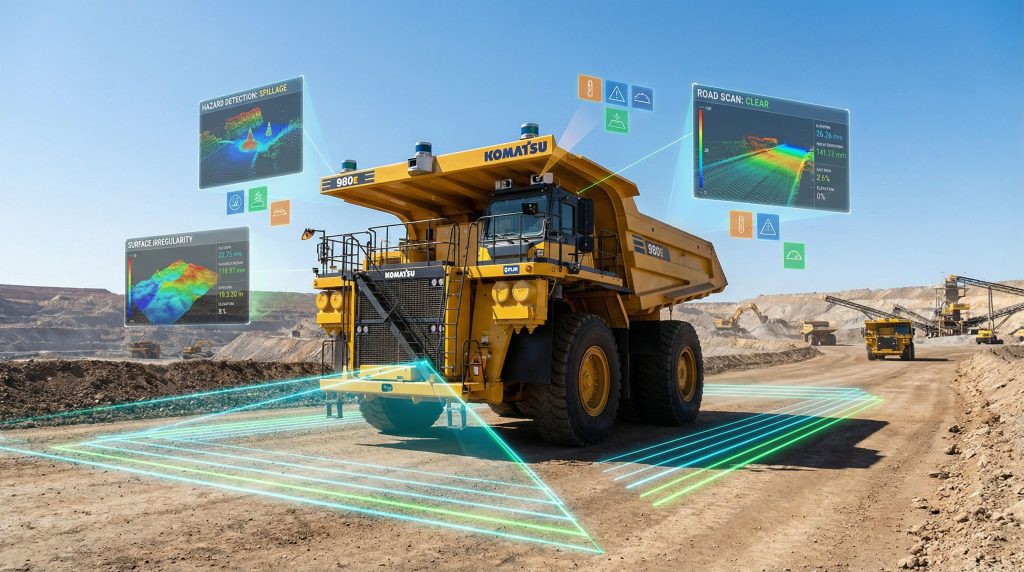
The mining industry faces mounting pressure to optimize operational efficiency while managing rising equipment costs and safety requirements. Traditional manual road inspection protocols, which rely on periodic visual assessments and reactive maintenance approaches, are proving inadequate for modern high-tonnage operations. The emergence of real-time autonomous haul road hazard detection represents a fundamental shift toward proactive infrastructure management.
Furthermore, autonomous road monitoring systems integrate sophisticated sensor arrays with existing fleet management infrastructure to provide continuous assessment of haul road conditions. Unlike conventional inspection methods that occur at scheduled intervals, these systems deliver instantaneous hazard identification throughout operational cycles. The technology bridges the gap between immediate safety concerns and long-term capital planning decisions.
The integration with established fleet management systems creates a comprehensive operational ecosystem. By connecting real-time hazard data with tire monitoring platforms and maintenance scheduling systems, mining operations can transform from reactive problem-solving to predictive asset management. This architectural approach enables seamless workflow integration without disrupting existing operational protocols.
The Business Case for Automated Road Safety Systems
Mining operations face substantial hidden costs associated with suboptimal road conditions. Equipment damage from unexpected impacts, accelerated tire wear from surface irregularities, and fuel inefficiencies from route obstacles compound into significant operational expenses. A comprehensive analysis reveals multiple cost centers that autonomous monitoring can address systematically.
Tire replacement costs represent one of the largest controllable expenses in mining operations. Heavy haul trucks operating on compromised road surfaces experience accelerated tread wear, sidewall damage, and premature failure. The cascading effects extend beyond replacement costs to include equipment downtime, emergency service calls, and production delays during tire changes.
Fuel consumption patterns directly correlate with road surface quality and gradient consistency. Trucks navigating around spillage, decelerating for undulations, and re-accelerating through compromised sections consume substantially more energy per cycle. These inefficiencies accumulate across fleet operations, particularly significant for electric vehicle deployments where energy management directly impacts operational range and battery longevity.
The safety implications extend beyond equipment protection to encompass operator well-being and regulatory compliance. For instance, enhanced safety operations demonstrate how modern safety protocols can reduce unexpected road hazards. Unexpected road hazards create sudden impact forces that stress vehicle frames, suspension components, and operator compartments.
When big ASX news breaks, our subscribers know first
How LiDAR-Based Hazard Detection Technology Works
Advanced sensor integration forms the foundation of autonomous hazard detection systems. LiDAR technology provides precise distance measurement capabilities, creating detailed three-dimensional maps of road surfaces in real-time. Camera sensors complement LiDAR data with visual confirmation of detected anomalies, reducing false positive rates through multi-modal verification.
The sensor architecture typically employs front and rear-mounted arrays to achieve comprehensive coverage during operational cycles. Front-mounted sensors detect upcoming hazards in the vehicle's trajectory, while rear-mounted systems identify spillage and trailing hazards that could impact following vehicles. This configuration ensures complete circuit monitoring throughout hauling operations.
Edge computing systems process sensor data locally rather than transmitting information to centralised cloud platforms. This architectural decision prioritises response time over processing power, enabling instant alert generation when hazards are detected. The reduced latency proves critical for real-time operational decision-making, particularly in ai in mining applications where milliseconds can determine collision avoidance success.
Pattern recognition algorithms analyse sensor data streams to categorise different hazard types. Spillage detection relies on visual pattern matching combined with surface contour analysis. Undulation measurement employs precise elevation mapping to identify surface irregularities exceeding operational thresholds. G-force event classification processes vibration and acceleration data to assess impact severity and structural stress levels.
Primary Hazard Categories and Detection Capabilities
Autonomous haul road hazard detection systems identify four primary hazard categories that impact mining operations. Spillage detection encompasses cargo overflow, debris accumulation, and foreign material on roadways. These hazards create both direct commodity loss and potential tire damage through sharp objects or unstable surface conditions.
Surface irregularities include pothole formation, undulation development, and gradient inconsistencies that force vehicles to decelerate and navigate around obstacles. The energy waste from repeated acceleration cycles compounds fuel consumption issues while extending cycle times throughout operational shifts.
High G-force events occur when vehicles impact unexpected road features at operational speeds. A 400-tonne haul truck encountering sudden undulations experiences significant spillage potential, tire hazard exposure, and structural stress to frame components and suspension systems. These events prove particularly problematic for autonomous operations where human perception and adjustment capabilities are absent.
Weather-related conditions represent the fourth hazard category, encompassing ice formation, water accumulation, and visibility reduction from dust or precipitation. Cold weather testing conducted over 18 months on Canadian mine sites demonstrated system effectiveness in sub-zero operational environments, validating year-round deployment capabilities.
Detection accuracy varies by hazard type and environmental conditions. Spillage identification achieves high confidence levels through combined visual and sensor confirmation. Surface undulation measurement relies on elevation threshold parameters that can be adjusted for site-specific requirements. G-force event classification employs severity scoring to prioritise maintenance responses based on operational impact potential.
Integration with Fleet Management Systems
System integration extends beyond hazard detection to encompass comprehensive fleet management workflows. The connection with established tire monitoring platforms creates unified asset management capabilities. Detected hazards trigger automated work order generation through priority-based algorithms that assess severity and operational impact.
The TOMS (Tire & Operations Managing System) connectivity enables condition monitoring experts to evaluate flagged issues within existing workflow structures. Rather than creating parallel monitoring systems, the integration approach enhances established protocols with real-time data streams. This architectural decision reduces training requirements while maximising existing infrastructure investments.
Fleet coordinators receive instant alerts when hazards are detected, enabling immediate response decisions. The system can guide truck operators to alternative loading or dumping locations to avoid identified hazards. This real-time feedback capability proves particularly valuable given that no two mines share identical road characteristics or operational requirements.
However, long-term planning capabilities emerge from accumulated hazard data analysis. The system calculates comparative costs between immediate road improvements and ongoing operational losses from tire damage, fuel inefficiency, and productivity impacts. This quantitative analysis supports data-driven mining capital investment decisions for infrastructure upgrades versus continued reactive maintenance approaches.
Implementation and Operational Integration
Successful deployment requires careful consideration of existing operational workflows and infrastructure capabilities. The installation process involves mounting sensor arrays to haul trucks while ensuring compatibility with current maintenance protocols. Communication infrastructure must support real-time data transmission between vehicles and fleet management systems.
Training protocols encompass multiple organisational levels, from equipment operators to maintenance coordinators and fleet managers. The transition from reactive to proactive hazard management requires cultural adaptation alongside technological implementation. Clear performance metrics and reporting frameworks help demonstrate system value while identifying optimisation opportunities.
Site-specific calibration ensures detection algorithms adapt to unique operational conditions. Threshold parameters for different hazard types require adjustment based on road characteristics, vehicle specifications, and operational tolerances. The system's adaptability to diverse mining environments represents a critical success factor for widespread adoption.
Performance optimisation occurs through continuous data analysis and algorithm refinement. Machine learning capabilities enable the system to improve detection accuracy over time while reducing false positive rates. Fleet data aggregation across multiple sites can inform predictive maintenance scheduling and proactive road improvement planning.
Measurable Benefits and Performance Improvements
Operational improvements manifest across multiple performance categories, with tire life extension representing the most immediately measurable benefit. Prevention of damage before occurrence eliminates costly emergency replacements and associated downtime. The shift from reactive to proactive maintenance scheduling reduces operational disruptions while optimising maintenance crew utilisation.
Fuel efficiency gains result from smoother operational routes and reduced acceleration cycles. Trucks avoiding hazards maintain consistent speeds rather than repeatedly slowing and accelerating around obstacles. For electric vehicle operations, these efficiency improvements directly translate to extended operational range and reduced charging frequency requirements.
Cycle time optimisation emerges from faster circuit completion enabled by optimal route selection. Real-time hazard avoidance eliminates delays from unexpected obstacles while guiding vehicles to most efficient loading and dumping positions. The cumulative effect across fleet operations produces measurable productivity improvements within weeks of deployment.
Capital investment planning benefits from quantitative data supporting infrastructure upgrade decisions. Rather than relying on periodic inspections and subjective assessments, mining operations can access continuous road condition monitoring with cost-impact analysis for different maintenance approaches. This data-driven decision support enables optimal allocation of capital resources between immediate repairs and long-term road improvements.
The next major ASX story will hit our subscribers first
Climate Adaptability and Environmental Performance
Cold weather operations present unique challenges for sensor-based detection systems. Sub-zero testing conducted across 18 months of Canadian mine site operations validated system performance in extreme conditions. Battery systems, processing units, and sensor arrays require winterisation protocols to maintain operational reliability throughout seasonal variations.
Dust and visibility challenges represent ongoing operational considerations for mining environments. LiDAR sensor performance in high-dust conditions requires regular maintenance protocols and lens cleaning procedures. Camera sensors need protective housings and automated cleaning systems to maintain visual confirmation capabilities during dusty operational periods.
Weather-adaptive algorithms adjust detection sensitivity based on environmental conditions. Rain and snow impact both sensor performance and road hazard characteristics, requiring dynamic threshold adjustments. Temperature-based calibration ensures consistent detection accuracy across seasonal operational variations while maintaining appropriate false positive rates.
Consequently, the system's environmental adaptability extends to diverse geological conditions and mining methods. Surface operations face different challenges than underground applications, while open-pit environments present distinct visibility and communication requirements compared to underground tunnel networks.
Role in Autonomous Mining Operations
Autonomous vehicle integration multiplies the value proposition of real-time hazard detection systems. Without human operators to perceive and respond to unexpected road conditions, autonomous haul trucks rely entirely on sensor systems for hazard avoidance. The integration of road monitoring with vehicle navigation systems creates comprehensive autonomous operation capabilities.
Electric vehicle deployments particularly benefit from optimised route planning and smooth operational profiles. Battery conservation through efficient navigation extends operational range while reducing charging infrastructure requirements. The mechanical stress reduction from hazard avoidance preserves electric drivetrain components and extends maintenance intervals.
In addition, autonomous mining operations showcase how integrated sensor technologies enhance safety protocols across entire fleets. Future technology convergence points toward integrated autonomous dispatch systems that incorporate real-time road condition data into fleet optimisation algorithms.
The evolution toward fully autonomous mining operations depends heavily on comprehensive environmental monitoring capabilities. Road hazard detection represents one component of the sensor ecosystem required for safe and efficient unmanned operations, alongside developments in fully autonomous truck testing validation protocols.
Selection Criteria and Implementation Considerations
Mining operations evaluating autonomous detection systems must assess technical specifications against operational requirements. Sensor accuracy and range specifications should align with typical haul distances and vehicle speeds. Processing speed and latency considerations prove critical for real-time response effectiveness, particularly in autonomous vehicle applications.
Integration compatibility with existing fleet management systems determines implementation complexity and training requirements. Systems that enhance rather than replace established workflows typically achieve higher adoption rates and operational success. The ability to scale across multiple mine sites and vehicle types provides long-term value proposition benefits.
Cost-benefit analysis requires consideration of both immediate operational savings and long-term strategic advantages. Initial investment costs should be evaluated against quantifiable improvements in tire life, fuel efficiency, and productivity metrics. Maintenance and support cost projections help determine total cost of ownership throughout system lifecycle.
Vendor selection criteria should emphasise technology maturity and proven performance in similar operational environments. Support infrastructure and training capabilities determine implementation success rates while long-term development roadmaps ensure continued system relevance as mining operations evolve toward increased automation.
Overcoming Implementation Challenges
Common deployment obstacles include integration complexity with legacy fleet management systems. Compatibility issues between new sensor technologies and established operational protocols can create implementation delays and cost overruns. Phased rollout strategies help identify integration challenges early while minimising operational disruptions.
Staff training requirements encompass both technical system operation and cultural adaptation to proactive maintenance approaches. New technology adoption curves vary significantly among operational teams, requiring comprehensive training programs and ongoing support resources. Clear performance metrics help demonstrate system value while addressing initial scepticism.
Data management challenges emerge from the substantial information volumes generated by continuous monitoring systems. Operations must develop appropriate analysis capabilities and reporting frameworks to transform raw sensor data into actionable operational insights. Information overload and analysis paralysis represent common obstacles that require systematic data management protocols.
Success factors for long-term adoption include executive leadership commitment and sustained support throughout implementation phases. Cross-departmental collaboration between IT and operations teams ensures technical capabilities align with operational requirements. Continuous improvement culture and feedback integration enable system optimisation based on actual operational experience.
Future of Mining Road Safety Technology
The trajectory toward comprehensive autonomous mining operations will accelerate adoption of integrated monitoring systems. Road hazard detection represents one component of the sensor ecosystem required for unmanned operations, with continued technology advancement expected to improve detection accuracy while reducing implementation costs.
Integration with broader digital mining transformation initiatives positions road monitoring as part of comprehensive operational optimisation platforms. Predictive analytics capabilities will evolve from reactive hazard detection to proactive infrastructure planning based on operational patterns and equipment performance data.
Furthermore, mining innovation trends indicate increasing industry focus on integrated technology solutions for operational efficiency. Industry events such as the innovation expo 2025 highlight emerging technologies and collaborative approaches to mining safety challenges.
Mining operations planning technology adoption should assess current operational readiness alongside long-term strategic objectives. Implementation timeline considerations must account for training requirements, integration complexity, and change management challenges while positioning for competitive advantage through operational efficiency improvements.
The evolution of autonomous haul road hazard detection technology represents a fundamental shift toward data-driven operational optimisation in mining. As the industry continues advancing toward fully autonomous operations, comprehensive environmental monitoring capabilities will prove essential for maintaining safety standards while achieving productivity improvements and cost optimisation objectives.
Are You Ready to Capitalise on Mining Technology Breakthroughs?
As mining operations embrace revolutionary technologies like autonomous haul road hazard detection, savvy investors are positioning themselves to benefit from the companies pioneering these transformative solutions. Discovery Alert's proprietary Discovery IQ model delivers instant notifications on significant ASX mineral discoveries, enabling subscribers to identify actionable opportunities in mining technology stocks ahead of the broader market. Begin your 30-day free trial today and secure your competitive advantage in discovering the next breakthrough mining investment opportunity.