
June 10, 2026
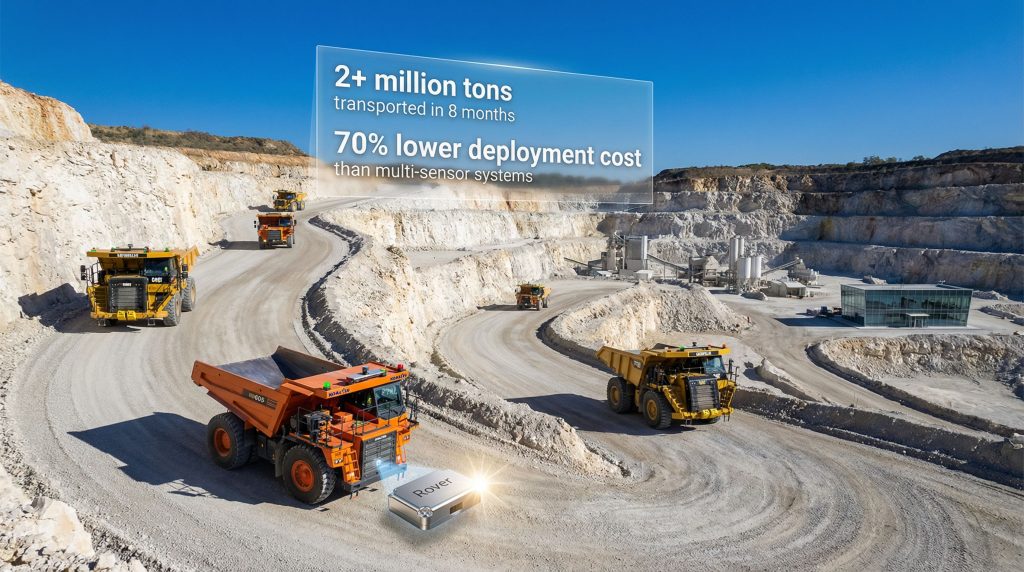
Autonomous haulage system in quarry automation has emerged as a transformative force in heavy machinery operations, particularly within aggregate production environments where operational flexibility outweighs the controlled conditions found in traditional mining operations. The fundamental architecture of vision-based systems relies on sophisticated camera arrays coupled with edge computing platforms that process environmental data in real-time, eliminating the traditional dependency on pre-mapped routes and external control systems. Furthermore, these advances align with broader mining innovation trends reshaping the industry landscape.
Understanding Vision-Based Navigation in Modern Aggregate Operations
Camera-Centric Processing Architecture
Modern vision-only systems utilise multiple high-resolution cameras positioned strategically around each vehicle to create comprehensive 360-degree environmental awareness. These systems process up to 30 frames per second through onboard AI algorithms capable of identifying obstacles, personnel, equipment, and terrain variations within milliseconds. The processing power required for this real-time analysis has decreased substantially, with current implementations requiring less than 5 Mbps of network bandwidth for fleet coordination operations.
The edge computing approach represents a fundamental shift from traditional centralised control models. Rather than transmitting raw video data to external processing centres, each vehicle contains sufficient computational power to make autonomous navigation decisions without continuous external input. This architecture proves particularly valuable in quarry environments where communication infrastructure may be intermittent or where network congestion from multiple vehicles could create operational bottlenecks.
Environmental Adaptability Advantages
Vision-based systems demonstrate superior adaptability to changing operational conditions compared to rigid mapping-dependent alternatives. Dynamic zone management capabilities enable autonomous vehicles to adapt automatically to shifting loading points, modified dump locations, and temporary obstacles without requiring engineering intervention or route reconfiguration. This flexibility addresses one of the primary operational challenges in aggregate production where work areas frequently change based on extraction patterns and customer demands.
However, environmental limitations exist for pure vision systems. Challenging weather conditions including heavy fog, dust storms, or low-light operations may require supplementary sensor integration. Industry analysis indicates that applications requiring consistent operation in adverse weather conditions or extended nighttime operations benefit from multi-sensor approaches incorporating LiDAR and radar technologies alongside primary vision systems.
When big ASX news breaks, our subscribers know first
Comparative Technology Analysis Across Sensor Platforms
Multi-Sensor Integration Benefits
Advanced autonomous haulage implementations increasingly utilise sensor fusion approaches that combine computer vision with complementary detection technologies. LiDAR sensors provide precise distance measurements and can penetrate dust or light precipitation that might challenge camera-based systems. For instance, Komatsu's autonomous haulage system demonstrates how radar technology offers reliable detection capabilities in extreme weather conditions and excels at identifying metallic objects and vehicles at extended ranges.
The integration complexity varies significantly between different technological approaches. Additionally, these developments complement broader data-driven mining operations that are revolutionising industry standards.
| Sensor Configuration | Initial Investment | Deployment Timeline | Weather Adaptability | Maintenance Demands |
|---|---|---|---|---|
| Vision-Only Systems | 70% below multi-sensor | 3-6 months | Moderate limitations | Minimal sensor upkeep |
| LiDAR-Enhanced Platforms | Traditional cost range | 6-12 months | Superior adverse weather | Regular calibration |
| Full Sensor Fusion | Highest capital requirement | 12-18 months | Maximum reliability | Complex maintenance protocols |
Deployment Speed Considerations
Recent implementations demonstrate significant variations in deployment timelines between technological approaches. Vision-primary systems achieve operational status more rapidly due to reduced sensor calibration requirements and simplified integration protocols. Consequently, innovative companies like Pronto AI have achieved 2 million tons of autonomous material transport within eight months, representing accelerated implementation compared to historical multi-sensor deployments that typically require 12-24 months to reach similar production volumes.
This deployment velocity advantage stems from several technical factors. Vision-based systems require minimal infrastructure modifications beyond basic communication networks, while multi-sensor platforms often necessitate specialised mounting hardware, dedicated power systems, and comprehensive sensor calibration procedures. Additionally, vision-only platforms can begin productive operations immediately upon installation, whereas complex sensor fusion systems typically require extended commissioning periods for optimal performance.
OEM-Agnostic Platform Integration
Mixed-fleet compatibility represents a critical advancement in autonomous haulage technology, addressing historical constraints that limited automation adoption among operators maintaining diverse equipment portfolios. Modern platforms demonstrate successful integration across multiple equipment manufacturers, including simultaneous operation of Caterpillar 775G rigid frame trucks alongside Komatsu HD605-8 and HD605-10 articulated dump trucks within single autonomous fleets.
This technological flexibility eliminates vendor lock-in constraints that previously forced operators to standardise entire fleets around single equipment manufacturers to access autonomous capabilities. The operational benefits extend beyond initial capital savings to encompass reduced parts inventory complexity, simplified maintenance protocols, and enhanced resale value retention across existing equipment assets.
Operational Performance Metrics in Production Environments
Material Transport Volume Achievements
Large-scale deployments provide quantifiable evidence of autonomous haulage system in quarry automation performance in real-world conditions. Recent operational data from major aggregate producers demonstrates substantial throughput improvements through consistent 24/7 operation capabilities. The elimination of shift changes, break periods, and human factor variations enables continuous productive cycles that traditional operations cannot maintain.
Production volume metrics from current deployments include:
- 2+ million tons transported in 8-month periods
- Equivalent to 20,000 fully-loaded freight train cars
- Continuous operation without shift interruptions
- Consistent cycle time optimisation through AI-driven route planning
Furthermore, these advances integrate with AI in drilling and blasting technologies to create comprehensive automated operations.
Safety Coordination Systems
Advanced safety architectures incorporate lightweight transponder systems that facilitate seamless coordination between autonomous haulers and human-operated equipment. These systems operate on different technical principles than proximity-based sensors, enabling dynamic interaction protocols that adapt to changing operational conditions without predetermined coordination patterns.
"Modern transponder systems enable real-time communication between autonomous and manual equipment, creating dynamic safety zones that adjust automatically based on operational conditions and personnel locations."
The safety performance improvements extend beyond collision avoidance to encompass predictable equipment behaviour that enhances overall site safety. Autonomous vehicles maintain consistent operational patterns, elimination erratic driving behaviours, and provide predictable interaction protocols that improve safety awareness among site personnel.
Cost Efficiency Analysis
Operational cost benefits from autonomous systems manifest across multiple categories:
- Fuel consumption reduction through optimised acceleration and deceleration patterns
- Extended tire life via consistent operational parameters and route optimisation
- Reduced labour costs through elimination of equipment operator positions
- Lower maintenance requirements compared to human-operated fleet segments
Financial analysis indicates that modern autonomous systems require investment levels that are an order of magnitude lower than traditional full-stack implementations that historically required hundreds of millions of dollars for large-scale deployments. This cost reduction enables access to autonomous technology for mid-sized operations previously excluded from automation adoption due to capital constraints.
Infrastructure Requirements for Autonomous Implementation
Communication Network Specifications
Effective autonomous operations require robust communication infrastructure capable of supporting real-time coordination between multiple vehicles while maintaining low latency for safety-critical functions. Current implementations operate effectively with bandwidth requirements below 5 Mbps for fleet coordination, with ongoing development targeting further reductions in network dependency.
The communication architecture must provide redundant pathways to ensure operational continuity during network interruptions. Edge computing capabilities enable extended periods of autonomous operation during communication outages, with vehicles continuing productive operations based on locally processed environmental data and pre-loaded operational parameters.
Site Infrastructure Modifications
Autonomous system deployment requires specific site modifications to support reliable operations:
- High-speed wireless coverage across all operational areas
- Redundant communication pathways for system reliability
- Edge computing infrastructure for reduced processing latency
- Comprehensive cybersecurity protocols protecting autonomous operations
However, these infrastructure requirements align with broader sustainable mining transformation initiatives that prioritise efficiency and environmental responsibility.
Maintenance Facility Adaptations
Supporting autonomous fleets requires specialised maintenance capabilities beyond traditional mechanical repair services. Facilities must incorporate diagnostic equipment capable of analysing autonomous system performance, troubleshooting sensor malfunctions, and updating software platforms. Technician training programmes become essential for maintaining electronic systems, camera calibration, and AI algorithm optimisation.
Parts inventory management must expand to include electronic components, specialised sensors, and computing hardware alongside traditional mechanical spare parts. Integration with existing maintenance schedules requires careful coordination to minimise impacts on autonomous operational availability. In addition, these systems can benefit from AI mill optimization principles applied to equipment management.
Technology Evolution and Market Expansion Trends
Artificial Intelligence Advancement Trajectories
Machine learning algorithms continue evolving toward improved environmental perception accuracy and enhanced decision-making capabilities in complex operational scenarios. Current developments focus on predictive maintenance algorithms that analyse equipment performance data to prevent failures before they impact operations, reducing unplanned downtime and maintenance costs.
Deep learning frameworks enable increasingly sophisticated environmental interpretation, including recognition of personnel behaviour patterns, prediction of equipment movement trajectories, and optimisation of multi-vehicle coordination in congested work areas. These capabilities enhance both operational efficiency and safety performance beyond current implementation levels.
Global Market Penetration Patterns
Industry engagement statistics indicate widespread adoption consideration among major aggregate producers. Current market analysis reveals active autonomous system evaluation or implementation across approximately 95% of major global quarrying companies, ranging from active fleet deployments to preliminary scoping assessments.
International expansion patterns demonstrate technology transfer from initial North American deployments to operations across Europe and Asia-Pacific regions. This geographic diversification validates system adaptability across varying regulatory environments, operational conditions, and equipment preferences in different markets.
Economic Driver Analysis
Multiple economic factors drive accelerating autonomous adoption:
- Labour shortage mitigation in markets experiencing skilled operator scarcity
- Operational cost reduction through improved fuel efficiency and equipment utilisation
- Safety performance improvement reducing insurance costs and regulatory exposure
- Sustainability goal advancement through optimised operational patterns
"Autonomous system deployment costs have decreased significantly compared to traditional implementations, making automation accessible to operators previously excluded from autonomous technology adoption due to capital constraints."
The next major ASX story will hit our subscribers first
Strategic Implementation Planning for Quarry Operators
Phased Deployment Strategy Framework
Successful autonomous implementation requires structured planning approaches that minimise operational disruption while maximising system benefits. Industry best practices indicate optimal deployment through three distinct phases.
Phase 1: Assessment and Preparation (Months 1-3)
- Comprehensive fleet analysis for autonomous system compatibility
- Site infrastructure evaluation for communication and power requirements
- Technology vendor selection based on operational priorities and budget constraints
- Personnel training programme development for system operation and maintenance
Phase 2: Pilot Implementation (Months 4-9)
- Limited deployment with 2-4 autonomous vehicles
- Performance monitoring systems installation and optimisation
- Safety protocol validation and refinement procedures
- Integration testing with existing quarry management systems
Phase 3: Full-Scale Deployment (Months 10-18)
- Fleet-wide autonomous system implementation
- Advanced feature activation including dynamic routing capabilities
- Complete staff transition to supervisory and monitoring roles
- Long-term support contract establishment and maintenance protocol integration
Success Measurement Frameworks
Effective autonomous system evaluation requires comprehensive metrics across operational, safety, and financial performance categories.
Operational Performance Indicators:
- Material transport volume increases (target: 15-25% improvement over manual operations)
- Equipment utilisation enhancement through continuous operation capability
- Fuel efficiency improvements via optimised driving pattern implementation
- Cycle time consistency and optimisation compared to human-operated benchmarks
Safety and Compliance Metrics:
- Incident rate reductions compared to manual operation periods
- Near-miss frequency analysis and trend identification
- Regulatory compliance maintenance across all operational parameters
- Emergency response protocol effectiveness and response time optimisation
Financial Return Analysis:
- Total cost of ownership evaluation over 5-year operational periods
- Labour cost reduction through autonomous operation implementation
- Maintenance cost optimisation via predictive maintenance systems
- Revenue enhancement through increased operational capacity and availability
The aggregate industry continues evolving toward increased automation adoption as technology maturity improves and economic benefits become quantifiable. Successful implementations demonstrate that autonomous haulage system in quarry automation represents practical solutions for operational challenges while providing measurable improvements in safety, efficiency, and cost management. Operators considering autonomous technology adoption benefit from comprehensive planning approaches that address technical requirements, infrastructure needs, and workforce development to maximise implementation success and operational benefits.
Ready to Capitalise on the Mining Innovation Boom?
As autonomous systems revolutionise quarry operations, smart investors are positioning themselves to benefit from the companies driving this technological transformation. Discovery Alert's proprietary Discovery IQ model delivers instant notifications on significant ASX mineral discoveries, empowering you to identify actionable investment opportunities in mining technology and automation leaders before the broader market catches on. Begin your 30-day free trial today to secure your advantage in this rapidly evolving sector.