June 13, 2026
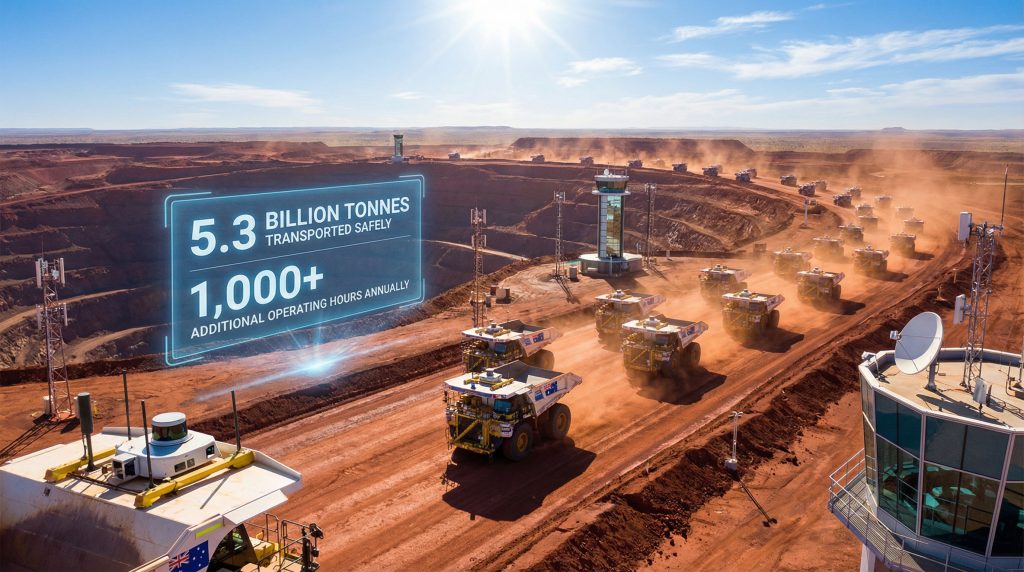
The transformation of mining operations through advanced automation represents one of the most significant technological shifts in heavy industry. At the heart of this revolution lies sophisticated engineering that combines satellite navigation systems, artificial intelligence, and real-time data processing to create autonomous haulage systems in Western Australia that operate with remarkable precision.
These systems rely on centimeter-accurate GPS positioning, enhanced by ground-based correction stations that provide real-time kinematic (RTK) positioning data. The core technology integrates multiple redundant sensor arrays, including LiDAR scanners, radar systems, and high-definition cameras, creating a comprehensive environmental awareness system that processes thousands of data points every second.
Fleet management software coordinates multiple vehicles simultaneously, calculating optimal routes while accounting for variables such as payload distribution, fuel efficiency, and maintenance schedules. Furthermore, the integration challenges extend beyond individual vehicle automation to encompass entire mining ecosystems, requiring seamless communication between autonomous trucks, manned equipment, and centralised control systems.
Modern collision avoidance systems utilise multiple detection technologies working in parallel. Millimeter-wave radar provides accurate distance measurements even in dusty conditions, while thermal imaging cameras detect heat signatures from personnel and equipment. Additionally, machine learning algorithms continuously refine decision-making processes based on operational data, improving response times and route optimisation over time.
Geographic and Operational Advantages of Australia's Mining Landscape
The Pilbara region's unique characteristics create ideal conditions for autonomous mining deployment. Vast open-pit iron ore deposits span hundreds of square kilometres, providing the scale necessary to justify substantial technology investments. These operations feature haul roads extending 15-30 kilometres between mining faces and processing facilities, distances that maximise the efficiency gains from autonomous systems.
Weather patterns in the region offer significant advantages over other global mining areas. Annual precipitation rarely exceeds 350mm, concentrated in brief seasonal periods that allow for consistent year-round operations. Temperature variations, while extreme, follow predictable patterns that autonomous systems can accommodate through programming adjustments.
The established mining infrastructure in Western Australia includes:
- Private haul road networks spanning thousands of kilometres
- Dedicated maintenance facilities equipped for autonomous vehicle servicing
- Advanced telecommunications infrastructure supporting high-bandwidth data transmission
- Established supply chains for specialised components and technical support
Geological factors contribute significantly to automation success. Iron ore deposits in the region typically occur in relatively consistent formations, reducing the variability in mining conditions that can complicate autonomous operations. The hardness and abrasiveness of Pilbara iron ore, while challenging for equipment longevity, creates predictable wear patterns that facilitate maintenance scheduling.
Regulatory Framework Supporting Technological Innovation
Western Australia's regulatory environment has evolved to accommodate autonomous mining technologies whilst maintaining stringent safety standards. The Mines Safety and Inspection Act 1994 provides the foundational framework, with specific provisions updated to address autonomous vehicle operations.
WorkSafe WA's Safe Mobile Autonomous Mining Code of Practice establishes comprehensive guidelines covering:
- Risk assessment methodologies for autonomous vehicle integration
- Communication protocols between autonomous and manned operations
- Emergency response procedures specific to unmanned vehicle incidents
- Training requirements for personnel working with autonomous systems
The regulatory approval process typically involves multiple phases of testing and validation. Companies must demonstrate system reliability through minimum 1,000-hour operational trials before receiving full authorisation for commercial deployment. These trials include stress testing under various operational conditions and verification of safety system redundancy.
Government incentives for mining technology advancement include research and development tax concessions and accelerated depreciation schedules for qualifying automation equipment. Consequently, industry-government collaboration through organisations like the Future Battery Industries Cooperative Research Centre facilitates knowledge sharing and best practice development.
When big ASX news breaks, our subscribers know first
Major Technology Deployments Across Western Australian Operations
Current Fleet Deployment Analysis
| Company | Primary Sites | Fleet Size | Technology Partner | Operational Status |
|---|---|---|---|---|
| Fortescue Metals | Christmas Creek, Cloudbreak | 74 trucks | Caterpillar MineStar | Fully operational since 2013 |
| BHP | South Flank, Mt. Whaleback | 185+ units | Komatsu FrontRunner | Expanding deployment |
| Rio Tinto | Multiple Pilbara sites | 130+ trucks | Komatsu/Caterpillar | World's largest AHS fleet |
| Mineral Resources | Iron Valley, Mt. Marion | 45+ vehicles | Hexagon Mining | Active expansion |
| Newmont | Boddington Gold | 12 trucks | Caterpillar Command | First autonomous gold operation |
The scale of these deployments represents over 450 autonomous vehicles currently operating across Western Australian mining sites, with expansion plans targeting an additional 200+ units by 2027. Each autonomous truck typically costs between $2-5 million, including vehicle acquisition, technology integration, and infrastructure development.
Fortescue's pioneering deployment began in 2012, making it the first company globally to implement Caterpillar's autonomous haulage system on a commercial scale. Their Christmas Creek operation now features the world's largest single-mine autonomous truck fleet, with vehicles operating continuously across three shifts.
Technology Platform Comparison and Capabilities
Komatsu FrontRunner systems dominate the market with 406 autonomous vehicles deployed across Australia. The platform integrates proprietary obstacle detection systems with advanced path planning algorithms. Vehicles operate at speeds up to 50 km/h on haul roads, automatically adjusting for payload weight and road conditions.
Caterpillar MineStar Command focuses on integration with existing Cat equipment fleets. The system features advanced tyre pressure monitoring that adjusts operating parameters in real-time to optimise tyre life, a critical factor given that large mining truck tyres can cost $40,000-60,000 each.
Hexagon Mining Solutions specialises in road train automation for iron ore transport. Their systems coordinate multiple trailers behind a single autonomous prime mover, achieving payload capacities exceeding 200 tonnes per vehicle combination.
Performance metrics demonstrate significant operational improvements:
- 15-20% increase in cycle time consistency
- 85-90% equipment availability versus 75% for manned operations
- 1,000+ additional operating hours per vehicle annually
- 30% reduction in unplanned maintenance events
Furthermore, these systems have contributed to enhanced haulage safety across mining operations, with significant improvements in incident reduction rates.
Economic Impact and Return on Investment Analysis
Operational Cost Structure Transformation
The economics of autonomous mining operations extend beyond simple labour cost calculations. While operator wages represent a significant expense, the comprehensive cost-benefit analysis reveals multiple value streams:
Direct Cost Reductions:
- Labour costs: $120,000-150,000 per operator position annually (including benefits and accommodation)
- Fuel consumption: 10-15% reduction through optimised routing and consistent operating speeds
- Tyre wear: 20-25% improvement in tyre life through precise navigation and speed control
- Maintenance costs: Predictive analytics reducing emergency repairs by 30%
Productivity Enhancements:
- Continuous operation: 24/7 capability without shift changes or rest breaks
- Consistent performance: Elimination of productivity variations due to operator fatigue or skill differences
- Optimised loading: Precise positioning improving loading times by 8-12%
- Route efficiency: Real-time traffic management reducing queue times at loading points
Capital investment requirements vary significantly by deployment scale. Large operations typically invest $50-100 million in autonomous system implementation, including vehicle conversions, infrastructure development, and support systems.
The total cost of ownership analysis for autonomous haulage systems typically shows positive returns within 3-5 years for operations with fleet sizes exceeding 20 vehicles.
Return on investment calculations must account for productivity gains that extend beyond the autonomous fleet itself. Moreover, optimised traffic flow and reduced congestion at loading and dumping points improve efficiency across entire mining operations.
Long-term Financial Projections
Market analysis indicates that autonomous system deployment costs are declining whilst capability improvements continue. Technology providers project 20-30% cost reductions in autonomous system pricing by 2028 as production volumes increase and component costs decrease.
The operational lifespan of autonomous systems typically exceeds 15 years, with software and hardware upgrade paths maintaining technological currency throughout the operational period. Additionally, residual value considerations factor into total cost of ownership calculations, with autonomous-capable vehicles commanding premium pricing in secondary markets.
Safety Performance and Risk Mitigation Strategies
Quantified Safety Improvements
Autonomous haulage systems in Western Australia have achieved remarkable safety records since widespread deployment began. Industry data shows:
- Zero fatalities directly attributable to autonomous vehicle operations across all WA deployments
- 5.3 billion tonnes of material transported globally by Komatsu autonomous systems without system-related injuries
- 75% reduction in haul truck-related safety incidents at autonomous sites
- Elimination of fatigue-related accidents in autonomous zones
The safety benefits extend beyond direct vehicle operations to encompass broader site safety improvements. Autonomous zones typically experience reduced personnel exposure to mobile equipment hazards, as maintenance and supervision activities can be conducted remotely or during scheduled shutdown periods.
Risk Management Frameworks
Comprehensive risk assessment methodologies address scenarios ranging from equipment failures to extreme weather events. Autonomous systems incorporate multiple layers of safety redundancy:
Primary Safety Systems:
- Dual-redundant GPS receivers with independent positioning validation
- Multiple sensor arrays providing 360-degree environmental awareness
- Emergency stop capabilities triggered by loss of communication or sensor failure
- Geofencing technology preventing vehicle operation outside designated areas
Secondary Safety Protocols:
- Remote monitoring capabilities allowing human intervention when required
- Automatic shutdown sequences initiated by predefined trigger conditions
- Emergency evacuation procedures coordinated with site-wide safety systems
- Regular safety system validation through comprehensive testing protocols
Human factors remain critical in autonomous operations. Training programs for personnel working in mixed autonomous and manual environments focus on situational awareness and communication protocols. Site-specific safety rules accommodate the unique characteristics of autonomous vehicle behaviour, including predictable movement patterns and response protocols.
Environmental Benefits and Sustainability Integration
Emissions Reduction Through Operational Optimisation
Autonomous haulage systems in Western Australia contribute significantly to environmental sustainability goals through multiple mechanisms. Optimised routing algorithms reduce unnecessary vehicle movements, achieving fuel consumption reductions of 10-15% compared to manual operations.
Consistent operating speeds and acceleration profiles improve engine efficiency whilst reducing particulate emissions. Autonomous systems maintain optimal engine parameters continuously, eliminating the variations in driving style that contribute to increased emissions in manual operations.
Quantified Environmental Benefits:
- 12-18% reduction in CO2 emissions per tonne of material transported
- 25% decrease in dust generation through precise speed control
- 30% reduction in tyre particulate emissions due to optimised acceleration patterns
- Significant noise reduction through consistent engine operation and route optimisation
Integration with renewable energy systems represents an emerging trend in autonomous mining operations. Solar-powered charging stations for electric autonomous vehicles are being piloted at several WA sites, with potential for zero-emission autonomous operations in specific applications.
Circular Economy Integration
Predictive maintenance capabilities inherent in autonomous systems extend equipment lifecycles whilst reducing waste generation. Real-time monitoring of component wear patterns enables precise maintenance scheduling that maximises component life while minimising replacement frequency.
Data-driven mining operations reduce resource consumption across mining facilities:
- Precision loading minimises material spillage and reduces cleanup requirements
- Optimised maintenance scheduling reduces spare parts inventory and waste
- Route optimisation decreases road maintenance requirements and extends infrastructure lifespan
- Fuel efficiency improvements reduce environmental impact of supply chain logistics
Remote monitoring capabilities reduce the need for personnel transportation to mine sites, decreasing traffic volume and associated emissions. Consequently, consolidated maintenance activities during scheduled shutdown periods improve resource utilisation whilst reducing environmental impact.
Advanced Operational Scenarios and Technical Challenges
Multi-Fleet Coordination Complexities
Managing autonomous operations in mixed fleets presents sophisticated coordination challenges. Modern mining sites typically feature combinations of autonomous trucks, manned equipment, light vehicles, and maintenance machinery operating simultaneously across shared infrastructure.
Traffic management systems coordinate vehicle movements using real-time priority algorithms that account for payload, destination, and operational urgency. Advanced systems can manage over 100 simultaneous vehicle movements across complex road networks whilst maintaining safety buffer zones and optimising overall productivity.
Dynamic Routing Protocols:
- Real-time obstacle detection and alternative route calculation
- Weather adaptation algorithms adjusting speeds and routes for conditions
- Maintenance zone avoidance with automatic route recalculation
- Emergency vehicle priority systems ensuring rapid response capabilities
Integration with blasting operations requires precise timing coordination. Autonomous vehicles must evacuate designated areas within strict timeframes, with systems tracking vehicle positions and confirming safe distances before blasting authorisation.
Maintenance Integration and System Reliability
Autonomous system maintenance demands specialised capabilities and training. Technicians require certification in multiple technical areas including GPS navigation systems, sensor calibration, and fleet management software.
Maintenance Complexity Factors:
- Sensor cleaning and calibration requiring precision procedures
- Software updates coordinated across entire fleets to maintain compatibility
- Component replacement using specialised tools and procedures
- System validation testing after any maintenance intervention
Predictive maintenance algorithms analyse thousands of operational parameters to forecast component failures before they occur. Machine learning systems improve prediction accuracy over time, with some operations achieving 90% accuracy in predicting tyre replacement requirements up to 500 operating hours in advance.
Remote diagnostics capabilities enable technology providers to monitor system performance globally, providing proactive support and identifying potential issues before they impact operations. This capability has proven particularly valuable for addressing software-related problems that can be resolved through remote updates.
The next major ASX story will hit our subscribers first
Future Technology Evolution and Market Development
Emerging Technologies and Integration Opportunities
The evolution of autonomous mining technology continues at a rapid pace, with several breakthrough technologies preparing for commercial deployment. 5G network integration promises to revolutionise autonomous haulage systems in Western Australia through ultra-low latency communications and massive data throughput capacity.
Artificial intelligence advancement focuses on edge computing capabilities that enable autonomous vehicles to process complex scenarios locally rather than relying on centralised systems. This development improves response times whilst reducing dependence on communication infrastructure.
Technology Development Pipeline:
- Battery-electric autonomous vehicles targeting zero-emission operations
- Hydrogen fuel cell integration for long-haul autonomous operations
- Advanced AI decision-making systems capable of handling complex scenarios
- Drone integration for comprehensive site monitoring and coordination
Machine learning algorithms continue improving through operational experience. Systems deployed in 2013 now demonstrate significantly enhanced performance compared to their initial capabilities, with continuous learning improving efficiency and safety margins.
The integration of AI-driven efficiency boost technologies continues to transform operational capabilities across mining sites.
Market Expansion Projections and Investment Opportunities
Industry analysis projects substantial growth in autonomous mining deployment across Western Australia through 2030. Current expansion plans indicate 200+ additional autonomous vehicles entering service across WA operations by 2027.
Investment Growth Drivers:
- Commodity price stability supporting capital investment decisions
- Technology cost reductions improving return on investment calculations
- Regulatory certainty providing confidence for long-term planning
- Workforce availability challenges increasing automation adoption incentives
New commodity sectors are beginning autonomous system deployment beyond traditional iron ore applications. Lithium mining operations are evaluating autonomous systems for hard rock applications, whilst gold mining operations are expanding beyond initial pilot deployments.
The success of Western Australian autonomous mining has positioned the region as a global centre of expertise. International mining companies increasingly study WA implementations for deployment in other regions, creating opportunities for technology export and consulting services.
Global Technology Transfer and Knowledge Export
Western Australia's autonomous mining expertise represents a significant competitive advantage in global markets. Companies that have successfully implemented autonomous systems locally are leveraging this experience for international expansion opportunities.
Technical expertise developed in WA's challenging operating conditions transfers effectively to other mining regions globally. The combination of extreme temperatures, abrasive materials, and large-scale operations provides comprehensive validation of technology capabilities.
Global Market Opportunities:
- Technology licensing to international mining operations
- Engineering consulting services for autonomous system implementation
- Training and certification programmes for international technicians
- Equipment and component export opportunities
The development of mining industry innovation capabilities in Western Australia demonstrates how regional technological leadership can create sustainable competitive advantages across global markets. As mining operations worldwide face similar challenges of safety, productivity, and environmental performance, the proven solutions developed in WA continue to find expanding applications internationally.
Furthermore, the sector's commitment to transforming mining sustainability through advanced automation technologies positions Western Australia at the forefront of Komatsu's global autonomous mining innovations.
This analysis is based on publicly available information and industry reports. Mining investments carry inherent risks, and technological implementations may vary significantly between operations and conditions. Readers should conduct independent research and consult qualified professionals before making investment or operational decisions.
Ready to Capitalise on the Next Major Mining Discovery?
Discovery Alert's proprietary Discovery IQ model delivers instant notifications on significant ASX mineral discoveries, empowering investors to identify actionable opportunities in Australia's rapidly evolving mining technology sector ahead of the broader market. Explore how major mineral discoveries can lead to exceptional returns and begin your 14-day free trial today to secure your competitive advantage in this transformative industry.