June 12, 2026
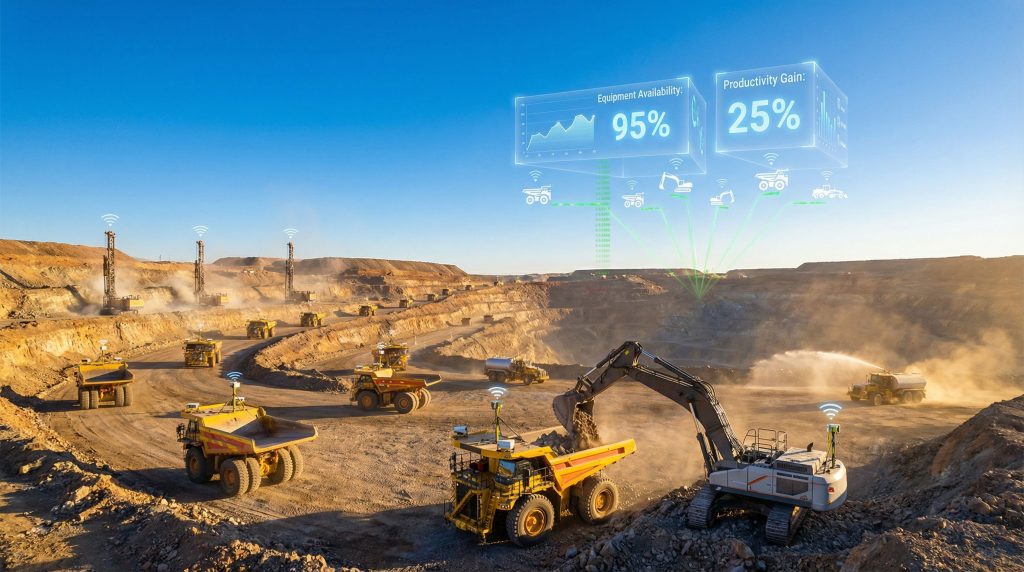
The evolution of autonomous mining technology represents one of the most significant operational transformations in modern extractive industries. Mining companies worldwide are increasingly turning to sophisticated automation systems to address rising labour costs, safety concerns, and productivity demands. The autonomous mining equipment acquisition landscape encompasses multiple equipment categories, each offering distinct operational advantages and implementation considerations that mining operators must carefully evaluate.
Understanding the Autonomous Mining Equipment Landscape
Surface mining operations have seen the most widespread adoption of autonomous systems, particularly in large-scale operations where consistent terrain and predictable conditions create ideal deployment scenarios. Haul trucks remain the most commercially mature autonomous mining equipment category, with several major manufacturers offering fully operational systems capable of round-the-clock operation without human intervention.
Excavators and loading equipment have progressed from remote operation capabilities to semi-autonomous functions, though full autonomy remains challenging due to the precision required for material handling and loading operations. Bulldozers and graders represent emerging autonomous categories, with several pilot programs demonstrating promising results in material spreading and road maintenance applications.
Underground automation presents unique technical challenges due to confined spaces, variable conditions, and complex navigation requirements. Development rigs for tunnel advancement have achieved commercial viability in several applications, while production loaders and material handling systems continue advancing through pilot testing phases.
Furthermore, AI in drilling & blasting has emerged as a particularly promising category, with autonomous blast hole drilling systems demonstrating significant productivity gains and operational consistency. The recent market activity in this sector, including corporate consolidation among specialised manufacturers, indicates growing commercial maturity and investor confidence in drilling automation technologies.
Technology Maturity Assessment Framework
Understanding autonomous mining equipment requires evaluating systems across multiple maturity levels. Level 1 automation encompasses remote operation capabilities, where human operators control equipment from safe locations using advanced communication systems. These systems reduce operator exposure to hazardous conditions while maintaining human decision-making in operational processes.
Level 2 automation introduces semi-autonomous functionality with human oversight capabilities. Equipment operates independently within predetermined parameters whilst maintaining intervention systems for operator control during unexpected situations or complex operational requirements.
Level 3 automation represents fully autonomous operation within defined operational boundaries. These systems navigate, operate, and make routine decisions independently while reporting status and performance data to central control systems. This maturity level requires sophisticated sensor systems, artificial intelligence algorithms, and robust communication infrastructure.
Level 4 automation incorporates adaptive decision-making capabilities, allowing equipment to respond to unexpected conditions and optimise performance based on real-time environmental data. This highest maturity level remains largely developmental, with limited commercial deployments in controlled environments.
When big ASX news breaks, our subscribers know first
What Drives ROI in Autonomous Equipment Procurement?
The financial justification for autonomous mining equipment acquisition centres on quantifiable operational improvements across multiple performance categories. Mining operators typically evaluate these investments through comprehensive total cost of ownership analyses that account for direct operational benefits, indirect productivity gains, and long-term strategic advantages.
Operational Efficiency Metrics
Productivity improvements represent the most significant ROI driver for autonomous mining equipment. Continuous operation capabilities eliminate shift changes, break periods, and human performance variability that characterise manual operations. Equipment utilisation rates typically improve by 15-30% compared to manual operations, primarily due to consistent operating speeds and reduced downtime.
Operating cost reductions of 10-25% per tonne moved have been documented across multiple autonomous mining implementations. These savings result from optimised fuel consumption, reduced maintenance costs through consistent operating practices, and elimination of operator-related expenses including wages, benefits, and accommodation costs in remote mining locations.
Safety performance improvements offer both direct cost savings and indirect operational benefits. Incident reduction rates of up to 80% for equipment-related accidents have been reported, primarily due to eliminating human operators from hazardous operational environments. These safety improvements reduce insurance costs, regulatory compliance expenses, and operational disruptions associated with accident investigations.
Fuel efficiency gains of 8-15% per operating hour result from optimised route planning, consistent operating speeds, and elimination of human driving behaviours that increase fuel consumption. Advanced autonomous systems continuously optimise engine performance and implement predictive route planning to minimise fuel usage whilst maintaining productivity targets.
Total Cost of Ownership Analysis
Autonomous mining equipment typically requires capital expenditure premiums of 20-40% compared to conventional equipment. This initial investment reflects advanced sensor systems, sophisticated control software, and specialised communication equipment required for autonomous operation.
Operating expenditure patterns shift significantly with autonomous equipment deployment. While labour costs decrease substantially, technology maintenance requirements increase, requiring specialised technical support and regular software updates. Mining operators must factor cybersecurity costs, communication infrastructure maintenance, and specialised training programmes into ongoing operational budgets.
Infrastructure requirements represent a significant additional investment category often overlooked in initial cost assessments. Comprehensive communication networks, centralised control facilities, and maintenance workshops equipped for autonomous equipment servicing require substantial capital allocation beyond equipment purchase costs.
However, data-driven mining operations enabled by autonomous systems often deliver lifecycle value calculations that must account for extended equipment operational life resulting from consistent operating practices and predictive maintenance capabilities. Autonomous systems typically operate equipment within optimal performance parameters, reducing wear rates and extending component life compared to manual operations subject to operator variability.
How to Evaluate Autonomous Equipment Suppliers?
Selecting appropriate autonomous mining equipment suppliers requires comprehensive evaluation across multiple technical, operational, and strategic criteria. The supplier assessment process must balance current technology capabilities with long-term viability and support infrastructure requirements.
Technology Provider Assessment Matrix
Comprehensive supplier evaluation requires systematic assessment across weighted criteria categories. Technology maturity should receive 25% weighting in evaluation frameworks, focusing on operational track record, deployed fleet sizes, and documented reliability performance across diverse operating conditions.
| Evaluation Criteria | Weight | Key Assessment Areas |
|---|---|---|
| Technology Maturity | 25% | Operational years, fleet deployment scale, proven reliability |
| Integration Capability | 20% | System compatibility, API availability, retrofit potential |
| Support Infrastructure | 20% | Local service presence, training programmes, parts availability |
| Financial Stability | 15% | Company financial health, R&D investment sustainability |
| Innovation Pipeline | 10% | Future technology roadmap, intellectual property portfolio |
| Reference Sites | 10% | Customer implementations, performance validation, satisfaction |
Integration capability assessment warrants 20% evaluation weighting due to the critical importance of seamless integration with existing mining operations. Suppliers must demonstrate compatibility with current fleet management systems, maintenance protocols, and operational procedures to minimise implementation disruption.
Support infrastructure evaluation also merits 20% weighting, reflecting the specialised maintenance and operational support requirements of autonomous systems. Suppliers must maintain local service capabilities, comprehensive training programmes, and reliable spare parts availability to ensure sustained operational performance.
Vendor Due Diligence Framework
Technical capability assessment requires detailed evaluation of autonomous navigation algorithms, safety system architectures, and environmental adaptation capabilities. Suppliers should provide comprehensive documentation of system performance under various operating conditions, including adverse weather, equipment failures, and unexpected obstacles.
Operational track record analysis involves reviewing performance data from existing deployments, including equipment availability statistics, productivity metrics, and maintenance requirements. Reference site visits and customer interviews provide valuable insights into supplier performance and support quality.
Consequently, financial viability evaluation must assess supplier financial stability and long-term operational sustainability. The autonomous mining equipment sector has experienced consolidation, with smaller specialised manufacturers facing financial challenges or acquisition by larger entities, as demonstrated by recent market activity in the drilling automation segment.
What Are the Critical Implementation Phases?
Successful autonomous mining equipment implementation requires systematic progression through distinct project phases, each with specific deliverables and success criteria. The implementation timeline typically extends 12-24 months from initial planning through full operational deployment.
Pre-Acquisition Planning Stage
Site readiness assessment forms the foundation of successful autonomous equipment deployment. This evaluation encompasses communication infrastructure requirements, including network coverage mapping and bandwidth analysis to support real-time equipment monitoring and control systems.
Workforce impact analysis addresses human resource implications of autonomous equipment implementation. This includes identifying training requirements for equipment monitoring and maintenance roles, planning career transition pathways for displaced operators, and developing change management strategies to address employee concerns about automation.
Regulatory compliance review ensures autonomous equipment deployment meets applicable safety standards and environmental requirements. Many jurisdictions maintain specific regulations governing autonomous vehicle operation in industrial environments, requiring formal approval processes and ongoing compliance monitoring.
Business case development requires comprehensive financial modelling incorporating equipment costs, infrastructure investments, operational savings, and risk assessments. ROI projections must account for implementation timelines, learning curve effects, and potential operational disruptions during deployment phases.
Procurement and Integration Phase
Request for proposal development establishes detailed technical specifications and performance requirements for autonomous equipment suppliers. These documents must clearly define operational requirements, performance metrics, support expectations, and integration specifications to enable accurate supplier responses.
In addition, supplier selection processes should incorporate weighted evaluation criteria, structured scoring methodologies, and comprehensive reference checking. Contract negotiations must address performance guarantees, support service levels, and technology update provisions to protect operational interests.
Pilot programme implementation provides controlled environments for performance validation and operational optimisation before full-scale deployment. Pilot programmes typically involve limited equipment quantities operating in defined areas under close monitoring to validate performance assumptions and refine operational procedures.
Full-scale rollout planning requires phased implementation strategies that minimise operational disruption while achieving target deployment timelines. Success metrics should include equipment availability targets, productivity benchmarks, and safety performance indicators.
Which Equipment Categories Offer the Highest Value?
Equipment category selection significantly impacts autonomous mining equipment acquisition ROI and implementation success. Different equipment types offer varying value propositions based on operational characteristics, technology maturity, and site-specific conditions.
Haul Truck Automation Priority Matrix
Large-scale operations moving more than 50 million tonnes annually typically offer the strongest business case for haul truck automation. The high equipment utilisation rates and substantial labour cost components in these operations create favourable conditions for autonomous system ROI achievement.
Long haul distances exceeding 5 kilometres one-way provide optimal conditions for autonomous haul truck deployment. Extended routes maximise the productivity advantages of continuous autonomous operation whilst minimising the impact of loading and dumping operations that may require human intervention.
Consistent operating conditions with predictable weather patterns and stable terrain characteristics reduce the complexity requirements for autonomous navigation systems. Operations in extreme weather conditions or highly variable terrain may experience reduced autonomous system reliability and increased intervention requirements.
High labour cost environments in remote locations or regions with significant operator wage premiums create stronger financial justification for autonomous systems. The labour cost savings component becomes more significant when operator wages, benefits, and accommodation costs represent substantial operational expenses.
Drilling Equipment Automation Assessment
Blast hole drilling represents the most mature autonomous drilling application, with commercial systems demonstrating reliable performance in production environments. Autonomous drill rigs can operate continuously with minimal human supervision, providing significant productivity improvements over manual drilling operations.
Exploration drilling applications require semi-autonomous systems due to the precision and adaptability requirements for geological sampling. These systems maintain human oversight for critical decisions whilst automating routine drilling operations to improve consistency and reduce operator fatigue.
Moreover, grade control drilling integration with autonomous sampling and analysis systems offers opportunities for real-time ore body characterisation. These applications require sophisticated data integration capabilities and immediate results processing to support mining operation decisions.
Specialised applications in hazardous environments or remote locations where human operator safety represents significant concerns provide strong justification for autonomous drilling systems. These applications may justify higher technology costs due to risk reduction benefits.
How to Structure Autonomous Equipment Financing?
Autonomous mining equipment financing requires careful consideration of multiple acquisition models, each offering distinct advantages and limitations based on organisational priorities and financial capabilities. The optimal financing approach depends on capital availability, technology obsolescence concerns, and operational control requirements.
Capital Acquisition Models
Direct purchase provides complete asset ownership and control, enabling customisation and modification according to specific operational requirements. This approach offers maximum tax benefits through depreciation and may provide the lowest total cost of ownership over extended operational periods. However, direct purchase requires substantial upfront capital allocation and assumes full technology obsolescence risk.
| Financing Option | Primary Benefits | Key Considerations |
|---|---|---|
| Direct Purchase | Complete ownership, customisation flexibility, tax advantages | High capital requirement, technology risk |
| Operating Lease | Reduced initial investment, operational flexibility | Higher lifetime costs, limited modifications |
| Technology Partnership | Shared implementation risk, performance-based pricing | Complex agreements, profit distribution |
| Equipment-as-a-Service | Predictable operational costs, comprehensive support inclusion | Long-term commitments, reduced operational control |
Operating lease arrangements reduce initial capital requirements whilst maintaining operational flexibility for technology upgrades or operational changes. Lease payments provide predictable operational expenses but typically result in higher total costs compared to direct purchase over extended periods.
For instance, technology partnership structures enable risk sharing between mining operators and equipment suppliers through performance-based compensation models. These arrangements may include shared productivity gains, guaranteed availability targets, and collaborative technology development initiatives.
Equipment-as-a-Service models provide comprehensive solutions including equipment, maintenance, support, and performance guarantees for predetermined monthly payments. This approach offers predictable costs and minimal technology risk but requires long-term commitments and reduced operational control over equipment utilisation.
Risk Mitigation Strategies
Performance guarantees should include contractual commitments for equipment availability, productivity targets, and operational cost benchmarks. These guarantees provide financial protection against underperforming technology whilst incentivising supplier support quality and system reliability.
Technology obsolescence protection requires contractual provisions for system upgrades, software updates, and migration pathways to future technology generations. Rapid technology evolution in autonomous systems makes obsolescence protection critical for long-term value preservation.
Cybersecurity risk management must address potential security vulnerabilities in autonomous equipment communication systems and control software. Insurance coverage, security protocols, and incident response procedures protect against operational disruption and data security breaches.
Furthermore, vendor support agreements should specify comprehensive maintenance services, technical support response times, and spare parts availability guarantees. Autonomous equipment requires specialised technical expertise that may not be available through traditional mining equipment service providers.
The next major ASX story will hit our subscribers first
What Infrastructure Requirements Enable Success?
Autonomous mining equipment deployment requires substantial infrastructure investments beyond equipment acquisition costs. Communication networks, control facilities, and support systems must meet stringent performance requirements to enable reliable autonomous operation.
Communication Network Specifications
Wireless coverage requirements demand 99.5% site coverage with redundant communication pathways to ensure continuous equipment connectivity. Coverage gaps can result in autonomous equipment shutdown and require manual intervention to resume operations, significantly impacting productivity and safety.
Bandwidth specifications require minimum 10 Mbps per autonomous vehicle to support real-time telemetry data, video monitoring, and control system communication. High-definition camera feeds, sensor data streams, and operational status reporting generate substantial data transmission requirements during normal operations.
Latency performance standards must maintain sub-100 millisecond response times for real-time control applications and emergency intervention systems. Excessive communication delays can compromise autonomous system responsiveness and safety system effectiveness during critical operational situations.
Cybersecurity protocols require end-to-end encryption for all autonomous equipment communications and network segmentation to isolate autonomous systems from general enterprise networks. Security vulnerabilities in autonomous equipment communication systems represent significant operational and safety risks.
Control Centre Design Considerations
Monitoring capabilities must provide comprehensive real-time fleet tracking, performance dashboards, and predictive analytics for proactive operational management. Control centre operators require immediate visibility into equipment status, location, and performance metrics across entire autonomous fleets.
Intervention systems include remote operator stations equipped for emergency equipment control and manual operation when autonomous systems encounter unexpected conditions. These stations require high-resolution displays, intuitive control interfaces, and reliable communication systems for effective remote operation.
Data management systems must capture, store, and analyse substantial volumes of operational performance data generated by autonomous equipment fleets. Advanced analytics capabilities enable operational optimisation, predictive maintenance, and performance benchmarking across equipment categories.
However, scalability planning requires control centre designs that accommodate fleet expansion and technology upgrades without major infrastructure modifications. Modular designs and standardised interfaces enable cost-effective expansion as autonomous equipment deployment increases.
How to Measure Autonomous Equipment Performance?
Comprehensive performance measurement systems enable autonomous mining equipment optimisation and justify continued investment in automation technology. Key performance indicators must capture operational efficiency, safety improvements, and financial performance across multiple measurement categories.
Key Performance Indicators (KPIs)
Equipment availability targets should exceed 95% mechanical availability to justify autonomous system investment and achieve projected productivity improvements. Availability measurements must distinguish between mechanical failures, communication system outages, and weather-related shutdowns to identify improvement opportunities.
Utilisation efficiency metrics compare productive operating hours against total available time, accounting for planned maintenance, shift changes, and operational delays. Autonomous systems should demonstrate consistently higher utilisation rates compared to manual equipment operations through elimination of human-related downtime.
Cycle time optimisation measurements compare autonomous equipment performance against manual operation benchmarks for identical operational tasks. Consistent cycle times and reduced variability indicate successful autonomous system implementation and operational optimisation.
In addition, fuel consumption tracking monitors consumption per tonne moved and per operating hour to quantify efficiency improvements from autonomous operation. Advanced autonomous systems optimise engine performance and route planning to achieve measurable fuel efficiency gains compared to manual operations.
Safety and Compliance Monitoring
Incident reporting systems must automatically log safety events, near-miss situations, and equipment interactions to maintain comprehensive safety performance records. Autonomous systems should demonstrate significant reduction in equipment-related incidents compared to manual operation baselines.
Regulatory compliance monitoring ensures autonomous equipment operations meet applicable safety standards and environmental requirements throughout operational life. Compliance tracking systems must document adherence to autonomous vehicle operation regulations and safety protocol compliance.
Environmental impact assessment includes emissions reduction monitoring, noise level measurement, and dust generation tracking to quantify environmental benefits of autonomous equipment deployment. These metrics support sustainability reporting and environmental compliance requirements.
Workforce safety protocols monitor human-equipment interactions and exclusion zone management to ensure autonomous systems enhance rather than compromise overall workplace safety. Safety systems must prevent unauthorised personnel access to autonomous equipment operating areas.
What Are the Long-Term Strategic Considerations?
Autonomous mining equipment investment requires strategic planning extending well beyond initial deployment timelines. Technology evolution, competitive positioning, and workforce transformation represent critical long-term considerations affecting investment success and operational sustainability.
Technology Evolution Planning
Upgrade pathway development must account for rapid technology advancement in autonomous systems, artificial intelligence, and sensor technologies. Equipment suppliers should provide clear roadmaps for system enhancements, software updates, and hardware upgrade compatibility to protect long-term investment value.
Interoperability requirements become increasingly important as autonomous equipment fleets expand and integrate with broader mining operation systems. Standardised communication protocols and data formats enable seamless integration across multiple equipment suppliers and technology platforms.
Data monetisation opportunities enable mining operators to extract additional value from operational data generated by autonomous equipment fleets. Advanced analytics, predictive modelling, and operational optimisation services represent potential revenue streams from autonomous system data assets.
Consequently, workforce transformation planning addresses long-term human resource requirements as autonomous systems reshape mining operation roles and skill requirements. Strategic workforce development ensures adequate technical expertise for autonomous system support whilst providing career transition pathways for traditional equipment operators.
Competitive Advantage Development
Operational excellence initiatives leverage autonomous equipment capabilities to achieve superior productivity, cost performance, and safety outcomes compared to competitors relying on conventional equipment. Continuous improvement programmes maximise autonomous system benefits through operational optimisation and best practice development.
Cost leadership strategies utilise automation technology to achieve competitive cost structures whilst maintaining operational flexibility and market responsiveness. Autonomous equipment deployment must align with broader cost management objectives and market positioning strategies.
Furthermore, innovation partnerships with technology providers enable collaborative development of customised autonomous solutions and early access to emerging technologies. Strategic partnerships can provide competitive advantages through exclusive technology access and preferential supplier relationships.
Market positioning as technology leaders in mining automation attracts investment, partnerships, and talent whilst enhancing corporate reputation for innovation and operational excellence. Technology leadership positioning supports premium valuation and strategic option value in competitive markets.
The autonomous mining equipment acquisition landscape continues evolving rapidly as technology capabilities expand and operational experience accumulates. Mining operators attending events like the global mining innovation expo can gain valuable insights into emerging technologies and industry consolidation trends that are reshaping the sector. Success requires comprehensive planning, systematic implementation, and ongoing optimisation to achieve sustainable competitive advantages through autonomous technology deployment.
Additionally, mining companies must consider various capital raising methods to fund their autonomous mining equipment acquisition programmes. The substantial capital requirements for autonomous systems, combined with ongoing infrastructure investments, make strategic financing decisions crucial for successful implementation.
Recent developments, including Hexagon's acquisition of autonomous mining technology companies, demonstrate the continued consolidation and technology advancement in the autonomous mining equipment sector. These strategic moves by major technology providers indicate growing confidence in autonomous mining applications and the potential for enhanced integration across mining operations.
Disclaimer: The performance metrics, cost estimates, and ROI projections presented in this analysis are based on industry reports and case studies. Actual results may vary significantly based on site-specific conditions, implementation quality, and operational practices. Mining operators should conduct thorough due diligence and pilot testing before making substantial autonomous mining equipment investments.
What Opportunities Await in Australia's Mining Automation Boom?
Australia's mining sector is experiencing unprecedented transformation through autonomous technology deployment, creating compelling investment opportunities for those who can identify early-stage adopters. Discovery Alert's proprietary Discovery IQ model delivers real-time alerts on significant ASX mineral discoveries, instantly empowering subscribers to identify actionable opportunities as mining companies modernise operations and announce major technology partnerships. Begin your 14-day free trial today to position yourself ahead of the market in Australia's rapidly evolving mining automation landscape.