June 17, 2026
Why the Mining Industry Is Standing at an Automation Crossroads
The history of industrial transformation is rarely a straight line. From the steam-powered revolution of the 19th century to the computerisation of manufacturing in the late 20th century, each technological leap has been preceded by a long period of fragmented adoption, uneven investment, and significant organisational friction. The mining sector is now navigating exactly that kind of inflection point, and the stakes could not be higher.
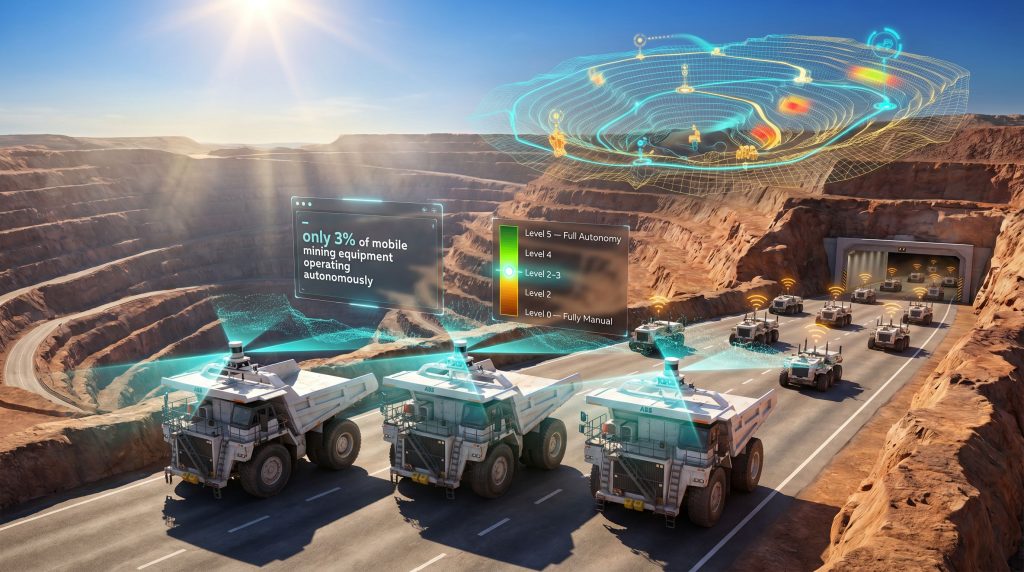
Despite decades of incremental mechanisation, the mining potential of autonomous operations remains largely unrealised. Current industry estimates suggest that only 3% of mobile mining equipment globally operates with any meaningful degree of autonomy. That single figure reveals everything about where the industry currently sits: enormous capital has been deployed, genuine progress has been made, but systemic, enterprise-wide autonomy is still the exception rather than the rule. Understanding why, and what it will take to close that gap, is one of the most consequential strategic questions facing mining leaders today.
When big ASX news breaks, our subscribers know first
Mechanisation Versus Autonomy: A Distinction That Matters
Why Most Mining Operations Are Not Yet Truly Autonomous
There is a critical conceptual distinction that is frequently blurred in industry discussions: the difference between automating a task and operating autonomously as a system. Mechanised automation describes the process of removing human effort from individual, repetitive functions, such as a conveyor belt, a controlled blast sequence, or a programmed drilling cycle. These are valuable productivity tools, but they do not constitute autonomy.
Genuine operational autonomy requires something qualitatively different. It demands that a system perceive its environment, interpret incoming data streams, weigh competing priorities, make decisions, and execute actions in a closed loop, without requiring human validation at each step. This distinction matters enormously when assessing the mining potential of autonomous operations, because most existing deployments, while impressive in isolation, do not yet constitute systemic intelligence.
The convergence of three foundational technologies is changing this dynamic, and mining automation trends across the sector illustrate just how rapidly this shift is accelerating:
-
Artificial intelligence and machine learning, which give systems the cognitive architecture to interpret complexity rather than just execute predetermined commands
-
IoT sensor networks and wireless connectivity, which create the real-time data pipelines necessary for situational awareness across an entire mine site
-
Edge computing infrastructure, which enables data processing at the source rather than depending entirely on centralised cloud architecture, reducing latency in time-critical operational decisions
Together, these technologies form the structural backbone of what the industry increasingly calls the digital mine: an operational environment where physical assets, logistics systems, and planning functions are unified through continuous, machine-readable data flows.
The Five-Level Automation Maturity Model
One of the most useful frameworks for situating any mining operation within the autonomy landscape is ABB's five-level automation model, which maps the progression from entirely manual operation through to fully self-governing systems.
| Automation Level | Description | Human Role |
|---|---|---|
| Level 0 | Fully manual operation | Operator controls all functions directly |
| Level 1 | Assisted operation | Machine provides decision support |
| Level 2 | Partial automation | Defined tasks are automated |
| Level 3 | Conditional autonomy | Human oversight remains required |
| Level 4 | High autonomy | System manages most decisions independently |
| Level 5 | Full autonomy | No on-site human decision-making required |
The majority of global mining operations currently occupy Levels 1 through 3. Furthermore, advancing up this spectrum is not simply a matter of purchasing more sophisticated hardware. It requires deliberate investment in IT architecture, data governance, cybersecurity frameworks, and workforce capability, all of which must be developed in parallel rather than sequentially.
The Technology Stack Powering Next-Generation Mine Autonomy
Artificial Intelligence as the Cognitive Engine of the Autonomous Mine
Artificial intelligence plays a fundamentally different role in autonomous mining compared to conventional process automation. Rather than executing fixed sequences of commands, AI in mining operations continuously processes sensor data streams to generate predictive, prescriptive, and diagnostic insights that inform operational decisions in near real time.
Practically, this capability manifests across several operational domains:
-
Predictive maintenance: AI models analyse equipment sensor data to identify failure signatures before breakdowns occur, replacing costly reactive maintenance schedules with precision interventions
-
Scenario simulation: Before implementing operational changes, AI platforms can model the downstream consequences of different decisions, dramatically reducing the risk of unintended production disruptions
-
Short interval control (SIC): AI-powered scheduling systems dynamically adjust production plans based on real-time data, replacing periodic human review cycles with continuous machine-driven optimisation
Machine learning's particular value lies in its capacity to improve over time. As systems accumulate operational data, model accuracy increases, and the quality of autonomous decision-making progressively improves. This directly supports AI-powered mining efficiency gains that compound meaningfully across full production cycles.
AMRs, LiDAR, and the Underground Navigation Challenge
Underground mining environments present some of the most demanding navigational challenges that autonomous systems face anywhere in the industrial world. Tunnels collapse, water levels change, geological conditions shift, and visibility is often minimal. These are precisely the conditions where autonomous systems can deliver their greatest safety value, and also where the technology requirements are most demanding.
Autonomous Mobile Robots (AMRs) represent a significant advance over earlier Autonomous Guided Vehicles (AGVs). Where AGVs rely on fixed physical infrastructure such as embedded cables or magnetic strips to navigate, AMRs use onboard sensor fusion and dynamic mapping to build and update their own understanding of the environment as they move through it. This adaptability makes AMRs genuinely suited to the inherently dynamic character of underground mine environments.
LiDAR technology is central to this capability. By emitting laser pulses and measuring their return times, LiDAR sensors generate 360-degree, high-resolution 3D spatial maps in real time, allowing robots to identify obstacles, track their position, and navigate safely in conditions that would be hazardous or impossible for human crews. Key operational advantages include:
-
Lower power consumption compared to alternative sensor configurations
-
Web-based configuration platforms that simplify deployment and maintenance
-
Resilience in high-stress conditions including poor visibility and adverse weather
-
The ability to operate in submerged, confined, or structurally compromised spaces where human access creates unacceptable risk
One particularly compelling application is the inspection of abandoned mines. Before any human crew is deployed, AMRs equipped with cameras and geological sensors can assess structural integrity, measure atmospheric conditions, and identify mineral deposits, providing critical intelligence at a fraction of the cost and risk of conventional survey methods.
Commercial Deployments: Where Autonomous Mining Is Already Delivering Results
Autonomous Haulage: The Most Commercially Mature Use Case
Of all the autonomous mining applications currently in commercial operation, autonomous haulage represents the most advanced and widely deployed. Large haul trucks operating without drivers deliver several structural advantages that explain their commercial momentum:
-
Continuous 24/7 operation unconstrained by shift rotations, fatigue regulations, or human reaction variability
-
Improved route consistency and payload accuracy, reducing fuel consumption and tyre wear across large fleets
-
Fewer personnel in active haul zones, directly reducing exposure to collision and vehicle incident risks
Rio Tinto operates one of the most advanced autonomous haulage programmes globally, with driverless vehicles conducting all ore transport at select operations. Sandvik's AutoMine platform has achieved commercial deployment across more than 20 mass mining operations and over 100 total operations worldwide, representing a meaningful proof of concept for large-scale autonomous haulage.
Closing the Loop: From Autonomous Equipment to Autonomous Mines
The conceptual leap that separates autonomous equipment from autonomous mines is significant. Sandvik's strategic acquisitions of Polymathian and the integration of its Deswik mine planning software platform illustrate what this next phase looks like in practice: software-driven decision automation that coordinates planning, scheduling, logistics, and maintenance functions as a unified, continuously optimising system.
This closed-loop architecture eliminates the latency inherent in periodic human review. Rather than waiting for a shift supervisor to analyse production data and adjust schedules, data-driven mining operations detect deviations from plan, model corrective options, and implement adjustments in near real time. The efficiency gains compound over time as systems accumulate operational experience.
The Three-Pillar Business Case for Autonomous Investment
Safety, Productivity, and Sustainability as Interconnected Drivers
The value case for autonomous mining investment rests on three mutually reinforcing pillars, each of which independently justifies significant capital allocation, and which together create a compelling strategic rationale.
| Value Dimension | Autonomous Operations Advantage |
|---|---|
| Worker safety | Removes personnel from blast zones, haul roads, and unstable underground environments |
| Equipment utilisation | Higher uptime through 24/7 operation and predictive maintenance |
| Operational consistency | Eliminates human variability in repetitive, high-frequency tasks |
| Energy efficiency | Optimised routing, load management, and precision operational control |
| Sustainability performance | Reduced fuel consumption, lower emissions, and water efficiency gains |
| Data quality | Continuous sensor-based monitoring replaces periodic manual inspection |
EY analysis of mining autonomy programmes consistently confirms that the pathway is non-linear. Operations that integrate autonomous systems across workforce, infrastructure, and operational complexity dimensions tend to realise measurable improvements across all three pillars, but only when the foundational prerequisites are in place before deployment begins.
A critical insight often overlooked by operators focused on headline technology purchases is that value realisation is unique to each operation. The ore body geometry, existing infrastructure, geographic location, regulatory environment, and workforce composition all influence the economic case. Defining core value metrics before committing to an autonomous deployment pathway is not merely good practice; it is a prerequisite for avoiding costly misalignment between capital expenditure and operational outcomes.
Prerequisites That Determine Whether Autonomous Systems Succeed or Fail
IT Architecture, Interoperability, and Cybersecurity
Technology alone does not create an autonomous mine. Three foundational prerequisites must be addressed before any meaningful autonomy can function reliably:
1. IT and communications architecture: Autonomous systems require multi-network, multi-equipment communication environments. Legacy infrastructure designed for human-operated fleets frequently lacks the bandwidth, redundancy, and interoperability needed to support continuous machine-to-machine data flows. Assessing and upgrading this architecture is a prerequisite, not an afterthought.
2. Application interoperability: Mining operations rely on multiple software platforms covering fleet management, enterprise resource planning, and mine scheduling. Autonomous systems must communicate across all of these, and the absence of universal interoperability standards creates significant integration complexity, particularly for operators running mixed-vendor equipment fleets.
3. Cybersecurity frameworks: The security implications of autonomous mining systems are categorically different from those of conventional IT environments. A cybersecurity breach in an autonomous mine does not merely expose sensitive data. It can result in direct loss of control over physical machinery, creating immediate safety consequences for personnel and infrastructure.
Data Readiness: The Most Commonly Underestimated Prerequisite
Across autonomous mining programmes globally, data readiness consistently emerges as the factor most frequently underestimated during planning and most consequential to outcomes during deployment. In addition, the accuracy of AI-driven autonomous decisions is only as good as the quality, completeness, and governance of the data those systems consume.
Operations that deploy autonomous platforms on top of poor data foundations do not simply underperform; they generate unreliable outputs that erode operator confidence. Furthermore, predictive maintenance systems in particular depend heavily on clean, continuous data streams to deliver accurate failure predictions. Building the data collection, validation, and governance infrastructure before deploying autonomous systems is not an optional investment. It is the foundation on which autonomous capability rests.
The next major ASX story will hit our subscribers first
Managing the Human Dimension of Autonomous Transition
Why Change Management Is as Critical as Technology Deployment
Among the most consistent findings across autonomous mining implementations is that technology deployment without parallel investment in human change management reliably underperforms expectations. The machines may be capable; however, if the workforce lacks confidence, competence, or trust in the new systems, adoption stalls and productivity gains dissipate.
Effective workforce transition programmes share several characteristics:
-
Transparent communication about how roles will evolve rather than disappear, grounded in evidence from comparable deployments
-
Competency-based training frameworks that build genuine capability to operate, supervise, and maintain autonomous systems, rather than superficial familiarisation programmes
-
Confidence-building mechanisms that give workers early, low-stakes exposure to autonomous technologies before full operational deployment
Organisational and Community Stakeholder Engagement
The social licence to operate in autonomous mining environments extends beyond the workforce to encompass local communities, regulatory bodies, and government stakeholders. Community concerns about job displacement are legitimate and must be addressed through proactive, evidence-based communication rather than reactive responses to public opposition.
| Change Dimension | Key Action Required |
|---|---|
| Internal workforce | Transparent communication and competency-based reskilling |
| Middle management | Redefining supervisory roles in autonomous operational environments |
| Community stakeholders | Proactive engagement on safety improvements and employment transitions |
| Regulatory bodies | Collaborative participation in developing standards for autonomous operations |
Regulatory frameworks governing autonomous mining operations vary significantly across jurisdictions, and in many cases lag meaningfully behind technological capability. Liability frameworks for autonomous equipment incidents, in particular, remain an area of active legal and regulatory development in most major mining nations.
Barriers That Are Slowing Industry-Wide Adoption
Capital, Compatibility, and Regulatory Complexity
Three structural barriers consistently constrain the pace of autonomous adoption across the mining sector:
Capital expenditure requirements remain substantial, encompassing hardware, software, connectivity infrastructure, and the workforce development programmes necessary to realise the technology's potential. Smaller operators face disproportionately higher barriers relative to large diversified producers, creating a structural dynamic where the productivity benefits of autonomy accrue most rapidly to the largest players.
Interoperability gaps between autonomous equipment from different manufacturers represent a systemic challenge. The absence of universal communication standards creates vendor lock-in dynamics that complicate long-term fleet management and increase the strategic risk of any single vendor relationship. Industry-level initiatives working toward open interoperability frameworks exist but have not yet produced consensus standards with widespread adoption.
Regulatory uncertainty compounds these challenges. Jurisdictional variation in how autonomous operations are governed, combined with unresolved questions about liability allocation when autonomous systems make consequential errors, creates a risk environment that cautious capital allocators find difficult to navigate.
Frequently Asked Questions: Autonomous Mining Operations
What Percentage of Mining Equipment Is Currently Autonomous?
Current industry estimates indicate that approximately 3% of mobile mining equipment operates autonomously, reflecting the early-stage nature of widespread adoption despite meaningful commercial deployments by major operators.
What Is the Difference Between Automated and Autonomous Mining?
Automated mining mechanises individual repetitive tasks with human oversight. Autonomous mining, however, describes systems capable of independent decision-making, self-coordination, and closed-loop operational management without continuous human intervention.
Which Mining Operations Have the Most Advanced Autonomous Systems?
Large-scale open-cut iron ore operations, particularly in Western Australia, represent the most commercially mature autonomous deployments, with driverless haul truck fleets transporting millions of tonnes of ore annually under centralised remote control.
What Is the Biggest Barrier to Autonomous Mining Adoption?
Capital cost, data readiness, and cybersecurity infrastructure are consistently identified as the three most significant barriers, alongside workforce resistance and regulatory uncertainty in some jurisdictions.
How Does AI Improve Mining Autonomy Beyond Equipment Control?
AI enables predictive maintenance, dynamic scheduling, short interval control, and scenario modelling — functions that move mines from automated equipment operation toward genuinely autonomous operational management.
What Role Does LiDAR Play in Underground Autonomous Mining?
LiDAR sensors generate real-time 3D spatial maps that allow autonomous robots and vehicles to navigate dynamic underground environments, identify obstacles, and operate safely without fixed guidance infrastructure.
The Strategic Horizon: Autonomous Mines as Systems of Systems
Where the Industry Is Headed Over the Next Decade
The long-term trajectory of the mining potential of autonomous operations points toward something qualitatively different from anything currently deployed: the fully integrated autonomous mine, where AI systems coordinate planning, logistics, maintenance, and production scheduling as a unified, self-optimising whole.
Stanford robotics research has framed this concept as a system of systems, where individual autonomous units are subordinate to a coordinating intelligence that manages the entire operation. Achieving this vision requires not just technology investment, but fundamental redesign of operational workflows, organisational structures, and data governance models.
Digital twin technology will play a central role in this transition. By creating continuously updated virtual replicas of physical mine environments, digital twins enable autonomous systems to simulate operational scenarios, test corrective actions, and optimise production planning before changes are implemented in the physical world.
The competitive dynamics of the next decade in mining will increasingly be shaped by software capability rather than hardware procurement. The operators that invest now in the foundational data architecture, IT infrastructure, and human capability that autonomous systems require are positioning themselves to capture a disproportionate share of the productivity and safety gains that full autonomy will ultimately deliver.
Disclaimer: This article contains forward-looking assessments about autonomous mining technology and its potential applications. These reflect current industry understanding and publicly available research but should not be construed as investment advice. Technology adoption timelines, economic outcomes, and operational results will vary significantly based on individual project circumstances. Readers making capital allocation decisions should conduct independent due diligence.
Want to Identify the Next Major ASX Mining Discovery Before the Market Moves?
Discovery Alert's proprietary Discovery IQ model delivers real-time alerts on significant ASX mineral discoveries, transforming complex data across more than 30 commodities into clear, actionable insights for both short-term traders and long-term investors. Explore Discovery Alert's discoveries page to understand how historic finds have generated substantial returns, and begin your 14-day free trial today to position yourself ahead of the market.