May 21, 2026
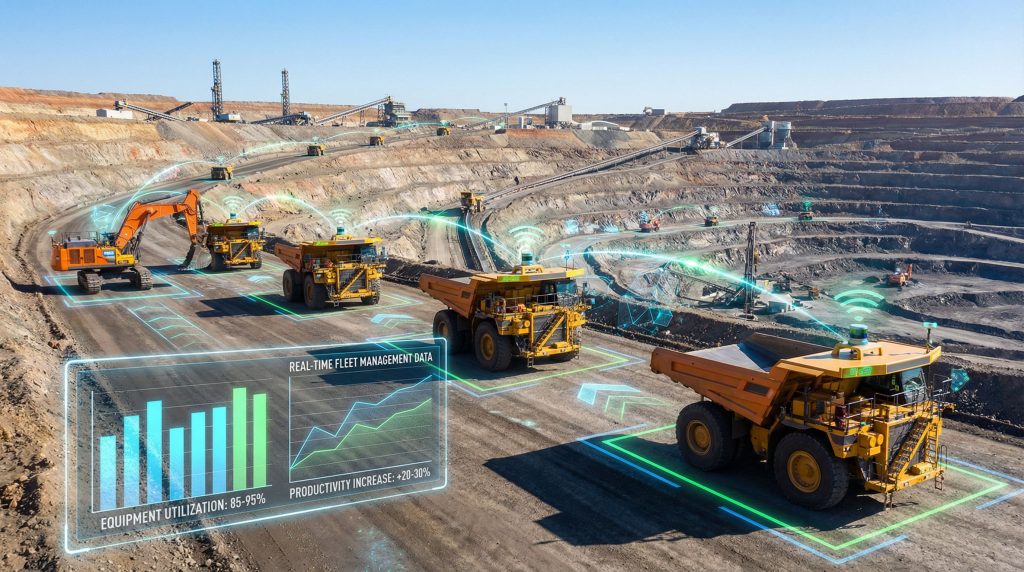
The mining industry stands at the precipice of a technological transformation that extends far beyond simple mechanisation. Modern resource extraction now operates within complex digital ecosystems where artificial intelligence, sensor networks, and autonomous decision-making systems converge to redefine operational possibilities. This shift represents more than efficiency gains; it signals a fundamental restructuring of how mining companies approach risk, productivity, and workforce deployment across both surface and underground environments.
The evolution toward autonomous mining operations reflects broader industry pressures including declining ore grades, escalating operational complexity, and heightened safety requirements in remote extraction zones. These challenges have accelerated investment in integrated automation platforms that can maintain continuous production cycles while reducing human exposure to high-risk activities. The technological infrastructure supporting these operations now encompasses everything from GPS-guided precision drilling to fleet coordination systems managing dozens of autonomous vehicles simultaneously.
What Defines Autonomous Mining Operations in Modern Resource Extraction?
Core System Architecture and Integration Frameworks
Autonomous mining operations function through sophisticated multi-layered hierarchies that integrate various levels of automation capability. These systems range from basic teleoperation with human oversight to fully autonomous equipment capable of independent decision-making in complex operational scenarios.
The technical foundation relies on sensor fusion technology that combines GPS positioning, LiDAR scanning, radar detection, and artificial intelligence algorithms. Furthermore, this integrated approach enables real-time environmental awareness and dynamic route optimization across mining sites. Fleet management software coordinates vehicle movements while processing continuous data streams from equipment sensors, ground conditions monitors, and processing plant status indicators.
Real-time data processing capabilities form the backbone of autonomous operations, with machine learning algorithms continuously analysing operational patterns to optimise performance metrics. These systems must process positioning data from dozens of vehicles simultaneously, coordinate loading equipment sequences, and maintain communication with crushing plants and processing facilities to ensure smooth material flow.
Operational Classification Levels
Modern autonomous mining operations follow a structured progression of automation levels:
-
Level 1: Remote-controlled operations maintain direct human oversight with operators controlling equipment from secure command centres
-
Level 2: Semi-autonomous systems handle routine navigation and standard procedures while requiring human intervention for complex decisions
-
Level 3: Supervised autonomy enables equipment to operate independently under normal conditions with humans managing only exceptional circumstances
-
Level 4: Full autonomy allows equipment to function with minimal human oversight, handling most operational scenarios independently
-
Level 5: Complete unmanned operations represent the ultimate goal where entire mine sites can function without direct human presence in operational areas
The progression through these levels requires substantial infrastructure investment and comprehensive workforce retraining programmes. At Escondida Norte in northern Chile, 33 autonomous haul trucks and 11 autonomous drilling systems now operate at Level 4 autonomy, moving more than 350,000 tonnes of material daily. This implementation represents one of the world's largest-scale autonomous mining deployments in copper extraction operations.
When big ASX news breaks, our subscribers know first
How Do Surface Mining Autonomous Systems Transform Large-Scale Operations?
Autonomous Haulage System Implementation
Surface mining operations have experienced the most dramatic transformation through autonomous haulage systems (AHS) deployment. Ultra-class trucks with 200-400 tonne payload capacities now operate continuously without human drivers, utilising sophisticated traffic management algorithms to prevent congestion at loading points and crusher interfaces.
The Escondida Norte implementation demonstrates how large-scale AHS operations function in practice. The site's 33 autonomous haul trucks coordinate movements through dynamic route optimisation that adjusts paths based on equipment availability, processing plant capacity, and real-time traffic conditions. Consequently, this system enables 24/7 operation capability with consistency levels impossible to achieve through human-operated fleets.
Performance metrics from autonomous haulage implementations show significant improvements:
| Performance Indicator | Traditional Operations | Autonomous Operations | Improvement Range |
|---|---|---|---|
| Equipment Utilisation | 65-75% | 85-95% | 20-30% increase |
| Fuel Consumption | Baseline | Optimised routes/speeds | 10-15% reduction |
| Maintenance Costs | Reactive/scheduled | Predictive/condition-based | 15-25% reduction |
| Safety Incidents | Human error factor | Systematic risk reduction | 40-60% reduction |
Open-Pit Drilling and Blasting Automation
Precision drilling operations now utilise GPS-guided autonomous rigs that can position blast holes with centimetre-level accuracy. These systems integrate directly with geological modelling software to ensure optimal fragmentation patterns while maintaining safety distances from active mining areas.
At Escondida Norte, 11 autonomous drilling systems coordinate with the autonomous haulage fleet to sequence operations efficiently. Moreover, automated blast hole sampling and quality control systems validate ore grades before blasting occurs, enabling real-time adjustments to mining plans based on geological conditions encountered during drilling operations. The AI transforming drilling processes demonstrate how sensor integration advancement enhances operational precision.
The integration with mine planning software allows drilling patterns to be optimised for specific rock formations and ore grade distributions. This precision approach reduces over-drilling while ensuring adequate fragmentation for downstream processing requirements.
Loading and Material Handling Systems
Autonomous excavator coordination with haul truck fleets represents one of the most complex integration challenges in surface mining operations. Loading equipment must synchronise with incoming autonomous trucks while managing stockpile inventory and maintaining optimal crusher feed rates.
Stockpile management through automated dozing operations helps maintain organised material flow patterns. These systems use GPS guidance to create and maintain stockpiles according to predetermined specifications, ensuring consistent material recovery and blending capabilities.
Conveyor system integration provides continuous material flow alternatives to truck haulage in specific applications. In addition, automated sampling and analysis systems monitor material quality throughout the transportation process, enabling real-time adjustments to blending ratios and processing parameters.
Which Technologies Enable Seamless Autonomous Mining Integration?
Sensor Fusion and Environmental Awareness
Modern autonomous mining equipment relies on multi-sensor data integration to achieve 360-degree environmental awareness. Primary positioning systems use GPS with Real-Time Kinematic (RTK) correction to achieve positioning accuracy within ±20-50 centimetres, essential for safe fleet coordination and precise material placement.
LiDAR and radar systems provide collision avoidance capabilities, scanning continuously for obstacles, personnel, or other equipment in operational zones. Weather condition adaptation enables surface operations to continue safely during precipitation, wind, or visibility-limiting conditions through sensor redundancy and adaptive operating parameters.
Ground condition assessment systems monitor surface stability and traction conditions, automatically adjusting vehicle speeds and route selections to maintain safe operating parameters. Autonomous mining technologies through IoT sensor networks monitor equipment health indicators including temperature, vibration, pressure, and wear patterns to optimise maintenance scheduling and prevent unexpected failures.
Artificial Intelligence and Machine Learning Applications
Path planning algorithms form the core of autonomous vehicle navigation, utilising advanced computational methods to determine optimal routes considering traffic conditions, loading equipment availability, and processing plant requirements. These systems process hundreds of variables simultaneously to make routing decisions in real-time.
Predictive analytics optimise equipment performance by analysing historical operational data to identify patterns and recommend operational adjustments. Anomaly detection systems monitor equipment behaviour continuously, flagging deviations from normal operating parameters that could indicate maintenance needs or safety concerns.
Adaptive learning capabilities enable autonomous systems to improve performance over time by analysing successful operational patterns and incorporating lessons learned into future decision-making processes. This continuous improvement approach helps optimise fuel consumption, reduce component wear, and enhance overall operational efficiency.
Communication Infrastructure Requirements
Autonomous mining operations require high-bandwidth wireless networks capable of transmitting real-time data from dozens of vehicles simultaneously. Communication systems must support latency requirements below 500 milliseconds for safety-critical operations while maintaining redundant pathways to prevent single-point communication failures.
Edge computing capabilities enable local decision-making at the equipment level, reducing dependence on centralised command systems for routine operational decisions. This distributed processing approach enhances system resilience while reducing communication bandwidth requirements for non-critical data streams.
Integration with enterprise resource planning (ERP) systems enables autonomous operations to coordinate with broader mine planning, maintenance scheduling, and production reporting systems. However, this connectivity ensures autonomous operations align with overall operational objectives and regulatory reporting requirements.
How Do Major Mining Companies Measure Autonomous Operations Success?
Productivity and Efficiency Metrics
Mining companies evaluate autonomous operations success through comprehensive performance measurement frameworks that extend beyond simple production volume metrics. The Escondida Norte operation, contributing approximately 30% of total Escondida production through autonomous zones, demonstrates how integrated measurement approaches function in practice.
Equipment utilisation rates represent a primary success indicator, with autonomous systems typically achieving 85-95% utilisation compared to 65-75% for traditional human-operated equipment. This improvement stems from elimination of shift changes, break periods, and operator fatigue-related productivity variations.
Daily material movement capabilities provide tangible productivity measurements. Escondida Norte's ability to move 350,000+ tonnes daily with 33 autonomous haul trucks demonstrates how fleet coordination and continuous operation capabilities translate into measurable throughput improvements. The data-driven mining operations approach enables comprehensive performance tracking across all operational parameters.
Safety Performance Indicators
Safety metrics represent the primary strategic driver for autonomous mining adoption. Mining companies measure success through reduction in personnel exposure to high-risk activities, with autonomous operations removing workers from collision zones, rollover risk areas, and dust-intensive environments.
Incident reduction statistics show autonomous systems achieving 40-60% reduction in safety incidents compared to traditional operations. This improvement results from elimination of operator fatigue, consistent adherence to safety protocols, and removal of human error factors from routine operational decisions.
Enhanced emergency response capabilities through automated systems enable faster reaction times to equipment failures or environmental hazards. Furthermore, automated monitoring systems can detect and respond to emergency conditions more quickly than human operators while simultaneously alerting emergency response teams.
Cost-Benefit Analysis Framework
Capital expenditure requirements for autonomous system implementation represent significant upfront investments, typically requiring 3-5 year payback periods depending on operation scale and commodity prices. However, operational expenditure reductions through fuel efficiency, maintenance optimisation, and labour cost adjustments contribute to long-term financial benefits.
Workforce transition planning becomes crucial for cost-benefit calculations, with companies like BHP investing in training 5,000+ workers in autonomous technologies at Escondida. Notably, 64% of autonomy-related roles are filled by women, indicating how autonomous operations create new technical career pathways distinct from traditional heavy equipment operation.
Return on investment calculations must account for productivity improvements, safety cost reductions, equipment utilisation gains, and maintenance optimisation benefits. Insurance cost reductions through improved safety performance provide additional financial benefits that support business case development for autonomous system deployment.
What Are the Implementation Challenges for Autonomous Mining Systems?
Technical Integration Complexities
Legacy equipment compatibility represents a fundamental challenge for autonomous system implementation. Mining operations typically include equipment from multiple manufacturers with varying technological capabilities, requiring sophisticated integration platforms to coordinate diverse systems effectively.
Interoperability between vendor systems demands standardised communication protocols and data formats. Without industry-wide standards, mining companies must develop custom integration solutions or accept limitations in cross-system coordination capabilities.
Cybersecurity considerations become critical as mining operations connect previously isolated equipment to networked systems. Network segmentation strategies, authentication protocols, and incident response procedures must be implemented to protect autonomous operations from cyber threats that could disrupt production or compromise safety systems.
System reliability and redundancy planning ensures autonomous operations can continue despite component failures or communication disruptions. Failover protocols must enable safe equipment shutdown or manual takeover procedures when autonomous systems encounter unexpected conditions.
Workforce Transition and Skills Development
Traditional equipment operators require comprehensive retraining programmes to transition into autonomous system monitoring and management roles. The skill sets needed for autonomous operations emphasise technical troubleshooting, system monitoring, and remote operation capabilities rather than mechanical equipment operation experience.
Remote operations centre staffing requires development of new organisational structures and job classifications. Personnel must be trained to monitor multiple autonomous vehicles simultaneously while maintaining situational awareness across entire mining operations.
Change management strategies must address potential workforce resistance to automation technologies while demonstrating how autonomous systems create new career opportunities rather than simply eliminating existing positions. The high percentage of women in autonomy-related roles at operations like Escondida suggests these positions attract different demographic profiles than traditional mining roles.
Regulatory and Compliance Considerations
Safety certification requirements for autonomous equipment vary significantly between jurisdictions, creating compliance challenges for multinational mining companies. The Western Australia safety code provides regulatory frameworks that must evolve to address autonomous operation scenarios while maintaining safety standards appropriate for unmanned equipment operation.
Environmental monitoring and reporting obligations may require modifications to account for autonomous operation patterns and data collection methods. Continuous monitoring capabilities of autonomous systems can enhance environmental compliance but may require updated reporting frameworks.
Insurance and liability frameworks for unmanned operations continue evolving as the industry gains experience with autonomous systems. Clear liability allocation between equipment manufacturers, software providers, and mining operators remains an ongoing legal development area.
How Will Autonomous Mining Operations Evolve Through 2030?
Emerging Technology Integration
5G network deployment will enable ultra-low latency communications essential for advanced autonomous coordination scenarios. Network capabilities supporting sub-10 millisecond latency will enable more sophisticated fleet coordination and real-time decision-making across larger operational areas.
Advanced AI algorithms incorporating machine learning and predictive analytics will handle increasingly complex decision-making scenarios. Digital twin technology will create virtual mine models that enable optimisation testing and scenario planning without disrupting actual operations. The AI mill drive optimization demonstrates how advanced algorithms can enhance processing efficiency.
Blockchain applications for supply chain transparency and verification will provide immutable records of material movement and processing. This technology could enable enhanced traceability for responsible sourcing requirements and automated contract execution based on production milestones.
Scale and Scope Expansion Projections
Integration across entire mine value chains will extend autonomous operations from extraction through processing and transportation. Multi-site coordination capabilities will enable centralised control systems to optimise operations across multiple mining locations simultaneously.
Autonomous processing plant operations represent the next frontier for unmanned mining systems. Quality control automation will enable continuous optimisation of processing parameters based on real-time ore characteristic analysis and market demand fluctuations.
Predictive maintenance evolution will extend to all mine infrastructure, creating comprehensive asset management systems that optimise maintenance scheduling across entire operations. Lights-out mining concepts may become feasible in specific applications where full automation eliminates need for human presence during routine operations.
Industry Transformation Indicators
The shift from equipment-centric to data-centric operations will fundamentally change how mining companies create value and compete in global markets. Data analytics capabilities will become as important as geological knowledge and engineering expertise for operational success.
Integration with renewable energy systems and sustainability goals will position autonomous operations as key enablers of carbon reduction strategies. Energy optimisation algorithms can coordinate equipment operation with renewable energy availability to minimise carbon footprint while maintaining production targets.
Development of autonomous mining-as-a-service business models may enable smaller mining companies to access advanced automation capabilities without major capital investments. This could democratise access to autonomous technologies across the mining industry evolution regardless of company size or financial resources.
The next major ASX story will hit our subscribers first
Strategic Considerations Driving Autonomous Mining Adoption
Market Drivers and Economic Factors
Labour shortage mitigation in remote mining locations provides compelling economic justification for autonomous system investment. Many mining regions struggle to attract and retain qualified personnel, making autonomous operations economically attractive even with significant upfront capital requirements.
Operational cost reduction through efficiency improvements creates sustainable competitive advantages in commodity markets. Fuel consumption reductions of 10-15% and maintenance cost savings of 15-25% provide measurable financial benefits that compound over equipment lifecycles.
Safety risk reduction generates insurance cost benefits while protecting companies from operational disruptions caused by safety incidents. Competitive advantage through technological differentiation enables mining companies to secure better contract terms and access to premium markets for responsibly-produced materials.
Regional Implementation Variations
High-wage economies prioritise automation for labour cost reduction and productivity enhancement. Countries with strong labour protections may experience slower autonomous adoption due to workforce transition challenges and regulatory requirements.
Remote location advantages make autonomous system deployment particularly attractive where traditional workforce accommodation and transportation costs are prohibitive. Infrastructure development requirements for communication networks and maintenance facilities vary significantly between regions, affecting implementation timelines and costs.
Regulatory environment influences create varying adoption rates across jurisdictions. Countries with supportive regulatory frameworks and government incentives for mining technology development tend to experience faster autonomous system deployment.
Investment and Partnership Strategies
Technology vendor selection requires long-term partnership agreements that extend beyond equipment supply to include ongoing software updates, technical support, and system optimisation services. Mining companies must evaluate vendor financial stability and technological roadmaps when making autonomous system investments.
Phased implementation approaches help manage financial risk while building organisational capabilities gradually. Collaborative development programmes with equipment manufacturers enable mining companies to influence technology development while sharing development costs and risks.
Knowledge sharing initiatives across industry participants accelerate technological advancement while reducing individual company implementation risks. Industry consortiums focused on autonomous mining standards and best practices help establish common frameworks that benefit all participants.
Integration with Broader Industry Trends
Alignment with ESG Objectives and Sustainability Commitments
Autonomous mining operations contribute significantly to Environmental, Social, and Governance (ESG) objectives through multiple pathways. Enhanced safety performance directly supports social responsibility commitments while fuel efficiency improvements contribute to carbon emission reduction goals.
The circular economy principles benefit from optimised resource extraction that autonomous systems enable through precision drilling and selective mining capabilities. Waste reduction through better ore body utilisation and processing optimisation aligns with sustainable resource management objectives.
Community engagement improvements result from reduced local environmental impacts and enhanced safety records that autonomous operations typically achieve. Mining companies can demonstrate tangible community benefits through measurable safety and environmental performance improvements.
Long-term Operational Transformation
Evolution from discrete automation to integrated autonomous ecosystems represents the ultimate transformation goal for mining operations. This progression requires coordination between extraction, processing, transportation, and administrative systems to achieve optimal operational efficiency.
Development of predictive and prescriptive operational models will enable mining companies to anticipate and prevent operational disruptions before they occur. Data monetisation opportunities may create new revenue streams through operational optimisation services and predictive analytics capabilities.
Autonomous mining as industry standard practice appears increasingly likely as technology costs decline and operational benefits become more apparent. Companies that fail to adopt autonomous technologies may find themselves at unsustainable competitive disadvantages in global commodity markets.
Disclaimer: This analysis is based on publicly available information and industry trends as of early 2026. Autonomous mining technology continues evolving rapidly, and specific performance metrics may vary significantly between operations depending on local conditions, implementation approaches, and equipment selections. Investment decisions should be based on comprehensive due diligence and professional consultation.
Ready to Invest in the Next Major Mineral Discovery?
Discovery Alert instantly alerts investors to significant ASX mineral discoveries using its proprietary Discovery IQ model, turning complex mineral data into actionable insights. Understand why historic discoveries can generate substantial returns by visiting Discovery Alert's dedicated discoveries page, then begin your 30-day free trial today to position yourself ahead of the market.