June 21, 2026
The global liquefaction sector operates on principles of thermodynamic efficiency and operational reliability that extend far beyond basic cooling processes. Modern LNG facilities represent sophisticated industrial systems where turbomachinery selection determines both immediate capital deployment and decades of operational performance. Understanding these technical foundations reveals why equipment partnerships shape the competitive landscape of natural gas price forecasts and export markets.
What Makes Baker Hughes the Leading Choice for Large-Scale LNG Liquefaction?
The selection of Baker Hughes liquefaction equipment for major export terminals reflects the company's established position in turbomachinery systems designed for continuous industrial operations. The Commonwealth LNG project's equipment award demonstrates how operators prioritise proven technology platforms when deploying capital investments exceeding billions of dollars, particularly amid concerns about tariff impacts on investments.
Technical Architecture Behind Modern LNG Export Terminals
Contemporary LNG facilities utilise mixed-refrigerant turbomachinery train configurations that integrate multiple subsystems into coordinated production units. Each train typically consists of:
• Aeroderivative gas turbines providing primary mechanical drive power
• Centrifugal compressors circulating refrigerant mixtures through closed cycles
• Heat exchanger networks facilitating heat transfer between natural gas and refrigerants
• Process control systems maintaining operational parameters within specified ranges
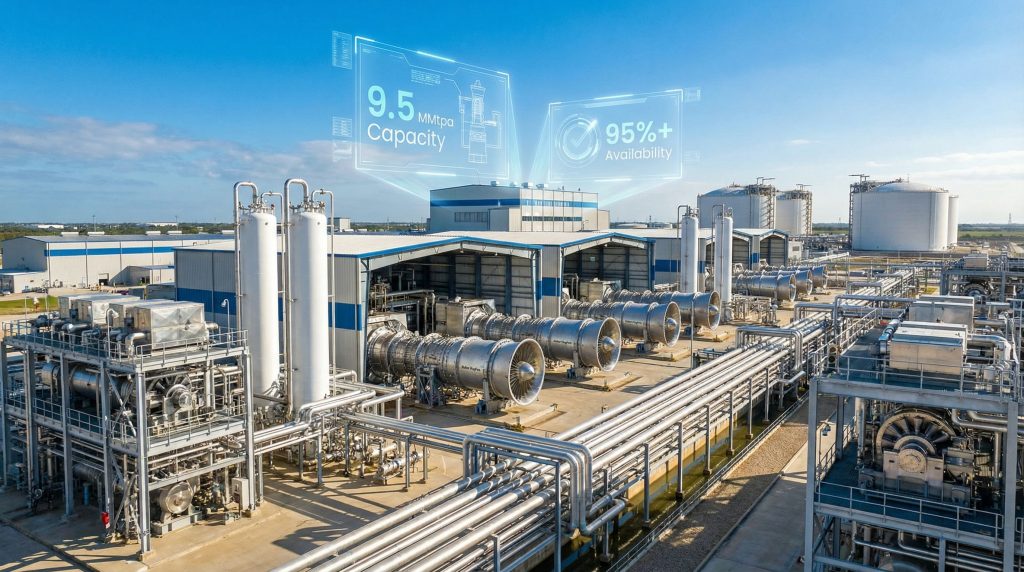
The Commonwealth LNG facility will deploy six mixed-refrigerant trains powered by LM9000 aeroderivative gas turbines, representing a total planned capacity of 9.5 million metric tons per annum (MMtpa). This configuration enables modular operation where individual trains can undergo maintenance whilst others maintain production continuity.
Baker Hughes LM9000 Gas Turbine Technology Deep Dive
Aeroderivative gas turbines offer distinct advantages over heavy-frame industrial turbines in LNG applications. The LM9000 platform provides high power density and operational flexibility suitable for continuous process operations. Key characteristics include:
Power and Performance Specifications:
• High-speed operation enabling direct coupling with centrifugal compressors
• Variable load capability accommodating process demand fluctuations
• Fuel flexibility allowing operation on natural gas or alternative fuels
• Compact footprint reducing facility infrastructure requirements
Maintenance and Reliability Features:
• Modular construction facilitating component replacement and overhaul procedures
• Extended warranty provisions covering multi-year operational periods
• Predictive maintenance capabilities through integrated monitoring systems
• Capital spares inventory ensuring component availability
The Commonwealth LNG equipment package includes commissioning services, capital spares, extended warranty, and full string testing, indicating comprehensive support throughout the facility's operational lifecycle. Furthermore, this approach addresses concerns about commodity market volatility affecting long-term project returns.
When big ASX news breaks, our subscribers know first
Why Do LNG Projects Choose Mixed-Refrigerant Train Systems?
Mixed-refrigerant cycles dominate large-scale LNG production because they optimise energy efficiency across the wide temperature range required for natural gas liquefaction. Understanding these process fundamentals illuminates why operators select specific equipment configurations for Baker Hughes liquefaction equipment Commonwealth LNG projects.
Process Engineering Fundamentals of LNG Liquefaction
Natural gas liquefaction requires cooling from ambient temperature to -162°C (-260°F) whilst maintaining process efficiency. Mixed-refrigerant systems achieve this through:
Refrigerant Composition Strategy:
• Nitrogen for high-temperature cooling stages
• Methane for intermediate temperature ranges
• Ethane and propane for lower temperature cooling
• Optimised blend ratios matching natural gas cooling requirements
Thermodynamic Advantages:
• Continuous temperature matching between refrigerant and natural gas streams
• Minimised irreversible heat transfer losses
• Reduced specific energy consumption compared to cascade systems
• Enhanced process control through refrigerant composition adjustment
| Performance Metric | Mixed-Refrigerant Systems | Alternative Technologies |
|---|---|---|
| Energy Efficiency | Optimised for large-scale operations | Variable depending on scale |
| Capital Investment | Moderate to high initial cost | Lower initial cost, higher operating cost |
| Operational Flexibility | High modularity and control | Limited operational range |
| Maintenance Requirements | Scheduled intervals, predictable costs | Variable maintenance patterns |
Critical Equipment Integration Requirements
The integration of LM9000 turbines with centrifugal compressors requires precise mechanical coupling and control system coordination. Essential integration elements include:
Turbomachinery Coupling Specifications:
• Rotational speed matching between turbine and compressor
• Vibration isolation and structural mounting systems
• Lubrication and cooling system integration
• Emergency shutdown and safety system coordination
Control System Architecture:
• Digital control systems managing six independent trains
• Process parameter monitoring and automatic adjustment
• Safety instrumented systems preventing equipment damage
• Remote monitoring capabilities for operational optimisation
What Are the Key Performance Indicators for Gulf Coast LNG Facilities?
Performance measurement in LNG operations encompasses availability, efficiency, and safety metrics that directly impact project economics. The Commonwealth LNG facility's performance expectations reflect industry standards for export terminal operations.
Operational Efficiency Benchmarks
Large-scale LNG facilities operate under strict performance commitments that include:
Availability Requirements:
• Target uptime typically exceeding 90% annually
• Planned maintenance windows scheduled during lower-demand periods
• Redundant systems enabling continued operation during individual train maintenance
• Emergency response procedures minimising unplanned downtime
Energy Consumption Standards:
• Specific energy consumption measured in kilowatt-hours per metric ton of LNG
• Optimisation of refrigeration cycle efficiency
• Heat integration minimising overall facility energy requirements
• Performance monitoring through advanced process control systems
Modern LNG facilities implementing mixed-refrigerant technology with aeroderivative turbines achieve operational availability rates that support consistent export commitments whilst maintaining energy efficiency standards suitable for competitive global markets.
Reliability and Maintenance Considerations
The Baker Hughes equipment for Commonwealth LNG addresses long-term reliability through:
Extended Warranty Provisions:
• Multi-year coverage protecting against equipment defects
• Performance guarantees ensuring operational targets
• Technical support throughout warranty periods
• Spare parts availability guarantees
Maintenance Planning Framework:
• Preventive maintenance schedules based on operating hours and cycles
• Predictive maintenance utilising condition monitoring systems
• Capital spares inventory enabling rapid component replacement
• Full string testing validating integrated system performance
How Does Equipment Selection Impact LNG Project Economics?
Equipment decisions in LNG projects influence both capital expenditures and operational costs over facility lifetimes extending 20-30 years. The Commonwealth LNG equipment selection reflects economic optimisation strategies, particularly considering US economic factors affecting project financing.
Capital Investment Analysis Framework
LNG facility capital costs encompass multiple interrelated systems where liquefaction equipment represents the largest single investment category:
| Cost Category | Percentage of Total CAPEX | Key Components |
|---|---|---|
| Liquefaction Equipment | 40-45% | Turbines, compressors, heat exchangers |
| Storage and Loading | 25-30% | Storage tanks, loading systems, jetty |
| Utilities and Infrastructure | 15-20% | Power systems, control rooms, utilities |
| Engineering and Construction | 10-15% | Design, project management, installation |
Cost Optimisation Strategies:
• Proven technology selection reducing development and commissioning risks
• Standardised equipment packages leveraging economies of scale
• Integrated warranty and service agreements providing cost predictability
• Energy efficiency optimisation reducing long-term operating expenses
Long-term Operational Cost Considerations
Operating cost analysis extends beyond initial capital deployment to encompass:
Fuel Gas Consumption:
• Natural gas used for turbine fuel represents significant ongoing cost
• High-efficiency turbines reduce fuel requirements and operating expenses
• Process optimisation minimising overall facility energy consumption
• Market price volatility management through efficiency improvements
Maintenance Cost Projections:
• Scheduled maintenance intervals typically every 3-5 years per train
• Component replacement costs including major overhauls
• Spare parts inventory management and availability
• Labour costs for specialised maintenance activities
Technology Upgrade Pathways:
• Future performance improvements through control system upgrades
• Component retrofits extending equipment operational life
• Digital monitoring enhancements improving operational efficiency
• Environmental compliance modifications addressing regulatory changes
What Role Does Strategic Partnership Play in LNG Equipment Supply?
The Commonwealth LNG equipment award demonstrates how strategic partnerships between operators, engineering contractors, and equipment suppliers influence project development and execution. In addition, these relationships help navigate energy transition challenges affecting the broader industry.
Vendor Selection Criteria for Major LNG Projects
Equipment supplier selection involves comprehensive evaluation of technical, financial, and strategic factors:
Technical Capability Assessment:
• Proven track record in comparable facility applications
• Technology performance history demonstrating reliability and efficiency
• Engineering capabilities supporting custom equipment configurations
• Testing and commissioning expertise ensuring successful startup
Financial Stability Evaluation:
• Corporate financial strength supporting long-term commitments
• Project financing capabilities potentially including equipment financing
• Insurance and bonding capacity protecting project investments
• Global service network ensuring worldwide support capabilities
The relationship between Technip Energies (engineering contractor) and Baker Hughes (equipment supplier) exemplifies established partnerships that reduce project execution risks through proven collaboration. Baker Hughes announced its equipment supply contract, highlighting the strategic importance of this partnership.
Risk Mitigation Through Equipment Partnerships
Strategic equipment partnerships address multiple project risks:
Performance Risk Management:
• Comprehensive performance guarantees covering availability and efficiency
• Liquidated damages provisions incentivising performance achievement
• Technical support throughout commissioning and early operations
• Continuous performance monitoring and optimisation services
Technology Risk Mitigation:
• Proven technology platforms avoiding first-of-a-kind risks
• Reference facility performance data validating technology capabilities
• Continuous technology development supporting future improvements
• Intellectual property licensing ensuring technology access
How Do Gulf Coast LNG Projects Compare Globally?
The Commonwealth LNG facility represents part of North America's expanding LNG export capacity, competing in global markets against projects worldwide. Understanding competitive positioning reveals strategic advantages and challenges.
Competitive Positioning Analysis
Major LNG export projects currently under development globally include:
| Project | Location | Capacity (MMtpa) | Technology Provider | Status |
|---|---|---|---|---|
| Commonwealth LNG | Louisiana, USA | 9.5 | Baker Hughes | Pre-FID |
| Plaquemines LNG | Louisiana, USA | 20.0 | Various | Development |
| Rovuma LNG | Mozambique | 15.2 | Various | Delayed |
| Arctic LNG 2 | Russia | 19.8 | Various | Sanctioned |
| Qatar North Field East | Qatar | 32.0 | Various | Under Construction |
U.S. Gulf Coast Advantages:
• Feedstock cost competitiveness through proximity to shale gas production
• Existing infrastructure including pipelines and processing facilities
• Regulatory environment with established permitting processes
• Financial markets access supporting project financing
Regional Advantages and Challenges
Location-Specific Benefits:
• Cameron Parish, Louisiana provides deep-water port access for large LNG carriers
• Pipeline connectivity to major natural gas production regions including Haynesville Shale
• Industrial infrastructure supporting construction and operations
• Skilled workforce availability with experience in petrochemical and LNG operations
Market Access Considerations:
• Panama Canal limitations affecting vessel routing to Asian markets
• Transportation cost competitiveness compared to alternative supply sources
• Market diversification opportunities across Atlantic and Pacific basin customers
• Contract structure flexibility accommodating various customer requirements
The next major ASX story will hit our subscribers first
What Are the Technical Specifications for Commonwealth LNG's Equipment Package?
The Baker Hughes liquefaction equipment Commonwealth LNG package encompasses comprehensive turbomachinery systems designed for continuous LNG production operations. Furthermore, Technip Energies received authorisation to procure key equipment for the facility.
Detailed Equipment Scope and Performance Parameters
Primary Equipment Components:
• Six LM9000 aeroderivative gas turbines providing primary drive power
• Centrifugal compressors integrated with turbine systems
• Control systems managing individual train operations
• Safety systems ensuring personnel and equipment protection
Performance Design Criteria:
• Total facility capacity: 9.5 MMtpa LNG production
• Individual train capacity: Approximately 1.6 MMtpa per train
• Operating flexibility: Variable load capability accommodating feedstock variations
• Reliability targets: High availability supporting export commitments
Service and Support Package:
• Commissioning services ensuring proper startup and performance validation
• Extended warranty coverage providing multi-year equipment protection
• Capital spares inventory enabling rapid component replacement
• Full string testing validating integrated system performance before startup
Integration with Broader Facility Infrastructure
The turbomachinery systems integrate with comprehensive facility infrastructure:
Pipeline and Feedstock Integration:
• Natural gas pipeline connections from regional production sources
• Gas treatment systems removing impurities before liquefaction
• Flow measurement and control managing feedstock to individual trains
• Emergency isolation systems protecting equipment during upset conditions
Storage and Export Systems:
• LNG storage tanks providing inventory management capability
• Loading systems transferring LNG to export vessels
• Marine terminal facilities accommodating various vessel sizes
• Utility systems supporting overall facility operations
Environmental and Safety Systems:
• Emissions control systems meeting regulatory requirements
• Fire protection systems designed for LNG facility hazards
• Process safety management preventing and mitigating potential incidents
• Environmental monitoring ensuring compliance with permits
FAQ: Baker Hughes Commonwealth LNG Equipment Supply
What is the significance of the LM9000 turbine selection for this project?
The LM9000 aeroderivative gas turbine provides high efficiency and reliability for continuous LNG production operations, with proven performance in similar Gulf Coast facilities. This technology offers operational flexibility and maintenance characteristics suited to the demanding requirements of LNG export terminals.
How does the six-train configuration optimise facility operations?
Multiple train systems provide operational flexibility, allowing for maintenance activities whilst maintaining production capacity, and enable phased startup procedures. This configuration also allows operators to match production levels with feedstock availability and market demand.
What are the key performance guarantees for this equipment package?
Whilst specific guarantees remain confidential, industry standard LNG equipment packages typically include availability, efficiency, and emissions performance commitments. The Commonwealth LNG package includes extended warranty provisions and comprehensive service support.
How does this contract position Baker Hughes in the LNG equipment market?
This award reinforces Baker Hughes' leadership position in LNG turbomachinery supply, building on their extensive installed base in North American export facilities. The selection demonstrates operator confidence in proven technology platforms for large-scale projects.
What factors influenced the equipment selection decision?
Equipment selection reflected comprehensive evaluation of technical performance, commercial terms, and strategic partnership opportunities. The choice of proven technology reduces project execution risks whilst ensuring long-term operational reliability.
How does the Commonwealth LNG project compare to other Gulf Coast developments?
The 9.5 MMtpa capacity positions Commonwealth LNG as a significant addition to U.S. export capacity. The project benefits from established regional infrastructure whilst contributing to North America's expanding role in global LNG markets.
Disclaimer: This analysis is based on publicly available information and industry knowledge. Specific project details, performance guarantees, and commercial terms may differ from publicly reported information. Investment and business decisions should be based on comprehensive due diligence and professional advice.
Ready to Invest in the Next Major Energy Discovery?
Discovery Alert provides instant notifications on significant ASX mineral discoveries across multiple sectors, including critical minerals essential for energy transition infrastructure, powered by its proprietary Discovery IQ model. Explore how major mineral discoveries can lead to exceptional market returns and begin your 30-day free trial today to position yourself ahead of the market with actionable investment insights.