July 20, 2026
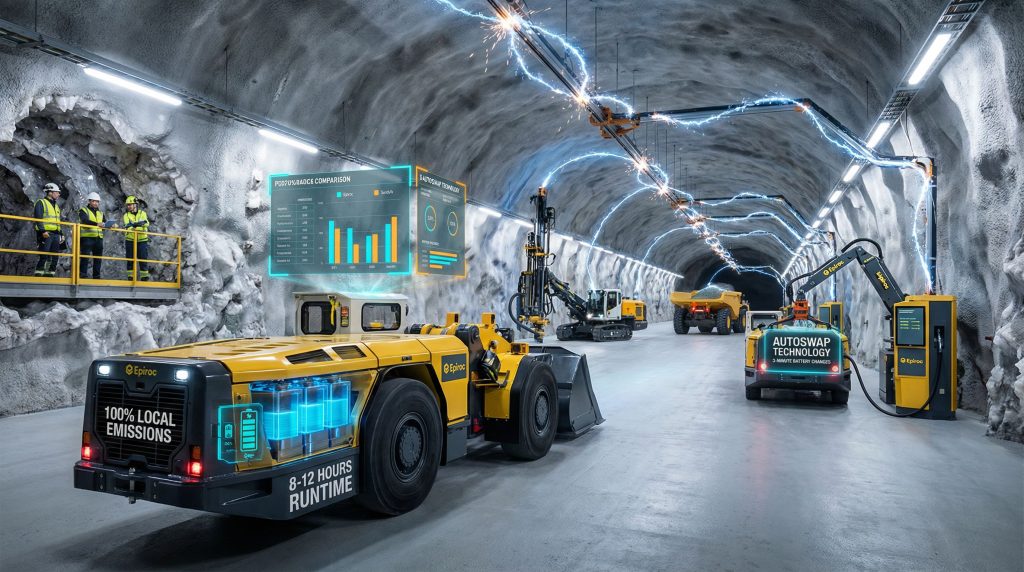
The modern mining industry stands at a pivotal juncture where operational excellence converges with environmental responsibility. Battery-electric mining equipment has emerged as the cornerstone technology driving this transformation, offering unprecedented operational advantages while addressing mounting regulatory pressures and sustainability imperatives. This technological revolution extends beyond simple equipment replacement, fundamentally reshaping how mining companies approach energy consumption, maintenance strategies, and fleet management across diverse geological environments.
Understanding the Technical Foundation of Battery-Electric Mining Equipment
Battery-electric mining equipment eliminates the thermodynamic inefficiencies inherent in internal combustion engines, which typically operate at 20-40% thermal efficiency in heavy-duty applications. Electric motors achieve 85-95% efficiency, converting electrical energy directly into mechanical work without combustion-related energy losses. This efficiency differential creates substantial operational advantages, particularly in underground environments where heat dissipation and air quality management are critical factors.
The elimination of diesel exhaust addresses significant occupational health concerns, as diesel particulate matter exposure in underground mining environments has been linked to cardiovascular disease and respiratory illness according to occupational health studies. Electric powertrains produce zero local emissions, fundamentally improving air quality in confined underground spaces where traditional ventilation systems must work continuously to manage combustion byproducts.
Furthermore, the integration of electric vehicles in mining operations represents a paradigm shift that extends beyond individual equipment performance. The elimination of local emissions creates cascading benefits throughout the entire mining operation.
Performance Characteristics of Electric Mining Systems
| Equipment Category | Operational Runtime | Charging Duration | Maintenance Reduction | Operational Benefits |
|---|---|---|---|---|
| Underground Loaders | 8-12 hours | 1-3 hours | 40-60% | Improved air quality |
| Haul Trucks | 6-10 hours | 2-4 hours | 50% | Reduced heat generation |
| Drilling Equipment | 10-14 hours | 1-2 hours | 40-50% | Lower acoustic signature |
Electric drivetrains require significantly fewer moving parts compared to diesel engines, eliminating oil changes, filter replacements, and many traditional maintenance procedures. A typical diesel engine requires oil changes every 250-500 operating hours, while electric motors operate without lubrication systems, reducing scheduled maintenance intervals and associated downtime.
When big ASX news breaks, our subscribers know first
Operational Applications Driving Electric Equipment Adoption
Underground Hard Rock Mining Environments
Underground mines operating at depths ranging from 500 metres to over 4,000 metres face unique challenges that make battery-electric mining equipment particularly advantageous. Ventilation energy costs in deep underground mines can represent 20-40% of total energy consumption, with diesel exhaust management requiring substantial airflow capacity to maintain safe working conditions.
The elimination of combustion engines reduces both the heat generation and harmful emissions that drive ventilation requirements. Electric motors generate heat only through resistive losses in windings and power electronics, representing 5-10% of input power compared to diesel engines that waste 60-70% of combustion energy as heat requiring dissipation through radiator systems.
Moreover, the development of hydrogen-powered trucks provides complementary solutions for specific applications where battery-electric systems may face limitations.
Key Underground Applications:
- Deep shaft operations where ventilation costs become prohibitive
- Multi-level mining requiring consistent power delivery across elevation changes
- Confined space operations where air quality management is paramount
- Temperature-sensitive environments where heat reduction improves working conditions
Surface Mining Operations and Regulatory Compliance
Surface mining operations face increasingly stringent noise regulations, particularly in populated areas. Mining sites in regions like Australia's Pilbara and Hunter Valley operate under strict environmental guidelines, with some jurisdictions imposing noise limits as low as 35dB(A) during nighttime hours near residential areas.
Battery-electric mining equipment operates at significantly lower acoustic levels than diesel-powered alternatives, enabling extended operational windows in noise-sensitive environments. This acoustic advantage allows mining companies to optimise production schedules while maintaining regulatory compliance, particularly valuable for operations near urban areas or sensitive environmental zones.
Additionally, renewable energy integration plays a crucial role in maximising the environmental benefits of electric mining equipment while reducing operational costs.
Ore Body Characteristics and Equipment Selection
The economics of electric equipment adoption varies significantly based on ore body characteristics, mining method, and operational scale. Underground operations mining high-grade ore bodies with long mine lives present the strongest business case for electric equipment, as the capital investment can be amortised over extended operational periods while delivering immediate operational cost savings.
Factors Influencing Electric Equipment ROI:
- Mine depth and associated ventilation costs
- Ore grade and processing requirements
- Production tonnage and equipment utilisation rates
- Local electricity costs versus diesel fuel pricing
- Regulatory environment and emissions compliance requirements
Core Technologies Enabling Electric Mining Equipment
Advanced Battery Chemistry Selection
Lithium Iron Phosphate (LFP) chemistry has emerged as the preferred solution for mining applications due to its superior thermal stability and cycle life characteristics. Current commercial LFP cells achieve energy densities of 150-170 Wh/kg while providing 3,000-5,000+ charge cycles at 80% depth-of-discharge, with some manufacturers claiming extended lifecycles exceeding 7,000 cycles under optimal conditions.
The thermal stability of LFP chemistry is particularly important in underground mining environments where temperature control and fire safety are paramount. Unlike higher-energy-density chemistries such as NCA or NMC, LFP cells resist thermal runaway even under extreme conditions, providing the safety margins required for confined space operations.
In addition, recent developments in battery recycling breakthrough technologies are addressing lifecycle sustainability concerns while creating new value streams for mining operations.
Power Management and Charging Infrastructure
Mining operations require sophisticated power management systems to handle simultaneous charging of large equipment fleets. Charging 200-300 electric vehicles simultaneously creates peak power demands of 30-100+ MW, necessitating significant electrical infrastructure investment or on-site renewable energy generation to manage grid impact.
Charging System Categories:
- Fast DC Charging: 150-350kW systems enabling 80% charge in 1-2 hours
- Battery Swapping: Automated systems exchanging depleted batteries in under 5 minutes
- Trolley Integration: Overhead power delivery with battery backup for continuous operation
- Opportunity Charging: Intermediate charging during operational breaks
Battery management systems (BMS) in mining equipment monitor cell-level voltage and temperature whilst managing charge and discharge rates to optimise battery life and performance. These systems integrate with mine control platforms to enable predictive maintenance and fleet optimisation strategies.
Autonomous Operation Integration
The convergence of electric powertrains and autonomous operation creates synergistic advantages for mining companies. Electric equipment provides consistent power delivery and precise control characteristics that enhance autonomous system performance, while autonomous operation optimises energy consumption through route planning and operational efficiency algorithms.
The implementation of AI-driven fleet optimization systems maximises the operational benefits of electric equipment whilst reducing energy consumption through intelligent scheduling and route planning.
Integration Benefits:
- Energy optimisation through AI-driven route planning
- Predictive maintenance using real-time equipment monitoring
- Remote operation capabilities reducing personnel exposure
- Fleet coordination optimising charging schedules and equipment deployment
Leading Manufacturers and Technology Development
Swedish Engineering Excellence in Electrification
Swedish manufacturers have established dominant positions in battery-electric mining equipment through decades of engineering investment and early market adoption. These companies have committed to comprehensive electrification strategies that position them as technology leaders in the transition away from diesel-powered equipment.
Epiroc has announced plans to offer battery-electric versions of every product in its underground equipment range by 2030, representing a complete portfolio transformation that anticipates regulatory pressure and customer demand evolution. The company's acquisition of ASI Mining has extended its capabilities into surface autonomy, creating integrated solutions combining electrification with autonomous operation.
Sandvik's approach emphasises equipment integration with digital platforms, combining battery-electric powertrains with OptiMine analytics and AutoMine automation systems. The company's battery-electric loader and truck ranges are deployed across multiple continents, providing operational validation of electric technology in diverse mining environments.
Global Market Expansion and Competitive Dynamics
Chinese manufacturers are disrupting established market dynamics through competitive pricing and rapid product development cycles. XCMG secured a landmark contract to supply 150-200 battery-electric haul trucks for Fortescue's Australian operations, representing one of the largest single electric mining equipment orders in industry history.
This contract demonstrates that Chinese manufacturers are competing on technology capability rather than price alone, challenging established Western and Japanese companies' market positions. The deal signals broader acceptance of Chinese electric mining technology in premium markets previously dominated by traditional suppliers.
Market Share Evolution:
| Region | Traditional Leaders | Emerging Competitors | Technology Focus |
|---|---|---|---|
| North America | Caterpillar, Komatsu | XCMG, Sany | Autonomous integration |
| Australia | Epiroc, Sandvik | XCMG | Battery swapping |
| Europe | Liebherr, Metso | Sany | Grid integration |
| Africa | Caterpillar | Chinese OEMs | Cost optimisation |
Economic Analysis and Total Cost of Ownership
Operational Cost Structure Transformation
Battery-electric mining equipment fundamentally alters operational cost structures by eliminating fuel consumption, reducing maintenance requirements, and minimising ventilation energy costs in underground applications. These savings often offset higher initial capital costs within 3-5 years of operation, depending on equipment utilisation and local energy pricing.
Annual Operating Cost Comparison:
| Cost Category | Diesel Equipment | Electric Equipment | Annual Savings |
|---|---|---|---|
| Energy Costs | $160,000 – $200,000 | $50,000 – $80,000 | $80,000 – $150,000 |
| Maintenance | $180,000 – $220,000 | $90,000 – $130,000 | $60,000 – $120,000 |
| Ventilation (Underground) | $120,000 – $150,000 | $60,000 – $90,000 | $30,000 – $90,000 |
The global mining industry's responsibility for approximately 4-7% of global greenhouse gas emissions when including scope 1, 2, and 3 emissions creates additional economic pressures through carbon pricing mechanisms and ESG investment criteria. Electric equipment adoption positions mining companies favourably with institutional investors prioritising climate commitments.
Capital Investment and Financial Models
Mining companies are adopting various financial models to manage the capital investment required for electric equipment fleets. Battery-as-a-Service arrangements allow operators to access electric technology without large upfront battery investments, whilst manufacturers retain ownership of the most expensive system components.
Financing Approaches:
- Traditional Purchase: Full equipment ownership with manufacturer warranties
- Operating Leases: Reduced capital requirements with predictable monthly payments
- Battery-as-a-Service: Separate battery and equipment financing arrangements
- Performance Contracts: Payments tied to equipment availability and performance metrics
Major Implementation Projects and Case Studies
Glencore's Onaping Depth Mine Electrification
Glencore's Onaping Depth Mine in Ontario has ordered 23 battery-electric machines from Epiroc, positioning the operation as one of the first predominantly electric underground mines in North America. The project features automated charging systems and battery swap technology designed to minimise equipment downtime during energy replenishment.
The mine's electrification strategy addresses both operational cost reduction and environmental compliance, as underground diesel emissions management represents a substantial portion of operating expenses. The implementation provides real-world validation of electric equipment performance in Canadian hard rock mining conditions.
Fortescue's Large-Scale Electric Haul Truck Deployment
Fortescue's contract with XCMG for 150-200 battery-electric haul trucks represents the mining industry's largest single electric equipment order, signalling mainstream acceptance of Chinese electric mining technology in premium markets. The project includes integration with renewable energy charging infrastructure, creating a comprehensive low-emission mining system.
The deployment's scale provides operational data on electric haul truck performance in Pilbara iron ore conditions, informing future industry adoption decisions. The project demonstrates that electric technology can meet the demanding requirements of high-tonnage surface mining operations.
The next major ASX story will hit our subscribers first
Infrastructure Requirements and Grid Integration
Electrical Infrastructure Development
Large-scale electric mining equipment deployment requires substantial electrical infrastructure investment, including high-voltage grid connections capable of supporting 5-15MW charging loads during peak demand periods. Mining companies must coordinate with utility providers to ensure grid stability and adequate power delivery capacity.
Infrastructure Components:
- High-voltage transformers stepping down transmission voltage to equipment requirements
- Power distribution systems routing electricity to charging stations throughout mine sites
- Load management systems coordinating charging schedules to prevent grid overload
- Energy storage systems providing grid stability and backup power capabilities
Renewable Energy Integration
The combination of electric mining equipment with on-site renewable energy generation creates opportunities for significant operational cost reduction and emissions elimination. Solar and wind installations can provide charging power during favourable weather conditions, reducing grid dependency and electricity costs.
Mining operations in Australia, Chile, and other regions with high solar irradiance are installing large-scale photovoltaic systems to power electric equipment fleets. Energy storage systems balance renewable generation intermittency with equipment charging requirements, enabling 24/7 operations using clean energy sources.
Future Technology Development and Market Evolution
Next-Generation Battery Technologies
Solid-state battery technology promises energy density improvements of 2-3x current LFP systems whilst maintaining thermal stability and cycle life characteristics essential for mining applications. These advances could eliminate range anxiety and reduce charging infrastructure requirements by extending equipment operating time between charges.
Fast charging technology development targets sub-15 minute charging capabilities for mining equipment, approaching the refuelling time of diesel systems whilst maintaining the operational advantages of electric powertrains. Advanced battery management systems will extend operational lifecycles beyond 7,000 cycles, improving total cost of ownership metrics.
What Role Will Hydrogen Play in Mining Electrification?
Fuel cell technology development offers complementary solutions for mining applications requiring extended range or rapid refuelling. Hydrogen-electric hybrid systems combine the operational flexibility of fuel cells with the efficiency advantages of battery-electric powertrains for applications where pure battery systems may have limitations.
On-site electrolysis using renewable energy can produce green hydrogen for fuel cell systems, creating closed-loop energy systems that eliminate fossil fuel dependency whilst providing operational flexibility for demanding mining applications.
Market Evolution and Competitive Landscape
The battery-electric mining equipment market is experiencing rapid evolution as traditional manufacturers compete with emerging technology companies and Chinese OEMs. Consolidation is likely as companies seek to acquire complementary technologies and expand geographic presence in growing markets.
Industry Transformation Drivers:
- Regulatory pressure accelerating emissions reduction requirements
- ESG investment criteria favouring low-emission mining operations
- Technology maturation improving electric equipment reliability and performance
- Cost competitiveness as electric systems achieve operational cost advantages
Implementation Strategy and Risk Management
How Should Mining Companies Approach Electric Equipment Deployment?
Mining companies should approach electric equipment adoption through carefully planned phases that minimise operational risk whilst building internal expertise and infrastructure capabilities. Initial pilot deployments provide operational experience and performance validation before large-scale fleet conversion.
Strategic Implementation Framework:
Phase 1: Assessment and Planning
- Comprehensive energy audit of existing operations
- Infrastructure capacity evaluation and upgrade requirements
- Financial analysis including total cost of ownership projections
- Workforce training and development planning
Phase 2: Pilot Deployment
- Small-scale electric equipment testing in representative applications
- Charging infrastructure installation and integration
- Performance monitoring and optimisation
- Maintenance procedure development
Phase 3: Scaled Implementation
- Fleet-wide electric equipment deployment based on pilot results
- Comprehensive charging network expansion
- Integration with mine automation and control systems
- Supplier partnership development for ongoing support
Risk Mitigation Strategies
Electric equipment adoption involves technical, operational, and financial risks that require comprehensive mitigation strategies. Battery technology evolution, infrastructure reliability, and workforce adaptation represent key risk categories requiring proactive management.
Risk Categories and Mitigation:
- Technology Risk: Partner with established manufacturers providing proven systems
- Infrastructure Risk: Implement redundant charging systems and backup power supplies
- Operational Risk: Maintain hybrid diesel-electric fleets during transition periods
- Financial Risk: Structure contracts with performance guarantees and flexible terms
Mining operations should maintain contingency plans including backup diesel equipment and alternative charging arrangements to ensure operational continuity during the electric equipment adoption process. Comprehensive maintenance training and spare parts inventory management become critical success factors for electric fleet operations.
However, the transition requires careful consideration of workforce development needs and operational continuity planning. Companies should invest in comprehensive training programmes to ensure maintenance personnel understand electric drivetrain systems and safety protocols specific to high-voltage equipment operations.
Investment Disclaimer: This analysis contains forward-looking statements and projections that involve inherent risks and uncertainties. Mining equipment technology development, market adoption rates, and operational performance may vary significantly from projections. Investors should conduct independent due diligence and consider multiple scenarios when evaluating electric mining equipment investments. Past performance does not guarantee future results, and emerging technologies carry additional risks related to technological obsolescence and market acceptance.
Want to Stay Ahead of Mining Technology Trends?
Discovery Alert's proprietary Discovery IQ model delivers instant notifications on significant ASX mineral discoveries, including companies developing cutting-edge mining technologies like battery-electric equipment systems. Access real-time insights into actionable investment opportunities and position yourself ahead of market movements by exploring Discovery Alert's discoveries page showcasing historic examples of exceptional returns, then begin your 14-day free trial today.