June 5, 2026
The Hidden Supply Chain That Could Reshape Critical Mineral Markets
The global energy transition is often framed as a story about what goes into the ground: new mines, deeper drilling, larger open pits. But an equally consequential story is unfolding above ground, inside the billions of lithium-ion batteries that power electric vehicles, store renewable energy, and drive consumer electronics. When those batteries reach the end of their operational life, they carry within them a concentrated repository of the same critical minerals that took years and billions of dollars to extract in the first place.
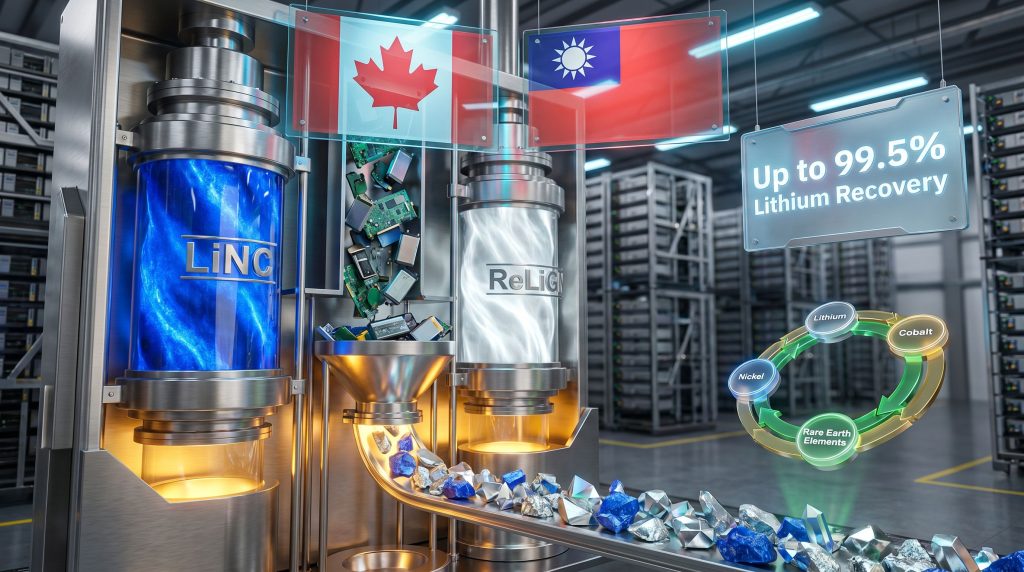
This reality is reshaping how technologists, manufacturers, and policymakers think about supply chain resilience. Rather than treating end-of-life batteries as a disposal problem, forward-thinking companies are increasingly viewing them as a self-replenishing mineral reserve — one that grows in direct proportion to the technologies driving demand. The Litus and UWin Nanotech battery metals recycling partnership, formalised through a Memorandum of Understanding, represents one of the more technically sophisticated attempts to turn this concept into commercial reality.
When big ASX news breaks, our subscribers know first
Why Secondary Recovery Is No Longer Optional for Critical Mineral Strategy
The structural dynamics of critical mineral supply are creating pressure that primary mining alone cannot absorb. Critical minerals demand tied to EV adoption, grid-scale storage, and expanding AI data centre infrastructure consistently outpaces what confirmed mine supply pipelines can realistically deliver within relevant timeframes.
The geographic concentration of processing capacity compounds this challenge. While lithium is mined across multiple continents, a substantial proportion of global lithium chemical processing has historically been concentrated in China. Cobalt supply faces an even more acute concentration problem, with the Democratic Republic of Congo accounting for the majority of global primary production. Furthermore, rare earth processing challenges present perhaps the most strategically sensitive case: China processes the overwhelming majority of rare earth oxides consumed globally, giving it structural leverage over industries ranging from defence to clean energy.
Strategic Context: The International Energy Agency has consistently flagged critical mineral supply concentration as one of the most significant risks to clean energy transition timelines, noting that the geographical diversity of processing capacity for many minerals is far lower than for oil and gas.
Secondary recovery from spent batteries and electronic waste offers a partial but meaningful counter to these vulnerabilities. Unlike primary deposits, secondary feedstocks accumulate in the markets that consume them, meaning that countries with high EV adoption and electronics consumption are simultaneously building domestic mineral reserves — even if they have not traditionally been mining jurisdictions.
What the Litus and UWin Nanotech Battery Metals Recycling Partnership Actually Involves
Calgary, Alberta-based Litus and Taiwan-headquartered UWin Nanotech Co. formalised their collaboration in the presence of representatives from the Canadian Trade Office in Taipei and the Industrial Technology Research Institute (ITRI) of Taiwan. The signing involved Litus CEO Ghada Nafie, UWin Nanotech Chairman Henry Hsu, Marie-Louise Hannan from the Canadian Trade Office in Taipei, and Tsu-Yu Chao, deputy general director of the Industry, Science and Technology International Strategy Center at ITRI.
The MOU establishes a framework for combining Litus' proprietary nanotechnology platforms with UWin's hydrometallurgical processing capabilities. Together, the two companies aim to develop an integrated system capable of recovering a broad basket of critical minerals from spent lithium-ion batteries, electronic waste, and other secondary feedstock streams.
The collaboration covers five primary workstreams:
- Extending separation applications to rare earth elements and other high-value materials beyond lithium.
- Optimising material performance across diverse feedstock compositions and recycling stream types.
- Assessing technical feasibility and commercial economics across multiple secondary material sources.
- Exchanging operational data, process knowledge, and technical expertise between the two organisations.
- Exploring future commercialisation pathways, including scale-up arrangements, licensing models, distribution agreements, and potential joint venture structures.
It is important to note that the MOU represents a structured exploration and development framework, not a confirmed commercial facility or fully deployed industrial operation. The partnership is designed to validate technical feasibility and de-risk the pathway from laboratory-proven concepts to industrial-scale application.
Inside Litus' Nanocomposite Technology Platforms
Litus has developed two distinct but complementary proprietary technologies, both built on nanocomposite material science:
LiNC (Direct Lithium Extraction)
Direct lithium extraction via LiNC operates as a single-step process engineered to recover up to 99.5% of lithium from brine sources. A technically significant aspect of LiNC is its ability to operate economically on brine concentrations that conventional processing methods would classify as sub-commercial. This matters because it expands the universe of exploitable lithium resources beyond the high-grade salars that have historically dominated the lithium supply picture.
ReLiGN (Battery Recycling Platform)
ReLiGN is specifically designed for end-of-life lithium-ion battery processing, targeting lithium recovery at battery-grade lithium purity specifications. This is a critical threshold in the recycling value chain. Recovered lithium that falls short of battery-grade quality cannot re-enter the cell manufacturing supply chain without additional refining steps, each of which adds cost, complexity, and potential yield loss. A platform that achieves battery-grade output directly from secondary feedstock removes a significant economic barrier to circular supply chain economics.
What Makes Nanocomposite Selectivity Technically Distinctive
The fundamental advantage of nanocomposite sorbent-based extraction lies in molecular-level selectivity. Conventional hydrometallurgical approaches to lithium recovery often involve broad chemical dissolution followed by sequential purification stages to separate lithium from competing ions such as sodium, magnesium, and potassium. This multi-stage process consumes energy, generates chemical waste streams, and introduces yield losses at each purification step.
Nanocomposite sorbents are engineered to preferentially bind lithium ions based on ionic size and charge characteristics, consequently reducing the burden on downstream purification. The result is a more direct pathway from feedstock to product, with a reported reduction in energy consumption relative to pyrometallurgical and conventional hydrometallurgical approaches when applied specifically to lithium recovery.
Technical Note: Pyrometallurgical smelting, while capable of recovering cobalt and nickel efficiently, is a poor method for lithium recovery because lithium typically reports to the slag phase at high temperatures, making it economically unrecoverable. This is one reason why integrated technology approaches that combine thermal and chemical methods with selective extraction are gaining traction for full-spectrum battery recycling.
UWin Nanotech's Hydrometallurgical Capabilities and What Apple's Certification Signals
UWin Nanotech has built its technical reputation on environmentally oriented hydrometallurgical processes for recovering precious metals, critical minerals, and rare earth elements from electronic waste and spent lithium-ion batteries. The company positions its approach as a cleaner alternative to conventional pyrometallurgical smelting, which generates significant carbon emissions, sulphur dioxide outputs, and solid slag residues requiring specialised disposal.
The commercial credibility of UWin's processes received a significant external validation in 2020 when Apple certified the company as an approved recycling supplier. Apple's supplier qualification process for recycling partners is notably rigorous, encompassing material recovery rate standards, environmental compliance requirements, and chain-of-custody documentation. Achieving and maintaining that certification places UWin in a select category of recyclers that have demonstrated the ability to meet tier-one technology manufacturer standards.
Why the Technology Pairing Creates Capabilities Neither Company Has Independently
The strategic logic of the Litus and UWin Nanotech battery metals recycling partnership becomes clearest when viewed through the lens of what each technology does well and where it has inherent limitations:
| Technology Approach | Primary Strength | Inherent Limitation |
|---|---|---|
| Litus Nanotechnology (LiNC / ReLiGN) | High lithium selectivity at battery-grade purity | Narrower focus on lithium; less optimised for full multi-metal recovery |
| UWin Hydrometallurgy | Multi-metal recovery across Co, Ni, REEs, precious metals | Lower lithium-specific selectivity compared to nanocomposite sorbents |
| Integrated Platform | Full critical mineral basket from batteries and e-waste | Being validated through the MOU collaboration workstreams |
The integrated platform targets a minerals basket that includes lithium, cobalt, nickel, rare earth elements, and additional precious and critical metals, addressing both the lithium-specific gap in conventional hydrometallurgy and the multi-metal gap in nanocomposite-only approaches.
Rare Earth Recovery: The Strategic Frontier of Battery Recycling
The MOU explicitly identifies expanding separation applications to rare earth elements as a priority collaboration area, and this is arguably the most strategically significant aspect of the partnership from a supply chain perspective. In addition, the Chinese battery recycling breakthrough earlier this year demonstrated just how rapidly the sector is advancing on a global scale.
Rare earth elements present unique technical challenges in secondary recovery. The seventeen lanthanide elements are chemically similar to one another, making separation difficult and energy-intensive regardless of whether the source is a primary ore or a secondary feedstock. Conventional REE separation relies on liquid-liquid solvent extraction processes that require multiple sequential stages to achieve the element-level purity that end markets require.
The application of nanocomposite selectivity to REE separation from secondary feedstocks is a less mature field than lithium recovery, and the technical feasibility work outlined in the MOU is intended to address exactly this question. If the combined platform can demonstrate REE separation from e-waste and battery streams at commercially viable recovery rates and purity levels, it would represent a meaningful advance in addressing one of the most concentrated and geopolitically sensitive supply chains in the critical minerals landscape.
Speculative Perspective: Some industry observers have theorised that REE recovery from secondary feedstocks could eventually provide a more consistent and geographically distributed REE supply than primary mining, precisely because e-waste accumulates in high-technology consumption markets rather than being geographically fixed. This remains an unproven thesis at commercial scale, but the directional logic is compelling and is reflected in the research priorities of several national laboratories and industrial research institutes.
The next major ASX story will hit our subscribers first
The Circular Economy Framework: From Battery to Battery
Understanding why the Litus and UWin Nanotech battery metals recycling partnership matters requires situating it within the broader circular economy framework for battery metals. The pathway from primary production to end-of-life recovery and re-entry into the supply chain involves six distinct stages:
- Primary extraction: Lithium, cobalt, nickel, and rare earths are mined from geological deposits and processed into chemical precursors.
- Cathode material synthesis: Processed minerals are converted into cathode active materials such as NMC (nickel manganese cobalt), NCA (nickel cobalt aluminium), or LFP (lithium iron phosphate) formulations.
- Cell and battery pack assembly: Cathode materials are incorporated into lithium-ion cells and assembled into battery modules and packs.
- Deployment and use: Battery packs power electric vehicles, grid storage systems, and consumer electronics over operational lifetimes typically ranging from eight to fifteen years depending on application.
- End-of-life collection and pre-processing: Spent batteries are discharged, dismantled, and converted into black mass — the powdered intermediate material containing the recoverable mineral content.
- Secondary recovery and re-entry: Technologies like those being developed by Litus and UWin Nanotech extract battery-grade minerals from black mass for re-entry into the cathode manufacturing supply chain.
The Black Mass Problem That Most Coverage Overlooks
A detail that receives insufficient attention in mainstream coverage of battery recycling is the variability of black mass composition. Unlike a geological ore body, which has a relatively consistent mineral assemblage that can be characterised through exploration drilling, black mass composition varies significantly depending on the cathode chemistry of the cells being processed.
NMC 811 black mass (from high-nickel cells) has a very different nickel-to-cobalt-to-manganese ratio than NMC 111 black mass, and LFP black mass contains no cobalt or nickel at all but is rich in iron and phosphate. A recycling technology that performs well on one black mass composition may require significant process adjustment for another.
The MOU's specific inclusion of feedstock optimisation as a workstream reflects an awareness of this practical challenge. Developing a platform that can adapt its performance parameters to diverse recycling stream compositions is a meaningful technical objective, not a trivial process engineering task.
Industry Drivers and the Investment Case for Battery Recycling Technology
The macro environment for battery recycling investment is being shaped by several converging forces that are unlikely to reverse over the medium term:
| Industry Driver | Mechanism of Impact on Battery Recycling |
|---|---|
| EV fleet growth | Increases future end-of-life battery feedstock volume through the late 2020s and into the 2030s |
| Grid storage deployment | Expands secondary feedstock beyond automotive, adding stationary storage batteries |
| AI data centre infrastructure | Drives electronics demand and associated e-waste volumes containing REEs and precious metals |
| EU Battery Regulation | Mandates minimum recycled content percentages in new batteries sold in the European market |
| North American IRA provisions | Creates incentives for domestic critical mineral processing including secondary recovery |
| Geopolitical supply risk | Reduces tolerance among Western manufacturers for single-source mineral dependencies |
Investor Consideration: The battery recycling sector carries genuine technical and commercial execution risk at early stages of development. MOU-stage partnerships represent exploratory frameworks rather than confirmed revenue streams, and investors should assess company disclosures carefully and consider the full range of technical, regulatory, and market risks before drawing investment conclusions. Nothing in this article constitutes financial advice.
Frequently Asked Questions About the Litus and UWin Nanotech Battery Metals Recycling Partnership
What exactly is the MOU between Litus and UWin Nanotech?
The MOU is a Memorandum of Understanding — a formal but non-binding framework document — that establishes the scope of technical collaboration and commercial exploration between Calgary-based Litus and Taiwan's UWin Nanotech Co. It defines five workstreams covering technology integration, feedstock optimisation, feasibility assessment, knowledge exchange, and commercialisation pathway exploration.
What is the difference between LiNC and ReLiGN?
LiNC is a direct lithium extraction technology targeting geological brine sources, capable of recovering up to 99.5% of lithium including from concentrations previously considered uneconomic. ReLiGN is specifically designed for end-of-life battery processing, recovering lithium from spent lithium-ion cells at battery-grade purity specifications.
Why does Apple's certification of UWin matter?
Apple operates one of the most demanding supply chain qualification processes in the technology sector. Its certification of UWin as an approved recycling supplier in 2020 provides independent verification that UWin's hydrometallurgical processes can meet the recovery rate, purity, and compliance standards of a tier-one global manufacturer.
Is there a commercial facility being built as a result of this MOU?
No commercial facility has been announced. The MOU establishes a structured framework for technical validation and commercial evaluation. Scale-up and facility development are identified as future exploration areas, contingent on the technical and economic outcomes of the collaboration workstreams.
What makes the rare earth element component of this partnership significant?
REE separation from secondary feedstocks addresses one of the most geopolitically sensitive supply chain vulnerabilities in the critical minerals landscape. The chemical similarity of lanthanide elements makes REE separation technically demanding, and the MOU's prioritisation of this application area signals an ambition to extend the integrated platform beyond lithium into a more strategically complex and commercially valuable mineral category.
Positioning Within the Broader Battery Recycling Technology Landscape
The global battery recycling industry is attracting substantial capital across three primary technology approaches: pyrometallurgical smelting, conventional hydrometallurgy, and direct recycling — which seeks to recover cathode materials in a form that can be directly reprocessed rather than dissolved and re-synthesised.
The Litus and UWin Nanotech battery metals recycling partnership occupies a differentiated technical position, combining nanocomposite selectivity with hydrometallurgical processing in a hybrid model that neither of the dominant commercial approaches currently replicates. This differentiation is commercially meaningful if the integrated platform can demonstrate performance advantages in lithium recovery purity and REE separation that conventional approaches cannot match at comparable economics.
The cross-border structure of the partnership — anchored by Canadian nanotechnology and Taiwanese hydrometallurgical expertise and convened with institutional participation from ITRI and the Canadian Trade Office in Taipei — reflects a model of international technology integration that is becoming more common in the critical minerals sector. Furthermore, as reported by Recycling Today, nations are increasingly seeking to build resilient supply chains through bilateral collaboration rather than unilateral capability development.
As the volume of end-of-life batteries continues to grow through the late 2020s, the commercial urgency behind partnerships like this one will only intensify. Secondary recovery is transitioning from an environmental compliance activity into a strategic supply chain function, and the technologies that can perform it at battery-grade quality and industrial scale will occupy a genuinely valuable position in the critical minerals economy of the coming decade.
Readers seeking ongoing coverage of critical minerals innovation, battery recycling technology, and supply chain strategy can explore related reporting at Metal Tech News, which provides continuous coverage of technology metals, processing innovation, and the evolving critical minerals landscape.
Want to Stay Ahead of the Next Major Critical Minerals Discovery?
Discovery Alert's proprietary Discovery IQ model delivers real-time alerts on significant ASX mineral discoveries — including critical minerals driving the battery and energy transition — instantly turning complex data into actionable insights for investors at every level. Explore historic examples of exceptional discovery returns or start your 14-day free trial at Discovery Alert and position yourself ahead of the market.