
May 18, 2026
Understanding the Core Technology Behind Electric Mining Trucks
The transition from diesel-powered heavy machinery to battery-powered mining trucks represents one of the most significant technological shifts in modern industrial operations. Unlike conventional automotive applications, mining environments demand extraordinary power output, extended operational cycles, and resilience against extreme conditions that push electric vehicles transforming mining technology to its absolute limits.
Battery Chemistry and Energy Storage Systems
Modern battery-powered mining trucks primarily utilise lithium-iron-phosphate (LiFePO4) chemistry due to its superior thermal stability and extended cycle life under demanding industrial conditions. These systems must deliver sustained high-current output to support vehicles weighing 200-400 tonnes while maintaining operational safety in temperatures ranging from sub-zero to extreme heat.
The energy density requirements for mining applications differ fundamentally from consumer vehicles. Where a standard electric car might require 50-100 kWh of battery capacity, mining trucks demand energy storage systems exceeding 1,000 kWh to maintain productivity levels comparable to diesel equivalents. This massive energy requirement creates complex thermal management challenges that require sophisticated cooling systems and battery pack design.
| Battery Specification | Mining Truck | Standard EV |
|---|---|---|
| Energy Capacity | 1,000+ kWh | 50-100 kWh |
| Operating Temperature | -40°C to +60°C | -20°C to +40°C |
| Cycle Life Requirement | 5,000+ cycles | 1,000-2,000 cycles |
| Power Output | 500+ kW | 100-300 kW |
Electric Drivetrain Architecture
Electric mining trucks employ multiple AC motor configurations to generate the massive torque required for hauling operations. These systems integrate permanent magnet synchronous motors or induction motors capable of delivering instant torque across the entire operating range. Consequently, this provides significant advantages over diesel engines that require transmission systems and suffer from power lag during acceleration.
Regenerative braking systems in mining applications capture substantial energy during downhill haul operations, potentially recovering 20-30% of total energy consumption depending on mine topography. This energy recovery capability represents a fundamental operational advantage, particularly in surface mining operations with significant elevation changes between loading and dumping areas.
Power electronics and inverter systems must handle extreme electrical loads while maintaining efficiency rates exceeding 95%. These components convert stored DC battery power to variable AC current for motor control, requiring sophisticated algorithms to optimise power delivery under varying load conditions.
When big ASX news breaks, our subscribers know first
What Are the Key Performance Metrics for Electric Mining Trucks?
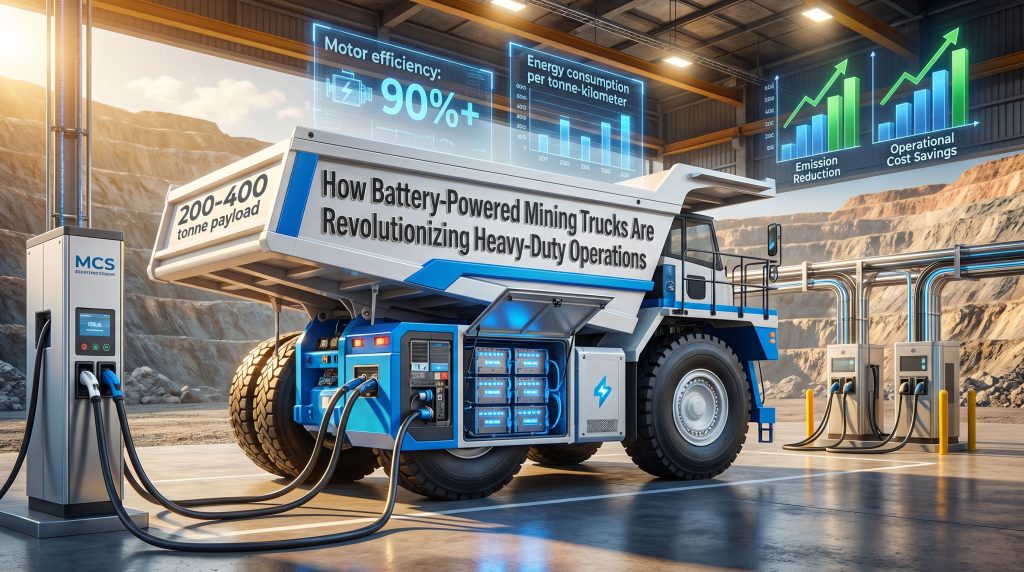
Electric motor efficiency represents the most compelling technical advantage of battery-powered mining trucks. While diesel engines typically achieve energy efficiency rates below 30%, electric motors consistently deliver efficiency rates exceeding 90%. This threefold improvement in energy conversion translates directly into operational cost advantages and reduced environmental impact.
Operational Capacity Analysis
Recent field trials have demonstrated that modern electric mining trucks can achieve operational performance matching or exceeding diesel equivalents under specific conditions. Furthermore, Hitachi Construction Machinery's completed trial at the Kansanshi copper mine in Zambia logged over 4,000 kilometres of operation and transported more than 30,000 tons of material with zero direct CO2 emissions over a 14-month period from June 2024 to August 2025.
The payload-to-battery-weight ratio remains a critical design constraint that varies significantly amongst manufacturers. While specific comparative data requires further industry disclosure, early commercial models indicate that battery systems represent approximately 15-20% of total vehicle weight. In comparison, fuel systems comprise roughly 5-8% of diesel truck weight.
Operating time per charge cycle depends heavily on duty conditions, with typical ranges varying from 4-8 hours of continuous operation under full load. Speed and grade performance generally match diesel equivalents on level terrain, though sustained high-grade operations may reduce operational time due to increased energy consumption.
Energy Efficiency Calculations
The fundamental energy efficiency advantage of electric systems becomes pronounced in underground mining applications. A Swedish study documented potential ventilation cost reductions of 86.7% when switching from diesel to electric fleets underground, as electric vehicles eliminate exhaust emissions that require extensive ventilation systems for safe operation.
Energy consumption per tonne-kilometre varies significantly based on operational conditions. However, preliminary data suggests electric trucks consume approximately 0.8-1.2 kWh per tonne-kilometre compared to diesel equivalents consuming 2.5-3.5 kWh equivalent in fuel energy per tonne-kilometre transported.
Grid-to-wheel efficiency analysis reveals that even when accounting for electrical grid inefficiencies, electric mining trucks achieve overall system efficiency rates of 65-75%. This compares favourably to diesel systems achieving 25-30% tank-to-wheel efficiency.
Charging Infrastructure Requirements and Solutions
The infrastructure requirements for battery-powered mining trucks far exceed conventional vehicle charging needs, demanding industrial-scale electrical systems capable of delivering megawatt-level power transfer. These systems must operate reliably in harsh mining environments while maintaining rapid charging capabilities to minimise operational downtime.
Static Charging Systems
Megawatt Charging System (MCS) specifications for mining applications typically require 1-3 MW power delivery capability to achieve acceptable charging times for large-scale operations. These systems utilise specialised high-voltage connectors and cooling systems to manage the extreme electrical loads safely.
Combined Charging System (CCS) interface standards adapted for mining equipment incorporate additional safety features including arc fault protection, ground fault monitoring, and environmental sealing rated for mining conditions. Installation requirements include substantial electrical infrastructure upgrades, often requiring dedicated substations and power distribution systems.
Charging time optimisation remains critical for maintaining operational efficiency. Current systems target 1-2 hour charging periods to restore 80% battery capacity, though achieving these rates requires careful management of battery thermal conditions and grid power availability.
Power grid integration presents significant challenges in remote mining locations where electrical infrastructure may be limited. In addition, demand management strategies include load scheduling, energy storage buffering, and integration with on-site power generation to minimise grid impact during peak charging periods.
Battery Swapping Technology
Automated battery exchange systems represent an alternative approach to rapid refuelling, targeting 3-10 minute swap times for complete battery pack replacement. These systems require standardised battery pack designs and substantial investment in battery inventory management infrastructure.
Battery pack standardisation across manufacturers remains incomplete, limiting the scalability of swapping systems. However, emerging industry collaboration efforts aim to establish common mechanical and electrical interfaces to enable cross-manufacturer compatibility.
The economics of battery swapping versus static charging depend heavily on operational patterns and capital costs. Swapping systems require 2-3 times the battery inventory of static charging systems but can maintain higher vehicle utilisation rates in continuous operation scenarios.
How Do Electric Mining Trucks Address Safety Challenges?
Safety considerations for battery-powered mining trucks encompass both unique risks associated with high-voltage electrical systems and lithium battery technology, as well as potential safety benefits from eliminating diesel exhaust and reducing fire risks associated with fuel storage.
Underground Safety Considerations
Fire suppression systems for lithium battery incidents require specialised approaches as traditional water-based systems may be ineffective or dangerous when applied to high-voltage electrical fires. Dry chemical and specialised lithium battery suppressants are being developed specifically for mining applications.
Ventilation requirement reductions provide substantial safety benefits in underground operations. Eliminating diesel exhaust reduces carbon monoxide exposure risks and allows for simplified ventilation system design. Nevertheless, electrical safety protocols become more critical.
Emergency response protocols for battery-related incidents must address thermal runaway scenarios, electrical shock risks, and potential toxic gas release from damaged battery cells. Training programmes for mine safety personnel require updates to address these new risk profiles.
Structural protection systems including crash buffers and reinforced steel casing designs protect battery systems from impact damage during mining operations. These systems must balance protection requirements with weight constraints and maintenance accessibility.
Surface Mining Safety Protocols
Thermal runaway prevention systems incorporate multiple layers of protection including cell-level monitoring, pack-level thermal management, and automated shutdown systems to prevent cascading battery failures.
High-voltage safety procedures for maintenance crews require specialised training and equipment including arc-rated personal protective equipment, insulated tools, and lockout/tagout procedures specific to high-voltage DC systems.
Weather-related operational limitations may restrict operation during extreme conditions such as lightning storms or severe cold that could affect battery performance or create additional electrical safety risks.
Which Mining Companies Are Leading Electric Truck Adoption?
The transition to battery-powered mining trucks has progressed beyond experimental phases, with major mining companies committing significant resources to comprehensive trials and early commercial deployments. These initiatives represent strategic investments in achieving mining decarbonisation benefits and net-zero operational emissions by 2050.
Large-Scale Implementation Case Studies
First Quantum Minerals completed a landmark 14-month trial in partnership with Hitachi Construction Machinery at their Kansanshi copper mine in Zambia. This collaboration demonstrated commercial viability with the electric truck covering 4,000 kilometres and transporting 30,000 tons of material between June 2024 and August 2025.
| Company | Location | Equipment Partner | Trial Status | Key Metrics |
|---|---|---|---|---|
| First Quantum Minerals | Kansanshi, Zambia | Hitachi | Completed | 4,000 km, 30,000 tons hauled |
| BHP & Rio Tinto | Jimblebar, Australia | Caterpillar | Active (Dec 2025-) | Joint trial ongoing |
BHP and Rio Tinto launched joint trials of battery-powered Caterpillar trucks at the Jimblebar iron ore mine in Western Australia in December 2025. This collaboration between two major mining companies and a leading equipment manufacturer represents a significant commitment to scaling electric fleet technology.
Both Rio Tinto and BHP have established net-zero operational emissions targets for 2050, positioning electric fleet adoption as a primary mechanism for achieving these climate commitments. The alignment between corporate sustainability goals and electric vehicle capabilities drives strategic investment beyond experimental trials.
Regional Adoption Patterns
Grid electricity composition significantly impacts the environmental benefits of electric mining truck adoption. The Kansanshi trial in Zambia achieved zero operational emissions partly due to the country's 92% hydroelectric power generation, demonstrating that regional power infrastructure critically influences environmental impact calculations.
Infrastructure readiness varies dramatically by mining region, with established mining areas in Australia and North America generally better positioned for electric fleet integration. In contrast, remote operations in developing regions where electrical grid capacity may be limited face greater challenges.
The global electric mining equipment market was valued at $1.70 billion in 2024 and projects growth to $5.26 billion by 2035, representing a compound annual growth rate of 10.82%. This expansion reflects increasing corporate commitments and improving technology maturity.
Supply chain considerations for remote locations include battery supply logistics, maintenance technician training, and spare parts availability. These operational factors significantly influence adoption timelines in geographically isolated mining operations.
What Are the Economic Implications of Electric Mining Truck Adoption?
The economic transformation represented by battery-powered mining trucks extends beyond simple fuel cost comparisons, encompassing capital expenditure requirements, total cost of ownership calculations, and fundamental changes to mining industry innovation economics.
Capital Expenditure Analysis
Upfront purchase costs for electric mining trucks currently approximate double the cost of diesel equivalent vehicles, representing a significant barrier to widespread adoption. However, this cost premium continues declining as battery costs decrease and production volumes increase.
Total cost of ownership calculations must account for several factors including electricity costs versus diesel fuel expenses, maintenance cost reductions from fewer moving parts, and potential carbon pricing impacts on operational economics.
Financing options for electric fleet investments are evolving to include specialised lease structures that separate battery ownership from vehicle ownership. This allows mining companies to manage technology risk whilst accessing latest battery developments.
Depreciation schedules for electric mining equipment require new approaches as battery technology evolution may impact residual values differently than traditional mechanical equipment depreciation patterns.
Operational Cost Breakdown
Electricity costs versus diesel fuel expenses vary significantly by region and operational scale. In locations with low electricity costs and high diesel transportation costs, electric trucks achieve operational cost parity more quickly than in regions with expensive electricity or low diesel costs.
Maintenance cost reductions from electric drivetrains potentially offset higher capital costs over equipment lifecycles. Electric motors require minimal scheduled maintenance compared to diesel engines requiring regular oil changes, filter replacements, and major overhauls.
Labour cost implications include charging coordination requirements versus simple refuelling operations. However, automation potential in electric systems may reduce overall labour requirements for fleet management.
Insurance and risk management costs are evolving as the industry develops experience with electric vehicle safety profiles, battery fire risks, and operational reliability data from commercial deployments.
The next major ASX story will hit our subscribers first
How Do Electric Mining Trucks Support Decarbonisation Goals?
The mining sector accounts for approximately 11% of global greenhouse gas emissions, positioning electric fleet adoption as a significant lever for industry decarbonisation efforts. Nevertheless, environmental benefits depend critically on electrical grid composition and lifecycle considerations.
Emission Reduction Quantification
Direct CO2 elimination at the point of operation provides immediate air quality benefits, particularly important in underground mining environments where diesel exhaust creates health and ventilation challenges for workers.
Life-cycle emission analysis reveals that manufacturing emissions for electric trucks typically exceed diesel equivalents due to battery production impacts. However, operational emission advantages overcome manufacturing impacts within 2-4 years of typical mining operation.
Grid electricity carbon intensity dramatically affects total emission reduction potential. Operations in regions with coal-heavy electrical grids may show limited emission benefits, whilst operations using renewable electricity achieve substantial emission reductions.
| Grid Composition | Emission Reduction Potential | Payback Period |
|---|---|---|
| 90% Renewable (Hydroelectric) | 85-95% reduction | 1-2 years |
| 50% Natural Gas Mix | 40-60% reduction | 3-5 years |
| Coal-Heavy Grid | 10-30% reduction | 5-8 years |
Scope 1 versus Scope 2 emission classification affects corporate carbon accounting, with electric trucks shifting emissions from direct (Scope 1) to indirect (Scope 2) categories. This potentially allows mining companies to meet operational emission reduction targets whilst maintaining production levels.
Integration with Renewable Energy Systems
On-site solar and wind power generation for truck charging represents an opportunity to achieve true zero-emission operation whilst reducing dependence on external electrical grid infrastructure.
Energy storage systems for grid stabilisation can utilise mining truck batteries during non-operational periods, creating additional value streams and improving project economics through dual-use applications.
Carbon offset potential through renewable integration extends beyond direct operational emissions to include broader grid decarbonisation as mining operations invest in renewable energy infrastructure that may serve broader regional needs.
What Technical Challenges Remain for Widespread Adoption?
Despite successful trials and commercial interest, several technical challenges continue limiting widespread battery-powered mining truck adoption, requiring continued technology development and infrastructure investment alongside battery metals investment.
Battery Technology Limitations
Energy density constraints continue limiting operational range compared to diesel equivalents, particularly problematic for mining operations with long haul distances or continuous operation requirements exceeding current battery capacity.
Cold weather performance degradation affects battery capacity and charging efficiency in northern mining operations, potentially reducing operational time by 20-30% during winter months depending on temperature extremes.
Battery degradation rates under heavy-duty cycling typical of mining applications remain higher than desired. Current battery systems show capacity loss of 15-25% over 3-5 year operational periods under continuous heavy use.
Recycling and end-of-life battery management present logistical and environmental challenges. This is particularly true for remote mining operations where battery transportation costs and battery recycling breakthrough infrastructure access may be limited.
Infrastructure Development Requirements
Electrical grid capacity upgrades for mining operations often require substantial investment in transmission infrastructure. This is particularly challenging for remote operations where grid connections may be limited or non-existent.
Standardisation needs across equipment manufacturers continue hindering interoperability and increasing infrastructure costs. Mining companies may need multiple charging systems to support mixed-vendor fleets.
Skilled technician training and certification programmes require development to ensure safe maintenance and operation of high-voltage electrical systems in mining environments. Traditional mechanical expertise may be insufficient.
Remote location charging infrastructure deployment costs can exceed $1-5 million per installation depending on electrical infrastructure requirements and site accessibility. This represents significant capital barriers for smaller mining operations.
Future Technological Developments and Market Projections
The trajectory of battery-powered mining truck development suggests continued rapid advancement in multiple technological areas, with market adoption accelerating as costs decline and performance improves.
Next-Generation Battery Technologies
Solid-state battery technology holds potential for mining applications through improved energy density, enhanced safety characteristics, and reduced thermal management requirements. However, commercial availability remains 3-5 years away for industrial applications.
Fast-charging technology advancement targets 15-30 minute charging times for 80% capacity restoration, potentially eliminating operational disadvantages compared to diesel refuelling times and enabling continuous operation with charging rotation.
Battery-as-a-Service (BaaS) business models are emerging to separate battery ownership from vehicle ownership, allowing mining companies to access latest battery technology whilst reducing capital requirements and technology risk.
Integration with hydrogen fuel cell hybrid systems offers potential solutions for extended range applications where pure battery systems may be insufficient, combining electric efficiency with hydrogen's energy density advantages.
Market Growth Forecasting
Production capacity scaling by major manufacturers indicates industry confidence in market growth, with Hitachi targeting commercial production beginning fiscal year 2027 and other manufacturers announcing similar timelines.
Market size projections from $1.70 billion in 2024 to $5.26 billion by 2035 reflect not only equipment sales growth but also supporting infrastructure and services expansion across the mining industry.
Regional market development priorities focus initially on mining regions with favourable electrical grid characteristics and supportive regulatory environments, expanding to more challenging locations as technology matures.
Technology cost reduction curves follow typical patterns for emerging technologies, with battery costs declining approximately 10-15% annually and charging infrastructure costs decreasing as installation volumes increase and standardisation improves.
Frequently Asked Questions About Electric Mining Trucks
Understanding the practical implications of battery-powered mining truck adoption requires addressing common operational, economic, and technical questions that mining companies face when evaluating these emerging technologies.
How long do electric mining truck batteries last?
Current battery systems designed for mining applications typically achieve 3,000-5,000 charging cycles before requiring replacement, equivalent to 5-8 years of operational life under typical mining duty cycles. Battery degradation occurs gradually, with capacity declining approximately 3-5% annually under normal use.
What happens when batteries fail during operation?
Modern electric mining trucks incorporate redundant battery systems and predictive maintenance monitoring to prevent unexpected failures. When battery issues occur, vehicles typically enter reduced-power mode allowing safe return to maintenance areas rather than complete shutdown.
Can electric trucks operate in extreme weather conditions?
Electric mining trucks function across temperature ranges from -40°C to +60°C, though extreme cold reduces battery capacity by 20-30%. Thermal management systems maintain optimal battery temperatures, but operation time may be reduced during extreme weather conditions.
How do electric trucks perform on steep grades?
Electric motors provide superior torque characteristics compared to diesel engines, often performing better on steep grades. However, battery consumption increases significantly during uphill operation, though regenerative braking during descent can recover substantial energy.
What is the payback period for electric mining truck investments?
Payback periods vary from 3-8 years depending on operational patterns, electricity costs, diesel prices, and carbon pricing policies. Operations with high utilisation rates and favourable electricity pricing achieve faster payback than occasional-use applications.
How do maintenance requirements differ from diesel trucks?
Electric trucks require minimal scheduled maintenance on drivetrain components but need specialised attention to battery systems, high-voltage electrical components, and thermal management systems. Overall maintenance costs typically decrease 30-50% compared to diesel equivalents.
What training is required for operators and maintenance staff?
Operators require training on regenerative braking systems, charging procedures, and emergency protocols specific to electric vehicles. Maintenance technicians need specialised high-voltage electrical training and certification, typically requiring 2-4 weeks of additional training beyond traditional mechanical skills.
How do electric trucks affect mine productivity targets?
Well-implemented electric fleets can maintain or exceed productivity targets achieved with diesel equipment. However, charging coordination and potential range limitations require operational planning adjustments to optimise utilisation rates.
Please note: This article includes forward-looking statements and projections based on current industry trends and available data. Actual performance, costs, and adoption timelines may vary significantly based on technological developments, market conditions, and regulatory changes. Mining companies should conduct detailed site-specific analysis before making investment decisions regarding electric fleet adoption.
Ready to Capitalise on Mining's Electric Revolution?
Discovery Alert's proprietary Discovery IQ model delivers real-time alerts on significant mining discoveries, including breakthrough developments in battery-powered mining technology and electrification opportunities. Begin your 14-day free trial today to position yourself ahead of the market as the mining sector transforms through electric vehicle adoption and sustainable technology innovation.