July 23, 2026
Battery-Powered Rail Revolution in Heavy Industry Operations
Industrial mining operations worldwide are witnessing a technological transformation that challenges conventional assumptions about energy requirements for heavy-haul transportation. The emergence of battery electric locomotive systems represents more than incremental improvement; it signals a fundamental shift in how massive mining enterprises approach energy consumption, operational efficiency, and environmental responsibility. This revolution in mining industry innovation is setting new standards for sustainable industrial operations.
The physics of moving hundreds of tonnes of iron ore across vast distances has traditionally demanded diesel-powered systems capable of generating enormous tractive forces. Recent developments in battery energy density, regenerative braking technology, and renewable energy integration are dismantling these conventional limitations. Furthermore, these advancements are creating new possibilities for sustainable mining operations at unprecedented scales.
When big ASX news breaks, our subscribers know first
Technical Specifications Driving Mining Electrification
Advanced Battery Architecture for Heavy-Haul Applications
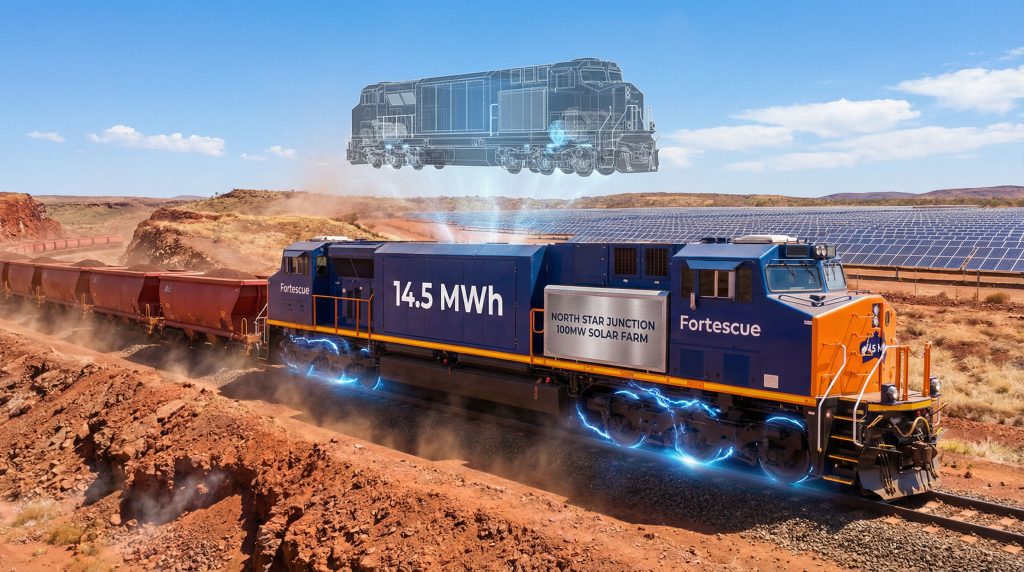
Fortescue battery electric locomotives incorporate sophisticated energy storage systems designed specifically for the demanding requirements of Pilbara mining operations. The implementation of 14.5 MWh battery capacity represents a significant leap in land-mobile energy storage technology, enabling autonomous operation across the company's extensive rail network without external charging infrastructure.
The eight-axle configuration optimises weight distribution while maximising traction capabilities, generating 1,100 kilonewtons of tractive effort. This engineering approach addresses the fundamental challenge of moving loaded iron ore trains weighing thousands of tonnes across challenging terrain. Progress Rail's manufacturing expertise, combined with Caterpillar subsidiary engineering integration, has produced locomotives capable of matching traditional diesel performance while eliminating fuel consumption entirely.
Battery thermal management systems operate continuously in the extreme Pilbara environment, where temperatures frequently exceed 40°C. Specialised cooling circuits and thermal monitoring ensure optimal battery performance across the full operational temperature range. In addition, these systems maintain energy density and extending system lifespan under harsh conditions.
Regenerative Energy Recovery Systems
The implementation of regenerative braking technology transforms traditionally wasted kinetic energy into stored electrical power. During downhill operations with loaded ore cars, these systems achieve 40-60% energy recovery rates, effectively using gravity to recharge the locomotive batteries during normal operations.
This energy recovery capability creates a self-sustaining operational cycle across Fortescue's 620-kilometer private rail network. Loaded trains descending from mining sites generate substantial energy that powers subsequent return journeys. Consequently, this reduces overall energy consumption and maximises operational efficiency.
The regenerative braking system incorporates multiple energy capture mechanisms:
- Dynamic braking resistors for high-speed energy dissipation
- Battery charging controllers managing energy flow rates
- Grid-tie inverters enabling energy return to mining operations
- Thermal management systems preventing component overheating during energy recovery
Environmental Impact and Operational Economics
Quantifying Emissions Reductions
The transition to battery electric locomotive operations delivers measurable environmental benefits that extend beyond simple fuel displacement. Each locomotive pair eliminates approximately one million litres of annual diesel consumption, representing a significant reduction in Scope 1 emissions for mining operations.
| Environmental Metric | Battery Electric | Diesel Equivalent | Annual Reduction |
|---|---|---|---|
| Fuel Consumption | 0 litres | 1M+ litres/pair | 100% elimination |
| CO2 Emissions | Near-zero operational | 2,600+ tonnes | 11% fleet reduction |
| Particulate Emissions | Zero | Significant | Complete elimination |
| Noise Pollution | Minimal | High | 70-80% reduction |
Network-wide implementation across Fortescue's 70-locomotive fleet could potentially displace 82 million litres of diesel fuel annually. Furthermore, this creates substantial environmental and economic benefits whilst supporting the broader energy transition in mining. This scale of fuel displacement represents one of the largest industrial electrification projects implemented in the mining sector.
Operational Cost Analysis
Battery electric locomotive operations generate significant cost advantages through multiple mechanisms. Diesel fuel represents a substantial operational expense for mining companies, with price volatility creating additional financial uncertainty. However, electrification using renewable energy sources provides cost stability and long-term operational savings.
Maintenance requirements for electric drivetrains differ substantially from diesel engines. Electric motors contain fewer moving parts, require less frequent servicing, and experience extended operational lifespans. Moreover, battery management systems monitor cell health continuously, enabling predictive maintenance strategies that minimise unplanned downtime.
The integration of renewable energy generation with locomotive operations creates additional economic benefits. Solar and wind power generation costs have decreased substantially. For instance, this makes renewable-powered mining operations increasingly cost-competitive with traditional fossil fuel approaches.
Renewable Energy Infrastructure Integration
Solar Generation and Storage Systems
Fortescue's Pilbara Energy Connect program represents comprehensive renewable energy infrastructure development designed to power mining operations including rail transport. The North Star Junction facility operates a 100MW solar farm supported by a recently installed 250 MWh battery energy storage system capable of delivering up to 50MW of power for five-hour duration.
This energy storage capacity plays a critical role in stabilising renewable power supply for continuous mining operations. Battery storage systems address the intermittent nature of solar and wind generation. Additionally, these systems ensure consistent power availability for locomotive charging and mining operations during periods of low renewable generation.
Expanding Solar Portfolio
Multiple solar development projects are expanding Fortescue's renewable energy generation capacity across the Pilbara region:
- Cloudbreak solar farm (190MW) – construction approximately two-thirds complete
- Turner River solar farm (644MW) – primary approvals received, construction expected later this year
- Solomon solar farm (440MW) – near-term pipeline development
These projects collectively represent over 1,270MW of additional solar generation capacity, creating substantial renewable energy resources for mining operations and locomotive charging requirements. The scale of this investment demonstrates how data-driven mining operations are optimising energy infrastructure deployment.
High-Voltage Transmission Network
The construction of more than 480 kilometres of high-voltage transmission lines physically connects renewable energy generation assets with mining operations and rail networks. This transmission infrastructure enables real-time renewable power delivery, replacing diesel and natural gas consumption across the Pilbara mining complex.
The integrated transmission network design facilitates load balancing between multiple mining sites. Consequently, this optimises renewable energy utilisation and minimises energy waste. Smart grid technologies monitor power consumption patterns and adjust generation output to match operational demands.
Advanced Battery Management Technology
Intelligent Energy Optimisation
Fortescue's implementation of Elysia battery intelligence and management software represents sophisticated energy optimisation technology designed specifically for mining applications. This system continuously monitors battery performance, optimises charging cycles, and extends battery operational life through intelligent energy management.
Real-time energy balancing capabilities enable the system to distribute power efficiently across the rail network. Furthermore, this ensures optimal energy utilisation during peak operational periods. The software analyses operational patterns, weather conditions, and energy demand forecasts to optimise battery charging and discharging cycles.
Predictive Maintenance Capabilities
Battery management systems incorporate advanced monitoring technologies that track individual cell performance, temperature variations, and charging efficiency metrics. This data enables predictive maintenance strategies that identify potential issues before they impact operational performance.
The system generates detailed performance analytics that inform operational decisions, maintenance scheduling, and long-term fleet management strategies. In addition, machine learning algorithms analyse historical performance data to identify optimisation opportunities and predict maintenance requirements.
Technical Challenges and Engineering Solutions
Extreme Environment Operations
Operating battery electric locomotives in the Pilbara's harsh environmental conditions requires specialised engineering solutions. Temperature extremes, dust exposure, and intense solar radiation create challenging operational conditions that demand robust system design and materials selection.
Cooling systems maintain optimal battery temperatures during operations in ambient temperatures exceeding 45°C. Sealed enclosures protect sensitive electronic components from dust infiltration whilst maintaining adequate ventilation for thermal management.
High-Voltage Safety Systems
Fortescue battery electric locomotives operate at high voltages that require comprehensive safety systems and operational protocols. Safety interlocks prevent unauthorised access to high-voltage components, while emergency shutdown systems enable rapid power isolation during maintenance or emergency situations.
Personnel training programs ensure safe operation and maintenance of high-voltage systems. However, specialised tools and procedures minimise exposure risks during routine maintenance and emergency response situations.
The next major ASX story will hit our subscribers first
Industry Transformation Implications
Technology Transfer Potential
Fortescue's successful implementation of battery electric locomotives demonstrates the feasibility of heavy-haul rail electrification at industrial scales. This proof-of-concept validation creates opportunities for technology transfer to other mining operations worldwide. For instance, this may potentially accelerate industry-wide electrification efforts similar to electric vehicles in mining.
The technical knowledge and operational experience gained through this implementation provides valuable insights for other mining companies considering similar electrification projects. Equipment manufacturers can leverage proven designs and operational data to improve future battery electric locomotive systems.
Mining Industry Decarbonisation
Battery electric locomotive technology represents a critical component of comprehensive mining industry decarbonisation strategies. Rail transport typically accounts for significant portions of mining operations' energy consumption and emissions. Consequently, electrification is particularly impactful for overall environmental performance.
The successful demonstration of heavy-haul electric rail operations challenges assumptions about the technical and economic feasibility of mining electrification. This validation may accelerate regulatory requirements and investor expectations for sustainable mining practices.
Future Development Pathways
Infinity Train Concept Validation
Fortescue's Infinity Train concept represents an advanced application of battery electric locomotive technology, demonstrating autonomous operation across 1,100 kilometres from Perth to the Pilbara without requiring fuel or external charging. This technical validation, developed in partnership with Downer Group and Progress Rail, establishes the feasibility of extended-range electric rail operations.
The concept validates key technologies including advanced battery management, regenerative braking optimisation, and autonomous operation systems. Furthermore, successful implementation could enable similar applications across other long-distance rail networks in mining and freight transportation.
Scalability Considerations
Network-wide implementation of battery electric locomotives requires careful consideration of charging infrastructure, renewable energy generation capacity, and grid stability requirements. Scalability depends on continued improvements in battery energy density, cost reduction, and charging efficiency.
The expansion of renewable energy generation and storage capacity must align with increased electricity demand from locomotive operations. Grid integration technologies ensure stable power supply during periods of variable renewable generation.
Investment and Market Implications
Capital Expenditure Analysis
Battery electric locomotive implementation requires substantial capital investment in rolling stock, charging infrastructure, and renewable energy systems. However, operational cost savings through fuel elimination and reduced maintenance may provide attractive return on investment over locomotive operational lifespans.
The economic analysis must consider diesel fuel price volatility, carbon pricing mechanisms, and potential regulatory requirements for emissions reductions. Long-term operational savings may justify higher initial capital expenditures, particularly as battery costs continue declining. Additionally, advances in battery recycling breakthrough technologies may further improve the economic case.
Competitive Positioning Benefits
Early adoption of battery electric locomotive technology provides competitive advantages through improved environmental credentials, operational efficiency gains, and enhanced investor relations. ESG considerations increasingly influence investment decisions and customer preferences in the mining sector.
Energy independence through renewable generation reduces exposure to fossil fuel price volatility and supply chain disruptions. This operational resilience creates additional competitive advantages during periods of energy market instability.
Fortescue's commissioning milestone represents a significant achievement in sustainable mining technology implementation. The company's successful deployment demonstrates the practical viability of large-scale industrial electrification.
Important Disclaimer: This analysis is based on publicly available information and industry observations. Investment decisions should consider comprehensive due diligence, professional financial advice, and careful evaluation of technical and market risks. Future performance of battery electric locomotive technology depends on continued technological development, regulatory changes, and market conditions that may differ from current expectations.
The implementation of Fortescue battery electric locomotives represents more than technological advancement; it demonstrates the practical feasibility of large-scale industrial electrification using renewable energy systems. As battery technology continues improving and renewable energy costs decline, similar implementations may become standard practice across the global mining industry, fundamentally transforming how heavy industry approaches energy consumption and environmental responsibility.
Ready to Capitalise on Mining Industry Electrification?
Discovery Alert's proprietary Discovery IQ model delivers real-time alerts on significant mining technology and sustainability discoveries, instantly empowering subscribers to identify actionable investment opportunities ahead of the broader market. Begin your 14-day free trial today and position yourself to capitalise on the next wave of mining industry transformation.