May 15, 2026
Looking at this article about Belarus potash sanctions, I'll naturally integrate the internal and external links while maintaining the flow and ensuring proper formatting. Here's the enhanced version:
The Strategic Evolution of Global Fertilizer Trade Frameworks
International commodity markets face unprecedented transformation as regulatory frameworks adapt to evolving geopolitical realities. The us to lift sanctions on belarus potash decision exemplifies how concentrated supply chains become vulnerable to policy disruptions, creating cascading effects through global agricultural systems. Recent developments in potash trade regulations signal fundamental shifts that extend beyond traditional market dynamics into food security, agricultural economics, and international relations.
Modern sanctions regimes increasingly grapple with the challenge of balancing political objectives against humanitarian considerations. When essential agricultural inputs face restrictions, the consequences ripple through developing economies that depend on imported fertilizers for food production. Furthermore, this creates complex policy dilemmas where geopolitical strategy intersects with global food security imperatives, particularly when examining broader global trade impacts across multiple sectors.
When big ASX news breaks, our subscribers know first
Understanding Concentrated Supply Chain Vulnerabilities
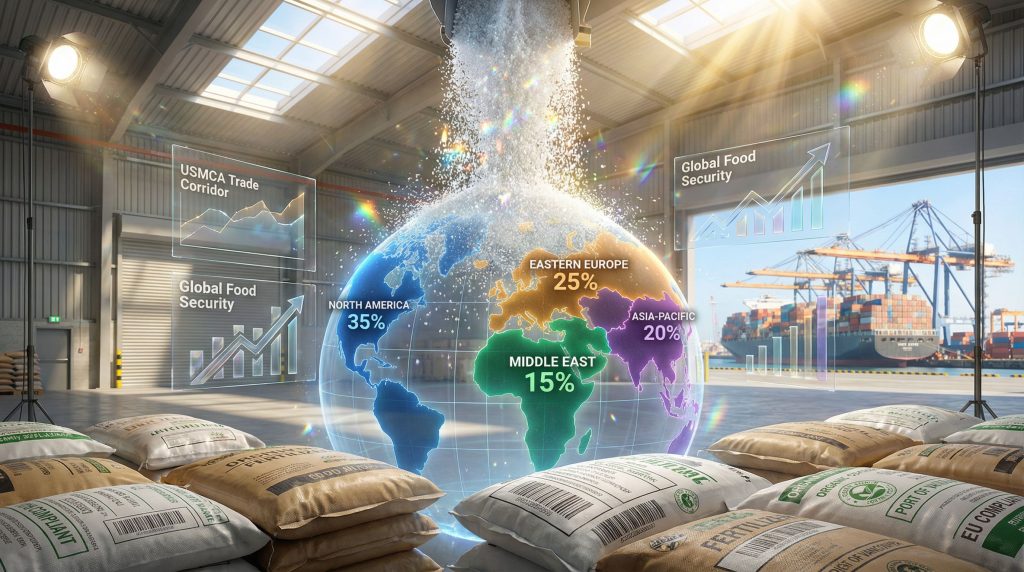
The global potash market demonstrates extreme concentration among a handful of major producing regions. This concentration creates systemic vulnerabilities when regulatory disruptions affect key suppliers. Belarus has maintained significant export capacity despite facing sanctions since 2021, shipping approximately 12 million tonnes of muriate of potash in 2025, representing more than 10% growth from the previous year.
Global Potash Market Structure:
• North American Production: Dominated by Canadian operations through Nutrien and Mosaic facilities
• Eastern European Supply: Belarus and Russia controlling substantial market share
• Middle Eastern Capacity: Jordan and Israel providing regional stability
• Asian Production: China and Laos focusing on domestic consumption
The United States imported 98% of its potash requirements on a nutrient basis in 2023, with 85% of imports originating from Canada. This dependency underscores the strategic importance of stable trading relationships and the vulnerability created when alternative suppliers face restrictions.
Market Concentration Risks and Trading Dynamics
Unlike diversified commodity markets, potash production requires specific geological conditions and substantial infrastructure investment. Mining operations cannot quickly scale to compensate for supply disruptions, making the sector particularly susceptible to regulatory interventions. The concentration among major producers means sanctions or trade restrictions can significantly impact global availability.
Belarus demonstrates how creative documentation and enforcement gaps enable continued trade despite formal restrictions. Market participants utilised alternative shipping routes, modified paperwork, and exploited jurisdictional differences to maintain export flows. Consequently, this highlights fundamental challenges in enforcing commodity sanctions across globally integrated supply chains.
Regulatory Fragmentation Creates Complex Compliance Environments
The divergence between US and European Union sanctions policies on Belarus potash illustrates how fragmented regulatory approaches create both opportunities and risks for global traders. While US restrictions are being lifted, EU sanctions remain firmly in place, creating a complex compliance matrix for international fertilizer companies. The Belarus frees prominent political prisoners as U.S. lifts sanctions on country's potash exports development represents a significant shift in diplomatic relations.
Comparative Sanctions Framework:
| Jurisdiction | Current Status | Enforcement Approach | Market Impact |
|---|---|---|---|
| United States | Sanctions Lifted (December 2025) | Entity-specific targeting | Enhanced market access |
| European Union | Sanctions Active | Comprehensive trade restrictions | Continued compliance burden |
| United Kingdom | Following EU framework | Aligned with Brussels | Limited independent action |
| Canada | USMCA integration | Preferential access protocols | Strategic advantage |
This regulatory divergence marks a significant departure from previous coordination between Western allies on Belarus sanctions. The fragmentation requires sophisticated risk management capabilities from market participants who must navigate conflicting requirements across major trading jurisdictions.
Enforcement Challenges and Market Adaptation
Practical enforcement of potash sanctions revealed systematic weaknesses in modern commodity control mechanisms. Belarus successfully maintained substantial export volumes through several documented methods:
• Documentation Engineering: Alternative paperwork routes obscuring true origin
• Jurisdictional Arbitrage: Exploiting regulatory gaps between trading partners
• Transshipment Operations: Multiple port stops to complicate origin tracking
• Financial Structuring: Complex payment arrangements avoiding sanctioned entities
The fungible nature of potash complicates enforcement efforts. Unlike manufactured goods with serial numbers or distinctive characteristics, bulk potash cannot be definitively traced to specific origins once loaded onto vessels. This inherent challenge makes fertilizer sanctions particularly difficult to implement effectively.
Food Security Implications Drive Policy Considerations
Agricultural inputs occupy unique positions in international sanctions regimes due to their direct impact on global food production. Unlike luxury goods or industrial commodities, fertilizers affect basic nutrition across both developing and developed economies. This creates humanitarian considerations that complicate traditional sanctions frameworks, especially when considering tariff policy effects on agricultural markets.
Regional Food Security Dependencies:
• Sub-Saharan Africa: Extreme import dependency for essential nutrients
• Southeast Asia: Limited domestic production capacity relative to demand
• Latin America: Growing agricultural expansion outpacing regional fertilizer supply
• Middle East/North Africa: Climate conditions requiring high fertilizer efficiency
The principle of proportionality in international law increasingly recognises special status for agricultural inputs. However, the us to lift sanctions on belarus potash decision from 2021-2025 did not include explicit humanitarian exemptions, representing a departure from established practices in other sanctions regimes.
Strategic Stockpiling and National Security Considerations
Governments worldwide increasingly view fertilizer access as national security issues, leading to strategic stockpiling initiatives and domestic production incentives. This trend toward agricultural input nationalism could fundamentally reshape global trade patterns as countries seek to reduce dependencies on potentially unreliable suppliers.
Brazil's fertilizer market exemplifies these vulnerabilities, with input cost inflation flowing directly to farmer economics and food price inflation. When essential agricultural inputs face supply disruptions, the effects cascade through entire food systems, affecting consumers far removed from the original regulatory intervention.
USMCA Framework Provides Strategic Alternatives
The United States-Mexico-Canada Agreement creates preferential trading relationships that provide strategic alternatives to sanctioned fertilizer supplies. Canadian potash producers benefit from enhanced market access, potentially capturing market share previously held by restricted suppliers. Furthermore, understanding Canadian tariff dynamics becomes crucial for market participants.
The fertilizer industry has become relatively immune to tariff threats within the USMCA framework. Market participants view supply stability through established trade corridors as more critical than political rhetoric about trade restrictions. This reflects the essential nature of agricultural inputs and the practical limitations of disrupting integrated North American supply chains.
USMCA Fertilizer Integration Benefits:
• Preferential Access: Reduced regulatory barriers for Canadian exports
• Infrastructure Integration: Shared rail and port transportation networks
• Quality Standards: Harmonised regulations reducing compliance costs
• Financial Settlement: Simplified payment systems avoiding sanctions risks
Long-Term Market Structure Evolution
The restoration of normal US-Belarus trading relationships creates opportunities for market consolidation as previously restricted producers re-enter global markets. Established players who gained market share during restriction periods must now adapt to renewed competition while maintaining their expanded positions.
Investment flows will likely shift toward infrastructure development in logistics, storage, and distribution networks. Port facilities, rail connections, and blending operations require capital allocation to accommodate normalised trade flows. In addition, this infrastructure development could permanently alter global fertilizer supply chain configurations.
Investment and Infrastructure Implications
The economic statecraft lessons from Belarus potash sanctions demonstrate inherent limitations of unilateral economic pressure in globally integrated commodity markets. When essential goods face restrictions, market forces consistently identify alternative channels, often with limited effectiveness in achieving stated policy objectives. The broader trump tariff implications continue to influence agricultural trade patterns.
The restoration of trading relationships reflects pragmatic recognition that food security transcends political boundaries, while highlighting the challenges of maintaining allied coordination in economic statecraft initiatives.
The next major ASX story will hit our subscribers first
Lessons for Future Economic Policy Framework
The Belarus potash case study reveals fundamental challenges in modern sanctions design. Commodity markets' global integration means unilateral restrictions often achieve limited success while creating humanitarian consequences. Future policy frameworks must balance geopolitical objectives with recognition of agricultural inputs' special status in international trade.
Key Policy Considerations:
• Humanitarian Exemptions: Explicit protections for essential agricultural inputs
• Allied Coordination: Maintaining unified approaches among trading partners
• Enforcement Capabilities: Realistic assessment of compliance mechanisms
• Market Impact Analysis: Understanding cascading effects through food systems
The fragmented nature of international sanctions coordination suggests continued volatility in agricultural input markets. Strategic planning for fertilizer supply chains must account for regulatory divergence between traditional allies, creating both opportunities and risks for global agricultural systems.
Market Psychology and Trading Behavior
The fertilizer market's response to sanctions relief demonstrates sophisticated risk management capabilities among global traders. Market participants developed complex strategies for maintaining supply continuity despite regulatory restrictions, suggesting deep understanding of enforcement limitations and alternative trading mechanisms.
Price volatility during sanctions periods disproportionately affected developing economies dependent on imported fertilizers. Small-scale farmers faced the greatest burden when input costs fluctuated due to geopolitical factors beyond agricultural fundamentals. However, this highlights how regulatory interventions in essential commodity markets create unintended consequences for vulnerable populations.
Future Trading Environment Considerations
The normalisation of the us to lift sanctions on belarus potash decision occurs within broader trends toward agricultural input nationalism and supply chain diversification. Countries increasingly prioritise food security considerations over pure economic efficiency, suggesting continued fragmentation in global fertilizer markets.
Emerging Market Dynamics:
• Supply Chain Regionalisation: Preference for geographically proximate suppliers
• Quality Premium Recognition: Higher prices for environmentally efficient production
• Financial Risk Management: Sophisticated hedging strategies for regulatory uncertainty
• Infrastructure Investment: Long-term capacity building in alternative supply routes
The ultimate beneficiaries of normalised trade relationships include farmers and consumers worldwide who depend on stable, affordable access to essential agricultural inputs. Nevertheless, the demonstrated ease of sanctions circumvention raises questions about the effectiveness of economic statecraft tools in addressing international conflicts, particularly regarding executive mineral orders and strategic resource management.
Market participants must now develop capabilities for navigating increasingly complex regulatory environments where traditional allies maintain divergent policies on essential commodity trade. This requires sophisticated legal, financial, and operational frameworks capable of adapting to rapid policy changes while maintaining supply chain integrity.
The US lifts sanctions on Belarusian potash initiative demonstrates that when essential goods face restrictions, market ingenuity consistently finds alternative channels, often rendering sanctions ineffective while creating unintended humanitarian consequences. Future policy frameworks must account for these realities when designing economic pressure mechanisms.
Looking for the Next Major Mineral Discovery?
Discovery Alert's proprietary Discovery IQ model provides instant notifications on significant ASX mineral discoveries, empowering investors to identify actionable opportunities before the broader market reacts. Begin your 30-day free trial today and explore how major mineral discoveries can generate substantial market returns.