May 15, 2026
The Hidden Architecture of Global Oil Vulnerability
Every barrel of crude oil that flows from the Persian Gulf to a refinery in Shanghai, Tokyo, or Mumbai passes through a corridor barely 33 kilometres wide at its narrowest point. This geographic reality has shaped global energy economics for decades, yet most market participants only engage with its implications when something goes wrong. In 2026, something went very wrong.
The effective closure of the Strait of Hormuz following coordinated Israeli-US airstrikes on Iran on February 28, 2026, transformed an abstract geopolitical risk into a live economic emergency. When the world's most critical maritime chokepoint stops functioning, the consequences do not stay contained to the Gulf region. They radiate outward through pricing mechanisms, supply chains, and foreign policy calculus in ways that reshape relationships between the world's most powerful economies.
The Xi Jinping Strait of Hormuz tolls discussion, and China's concurrent push to increase US oil purchases, represents one of the most strategically significant realignments in modern energy diplomacy. Furthermore, the geopolitical trade tensions surrounding this crisis have accelerated shifts that were already building beneath the surface of global energy markets.
When big ASX news breaks, our subscribers know first
Why the Strait of Hormuz Cannot Be Replaced
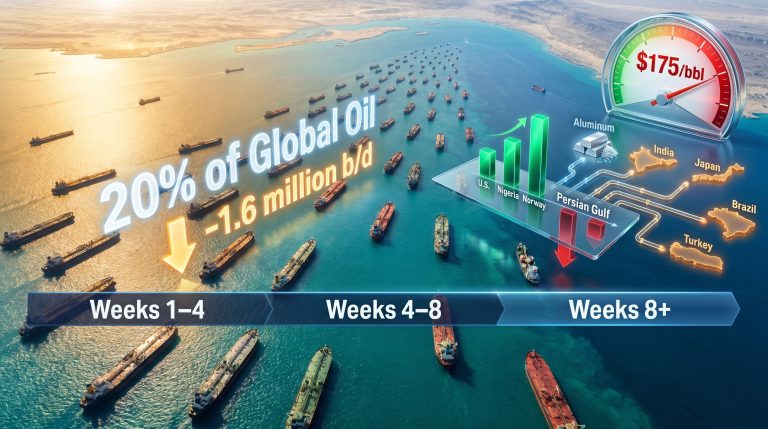
The numbers governing Hormuz transit are staggering in both their scale and concentration. In the period spanning 2024 through the first quarter of 2025, flows through the Strait accounted for more than one-quarter of total global seaborne oil trade and approximately one-fifth of worldwide oil and petroleum product consumption. Roughly one-fifth of global liquefied natural gas trade also transited this single corridor, with the majority originating from Qatari export terminals.
Asian markets bear the sharpest exposure. In 2024, 84 percent of crude oil and condensate and 83 percent of LNG moving through the Strait was destined for Asian consumers. Four nations alone — China, India, Japan, and South Korea — collectively accounted for 69 percent of all Hormuz crude oil and condensate flows during the same period.
Why Alternative Routes Cannot Compensate
The absence of meaningful bypass infrastructure amplifies every disruption. Two pipeline alternatives exist, but neither offers scale sufficient to absorb Strait closure:
- The UAE's Habshan-Fujairah pipeline carries a maximum capacity of approximately 1.8 million barrels per day, connecting onshore fields to Gulf of Oman export terminals
- Iran's Goreh-Jask pipeline operates at roughly 300,000 barrels per day effective capacity, connecting to ports at Bandar-e-Jask and Kooh Mobarak
- Iran's southern port exports averaged less than 70,000 barrels per day during 2024 and ceased loading operations entirely after September 2024
Combined, these alternatives cannot remotely substitute for the tens of millions of barrels that ordinarily transit the Strait each day. The waterway's depth and width accommodate the world's largest crude tankers, a physical advantage that no pipeline can replicate.
The 2026 Crisis: Scale and Immediate Impact
The triggering event — Israeli-US airstrikes on February 28, 2026 — set off a chain of responses that rapidly escalated into a full-scale supply emergency. Iran's effective enforcement of Strait restrictions stranded approximately 800 vessels awaiting passage by mid-May 2026. Saudi Arabia responded to threats against shipping traffic by reducing output by 2 million barrels per day, compounding the supply shock.
Saudi Aramco's chief executive reported that global oil markets were losing approximately 100 million barrels every single week the Strait remained closed, with cumulative losses reaching roughly 1 billion barrels across the crisis period. Should disruptions extend beyond a few weeks from mid-May, the supply deficit may not resolve until 2027.
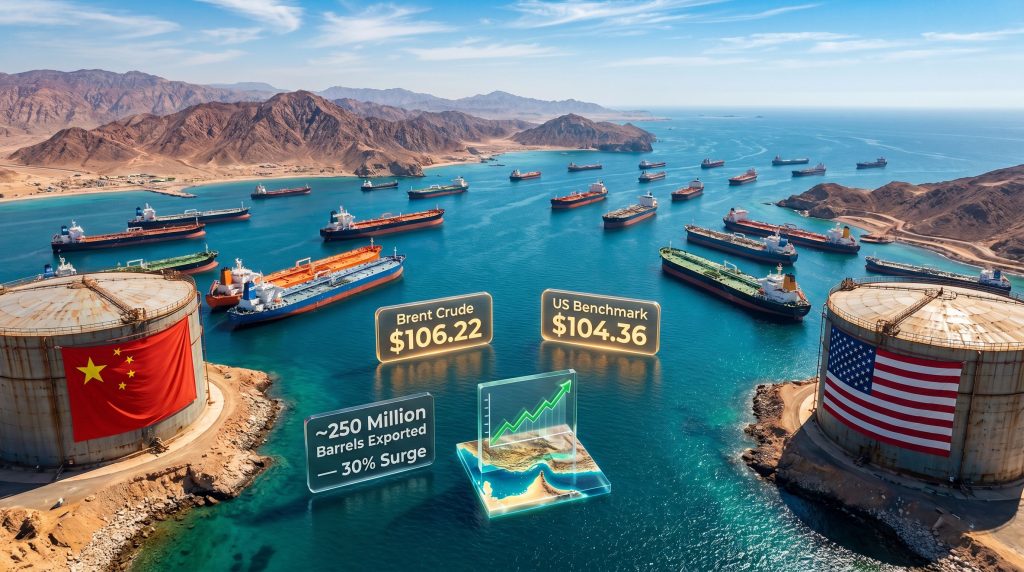
The oil price movements during this period were dramatic and immediate. Brent crude climbed to $106.22 per barrel while the US benchmark reached $104.36 per barrel, reflecting both physical scarcity and the risk premium attached to an unresolved geopolitical standoff.
What the Trump-Xi Beijing Summit Revealed About Energy Diplomacy
The Trump-Xi summit held in Beijing on May 14–15, 2026, marked the first US presidential visit to China in nearly nine years, a fact that underscores how exceptional the diplomatic moment was. While trade, artificial intelligence cooperation, Taiwan, and broader Middle East developments all featured on the agenda, energy security emerged as a substantive undercurrent confirmed by White House officials.
Xi Jinping's Three Positions on the Hormuz Dispute
According to White House officials, Xi communicated three distinct positions during the summit discussions:
- Firm opposition to any toll mechanism on vessels transiting the Strait of Hormuz, treating the waterway as an internationally recognised open passage
- Interest in increasing purchases of American crude oil, reducing structural reliance on Gulf supply routes vulnerable to Iranian-controlled chokepoints
- Preference for civilian passage protocols and opposition to any framework that introduces military control over navigation through the Strait
China's official summit readout referenced discussions on West Asia but did not explicitly list energy among the disclosed topics, creating an asymmetry between Chinese and American characterisations of the meeting's scope. This divergence itself carries diplomatic significance, suggesting Beijing was more comfortable projecting ambiguity on its energy positioning than Washington.
A Rare Convergence Between Geopolitical Rivals
The alignment between Washington and Beijing on Hormuz tolls preceded the summit itself. US Secretary of State Marco Rubio stated in April 2026 that no country or organisation possesses the right to levy charges on vessels transiting internationally recognised waterways. Chinese Foreign Minister Wang Yi had already articulated a matching position, creating an unusual moment of explicit US-China diplomatic convergence on a security matter.
This pre-summit alignment mattered because it framed the Beijing discussions not as a starting point for negotiation but as a consolidation of an existing shared position. Two nations whose economic relationship had been defined by escalating tariffs, retaliatory levies on energy commodities, and near-complete cessation of bilateral energy trade found themselves on the same side of a critical maritime security question.
The paradox is instructive: geopolitical rivalry does not prevent tactical alignment when both parties face a common structural vulnerability.
Iran's Toll Framework: The Legal and Commercial Reality
Iran's proposed mechanism for managing Strait access involves a fixed charge applied to each transiting vessel. The terms of this proposal have drawn near-universal rejection from international legal authorities.
| Parameter | Detail |
|---|---|
| Proposed toll per vessel | $2 million |
| Accepted payment currencies | Yuan or cryptocurrency only |
| Stated justification | Compensation for regional security provision |
| International legal standing | No recognised basis under established maritime law |
| Vessels currently stranded | Approximately 800 as of mid-May 2026 |
The UNCLOS Framework and Transit Passage Rights
The United Nations Convention on the Law of the Sea distinguishes between a coastal state's rights over territorial waters and the established international principle of transit passage through straits used for international navigation. The Strait of Hormuz falls unambiguously into the latter category. Under transit passage rights, all ships and aircraft enjoy continuous and expeditious passage without interference — a principle that carries no carve-out for toll collection by bordering states.
Iran's insistence on yuan or cryptocurrency payment, bypassing US dollar settlement systems, adds a secondary dimension to the proposal. Beyond the legal challenge, the currency requirement represents a deliberate attempt to exclude dollar-denominated trade flows and create a parallel settlement architecture for energy corridor access. International maritime law experts, across both Western and non-Western jurisdictions, have characterised this demand as legally untenable.
China's Selective Passage: A Diplomatically Complex Position
Ship tracking data has revealed that dozens of Chinese-linked tankers have been permitted selective passage through the Strait even as Western commercial vessels face restrictions and toll demands. This creates a layered diplomatic challenge for Beijing. China has publicly opposed the toll mechanism while simultaneously benefiting from preferential treatment under the very system it condemns.
This arrangement, whether formalised or tacit, places Beijing in a position of apparent contradiction that could complicate its credibility as a neutral party should multilateral resolution frameworks emerge.
China's Strategic Case for Buying More American Oil
China's position as the world's largest importer of both crude oil and natural gas creates structural exposure to any disruption along Gulf supply routes. The Hormuz crisis has crystallised a long-standing strategic vulnerability: the concentration of procurement pathways through a single geographic chokepoint controlled by a third party. Understanding the broader trade war impact on oil helps contextualise why Beijing is now actively seeking alternative supply corridors.
The Supply Diversification Logic
Increasing US crude oil purchases addresses this vulnerability through several overlapping mechanisms:
- Route diversification: American crude arrives via Pacific or Atlantic shipping lanes entirely disconnected from Persian Gulf infrastructure
- Refinery compatibility: US crude oil grades are technically compatible with configurations in Chinese refineries, reducing the cost of transitioning procurement sources
- Diplomatic leverage: Energy trade functions as a stabilising instrument in bilateral relations, providing mutual economic interest that moderates adversarial dynamics
- Reduced Iranian dependency: Increased American supply reduces the implicit reliance on Iranian goodwill for passage rights, a dependency that carries both strategic and reputational costs
The Prior Breakdown and Why It Matters
The interruption to US-China energy trade that preceded the Hormuz crisis was itself a product of tariff escalation. The US-China trade war saw China impose retaliatory levies on American energy commodities in response to sweeping US tariffs on Chinese goods, effectively halting bilateral energy shipments. The economic costs fell on both sides: American producers lost a major export market, while Chinese refiners absorbed higher procurement costs by sourcing replacement volumes through more expensive alternative channels.
The 2026 Hormuz crisis has transformed this pre-existing trade disruption from a bilateral dispute into a structural energy security problem. Both governments now face a shared incentive to restore energy commerce that neither could easily justify on purely diplomatic grounds during the tariff standoff.
America's Paradoxical Position: Opposing the Closure While Benefiting From It
The United States occupies a uniquely contradictory position in the Hormuz crisis. As the world's largest producer of both crude oil and natural gas, American exporters have capitalised directly on the supply gap created by the Strait's effective closure.
The Export Surge
US crude export volumes during the crisis period have reached historic levels. In the two months preceding mid-May 2026, the US shipped more than 250 million barrels of crude, representing a 30 percent increase in export volumes compared to baseline periods. This surge has positioned American producers as the primary alternative energy source for importing nations cut off from Gulf supplies.
How Exposed Is the US Domestically?
Despite its dominant production position, the US is not immune to Hormuz disruptions. Its direct import dependency is modest:
| Metric | Figure |
|---|---|
| US crude imports via Hormuz (2024) | Approximately 0.5 million barrels per day |
| Share of total US crude imports | Approximately 7% |
| Share of total US petroleum consumption | Approximately 2% |
| Structural insulation from closure | High |
Despite low direct dependency, global oil markets operate on unified pricing mechanisms. Supply shocks originating in the Persian Gulf translate into domestic price increases regardless of where American refiners source their crude, meaning US consumers absorb the inflationary consequences even as US producers capture record export premiums.
This dynamic creates a commercially successful but diplomatically awkward position. Washington opposes the closure on freedom-of-navigation principles while American energy companies record historically elevated revenues from the resulting supply disruption.
The next major ASX story will hit our subscribers first
Scenario Analysis: Three Pathways to Resolution
Scenario 1: Iran Abandons Toll Demands and Reopens the Strait
Sustained US-China diplomatic pressure, combined with the cumulative economic cost to Iran of maintaining restrictions, represents the primary driver toward this outcome. Saudi Aramco's assessment suggests that immediate resumption of Strait traffic could allow market rebalancing within months. In this scenario, crude prices would correct sharply from current elevated levels, and China's commitment to increased US oil purchasing would likely persist as a structural diversification strategy rather than a crisis-driven response.
Scenario 2: Selective Chinese Passage Continues While Restrictions Persist for Others
This outcome sustains Beijing's current preferential position while creating escalating reputational and diplomatic costs. The longer the two-tier access arrangement persists, the more difficult China's stated opposition to the toll mechanism becomes to credibly maintain. This scenario also increases the probability of US naval freedom-of-navigation operations in the Strait, which would introduce direct military escalation risk.
Scenario 3: A Multilateral Maritime Framework Emerges
Historical precedents for internationally governed maritime chokepoints suggest that sustained crises can generate durable institutional responses. China's dual relationships with Iran and the United States position it as a potential mediating party. A multilateral security framework governing Hormuz transit would be unprecedented in the context of this specific waterway. However, the economic pressure generated by 800 stranded vessels and $106 crude creates structural incentives for all parties to explore negotiated frameworks.
Frequently Asked Questions
What did Xi Jinping say about Strait of Hormuz tolls?
During the May 2026 Beijing summit, Xi communicated China's firm opposition to any toll-charging mechanism on vessels transiting the Strait of Hormuz. A White House official confirmed this position following the meeting. China's official summit readout referenced West Asia discussions but did not explicitly itemise energy matters among disclosed topics, creating a degree of ambiguity around the formal scope of what was agreed.
Why does China want to buy more US oil?
China's interest in increasing American crude purchases reflects a strategic imperative to diversify energy supply chains away from Gulf routes dependent on uninterrupted Strait access. With approximately 800 vessels stranded and cumulative supply losses reaching roughly 1 billion barrels, Beijing is seeking alternative procurement corridors that reduce its exposure to Iranian-controlled chokepoints while simultaneously providing diplomatic stabilisation benefits in its relationship with Washington.
How much is Iran charging for Strait of Hormuz passage?
Iran has proposed a fee of $2 million per vessel, payable exclusively in yuan or cryptocurrency. This demand carries no recognised legal foundation under international maritime law conventions governing transit passage through internationally recognised straits, and has been rejected by both the US and China.
How has the Strait of Hormuz closure affected oil prices?
Since Iran's effective closure following the February 28, 2026 airstrikes, Brent crude has risen to approximately $106.22 per barrel and the US benchmark to $104.36 per barrel. The disruption affects roughly one-fifth of global oil and gas supply, with global markets losing an estimated 100 million barrels weekly while the restriction persists. The geopolitical oil price factors at play here are among the most complex seen in decades.
Is the US heavily dependent on the Strait of Hormuz?
The US imports only approximately 0.5 million barrels per day via the Strait, representing around 7 percent of total crude imports and approximately 2 percent of total petroleum consumption. However, unified global pricing mechanisms ensure that US domestic energy prices remain exposed to supply shock contagion regardless of where American refiners source their crude.
What has the US exported during the crisis period?
The US shipped more than 250 million barrels of crude in the two months preceding mid-May 2026, a 30 percent surge in export volumes. American producers have consequently assumed the role of primary alternative energy supplier for importing nations whose Gulf access has been curtailed by the Strait restrictions.
The Structural Realignment That Outlasts the Crisis
The Xi Jinping Strait of Hormuz tolls position, and Beijing's concurrent interest in greater US oil purchases, signals something more consequential than a short-term diplomatic response to an acute supply emergency. It reflects a recalculation of energy supply architecture by the world's largest importer in response to demonstrated vulnerability at a single geographic chokepoint.
For investors and market participants, the key structural shifts to monitor extend well beyond crude price normalisation:
- The resumption of US-China energy trade could reshape long-haul crude shipping dynamics and Pacific basin energy pricing benchmarks
- Iran's legal and diplomatic isolation on the toll question, opposed by both Washington and Beijing, concentrates resolution pressure on Tehran in ways that a purely Western-led opposition could not achieve
- The US export infrastructure build-out accelerated by record crisis-period volumes may create lasting capacity that survives any Strait resolution
- Asian importer supply chain diversification, already underway before the 2026 crisis, will likely accelerate regardless of how the current standoff resolves
The Hormuz crisis has compressed years of structural energy transition pressure into weeks. The question now is not whether global energy trade architecture will change, but how durable the realignments forged under crisis conditions will prove once the immediate pressure subsides.
Want to Stay Ahead of the Next Major Resource Discovery?
When geopolitical shocks reshape global energy and commodity markets this rapidly, early identification of emerging opportunities becomes critical — Discovery Alert's proprietary Discovery IQ model scans ASX announcements in real time, instantly alerting subscribers to significant mineral discoveries before the broader market reacts. Explore how historic discoveries have generated substantial returns on Discovery Alert's dedicated discoveries page, and begin your 14-day free trial today to position yourself ahead of the next major market shift.