May 19, 2026
BHP's innovative approach to African exploration partnerships demonstrates how corporate giants can accelerate mineral discovery while supporting regional development. The company's strategic energy transition strategy addresses urgent global demand for copper, zinc, and lithium across renewable energy infrastructure. Traditional exploration models, focused on direct equity investment, increasingly prove inadequate for addressing complex geological and regulatory landscapes in emerging jurisdictions.
The confluence of energy transition urgency, African geological potential, and institutional capacity building creates unique opportunities for strategic collaboration. These dynamics reshape how international corporations approach early-stage mineral development while simultaneously addressing local capacity constraints and technological gaps through sophisticated critical minerals strategy implementation.
Strategic Acceleration Models in African Mineral Exploration
Corporate-led exploration acceleration represents a fundamental departure from traditional mining investment paradigms. Rather than pursuing direct acquisition strategies or conventional joint ventures, major mining corporations increasingly deploy non-dilutive funding mechanisms combined with technical mentorship frameworks. This approach aligns with broader mining industry evolution trends emphasising collaborative partnerships.
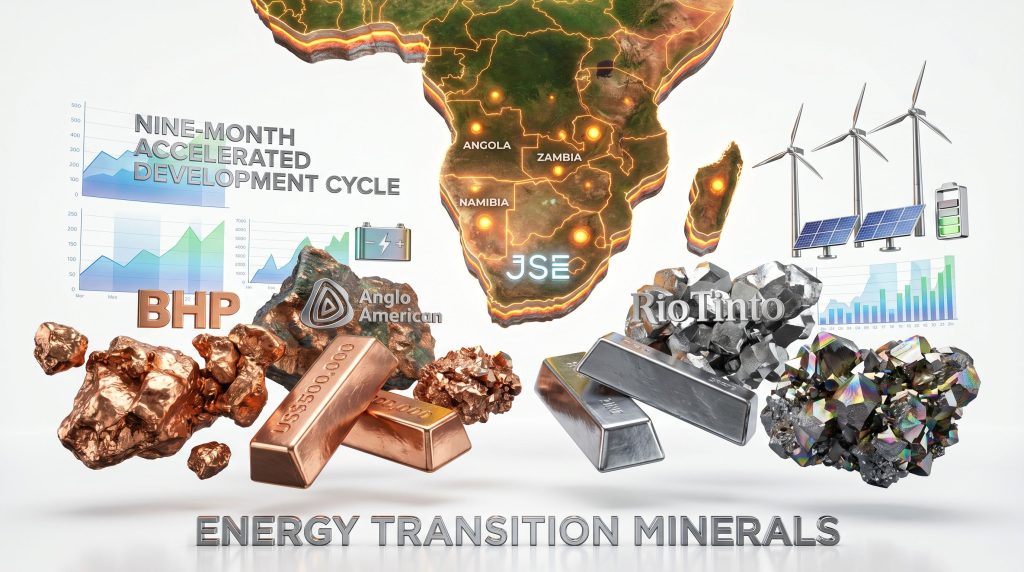
The BHP Xplor programme for African mining exploration exemplifies this strategic evolution through its distinctive approach to regional partnerships. The initiative provides $500,000 in equity-free capital over a nine-month development cycle, targeting energy transition minerals across sub-Saharan jurisdictions. This funding structure eliminates ownership dilution concerns for participating exploration companies while providing major miners with exposure to diverse geological opportunities.
Dr. Cam McCuaig, BHP's head of global generative exploration, emphasises the programme's collaborative foundation. He notes that workshops aim to provide insights into global exploration approaches while identifying mutual opportunities for regional development. This perspective reflects broader industry recognition that sustainable mineral development requires genuine partnership rather than traditional investor-investee relationships.
Technology Transfer and Capacity Building Mechanisms
The programme's technical framework extends beyond capital provision to encompass advanced exploration methodologies and digital tool implementation. Participating companies gain access to sophisticated geological analysis platforms and artificial intelligence applications for mineral systems analysis. Furthermore, they benefit from data-driven mining operations capabilities typically available only to major mining corporations.
Key technological components include:
- Mineral systems thinking applications
- Advanced geological data interpretation
- Digital exploration methodologies
- Risk assessment frameworks
- Resource development acceleration techniques
This technology transfer approach addresses critical capacity constraints across African exploration sectors. Moreover, it builds sustainable local expertise that extends beyond individual project lifecycles, creating lasting value for regional development.
When big ASX news breaks, our subscribers know first
Institutional Partnership Networks in African Mining Development
The strategic significance of institutional collaboration becomes evident through examining the multi-stakeholder framework underlying successful exploration acceleration programmes. The partnership between BHP and the Johannesburg Stock Exchange demonstrates how established financial infrastructure supports early-stage mineral development while creating pathways for market access and capital formation.
Patrycja Kula-Verster, JSE's primary markets equity origination manager, highlights the exchange's recognition that mining capital formation begins long before market entry. This perspective acknowledges the critical role of institutional support in building robust investment pipelines across regional mining sectors.
Regional Workshop Strategy and Knowledge Distribution
The programme's geographical expansion across Namibia, Angola, and Zambia reflects strategic targeting of diverse geological environments and regulatory frameworks. This regional approach maximises exposure to varied mineral systems while building relationships across multiple African mining jurisdictions. Additionally, it demonstrates commitment to comprehensive continental engagement rather than isolated country-specific initiatives.
Workshop participants include:
- Junior mining and exploration companies
- Academic institutions with geoscience programmes
- Geological surveys and national geoscience bodies
- Innovation-focused research centers
- Technology development organisations
The inclusion of geological survey organisations proves particularly significant, as demonstrated by BHP's strategic partnership with the South African Council for Geoscience. This collaboration establishes frameworks for joint research, data sharing, and exploration initiatives designed to extract insights from decades of accumulated geological information.
African Mining Company Strategic Positioning
Understanding which exploration companies derive maximum value from acceleration programmes requires analysis of participant characteristics and strategic positioning. Orion Minerals Limited, a JSE-listed South African exploration company, exemplifies optimal programme utilisation through its focus on copper and zinc assets. The company's approach demonstrates how effective sustainable mining practices integration enhances programme outcomes.
John Paul Hunt, Orion's executive for exploration, describes the programme as validation of the company's strategic positioning in South Africa's Northern Cape region. He emphasises its value as a catalyst for partnerships and resource development acceleration. This perspective illustrates how programme participation extends beyond capital access to encompass strategic validation and network development.
Participant Selection and Strategic Alignment
Optimal programme participants typically demonstrate:
- Established market credibility through stock exchange listing
- Focus on energy transition minerals (copper, zinc, lithium)
- Regional geological expertise and asset portfolios
- Development-stage projects between exploration and production phases
- Demonstrated capacity for technology adoption and implementation
The equity-free funding model proves particularly attractive for exploration companies seeking development capital without ownership dilution. This structure enables participants to maintain control while accessing resources and expertise typically available only to major mining corporations. Consequently, it creates more balanced partnership dynamics than traditional investment relationships.
| Company Type | Strategic Benefits | Programme Outcomes |
|---|---|---|
| Listed Explorers | Capital + Validation | Accelerated Development |
| Academic Partners | Technology Access | Research Enhancement |
| Geological Surveys | Methodology Transfer | Capability Building |
| Innovation Companies | Commercial Support | Market Access |
Energy Transition Mineral Strategic Priorities
The programme's emphasis on energy transition minerals reflects broader recognition of Africa's strategic importance in global supply chain diversification. Copper demand for renewable energy infrastructure continues accelerating, while zinc applications in energy storage technologies expand alongside lithium requirements for battery manufacturing. Furthermore, the Mining Weekly reports on significant industry engagement across multiple African jurisdictions.
Critical mineral focus areas encompass:
- Copper: Primary target for renewable energy infrastructure development
- Zinc: Essential components for energy storage and grid applications
- Lithium: Battery technology applications where geologically viable
- Rare Earth Elements: Advanced technology and renewable energy components
This strategic prioritisation aligns with global energy transition requirements while positioning African mineral resources as critical components of sustainable energy infrastructure. Rather than traditional commodity exports, this approach emphasises value-added participation in global energy transformation.
Advanced Exploration Technology Integration
Programme participants access cutting-edge exploration technologies including machine learning applications for geological prediction and hyperspectral analysis systems. These technological capabilities accelerate mineral deposit identification while reducing exploration risk and timeline uncertainty. Moreover, they position African exploration companies at the forefront of industry technological advancement.
The integration of artificial intelligence applications proves particularly valuable for processing large geological datasets and identifying mineral system patterns. This technological approach transforms traditional exploration methodologies while building local capacity for advanced mineral assessment techniques across diverse African geological terranes.
Regional Mining Ecosystem Development Implications
The long-term strategic implications of corporate-led exploration programmes extend beyond individual project outcomes to encompass broader African mining ecosystem development. Knowledge networks created through programme participation facilitate ongoing collaboration between international mining corporations, regional exploration companies, and institutional partners. Additionally, they establish foundations for sustained technological advancement.
Ecosystem development outcomes include:
- Enhanced local exploration capabilities through technology transfer
- Regional availability of advanced exploration methodologies
- Established collaboration frameworks for ongoing partnerships
- Improved project quality attracting additional investment capital
This ecosystem approach positions participating African nations as strategic partners in global energy transition supply chains. Rather than traditional resource extraction locations, this positioning enhances long-term economic development prospects while building sustainable mining industry capabilities.
Geopolitical Supply Chain Positioning
The strategic importance of African mineral development gains additional significance within broader geopolitical contexts surrounding critical mineral supply chain security. Western economies increasingly recognise the need for supply chain diversification away from concentrated production sources, particularly for battery metals and renewable energy materials.
African mineral development programmes contribute to this diversification strategy while building regional capacity for sustainable resource development. This approach creates mutual benefits for international mining corporations seeking supply security and African nations developing mining sector capabilities. Furthermore, it establishes more resilient global supply chain networks.
Corporate Partnership Model Replication Framework
The success of equity-free exploration acceleration programmes suggests broader applicability across international mining corporations seeking strategic partnerships in emerging jurisdictions. Replication success depends on several critical framework components that ensure sustainable partnership development and mutual benefit creation. However, each implementation requires careful adaptation to local contexts and regulatory environments.
Essential replication elements include:
- Local Partnership Integration: Collaboration with established regional institutions and exchanges
- Technology Sharing Commitment: Genuine knowledge transfer rather than capital provision alone
- Long-term Relationship Building: Multi-year engagement strategies beyond single programme cycles
- Regulatory Alignment: Operating within existing governance frameworks and institutional structures
Risk Mitigation and Success Measurement
Successful programme implementation requires comprehensive risk assessment frameworks addressing political, geological, and operational uncertainties common in emerging mining jurisdictions. Clear success metrics encompass participant project advancement rates, technology adoption effectiveness, and partnership sustainability indicators. Additionally, they must account for broader economic development impacts.
Key performance indicators include:
- Participant project advancement through development stages
- Technology adoption and implementation success rates
- Long-term partnership sustainability beyond programme completion
- Regional capacity building and knowledge transfer effectiveness
- Subsequent investment attraction and project development acceleration
These metrics enable continuous programme refinement while demonstrating value creation for all stakeholder categories.
The next major ASX story will hit our subscribers first
Programme Participation and Implementation Framework
How do companies apply for BHP Xplor programme participation?
Applications typically open annually through BHP's official channels, targeting early-stage exploration companies, academic institutions with relevant geoscience programmes, and innovation-focused organisations. Selection criteria emphasise energy transition mineral focus, technological innovation potential, and regional development alignment. Furthermore, applications undergo rigorous technical and strategic evaluation processes.
What types of projects receive priority consideration?
Energy transition mineral projects, particularly copper and zinc exploration initiatives, receive priority consideration. Projects incorporating innovative exploration technologies, advanced geological methodologies, or novel approaches to mineral systems analysis demonstrate competitive advantages in selection processes. Additionally, initiatives showing strong potential for regional capacity building gain preference.
How does programme participation affect company ownership structures?
The equity-free funding model ensures participants retain complete ownership control while accessing capital and expertise. This non-dilutive approach eliminates ownership concerns typically associated with traditional investment relationships, enabling companies to maintain strategic autonomy throughout programme participation. Consequently, it attracts higher-quality participants seeking genuine partnerships.
What ongoing obligations do participants have after programme completion?
While specific terms vary across programme iterations, participants typically maintain relationships with BHP for potential future collaboration opportunities and ongoing knowledge sharing initiatives. These relationships often extend beyond formal programme timelines to encompass long-term strategic partnerships. Moreover, they create valuable networks for continued professional development.
African Mining Exploration Strategic Evolution
The BHP Xplor programme for African mining exploration represents a significant evolution in corporate approaches to regional partnerships, demonstrating how major mining corporations can create sustainable development pathways through genuine collaboration. This approach combines capital provision with institutional partnership and technology transfer to create lasting benefits for international corporations and regional exploration ecosystems.
The programme's emphasis on energy transition minerals positions Africa strategically within global supply chain diversification efforts while building local capacity for sustainable resource development. Success in fostering authentic partnerships suggests this model may increasingly replace traditional exploration investment approaches as the mining industry adapts to energy transition requirements.
Investment Considerations: Investors evaluating African mining exploration opportunities should consider companies demonstrating strategic alignment with energy transition mineral priorities, established relationships with major mining corporations, and access to advanced exploration technologies. Programme participation often indicates strategic validation and enhanced development prospects for participating organisations.
Disclaimer: This analysis contains forward-looking statements and investment considerations that involve inherent risks and uncertainties. Mining exploration investments carry significant risks including geological uncertainty, regulatory changes, and market volatility. Investors should conduct independent research and consult qualified advisors before making investment decisions. Past performance does not guarantee future results.
Ready to Capitalise on African Mining Exploration Opportunities?
Discovery Alert's proprietary Discovery IQ model delivers real-time notifications on significant ASX mineral discoveries, instantly empowering subscribers to identify actionable opportunities in energy transition metals ahead of the broader market. Discover how major mineral discoveries can generate substantial returns by exploring Discovery Alert's dedicated discoveries page, showcasing historic examples of exceptional outcomes, and begin your 14-day free trial today to position yourself ahead of the market.