June 11, 2026
The Hidden Complexity Inside a Conveyor Belt Agreement
Most casual observers of the mining industry would consider a conveyor belt supplier agreement to be routine procurement housekeeping. The reality is considerably more nuanced. Conveyor systems in large-scale mining operations are not passive infrastructure — they are the circulatory system of a mine, moving billions of dollars worth of ore across some of the planet's most demanding environments, continuously, often for decades. When a Tier 1 miner like BHP formalises a deepened technology relationship with a conveyor specialist, the implications extend well beyond rubber and steel.
The BHP BOTON mining conveyor systems agreement, signed in 2026 at BOTON's Innovation Centre in Wuxi, China, is a case study in how major resource companies are fundamentally reengineering their supplier relationships. Furthermore, it replaces transactional procurement logic with co-development partnerships that embed technology, sustainability accountability, and long-term service integration into a single framework.
When big ASX news breaks, our subscribers know first
Fourteen Years in the Making: The Commercial Foundation
The agreement did not emerge from a standing start. The commercial relationship between BHP and Wuxi BOTON Technology originated in 2012, when BOTON began supplying conveyor belts to BHP's operations across Australia and Chile. Over the following decade-plus, that relationship steadily expanded in geographic scope and operational scale.
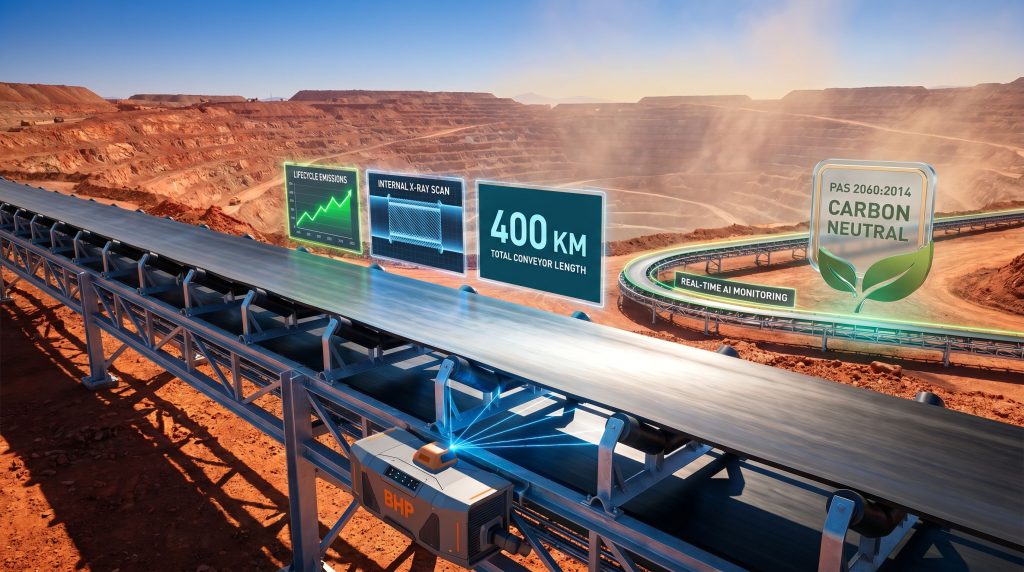
By the time the foundational agreement was renewed in May 2024, BOTON had supplied more than 400 kilometres of conveyor belts across BHP's global asset base. This figure speaks to the operational depth of the partnership and the logistical complexity of maintaining belt infrastructure across multiple continents and climatic extremes.
The evolution of the relationship can be understood across three distinct phases:
| Partnership Phase | Time Period | Scope |
|---|---|---|
| Initial Supply Relationship | 2012–2023 | Product procurement — conveyor belts and components |
| Renewed Framework | May 2024 | Expanded to intelligent systems, lifecycle services, sustainability |
| Global Framework Agreement | 2026 | Joint technology development, carbon monitoring, robotic inspection |
The 2026 global framework agreement represents the third and most structurally significant phase — one in which BOTON transitions from product supplier to co-developer and integrated service partner embedded within BHP's operational support architecture.
What the Agreement Actually Covers
The scope of the BHP BOTON mining conveyor systems agreement is broader than most industry partnerships of this type. It encompasses four distinct work streams:
- Joint technology development focused on automation and intelligent monitoring
- Lifecycle services extending across installation, maintenance, and end-of-life management
- Sustainability programmes targeting carbon footprint reduction across the supply chain
- Global service expansion through dedicated local support stations in BHP's core markets
Each of these is substantive rather than aspirational, building on documented prior work at specific BHP mine sites rather than representing entirely new research directions.
Intelligent Conveyor Technology: What Is Actually Being Built?
The Four Core Technology Workstreams
The automation agenda under the agreement concentrates on four specific technology areas, each addressing a distinct failure mode or inefficiency in large-scale conveyor operations. Automation has transformed mining technology considerably in recent years, and this agreement reflects that broader shift:
-
Longitudinal rip detection — Real-time identification of belt tears running along the length of the belt, which represent one of the most catastrophic and costly failure types in bulk material handling. A single undetected rip can destroy hundreds of metres of belt within minutes.
-
Digital X-ray scanning — Non-invasive imaging that assesses the internal structure of a belt, including embedded steel cable condition, without requiring the belt to stop. This enables predictive maintenance scheduling based on actual belt condition rather than calendar-based replacement cycles.
-
AI-based belt alignment systems — Machine learning applications that continuously monitor and adjust belt tracking to prevent edge wear, spillage, and structural stress. Belt misalignment is one of the most common and costly sources of premature belt degradation in mining operations.
-
Robotic inspection tools — Autonomous platforms capable of traversing conveyor systems in confined, dusty, or otherwise hazardous environments, removing the need for human entry into spaces with significant safety risk profiles.
Why Escondida Is the Right Test Environment
Previous collaborative work between BHP and BOTON was conducted at the Escondida copper mine in Chile's Atacama Desert — the largest copper mine in the world by annual production volume. Escondida's conveyor systems operate under some of the most extreme conditions encountered in global mining: high altitude, significant temperature variation, abrasive ore types, and conveyor runs spanning kilometres across steep and remote terrain.
"The operational demands at Escondida make it one of the most rigorous validation environments available for conveyor technology. Proving performance there provides a level of credibility that translates directly to other challenging mine environments globally."
The technical development roadmap under the new framework uses this existing Escondida foundation to scale proven concepts across BHP's broader international operations. In addition, AI-powered tools are boosting mining efficiency in complementary ways across the sector, reinforcing the value of this technology-led approach.
The Carbon-Neutral Conveyor Belt: A Genuinely Novel Development
Perhaps the most strategically distinctive element of the BHP BOTON relationship is the work conducted at BHP's Spence copper mine, also in Chile. BHP and BOTON jointly developed what has been described as the world's first carbon-neutral conveyor belt, verified by global testing and certification organisation SGS against the PAS 2060:2014 standard — the internationally recognised specification for demonstrating carbon neutrality.
This certification is not a marketing label. PAS 2060:2014 requires:
- Quantification of the full carbon footprint of the product across its lifecycle
- A documented commitment to reduce that footprint over time
- Offsetting of residual emissions using high-quality, independently verified carbon credits
- Third-party verification of the entire process
Applying this rigorous standard to a physical industrial product in a mining supply chain context is technically complex and operationally demanding. The Spence pilot demonstrated that it is achievable — and the new framework agreement is designed to extend this approach systematically.
The Supply Chain Partner Programme: Lifecycle Carbon Accountability
The proposed Supply Chain Partner Programme under the agreement is designed to create a comprehensive emissions monitoring architecture spanning the entire useful life of a conveyor system:
-
Raw material sourcing — Tracking embedded carbon from the extraction and processing of belt constituent materials, including rubber compounds and steel reinforcement.
-
Manufacturing — Monitoring production-phase emissions at BOTON's facilities during belt fabrication.
-
Operational phase — Real-time carbon tracking during active conveyor use at mine sites, capturing energy consumption and associated emissions.
-
End-of-life recycling — Developing new recycling pathways to increase material circularity and reduce the volume of worn belt material directed to landfill or incineration.
"This lifecycle approach moves sustainability accountability beyond the fence line of the mine site itself — a direction that major institutional investors and ESG-focused analysts are increasingly demanding from Tier 1 resource companies."
Consequently, decarbonisation in mining is delivering tangible economic benefits alongside its environmental credentials, making programmes like this one commercially attractive as well as ethically sound.
The next major ASX story will hit our subscribers first
Strategic Alignment With BHP's Operational Priorities
BHP's Chief Commercial Officer Rag Udd described the agreement as advancing the next generation of mining conveyor solutions to improve productivity, support the company's decarbonisation commitments, and deliver long-term value across its global operations. This framing positions the BOTON partnership squarely within three of BHP's core strategic pillars:
| Strategic Pillar | Conveyor Agreement Contribution |
|---|---|
| Productivity improvement | AI alignment, rip detection, and robotic inspection reduce unplanned downtime and increase throughput |
| Safety enhancement | Automated inspection eliminates human exposure in high-risk confined belt environments |
| Decarbonisation | Carbon-neutral belt certification, lifecycle emissions monitoring, and end-of-life recycling programme |
The convergence of these three pillars within a single supplier relationship is what distinguishes the BHP BOTON mining conveyor systems agreement from conventional equipment procurement. Each technology workstream delivers against multiple strategic objectives simultaneously.
The Operational Economics Driving Intelligent Conveyor Adoption
For observers outside the mining sector, the investment logic behind intelligent conveyor systems requires some context. Conveyor infrastructure in large-scale mining operations carries significant financial exposure across several dimensions:
- Unplanned downtime costs at major mines can reach tens of millions of dollars per day when throughput is interrupted
- Belt replacement for a single long-distance mining conveyor run can cost several million dollars, excluding lost production during the replacement window
- Increasing mine depths and longer haul distances are placing progressively greater mechanical stress on conveyor systems as deposits mature
- Human entry inspections in confined belt environments carry meaningful safety liability, particularly in underground or chemically hazardous settings
- Energy consumption by conveyor drives represents a significant operating cost component, making efficiency improvements through AI alignment economically material
Against this financial backdrop, the business case for intelligent monitoring and automation is compelling even before environmental considerations are applied. Furthermore, data-driven mining operations are becoming essential to how leading miners manage costs and optimise throughput across their asset bases.
Comparing Conveyor Technology Approaches
| Technology | Primary Function | Key Operational Benefit |
|---|---|---|
| Longitudinal rip detection | Real-time belt tear identification | Prevents catastrophic belt loss events |
| Digital X-ray scanning | Internal belt structure assessment | Enables condition-based maintenance scheduling |
| AI belt alignment | Continuous tracking correction | Reduces wear rates and energy consumption |
| Robotic inspection | Autonomous belt assessment | Eliminates human entry into hazardous zones |
BOTON's Service Infrastructure Expansion
The agreement also commits BOTON to strengthening its service presence within BHP's core operating regions. Leveraging existing international facilities in Australia and Thailand, BOTON's conveyor innovation journey with BHP continues to expand through dedicated local service stations designed to reduce response times and accelerate maintenance cycles when issues arise at BHP mine sites.
This geographic service expansion represents a significant commercial commitment on BOTON's part and reflects the broader industry trend toward service localisation as a competitive differentiator. For large mining operators managing assets across multiple continents, the ability to access expert maintenance support without extended logistics delays has direct operational value.
What This Signals for the Future of Mining Equipment Partnerships
The BHP BOTON mining conveyor systems agreement is a visible expression of a structural shift occurring across the mining equipment and services sector. Tier 1 miners are consolidating around fewer, deeper supplier relationships — selecting partners capable of co-investing in innovation, integrating sustainability accountability into product delivery, and providing embedded lifecycle service rather than discrete transactional supply.
However, it is worth noting that the broader context of mining's electrification transformation is also shaping how companies like BHP approach long-term equipment partnerships. Key implications of this trend for the broader mining equipment sector include:
- Joint intellectual property development is becoming an increasingly important differentiating factor in major mining procurement decisions, with operators favouring suppliers willing to co-invest in customised technology
- Carbon-neutral product certifications are transitioning from optional sustainability credentials to embedded supplier qualification requirements for major miners
- Regional service infrastructure is emerging as a mandatory capability rather than an optional premium service for global equipment providers
- Data integration between intelligent conveyor systems and mine-wide operational platforms represents the next frontier, as operators seek to connect asset-level performance data into broader digital mine management ecosystems
The 2026 global framework agreement between BHP and BOTON is not simply a procurement update. It is, consequently, a blueprint for how the world's largest mining companies intend to structure their technology partnerships in the decade ahead.
This article is intended for informational purposes only and does not constitute financial or investment advice. References to future programmes, technology development roadmaps, and sustainability initiatives reflect plans and intentions as described in publicly available sources. Readers should conduct independent research before making any investment or commercial decisions. For further coverage of the BHP BOTON agreement and related mining technology developments, visit Mining Technology.
Want To Stay Ahead of Significant ASX Mineral Discoveries?
Discovery Alert's proprietary Discovery IQ model delivers real-time alerts the moment significant mineral discoveries are announced on the ASX, transforming complex data across more than 30 commodities into clear, actionable insights for investors at every level. Explore Discovery Alert's discoveries page to see how historic finds have generated substantial returns, and begin your 14-day free trial today to position yourself ahead of the broader market.