June 6, 2026
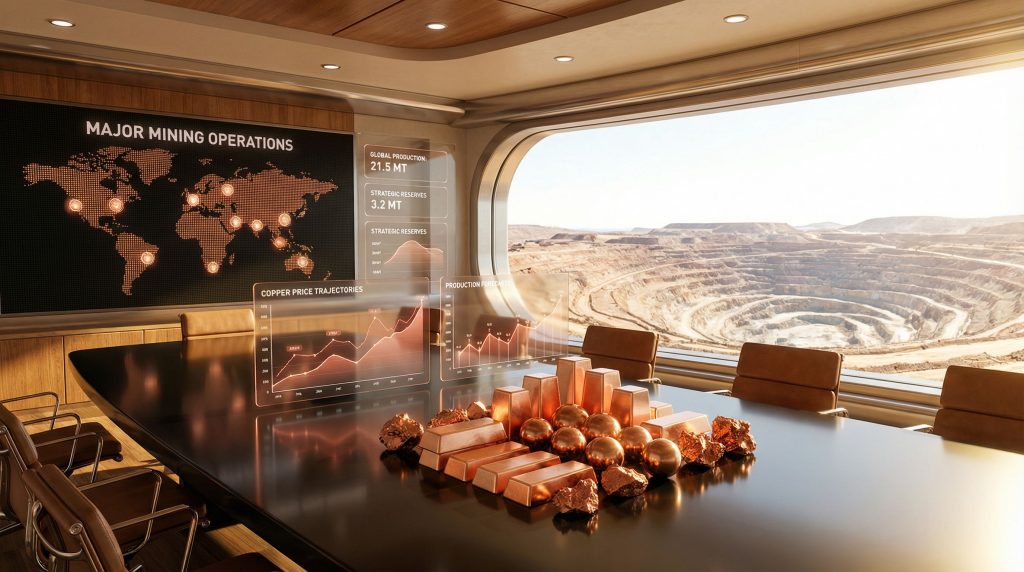
Global mining dynamics are shifting as executives navigate unprecedented transitions between traditional resource portfolios and future-focused commodity strategies. The BHP CEO steps down as miner pivots to copper scenario exemplifies how leadership succession planning and strategic mineral concentration represents a critical inflection point that will reshape competitive positioning across the industry. Understanding how these executive-driven transformations unfold provides essential insights into long-term value creation mechanisms in the resources sector, particularly as copper and uranium investment opportunities continue expanding globally.
Strategic Leadership Transitions in Modern Mining Operations
Mining industry leadership changes carry amplified significance compared to other sectors due to the capital-intensive nature of resource development and the decades-long investment horizons required for major projects. When Mike Henry steps down as BHP CEO on July 1, 2026, after serving 6.5 years in the position, the transition represents more than standard executive succession. Brandon Craig's appointment as his successor signals potential strategic realignments that could influence global copper supply forecast dynamics for the next decade.
Executive tenure patterns in major mining companies typically range from 5-8 years, providing sufficient time to implement transformational strategies while maintaining operational continuity. However, the timing of leadership changes often coincides with commodity cycle inflections and market structure evolution, creating compound effects on strategic direction.
The succession planning framework employed by tier-1 mining companies increasingly emphasises candidates with deep understanding of energy transition commodities rather than traditional diversified resource management experience. This shift reflects broader industry recognition that future value creation will concentrate around specific metals critical to global decarbonisation efforts.
When big ASX news breaks, our subscribers know first
Copper Portfolio Concentration Strategies Driving Corporate Evolution
Mining companies are implementing deliberate strategic pivots toward copper-centric operations as electrification demand projections through 2035 indicate sustained supply deficits. Furthermore, this transformation requires sophisticated capital reallocation models that balance existing asset optimisation with greenfield development opportunities in copper-rich geological formations.
Key factors driving copper portfolio concentration include:
- Global electric vehicle production scaling requiring 2.5-4 times current copper consumption per vehicle
- Renewable energy infrastructure deployment demanding 3-5 times more copper than fossil fuel equivalents
- Grid modernisation programmes across developed economies necessitating extensive copper-intensive upgrades
- Data centre expansion supporting artificial intelligence applications requiring substantial copper infrastructure
Supply constraint analysis indicates that meeting projected copper demand will require discovery and development of new deposits equivalent to 6-8 major mines annually through 2040. Moreover, this supply challenge creates strategic advantages for companies with established copper operations and exploration portfolios positioned in stable jurisdictions.
The competitive dynamics surrounding copper assets have intensified merger and acquisition activity, with premium valuations emerging for high-grade deposits in politically stable regions. Companies executing early transitions toward copper concentration benefit from asset acquisition opportunities before broader market recognition drives valuations higher.
Executive Compensation Alignment with Commodity Strategy Evolution
Modern mining executive compensation structures increasingly incorporate performance metrics tied to specific commodity production targets rather than diversified output measures. In addition, this alignment mechanism ensures leadership decision-making prioritises long-term strategic positioning over short-term operational optimisation across multiple commodities.
Compensation framework evolution includes:
| Traditional Approach | Future-Focused Structure |
|---|---|
| Revenue diversification bonuses | Copper production growth incentives |
| Multi-commodity cost optimisation | Single-commodity margin enhancement |
| Geographic distribution rewards | Strategic jurisdiction concentration |
| Short-term profit maximisation | Long-term transformation milestones |
Performance measurement periods for senior mining executives now extend 3-5 years to accommodate the timeline required for meaningful strategic pivots. Consequently, this extended evaluation framework reduces pressure for quarterly earnings optimisation while encouraging investments in future-focused infrastructure and capability development.
Stock option vesting schedules in major mining companies increasingly include copper price performance triggers and production milestone achievements. These mechanisms create direct financial alignment between executive wealth creation and successful commodity strategy execution.
How Do Leadership Changes Impact Mining Strategy?
The BHP CEO steps down as miner pivots to copper situation demonstrates how executive transitions often coincide with strategic realignments. However, successful transformations require continuity in vision and execution capabilities across leadership changes.
Operational Excellence Frameworks in Copper-Focused Operations
Successful transitions toward copper concentration require comprehensive operational excellence initiatives that optimise extraction efficiency, processing capabilities, and cost curve positioning. Meanwhile, companies implementing these strategic pivots must balance maintaining current production levels while investing in technological upgrades and capacity expansion.
Process optimisation in copper operations focuses on several critical areas, particularly with advancing data-driven mining operations becoming standard practice.
Extraction Technology Enhancement:
- Advanced flotation systems improving recovery rates by 2-4%
- Automated ore sorting reducing waste processing volumes
- Predictive maintenance systems minimising equipment downtime
- Real-time grade optimisation maximising valuable mineral recovery
Processing Capability Advancement:
- Hydrometallurgical processing for low-grade ore treatment
- Bioleaching systems enabling extraction from previously uneconomic deposits
- Concentrate upgrading facilities improving product quality premiums
- Waste heat recovery systems reducing energy consumption
The implementation timeline for operational excellence initiatives typically requires 18-24 months for initial improvements and 3-5 years for transformational capability development. Companies executing these programmes during leadership transitions must maintain momentum through succession planning continuity.
Quality premium capture represents a significant value creation opportunity in copper markets, with high-grade concentrates commanding 5-15% price premiums over standard products. For instance, operational excellence programmes targeting quality enhancement can generate substantial margin improvements independent of commodity price movements.
Strategic Partnership Development in Copper Value Chains
Mining companies concentrating on copper production increasingly pursue vertical integration opportunities and strategic partnerships that enhance market positioning beyond traditional extraction activities. Furthermore, these relationships provide access to downstream processing capabilities, technology development resources, and end-market demand visibility.
Partnership categories driving strategic value include:
- Technology Collaboration: Joint development of extraction and processing innovations with equipment manufacturers and research institutions
- Downstream Integration: Direct relationships with copper consumers in electric vehicle, renewable energy, and infrastructure sectors
- Supply Chain Security: Long-term offtake agreements providing price stability and volume certainty
- Joint Venture Development: Shared risk arrangements for large-scale project development in challenging jurisdictions
The establishment of strategic partnerships requires 12-18 months for negotiation and structuring, with full integration benefits typically realised over 3-7 year periods. Companies implementing these initiatives during leadership transitions must ensure successor executives maintain commitment to partnership development.
BHP has announced Brandon Craig as their new CEO, signalling continuity in their copper-focused strategic direction. Market dynamics in copper trading increasingly favour producers with direct relationships to end-users rather than traditional spot market sales approaches.
Capital Allocation Optimisation During Strategic Transitions
Effective capital deployment during copper-focused strategic transitions requires sophisticated prioritisation frameworks that balance immediate production requirements with long-term growth investments. However, mining companies must allocate resources across exploration, development, operational enhancement, and technology integration initiatives while maintaining shareholder return expectations.
Strategic Capital Allocation Framework:
Companies successfully executing commodity concentration strategies allocate approximately 40-50% of capital toward core asset optimisation, 25-35% toward strategic growth projects, and 15-25% toward exploration and technology development. This allocation balance enables sustained production while building future growth platforms.
Investment prioritisation matrices consider multiple factors:
| Investment Category | Risk Profile | Return Timeline | Strategic Value |
|---|---|---|---|
| Operational Enhancement | Low-Medium | 1-3 years | Production optimisation |
| Capacity Expansion | Medium | 3-5 years | Volume growth |
| Technology Integration | Medium-High | 2-4 years | Cost curve improvement |
| Exploration Programs | High | 5-10 years | Resource base expansion |
Return threshold adjustments for copper-focused investments typically require 12-15% internal rates of return compared to 10-12% for diversified commodity portfolios. This elevated threshold reflects the concentrated risk profile while ensuring projects generate adequate returns for strategic transformation costs.
Project development timelines in copper operations range from 3-7 years for brownfield expansions to 7-12 years for greenfield developments. Consequently, capital allocation planning must account for these extended timelines when balancing immediate cash flow requirements with long-term growth investments.
What Drives Successful Mining Transitions?
The BHP CEO steps down as miner pivots to copper example highlights how leadership continuity and clear strategic vision enable successful commodity concentration strategies. Moreover, understanding mineral exploration importance becomes crucial during these transitions.
The next major ASX story will hit our subscribers first
Market Dynamics and Competitive Positioning Analysis
Copper market structure evolution creates distinct advantages for companies implementing early strategic concentration compared to those maintaining diversified commodity portfolios. In addition, supply constraint anticipation and demand projection integration enable superior market timing for asset acquisitions and development decisions.
Competitive positioning factors include:
- Resource Quality: Ore grade superiority providing sustained cost advantages
- Geographic Diversification: Operations spanning stable jurisdictions reducing political risk
- Processing Capability: Value-added production capacity capturing premium pricing
- Technology Integration: Automation and optimisation systems improving operational efficiency
Price discovery mechanisms in copper markets increasingly reflect supply constraint premiums for high-quality production from established operations. Companies with superior resource bases benefit from these premiums independent of broader commodity price movements, especially as record-high copper prices continue supporting strategic transitions.
Market concentration trends indicate the top 10 copper producers control approximately 60% of global supply, with further consolidation anticipated as smaller operations become uneconomic under tightening environmental and social governance requirements.
Regulatory Environment Navigation and Compliance Integration
Environmental compliance requirements for copper operations continue expanding across major mining jurisdictions, creating both challenges and competitive advantages for companies implementing comprehensive sustainability programmes. Furthermore, regulatory navigation capabilities increasingly determine project viability and operational longevity.
Regulatory compliance categories requiring strategic focus:
- Environmental Impact Assessment: Comprehensive evaluation of ecosystem effects and mitigation strategies
- Community Engagement: Stakeholder consultation processes ensuring social licence to operate
- Water Management: Usage optimisation and treatment systems meeting environmental standards
- Waste Minimisation: Tailings management and processing waste reduction initiatives
Permitting timelines for new copper projects range from 3-7 years in developed jurisdictions, with environmental assessment requirements representing the most significant timeline component. Companies with established regulatory expertise gain substantial competitive advantages in project development speed.
International trade considerations for copper production include export licensing requirements, quality certification standards, and potential trade dispute impacts on market access. Strategic planning must account for these regulatory factors when evaluating development opportunities.
Investment Implications and Market Response Analysis
Investor sentiment toward copper-focused mining companies reflects broader recognition of electrification demand trends and supply constraint realities. However, market response to strategic transitions varies significantly based on execution credibility and operational track record demonstration.
Investment decision factors include:
- Strategy Clarity: Clear articulation of copper concentration rationale and implementation timeline
- Execution Track Record: Historical performance in strategic transformation initiatives
- Asset Quality: Resource base characteristics supporting long-term production profiles
- Management Capability: Leadership team experience in commodity-focused operations
Sector rotation implications suggest institutional investors increasingly allocate capital toward pure-play copper exposure rather than diversified mining portfolios. This trend creates valuation premiums for companies successfully implementing copper concentration strategies.
ESG investment alignment represents a critical factor in institutional capital allocation decisions, with copper mining companies benefiting from positive association with energy transition support. Companies demonstrating superior environmental and social performance attract premium valuations from ESG-focused investment managers.
Growth narrative validation requires consistent execution of strategic milestones and operational performance targets over 2-3 year periods. Moreover, market confidence builds through demonstrated progress rather than strategic announcements alone.
Long-Term Industry Transformation Patterns
Consolidation trends across the copper mining sector indicate accelerating merger and acquisition activity as companies seek scale advantages and geographic diversification benefits. Furthermore, asset portfolio optimisation drives divestiture strategies as companies focus resources on core operational areas.
Industry transformation indicators include:
- Technology Adoption: Automation and artificial intelligence integration improving operational efficiency
- Sustainability Integration: Environmental performance becoming competitive differentiation factor
- Supply Chain Optimisation: Vertical integration reducing transportation costs and improving market access
- Human Capital Development: Workforce capability enhancement supporting technological advancement
Innovation adoption patterns across copper operations demonstrate clear competitive advantages for early technology implementers. Companies investing in automation, process optimisation, and environmental performance enhancement achieve superior cost curve positioning and operational reliability.
Market structure evolution toward increased concentration among tier-1 producers creates pricing power advantages and reduces commodity price volatility impacts on individual company performance. This trend supports strategic transitions toward copper specialisation for companies with superior resource bases.
Brandon Craig's appointment as BHP's new chief executive demonstrates how the BHP CEO steps down as miner pivots to copper strategy continues under new leadership. Data analytics deployment in copper operations enables real-time optimisation of extraction and processing activities, improving recovery rates and reducing waste generation.
Disclaimer: This analysis is based on publicly available information and industry research. Investment decisions should consider individual risk tolerance and professional financial advice. Mining investments carry inherent risks including commodity price volatility, operational challenges, and regulatory changes. Past performance does not guarantee future results.
Looking to Capitalise on Strategic Mining Transitions?
Discovery Alert's proprietary Discovery IQ model delivers instant notifications when ASX-listed mining companies announce significant copper and mineral discoveries during these strategic pivots, empowering subscribers to identify actionable opportunities ahead of broader market recognition. Begin your 14-day free trial today and position yourself to benefit from the next major discovery as miners execute their transformation strategies.