
May 19, 2026
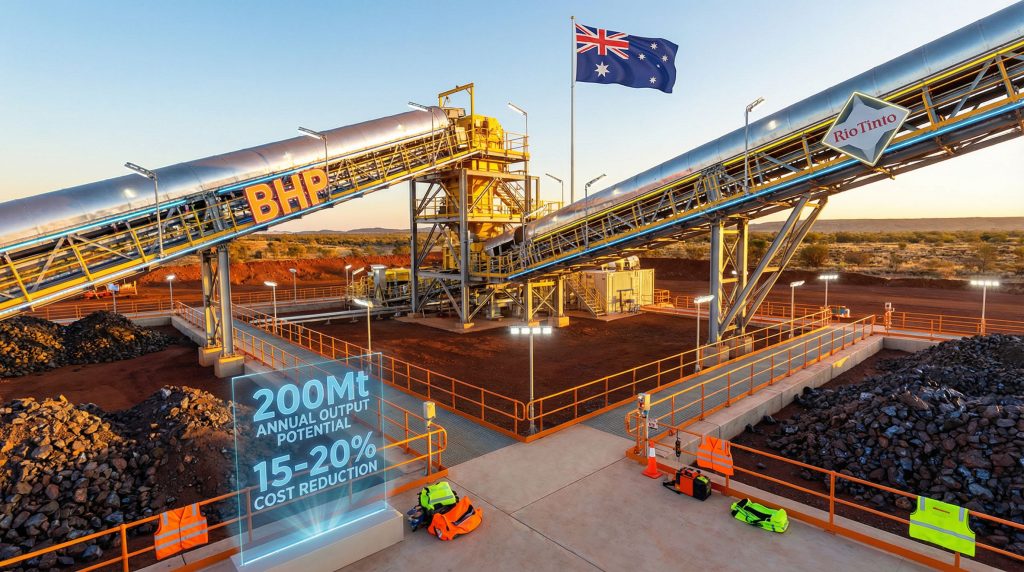
The BHP and Rio Tinto iron ore partnership represents a significant evolution in how major mining companies approach resource development in an increasingly competitive global market. When established resource extraction giants experience simultaneous production declines, collaborative frameworks emerge as viable alternatives to capital-intensive standalone expansion strategies, demonstrating how current mining consolidation trends are reshaping traditional industry dynamics.
The resource sector's shift toward partnership-based development models reflects deeper structural challenges within mature mining jurisdictions. As ore grades decline and operational costs escalate, the economic rationale for shared infrastructure utilisation becomes increasingly compelling for major producers seeking to maintain market positioning without proportional capital exposure.
Strategic Infrastructure Synergies in Large-Scale Mining Operations
Modern mining partnerships transcend traditional joint venture models by incorporating sophisticated resource optimisation frameworks. When major producers coordinate operational capabilities, the resulting efficiency gains extend beyond simple cost reduction to encompass risk distribution across diversified asset portfolios, which aligns with emerging critical minerals strategy approaches.
The BHP and Rio Tinto iron ore partnership exemplifies this evolution, targeting 200 million tonnes annually in additional production capacity through coordinated development of the Wunbye and Yandi Lower Channel deposits. This collaboration leverages existing processing infrastructure to achieve scale economies without duplicating capital expenditures across competing facilities.
Processing Facility Optimisation Models
Infrastructure sharing in mining operations typically reduces capital requirements by 15-20% compared to standalone development approaches. The Pilbara partnership utilises BHP's processing capabilities for ore extracted from Rio Tinto's Wunbye deposit, whilst Rio Tinto provides mining expertise for BHP's Yandi Lower Channel development.
This cross-utilisation model delivers several operational advantages. However, it also requires careful consideration of various investment risk factors that could impact long-term success.
Key operational benefits include:
- Reduced environmental footprint through consolidated processing activities
- Enhanced operational flexibility during maintenance or equipment upgrades
- Shared technical expertise across geological formations
- Coordinated workforce development and training programmes
The timeline for implementation extends into the early 2030s, providing sufficient lead time for regulatory approvals and community consultation processes required for expanded operations in Western Australia's Pilbara region.
Market Concentration Effects Through Collaborative Structures
When industry leaders coordinate production strategies, market dynamics shift beyond traditional competitive frameworks. The partnership creates potential barriers for mid-tier competitors seeking to establish comparable operational scale or processing efficiency. Furthermore, these developments often incorporate mining technology advancements that provide additional competitive advantages.
Strategic positioning implications include:
- Supply chain consolidation reducing buyer negotiating power
- Enhanced pricing stability through coordinated production planning
- Increased market entry barriers for emerging producers
- Technology sharing advantages unavailable to standalone operators
Recent production data illustrates the strategic urgency driving collaboration. BHP's Yandi operations produced 3.5 million tonnes in Q3 2025, representing a 21% year-on-year decline. Similarly, Rio Tinto's Yandicoogina operations delivered 10.8 million tonnes, down 8.7% from the previous year.
When big ASX news breaks, our subscribers know first
Geographic Concentration Advantages in Australia's Mining Heartland
The Pilbara region represents the world's largest iron ore production hub, housing multiple operations from both BHP and Rio Tinto alongside other major producers. This geographic concentration creates unique opportunities for collaborative development that would be impractical in dispersed mining jurisdictions. Moreover, the WA resources sector insights demonstrate how regional integration can amplify economic benefits.
Regional Employment Impact and Community Engagement
Large-scale mining partnerships generate employment effects extending beyond direct operational roles. The partnership structure is projected to support 2,000+ sustained jobs throughout the development and operational phases, encompassing direct mining positions, processing facility operations, and supporting service industries.
| Partnership Element | Strategic Impact | Timeline |
|---|---|---|
| Shared Infrastructure Access | 15-20% cost reduction potential | 2030-2035 |
| Combined Processing Capacity | 200Mt additional annual output | Early 2030s |
| Regional Employment Impact | 2,000+ sustained jobs | Ongoing |
Traditional Owner engagement remains a critical component of expanded mining operations. The partnership structure requires consultation with Aboriginal communities holding native title interests across both deposit areas, potentially creating more complex but comprehensive benefit-sharing arrangements.
Water Resource Management in Arid Mining Regions
Western Australia's Pilbara region faces significant water scarcity challenges, making resource optimisation essential for sustained mining operations. Collaborative partnerships can achieve water usage efficiency through:
- Shared water treatment and recycling facilities
- Coordinated groundwater management across adjacent deposits
- Combined desalination infrastructure for coastal processing facilities
- Integrated waste water processing systems
These water management synergies become increasingly valuable as environmental regulations tighten and community scrutiny of resource consumption intensifies.
Production Capacity Analysis and Global Market Context
The 200 million tonnes annual production target represents approximately 8% of global iron ore production, currently estimated at 2.5 billion tonnes annually. This scale provides significant leverage in global steel supply chains whilst maintaining manageable operational complexity.
Competitive Positioning Against Emerging Market Producers
The partnership timing coincides with increasing competition from state-owned enterprises in emerging markets, particularly Chinese mining companies expanding operations in Africa and South America. Australian producers face pressure to maintain cost competitiveness whilst meeting stringent environmental and safety standards.
The collaboration represents a strategic response to changing global supply dynamics, where operational efficiency increasingly determines market share retention rather than simple production volume expansion.
Brazil's Vale remains the world's largest iron ore producer, whilst Australia's Fortescue Metals Group continues expanding operations through technological innovation and operational automation. The BHP and Rio Tinto iron ore partnership positions both companies to compete effectively against these established and emerging competitors.
Investment Requirements and Return Projections
The partnership structure minimises individual company capital exposure through shared infrastructure utilisation. Rio Tinto's recent $1.6 billion investment in the Hope Downs joint venture with Hancock Prospecting demonstrates the company's commitment to collaborative development models.
Capital Efficiency Mechanisms:
- Utilisation of existing processing infrastructure reduces greenfield development costs
- Shared mining equipment and transportation systems optimise asset utilisation
- Coordinated exploration activities reduce duplicate geological assessment expenses
- Joint procurement strategies leverage combined purchasing power
The early 2030s production timeline aligns with expected infrastructure upgrade completion and regulatory approval processes. Both companies maintain flexibility to adjust investment levels based on global demand projections and commodity price cycles.
Regulatory Framework and Approval Processes
Australian mining partnerships require comprehensive regulatory review under multiple jurisdictions. The Australian Competition and Consumer Act governs market concentration concerns, whilst the Foreign Investment Review Board evaluates any international ownership implications.
State Government Approval Requirements
Western Australian mining approvals encompass environmental impact assessments, Traditional Owner consultation requirements, and infrastructure development permits. The partnership structure may simplify some approval processes by reducing total environmental footprint compared to separate development projects.
Key Regulatory Considerations:
- Environmental impact assessment for expanded mining activities
- Water usage permits for increased processing capacity
- Transportation infrastructure upgrades for additional ore movement
- Aboriginal Heritage Act compliance across multiple deposit areas
The non-binding nature of current agreements provides flexibility during regulatory review processes, allowing both companies to adjust partnership structures based on approval outcomes.
Industry Consolidation Patterns and Future Partnership Models
The collaboration occurs alongside broader industry consolidation patterns. Rio Tinto's simultaneous discussions with Glencore regarding potential merger arrangements indicate industry-wide strategic repositioning. In addition, these developments reflect changing approaches to capital allocation and operational efficiency across the sector.
Precedent-Setting Implications for Competitor Response
Major mining partnerships historically prompt competitive responses from industry peers. Potential scenarios include:
- Vale partnership initiatives with regional Australian producers
- Fortescue collaboration opportunities with international mining companies
- Chinese state-owned enterprise strategic alliance formation
- Mid-tier producer consolidation to achieve competitive scale
These competitive dynamics may accelerate industry consolidation beyond current partnership structures, potentially reshaping global iron ore supply chains over the next decade.
Technology Transfer and Innovation Sharing
Collaborative frameworks enable technology sharing between companies that traditionally compete on operational efficiency. Shared research and development initiatives can advance:
- Automated mining equipment deployment
- Environmental monitoring and remediation technologies
- Ore processing efficiency improvements
- Safety system standardisation across operations
The partnership creates opportunities for coordinated innovation investment, potentially delivering technological advantages unavailable to standalone operators.
Investment Market Response and Valuation Implications
Mining industry partnerships typically generate positive investor sentiment due to perceived risk reduction and capital efficiency improvements. Historical analysis suggests collaborative announcements produce:
- Short-term share price appreciation averaging 3-7% for participating companies
- Reduced earnings volatility through diversified operational exposure
- Enhanced dividend sustainability via improved cash flow stability
- Premium valuations for companies demonstrating strategic flexibility
Supply Chain Security Considerations for Steel Producers
Major steel producers monitor mining industry consolidation closely due to potential impacts on ore pricing and supply reliability. The partnership implications include:
- Increased supplier concentration potentially affecting negotiating power
- Enhanced supply reliability through coordinated production planning
- Long-term contract advantages for strategic steel industry partnerships
- Alternative supply source development by major buyers seeking diversification
Steel producers in Asia, Europe, and North America may adjust procurement strategies to account for increased coordination between major Australian iron ore suppliers.
The next major ASX story will hit our subscribers first
What Are the Key Operational Risks?
Large-scale mining partnerships face inherent operational and strategic risks requiring careful management. The partnership must address several critical challenges.
Operational Integration Complexities
- Cultural differences between organisational approaches to safety, environmental management, and community relations
- Technology system integration across different operational platforms and data management systems
- Workforce coordination between companies with distinct employment policies and training programmes
- Supply chain alignment involving different vendor relationships and procurement processes
Market Risk Exposure
The partnership concentrates production capacity within a single geographic region, creating potential vulnerabilities to:
- Extreme weather events disrupting transportation and processing infrastructure
- Regulatory changes affecting Australian mining operations
- Currency fluctuation impacting international competitiveness
- Geopolitical tensions affecting key export markets
Future Industry Evolution and Strategic Implications
The partnership model establishes precedents for resource sector collaboration that may extend beyond iron ore to other commodity markets. Similar frameworks could emerge in:
- Coal mining operations seeking efficiency improvements
- Copper extraction projects requiring significant capital investment
- Lithium processing facilities serving battery material supply chains
- Rare earth element production addressing strategic mineral security concerns
Technology-Driven Partnership Opportunities
Advancing mining technologies create new collaboration possibilities:
- Automated equipment sharing reducing individual company capital requirements
- Integrated data analytics improving operational decision-making across partnership assets
- Environmental monitoring systems providing comprehensive regional impact assessment
- Safety technology deployment standardising protection protocols across operations
The BHP and Rio Tinto iron ore partnership represents strategic adaptation to evolving industry conditions rather than revolutionary change. Success depends on effective integration of operational capabilities whilst maintaining competitive advantages in global markets. Consequently, this collaboration may serve as a blueprint for future industry partnerships facing similar operational and market pressures.
Disclaimer: This analysis contains forward-looking projections and industry forecasts that involve inherent uncertainties. Production targets, timeline estimates, and market share projections should be considered speculative pending final investment decisions, regulatory approvals, and market conditions. Investment decisions should incorporate comprehensive due diligence beyond the scope of this strategic assessment.
Ready to Capitalise on Major Mining Partnerships Before the Market Responds?
Discovery Alert's proprietary Discovery IQ model delivers instant notifications on significant ASX mining discoveries and strategic developments, empowering subscribers to identify actionable opportunities ahead of broader market awareness. Explore how historic partnerships and discoveries have generated substantial returns by visiting Discovery Alert's dedicated discoveries page, then begin your 30-day free trial today to position yourself ahead of the market.