June 15, 2026
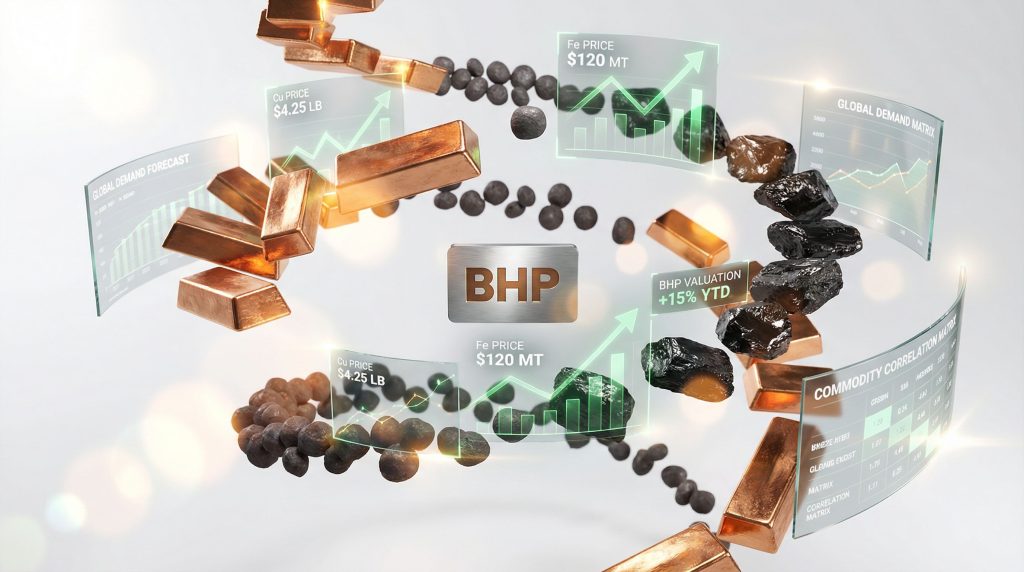
Global commodity markets are experiencing significant transformations that directly impact major mining companies, with rising commodity prices influence on BHP share forecast becoming a critical consideration for investors seeking exposure to the resources sector. The interconnected nature of global commodity markets creates complex valuation patterns for resource companies, where multiple factors converge to influence investor sentiment and pricing mechanisms. Understanding these dynamics becomes crucial when analyzing major mining operations, particularly as markets experience simultaneous price movements across copper, iron ore, and other industrial metals.
Current market conditions reflect a convergence of infrastructure spending, energy transition requirements, and supply chain restructuring that collectively supports elevated commodity valuations. The timing of these market forces creates unique investment opportunities, as traditional commodity cycles intersect with structural demand shifts driven by technological advancement and geopolitical considerations.
Mining companies positioned across multiple commodity exposures benefit from diversified revenue streams, though this also introduces complexity in valuation analysis as different metals respond to varying market drivers. Furthermore, commodity market volatility continues to influence investment strategies across the sector.
What Drives BHP's Valuation in Today's Commodity Supercycle?
Understanding the Commodity-Equity Correlation Matrix
BHP's share price trajectory demonstrates strong correlation with underlying commodity price movements, as evidenced by recent market performance reaching $47.58 on January 14, 2026, representing a 2.3% single-day gain. The stock achieved a near two-year high of $48.49 during early January 2026, occurring contemporaneously with copper prices reaching record levels above $6 per pound and other key commodities experiencing sustained strength.
| Commodity | Current Price | 12-Month Performance | Impact on BHP Valuation |
|---|---|---|---|
| Copper | $5.97/lb | +39% | Primary driver given largest producer status |
| Iron Ore | $108.25/tonne | +10% | Stable baseline revenue contributor |
| Coking Coal | $235.33/tonne | +20% | Moderate positive contribution |
| Potash | $358.33/tonne | +24% | Future earnings (Jansen 2027 production) |
| Nickel | Various | +26% (1-month) | Potential restart opportunity |
The correlation patterns reveal that copper price movements exert disproportionate influence on BHP's valuation, particularly following the company's achievement of world's largest copper producer status in August 2025. This positioning amplifies BHP's sensitivity to copper market dynamics while providing competitive advantages through scale economics and favourable cost curve positioning.
Additionally, iron ore price trends continue to play a significant role in determining the company's overall valuation framework. The relationship between these key commodities creates complex interdependencies that investors must carefully consider.
Macro-Economic Tailwinds Supporting Resource Valuations
Several structural forces support sustained commodity demand beyond typical cyclical patterns:
• Energy Transition Infrastructure: Copper demand from renewable energy installations, grid modernisation, and electric vehicle production creates baseline consumption growth independent of traditional construction cycles
• Data Center Expansion: Artificial intelligence and cloud computing infrastructure requires substantial copper consumption for power distribution and cooling systems
• Supply Chain Reshoring: Government incentives for domestic manufacturing in developed economies increase regional metal consumption patterns
• Urbanisation Trends: Continued development in emerging markets sustains steel demand through infrastructure and residential construction
Rising commodity prices influence on BHP share forecast reflects these converging demand drivers, as multiple end-use sectors simultaneously require increased metal inputs. The durability of these trends suggests current valuations may reflect sustainable rather than speculative demand patterns.
When big ASX news breaks, our subscribers know first
Which Commodities Present the Greatest Upside Catalysts for BHP?
Copper Market Dynamics: The New Oil of Electrification
Copper's 39% year-to-date gain to $5.97 per pound positions it as the standout performer among BHP's commodity portfolio. The recent achievement of record prices above $6 per pound indicates market recognition of supply-demand imbalances that may persist through the current decade.
Current global copper supply faces structural deficits projected through 2030, driven by mine depletion rates exceeding new project development timelines while demand growth accelerates from electrification initiatives.
BHP's position as the world's largest copper producer provides significant leverage to sustained price strength, as the company likely operates within the lowest-quartile cost producers globally. This competitive positioning means copper price volatility impacts BHP's margins favourably compared to higher-cost competitors who face production constraints during price weakness.
The technical fundamentals supporting copper demand include:
• Electric Vehicle Adoption: Each EV requires approximately 80 kilograms of copper compared to 25 kilograms in traditional vehicles
• Renewable Energy Infrastructure: Wind turbines contain 3-5 tonnes of copper each, while solar installations require substantial copper wiring
• Grid Modernisation: Aging electrical infrastructure in developed economies requires copper-intensive upgrades for smart grid capabilities
Iron Ore: Balancing Chinese Steel Demand with New Supply
Iron ore prices at $108.25 per tonne represent a moderate 10% annual gain, suggesting relative stability compared to copper's dramatic appreciation. This performance reflects balanced supply-demand conditions as Chinese steel production adjusts to property sector dynamics while new supply sources prepare for market entry.
| Iron Ore Price Scenario | Price Range ($/tonne) | BHP Earnings Impact | Probability Assessment |
|---|---|---|---|
| Strong Demand Recovery | $120-140 | +15-25% EBITDA | Moderate (Chinese stimulus) |
| Current Stability | $100-115 | Baseline scenario | High (balanced market) |
| Demand Weakness | $80-100 | -10-20% EBITDA | Low (recession scenario) |
The Simandou iron ore project in Guinea represents a potential long-term supply addition that could impact pricing dynamics, though development timelines extend beyond immediate forecasting horizons. BHP's established operations benefit from economies of scale and logistics advantages that provide competitive moats against new entrants.
Furthermore, investors should consider the broader implications of US–China trade war impacts on commodity flows and pricing mechanisms across global markets.
Metallurgical Coal: The Overlooked Value Driver
Coking coal's 20% price appreciation to $235.33 per tonne reflects supply constraints from environmental regulations and mine closures. The specialised nature of metallurgical coal for steel production limits substitution possibilities, creating pricing power for high-quality producers.
BHP's high-quality metallurgical coal operations benefit from premium pricing relative to thermal coal markets, as steel producers prioritise coal quality for efficient blast furnace operations. Environmental regulations increasingly restrict new coking coal development, supporting supply constraint dynamics.
How Do Analyst Forecasts Reflect Commodity Price Expectations?
Broker Target Price Analysis Framework
Recent analyst revisions demonstrate varying perspectives on rising commodity prices influence on BHP share forecast, with target prices ranging from conservative to highly optimistic:
| Broker | Rating | Target Price | Previous Target | Implied Upside | Key Assumptions |
|---|---|---|---|---|---|
| Bank of America | Buy | $56 | $49 | +18% | Sustained copper strength |
| Macquarie | Hold | $48 | $43 | +1% | Moderate commodity outlook |
| Morgan Stanley | Buy | $48 | $48 | +1% | Stable production ramp |
| Citi | Hold | $48 | $47 | +1% | Balanced risk-reward |
| Barclays | Hold | $50.12 | – | +5% | Conservative valuation |
| Ord Minnett | Buy | $48 | $48 | +1% | Operational efficiency |
Bank of America's $56 target represents a record high projection, exceeding the December 2023 peak of $50.84 by approximately 10.1%. This outlier target suggests either significantly higher commodity price assumptions or willingness to assign premium valuation multiples during commodity upcycles.
The concentration of targets around $48-$50.12 (excluding Bank of America) indicates analyst consensus anticipates modest appreciation from current levels, implying that much of the commodity strength may already be reflected in current valuations. However, analysts also recognise potential opportunities in copper and uranium investment strategies.
Valuation Multiple Expansion Potential
Historical analysis reveals that mining companies experience multiple expansion during sustained commodity price strength, as investors gain confidence in earnings durability. BHP's diversified commodity exposure provides some insulation from single-commodity volatility, potentially justifying premium valuations relative to pure-play producers.
Key metrics investors should monitor for timing entry points:
• Free Cash Flow Yield: Current yields above 8% historically indicate attractive entry opportunities
• Price-to-Book Ratios: Trading below 1.5x book value often signals undervaluation during commodity cycles
• EV/EBITDA Multiples: Ratios below 6x typically occur at cyclical lows for diversified miners
What Are the Primary Risk Factors That Could Derail Share Price Growth?
Global Economic Headwinds and Demand Destruction
Economic recession scenarios pose the most significant threat to commodity demand, as construction and manufacturing sectors reduce metal consumption rapidly during economic contractions. Interest rate policies in major economies directly impact infrastructure spending and housing construction, creating demand sensitivity for steel and copper consumption.
Geopolitical tensions affecting trade flows could disrupt commodity supply chains and pricing mechanisms. Indonesia's signalled potential 34% cut in 2026 nickel output demonstrates how regulatory decisions in major producing countries can create supply uncertainty, though such constraints typically support pricing for remaining producers.
Scenario Analysis – Recession Impact on Commodity Consumption:
• Mild Recession: 5-10% reduction in industrial metal demand, 15-20% price declines
• Severe Recession: 15-25% demand destruction, 30-40% price corrections from peak levels
• Stagflation Scenario: Mixed impacts with infrastructure spending resilience offsetting manufacturing weakness
Supply-Side Disruption Risks
Indonesian nickel production expansion has previously impacted BHP's operations, forcing the care and maintenance status of Western Australia Nickel in July 2024. However, recent nickel price recovery of 26% in one month suggests market rebalancing may create restart opportunities, with BHP planning to review the suspension decision by February 2026.
Currency fluctuation impacts affect USD-denominated commodity revenues, as Australian dollar strength reduces translated earnings for domestic reporting. Mining operations face ongoing regulatory scrutiny regarding environmental compliance and community impact, potentially affecting operational permits and expansion approvals.
How Should Investors Position for BHP's Commodity Exposure?
Portfolio Construction Considerations
BHP's diversified commodity portfolio provides natural hedging against single-commodity price volatility, though this diversification comes at the cost of concentrated exposure to individual metal price movements.
| Commodity Segment | Approximate Revenue % | Diversification Benefit | Volatility Profile |
|---|---|---|---|
| Copper | 35-40% | High growth exposure | Moderate-High |
| Iron Ore | 40-45% | Stable baseline | Moderate |
| Coal (Met & Thermal) | 15-20% | Declining exposure | High |
| Potash (Future) | 5-10% | Agricultural diversification | Moderate |
Compared to pure-play copper stocks, BHP offers broader commodity exposure with lower single-metal risk, though potentially reduced leverage to specific commodity price movements. The iron ore base provides cash flow stability during copper price volatility periods.
Timing Market Entry Points
Technical analysis suggests support levels around $45-46 based on recent consolidation patterns, while resistance appears near the $48.49 recent high. Seasonal commodity patterns often show strength during spring construction seasons in the Northern Hemisphere, though these patterns may be overshadowed by structural demand trends.
Optimal entry strategies based on commodity cycle positioning:
• Dollar-Cost Averaging: Regular purchases during volatility periods to smooth entry timing
• Commodity Price Correlation: Buy during temporary copper price weakness while maintaining conviction in long-term demand trends
• Relative Value: Compare BHP valuation metrics to peer group mining companies for relative attractiveness assessment
Additionally, considering the broader context of the energy transition outlook helps inform long-term positioning strategies for commodity-exposed investments.
What Does BHP's Capital Allocation Strategy Signal About Future Performance?
Project Pipeline and Growth Capital Deployment
The Jansen potash project timeline with first production anticipated in mid-2027 represents BHP's largest growth capital commitment, requiring sustained investment before revenue generation. This project diversifies BHP into agricultural commodity markets, providing exposure to global food security trends and fertiliser demand growth.
Copper expansion projects across BHP's global operations target increased production from existing assets, leveraging established infrastructure and operational expertise. These brownfield expansions typically offer superior risk-adjusted returns compared to greenfield developments while accelerating production timelines.
Key milestones investors should track for project execution:
• Jansen Construction Progress: Monthly production ramp schedules and capital expenditure tracking
• Copper Asset Optimisation: Throughput increases and grade improvements at existing operations
• Western Australia Nickel Decision: February 2026 review outcome and potential restart timeline
Shareholder Return Framework
BHP's dividend policy emphasises returns to shareholders through both regular dividends and special distributions during periods of exceptional cash generation. The company's capital discipline compared to historical mining boom periods suggests management learned from previous cycles where excessive capital deployment destroyed shareholder value.
Share buyback programmes provide additional return mechanisms while supporting per-share metrics during commodity price volatility. The balance between growth investment and shareholder returns reflects management's assessment of project economics versus market valuations.
The next major ASX story will hit our subscribers first
How Do Macroeconomic Trends Support Long-Term BHP Valuation?
Structural Demand Drivers Beyond Cyclical Factors
Urbanisation trends in developing markets continue driving steel consumption through infrastructure development and residential construction. These demographic shifts create baseline commodity demand growth independent of developed economy cyclical patterns, providing demand floor effects during economic downturns.
Green energy infrastructure requirements significantly boost copper demand through renewable energy installations, grid modernisation, and electric vehicle adoption. Unlike traditional industrial demand, these applications reflect policy-driven consumption that may prove less sensitive to economic cycles.
| End-Use Sector | Copper Demand Growth (2026-2030E) | Iron Ore Impact | Long-term Sustainability |
|---|---|---|---|
| Electric Vehicles | 8-12% annually | Minimal | High (policy-driven) |
| Renewable Energy | 6-10% annually | Moderate (steel towers) | High (climate goals) |
| Data Centers | 12-15% annually | Minimal | High (digitalisation) |
| Traditional Construction | 2-4% annually | High | Moderate (cyclical) |
Supply Constraint Analysis
Global mine reserve depletion rates across key commodities create natural supply constraints that support long-term pricing, as new project development faces increasingly complex permitting and environmental requirements. The average timeline from discovery to production now exceeds 15-20 years for major copper projects, creating supply response delays to demand growth.
Environmental regulations limit new supply development while increasing operational costs for existing mines. These regulatory trends favour established operators with existing permits and infrastructure over new entrants facing modern compliance requirements.
According to BHP's latest economic and commodity outlook, the company maintains optimistic projections for key commodity demand drivers through the remainder of the decade.
What Investment Thesis Emerges from Current Market Dynamics?
Bull Case Scenario Analysis
Under optimal commodity conditions, rising commodity prices influence on BHP share forecast could support share price targets approaching $55-60, representing 15-25% upside from current levels. This scenario assumes sustained copper prices above $5.50 per pound, stable iron ore around $105-115 per tonne, and successful Jansen project execution.
Multiple expansion during sustained commodity strength could drive valuations beyond pure earnings growth, as investor confidence in cycle sustainability increases. Historical precedent suggests P/E ratios can expand to 12-15x during commodity bull markets, compared to 8-10x during neutral periods.
Potential share price targets under optimal commodity conditions:
• Conservative Bull Case: $50-52 (5-10% upside) assuming moderate commodity strength
• Base Bull Case: $53-56 (12-18% upside) with sustained current pricing
• Aggressive Bull Case: $57-62 (20-30% upside) during commodity supercycle conditions
Base Case and Bear Case Considerations
Moderate commodity price assumptions suggest share prices in the $46-50 range, roughly aligned with current analyst consensus excluding Bank of America's outlier target. This scenario anticipates some commodity price normalisation from current elevated levels while maintaining structural demand support.
| Scenario | Copper Price | Iron Ore Price | Share Price Range | Expected Returns |
|---|---|---|---|---|
| Bull Case | $5.50-6.50/lb | $110-130/tonne | $52-60 | +10-25% |
| Base Case | $5.00-5.50/lb | $95-115/tonne | $45-52 | -5 to +10% |
| Bear Case | $4.00-5.00/lb | $80-100/tonne | $38-46 | -15 to -5% |
Risk-adjusted return expectations favour 3-5 year investment horizons to capture full commodity cycle dynamics while allowing time for project execution and demand trend realisation. Shorter-term positions face greater volatility risk from commodity price fluctuations and macroeconomic uncertainty.
Furthermore, recent analysis from Seeking Alpha regarding BHP's record copper prices suggests the company may benefit significantly from sustained strength in this critical commodity market.
Disclaimer: This analysis contains forward-looking statements and projections based on current market conditions and commodity price assumptions. Actual results may vary significantly due to market volatility, economic conditions, regulatory changes, and company-specific factors. Investors should conduct independent research and consider professional advice before making investment decisions. Past performance does not guarantee future results, and commodity investments carry inherent risks including price volatility and operational challenges.
Ready to Capitalise on the Next Major ASX Mineral Discovery?
Discovery Alert's proprietary Discovery IQ model delivers real-time alerts on significant ASX mineral discoveries, instantly empowering subscribers to identify actionable opportunities ahead of the broader market. Understanding why major mineral discoveries can lead to substantial market returns by exploring Discovery Alert's dedicated discoveries page, showcasing historic examples of exceptional outcomes, helps investors position themselves strategically. Begin your 30-day free trial today to secure your market-leading advantage in identifying the next transformative mineral discovery.