May 19, 2026
Understanding BIOWEG Bio-Leaching Technology for Rare Earth Recovery
The biotechnology revolution in materials science extends far beyond consumer applications, reaching into the complex realm of critical mineral recovery where traditional extraction methods face mounting economic and environmental pressures. BIOWEG bio-leaching rare earth elements represents a breakthrough approach that leverages precision fermentation and engineered biological systems to extract valuable materials from previously uneconomical sources. Furthermore, this technology addresses the increasing demand for sustainable alternatives to conventional high-temperature processing methods.
This technological evolution reflects broader shifts in how industrial processes can leverage biological systems to address resource scarcity and supply chain vulnerabilities. The integration of precision fermentation, engineered biological systems, and selective separation technologies represents a convergence of capabilities that could reshape how critical materials move from waste streams back into productive use. Consequently, understanding these developments requires examination of both their technical foundations and their practical limitations in addressing real-world supply chain challenges.
The foundation of BIOWEG bio-leaching rare earth elements technology rests on the integration of established fermentation processes with advanced peptide chemistry to create aqueous extraction systems. This approach represents a departure from traditional high-temperature, solvent-intensive methods by utilizing biological acid production coupled with engineered selectivity mechanisms.
Core Technical Architecture
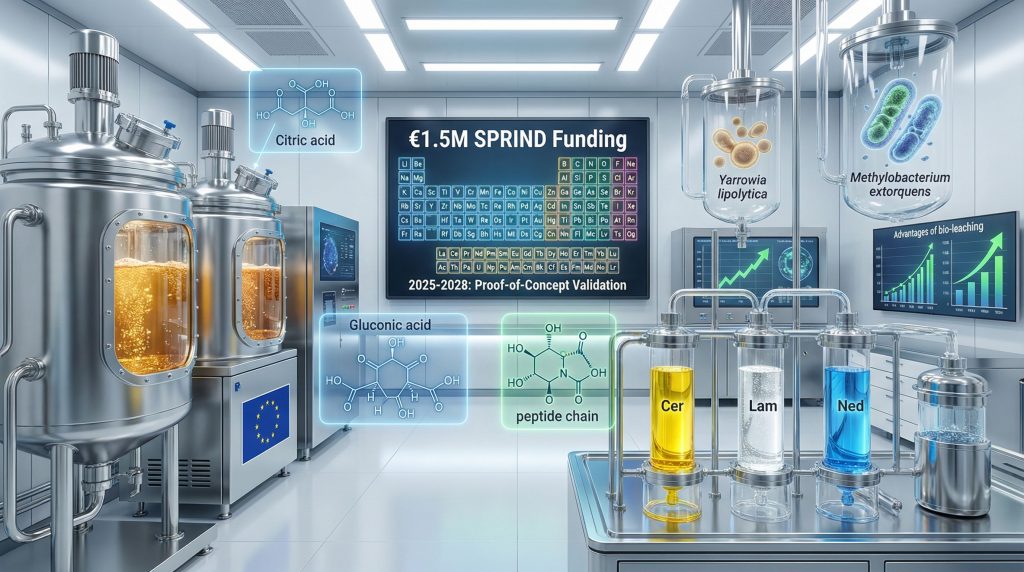
The system operates through a multi-stage process beginning with fermentation-derived organic acid generation. BIOWEG's existing precision fermentation platform, originally developed for bacterial cellulose and biodegradable polymer production, serves as the foundation for producing citric, gluconic, and oxalic acids. These naturally occurring acids replace synthetic mineral acids typically used in conventional extraction.
The critical innovation lies in the integration of peptide-based selectivity columns developed through partnership with Technische Universität Berlin. These columns utilize engineered peptides designed to bind specifically with individual rare earth elements, enabling targeted separation from complex matrices. In addition, the partnership leverages expertise in structural proteomics and mass spectrometry-based research to optimize binding specificity and column performance.
Operational Infrastructure and Locations
BIOWEG operates from two primary facilities supporting the rare earth recovery development program:
- Demonstration facility: Quakenbrück, Germany, housing pilot-scale fermentation and processing equipment
- Research laboratory: Monheim, located on the Bayer Crop Science campus, focusing on formulation optimization and peptide system development
This dual-site approach enables both fundamental research advancement and practical validation under controlled conditions, supporting the three-year validation timeline established under the €1.5 million SPRIND grant funding.
Biochemical Process Mechanisms
The biological foundation centers on optimized microbial fermentation systems producing organic acids as secondary metabolites. Unlike synthetic acid production, this approach generates chelating agents naturally compatible with aqueous processing environments. The fermentation process operates at ambient temperatures between 25-35°C, eliminating the energy-intensive thermal requirements of traditional extraction methods.
Key process parameters include:
- pH optimization range: 1.8-3.7 for maximum acid stability and metal solubility
- Glucose concentration: 2-5 g/L supporting optimal metabolic acid production
- Pulp density: 5-15% solids content for efficient mass transfer
- Processing duration: 72-168 hours for complete extraction cycles
The peptide selectivity system represents the most technically sophisticated component, designed to achieve single-element separation through engineered lanthanophore binding mechanisms. This approach theoretically enables direct isolation of specific rare earth elements without the multi-stage separation cycles required in conventional solvent extraction.
When big ASX news breaks, our subscribers know first
Comparative Analysis: Bio-Leaching vs Traditional REE Extraction
Traditional rare earth element processing relies predominantly on high-temperature pyrometallurgical treatment followed by solvent extraction using synthetic organic compounds. These established methods, while proven at industrial scale, present significant limitations when applied to distributed processing of complex waste streams.
Energy and Infrastructure Requirements
Conventional pyrometallurgical processing demands roasting temperatures between 900-1,200°C, resulting in energy consumption ranging from 15-30 MWh per ton of processed ore concentrate. This thermal intensity necessitates large-scale centralized facilities to justify capital investment, typically requiring minimum processing capacities of 10,000+ tons per annum.
In contrast, BIOWEG bio-leaching rare earth elements operates at ambient temperature conditions, eliminating high-temperature processing stages. However, the modular architecture enables distributed deployment at scales below 5,000 tons annually, addressing waste streams unsuitable for conventional centralized processing.
Chemical Input and Environmental Profile
Traditional extraction utilizes harsh mineral acids including sulfuric acid (H₂SO₄) and hydrochloric acid (HCl), combined with synthetic organic extractants such as:
- Di(2-ethylhexyl)phosphoric acid (D2EHPA): Primary REE extraction reagent
- Tributyl phosphate (TBP): Synergistic extraction modifier
- Cyanex 923: Specialised for heavy rare earth selectivity
- Trioctyl phosphine oxide (TOPO): Alternative extraction medium
These chemicals require organic solvent carriers (kerosene, naphtha) and generate secondary waste streams requiring specialised disposal protocols. For instance, bio-leaching eliminates synthetic organic solvents entirely, utilising aqueous systems with biodegradable organic acids derived from fermentation processes.
Processing Capability Comparison
| Parameter | Traditional Solvent Extraction | Bio-Leaching Technology |
|---|---|---|
| Operating Temperature | 40-100°C | 25-35°C |
| Feed Concentration | 60-70% REE oxide (primary ores) | 0.5-5% REE oxide (waste streams) |
| Selectivity Method | Multi-stage equilibrium separation | Single-stage peptide binding |
| Infrastructure Scale | Centralised (10,000+ tpa) | Modular (500-5,000 tpa) |
| Waste Generation | Hazardous organic waste | Biodegradable aqueous streams |
| Capital Requirements | $200-500M for greenfield | Significantly reduced (modular) |
Purity Achievement and Quality Standards
Established solvent extraction achieves 95-99% purity for individual rare earth elements through 3-7 sequential extraction stages, depending on final application requirements. Magnet-grade specifications demanding 99.5%+ purity necessitate extensive multi-stage processing with correspondingly higher capital and operating costs.
Bio-leaching peptide systems theoretically enable direct high-purity separation through engineered binding specificity, though validation of consistent purity achievement across diverse feed materials remains under development through the SPRIND-funded research program.
Technical Scaling Challenges for Bio-Leaching Systems
The transition from laboratory validation to industrial deployment presents multiple technical hurdles that must be addressed for successful commercialisation of BIOWEG bio-leaching rare earth elements technology.
Peptide System Durability and Throughput
Peptide-based separation columns face significant challenges in continuous industrial operation. Laboratory-scale systems demonstrate binding selectivity under controlled pH conditions, but industrial waste streams present complex matrices with suspended solids, competing ions, and variable composition.
Current performance parameters indicate:
- Laboratory throughput: 0.5-2 L/hour at optimal conditions
- Column fouling rate: Estimated 5-15% throughput reduction per 100 operating hours in complex matrices
- Regeneration cycles: Target 500-2,000 cycles before performance degradation
Scaling these systems to industrial throughput requirements while maintaining selectivity presents engineering challenges requiring significant process optimisation and potentially alternative column configurations.
Selectivity Maintenance in Complex Waste Streams
While laboratory conditions enable precise peptide-rare earth binding, real-world waste streams contain numerous interfering compounds that can compromise selectivity. Electronic waste, industrial residues, and end-of-life magnets present matrices with:
- Competing metal ions: Aluminium, iron, copper, zinc disrupting binding equilibria
- Organic contaminants: Polymers, adhesives, and coatings affecting column performance
- Suspended solids: Physical fouling reducing mass transfer efficiency
- pH variability: Fluctuating acidity affecting peptide stability
Maintaining consistent single-element separation under these conditions requires robust pretreatment protocols and potentially adaptive column regeneration strategies not yet validated at scale.
Quality Control for Downstream Supply Chains
Rare earth elements destined for permanent magnet production require stringent purity specifications and consistent composition. Traditional supply chains incorporate extensive quality control protocols validated over decades of industrial experience.
Bio-leaching systems must demonstrate:
- Consistent purity levels across varying feed compositions
- Trace contaminant control meeting magnet manufacturer specifications
- Reproducible separation efficiency for commercial supply commitments
- Analytical verification protocols for product certification
Furthermore, the development of these quality assurance systems represents a parallel challenge to the core separation technology, requiring significant validation across multiple waste stream sources. This aligns with broader industry innovation trends that emphasise technological advancement in mineral processing.
Microorganisms Driving Effective REE Bio-Leaching
The biological foundation of BIOWEG bio-leaching rare earth elements relies on carefully selected and optimised microbial systems capable of producing organic acids with rare earth chelating properties. These biological platforms represent decades of biotechnology development adapted for mineral processing applications.
Fungal Leaching Platforms
Fungal systems, particularly Aspergillus niger and Aspergillus fumigatus, demonstrate proven capability for rare earth extraction from monazite sand processing. These organisms produce organic acids including citric, gluconic, and oxalic acids that effectively solubilise rare earth elements under controlled conditions.
Key performance characteristics include:
- Cerium, lanthanum, neodymium, praseodymium recovery: 85-92% from monazite feedstock
- Thorium co-extraction reduction: 10-20% lower than conventional acid leaching
- Processing duration: 72-168 hours for optimised recovery rates
- Temperature requirements: 25-30°C ambient operation
However, the reduced thorium co-extraction represents a significant advantage, as radioactive thorium handling creates regulatory and safety challenges in conventional processing operations.
Yeast-Based Systems for Enhanced Bioaccumulation
Yarrowia lipolytica fermentation systems offer dual functionality through both acid production and direct rare earth bioaccumulation. This yeast platform demonstrates:
- Citric acid production: 40-60 g/L under optimised fermentation conditions
- Fermentation efficiency: 0.5-0.7 mol citric acid per mol glucose consumed
- Batch processing time: 5-10 days per complete cycle
- Metabolic engineering potential: Genetic modification for enhanced REE binding
The bioaccumulation mechanism enables direct microbial concentration of rare earth elements from dilute solutions, potentially reducing downstream processing requirements.
Engineered Bacterial Platforms
Advanced bacterial systems utilise genetic engineering to optimise rare earth recovery through enhanced lanthanophore production. Methylobacterium extorquens AM1 represents a particularly promising platform through genetic modifications targeting:
- Lanthanophore overproduction: Engineered biosynthesis of REE-binding compounds
- Enhanced leaching efficiency: 20-fold improvement over baseline systems
- Bioaccumulation capacity: 50-fold increase in rare earth concentration
- Selective binding mechanisms: Genetic optimisation for specific element targeting
These engineered systems represent the frontier of biological rare earth recovery, though regulatory approval and scaling validation remain significant development challenges.
Critical Fermentation Parameters
Optimal microbial performance requires precise control of fermentation conditions across multiple parameters:
| Parameter | Optimal Range | Performance Impact |
|---|---|---|
| pH Control | 1.8-3.7 | Acid stability and metal solubility |
| Temperature | 25-35°C | Microbial growth and acid production |
| Pulp Density | 5-15% | Mass transfer and contact efficiency |
| Glucose Supply | 2-5 g/L | Metabolic support for acid generation |
| Oxygen Level | 2-6 mg/L dissolved O₂ | Aerobic metabolism optimisation |
| Agitation Rate | 150-300 RPM | Mixing efficiency without cell damage |
Maintaining these parameters within optimal ranges while processing complex waste streams presents significant process control challenges requiring automated monitoring and adjustment systems.
Europe's Strategic REE Supply Chain Benefits
The development of BIOWEG bio-leaching rare earth elements technology addresses critical vulnerabilities in European critical materials supply chains, offering strategic advantages beyond purely technical considerations.
Geopolitical Risk Mitigation Through Distributed Processing
European rare earth supply chains currently depend heavily on concentrated Asian processing capacity, creating strategic vulnerability to supply disruption. Distributed bio-leaching systems offer potential risk mitigation through:
- Reduced import dependency: Processing European waste streams locally rather than exporting materials
- Supply chain diversification: Multiple small-scale processing nodes reducing single-point failures
- Strategic autonomy development: Indigenous processing capabilities for critical applications
- Emergency supply maintenance: Domestic processing capacity during trade disruptions
The modular architecture enables deployment across multiple European locations, creating a distributed network less susceptible to coordinated disruption than centralised facilities. This approach supports the development of a critical minerals reserve strategy at the European level.
Circular Economy Integration and Waste Stream Valorisation
European environmental regulations increasingly mandate circular economy approaches to critical materials management. Bio-leaching technology aligns with these requirements through:
Electronic Waste Processing:
- End-of-life smartphone and computer rare earth recovery
- Permanent magnet recycling from electric vehicle motors
- Industrial electronics waste stream processing
- Consumer appliance rare earth element capture
Industrial Waste Stream Applications:
- Manufacturing residue rare earth recovery
- Process waste valorisation from electronics production
- Secondary source development complementing primary mining
- Waste-to-resource transformation reducing disposal costs
Germany's ElektroG 2 electronics regulations mandate rare earth recovery from discarded devices, creating regulatory drivers for distributed processing capabilities that traditional centralised extraction cannot economically address. Furthermore, this aligns with broader movements toward sustainable mining transformation across the industry.
EU Critical Raw Materials Act Alignment
The European Union's Critical Raw Materials Act establishes targets for domestic processing capacity and supply chain resilience. Bio-leaching technology contributes to these objectives through:
- Processing capacity development: Distributed systems adding to European REE processing capability
- Innovation in extraction technology: Advanced biotechnology methods supporting technological leadership
- Waste stream activation: Converting previously uneconomical sources into productive supply
- Environmental compliance: Green chemistry approaches meeting strict European environmental standards
The technology's environmental profile aligns with European sustainability requirements while addressing strategic supply objectives. This supports broader initiatives in critical minerals energy transition planning.
Investment Timeline and Development Projections
The commercialisation pathway for BIOWEG bio-leaching rare earth elements follows a structured development timeline supported by German federal innovation funding and academic partnerships.
SPRIND Funding Structure and Validation Milestones
The €1.5 million Stage 1 allocation from SPRIND (Agentur für Sprunginnovationen) supports a comprehensive three-year validation program addressing key technical and commercial uncertainties:
Years 1-2: Technology Validation Phase
- Laboratory optimisation of peptide selectivity systems
- Fermentation process scaling from bench to pilot scale
- Complex waste stream processing validation
- Initial cost modelling and economic feasibility assessment
Year 3: Commercial Readiness Demonstration
- Pilot-scale continuous operation validation
- Quality control protocol establishment
- Supply chain integration pathway development
- Stage 2 funding preparation and commercialisation planning
The partnership with Technische Universität Berlin provides academic research support and access to specialised analytical equipment, reducing development costs while accelerating technical advancement.
Market Entry and Scaling Projections
Commercial deployment follows a staged approach reflecting the technology's modular architecture:
2025-2028: Proof-of-Concept Period
- SPRIND-funded validation completion
- First demonstration installations with industrial partners
- Regulatory approval processes for commercial deployment
- Initial market feedback and process optimisation
2028-2030: Pilot Commercial Deployment
- Small-scale modular systems deployment (500-2,000 tpa capacity)
- Strategic partnerships with waste stream suppliers
- Quality certification for downstream supply chains
- Process automation and control system refinement
2030-2032: Commercial Scale Rollout
- Multiple facility deployment across European markets
- Integration with established rare earth supply chains
- Cost competitiveness achievement with traditional methods
- Expansion into additional geographic markets
Post-2032: Industrial Integration Phase
- Large-scale distributed processing network establishment
- Supply contract development with permanent magnet manufacturers
- Technology licensing and international expansion
- Advanced process development for enhanced capabilities
Capital Requirements and Funding Pathway
The modular deployment architecture reduces initial capital requirements compared to traditional extraction facilities:
- Stage 1 validation: €1.5M SPRIND funding plus institutional matching
- Pilot deployment: Estimated €5-15M per initial facility (500-2,000 tpa)
- Commercial scaling: €20-50M for multiple facility network development
- Full-scale integration: €100-200M for comprehensive European deployment
These capital requirements reflect the distributed nature of the technology, enabling staged investment and risk management compared to large-scale traditional processing facilities. This approach complements broader renewable energy mining solutions that require distributed processing capabilities.
The next major ASX story will hit our subscribers first
Strategic Implementation Framework for Bio-Leaching Adoption
Successful deployment of BIOWEG bio-leaching rare earth elements technology requires systematic approach addressing technical, commercial, and regulatory considerations across the development timeline.
Technology Integration Pathway
Implementation begins with comprehensive waste stream characterisation to optimise processing parameters for specific feedstock types:
Phase 1: Feedstock Assessment and Process Design
- Waste stream analysis: REE content, composition, and contamination assessment
- Microbial system selection: Organism optimisation for specific rare earth targets
- Process parameter development: pH, temperature, and retention time optimisation
- Quality control protocol establishment: Analytical methods and specification compliance
- Economic modelling: Cost structure development and competitiveness analysis
Phase 2: Pilot System Deployment and Validation
- Modular system installation: Equipment deployment and commissioning
- Process optimisation: Performance tuning for specific waste stream characteristics
- Quality validation: Product specification achievement and consistency demonstration
- Regulatory compliance: Environmental and safety protocol implementation
- Supply chain integration: Downstream customer qualification and certification
Risk Assessment and Mitigation Strategies
Commercial deployment faces multiple categories of risk requiring structured management approaches:
Technical Risk Management:
- Performance validation: Staged milestone achievement with clear success criteria
- Process reliability: Redundant systems and maintenance protocol development
- Quality assurance: Multiple analytical methods and specification verification
- Scalability demonstration: Progressive capacity increase with performance monitoring
Market Risk Mitigation:
- Customer diversification: Multiple supply chain partner development
- Application flexibility: Processing capability across various waste stream types
- Competitive positioning: Cost structure optimisation and value proposition refinement
- Geographic expansion: Multiple market entry reducing single-market dependence
Regulatory Compliance Framework
European deployment requires navigation of multiple regulatory frameworks covering environmental protection, product quality, and industrial safety:
Environmental Regulations:
- EU Industrial Emissions Directive compliance for processing operations
- Waste Framework Directive requirements for secondary material processing
- Water Framework Directive compliance for aqueous processing systems
- REACH regulation compliance for bio-produced chemicals
Product Quality Standards:
- ISO 9001 quality management system implementation
- Rare earth purity specifications for downstream applications
- Analytical method validation and certification
- Traceability protocol development for supply chain compliance
Frequently Asked Questions About Bio-Leaching REE Recovery
What purity levels can bio-leaching systems achieve for rare earth elements?
Current peptide-based bio-leaching systems target industrial-grade purity levels suitable for many applications, typically achieving 95-97% purity in single-stage processing. Magnet-grade specifications requiring 99.5%+ purity may necessitate additional purification steps or multi-stage peptide column processing, though validation of these higher purity levels remains under development through the SPRIND-funded research program.
How does the cost structure of bio-leaching compare to traditional solvent extraction?
Bio-leaching demonstrates favourable capital cost structure through modular deployment architecture, requiring significantly lower initial investment than traditional centralised facilities. Operating costs depend on throughput optimisation and peptide system longevity, with preliminary modelling suggesting competitiveness for waste streams containing 0.5-5% REE oxide where conventional methods prove uneconomical. Detailed cost validation awaits completion of pilot-scale demonstrations.
Can bio-leaching technology replace traditional rare earth mining operations?
Bio-leaching serves as a complementary technology rather than a direct replacement for primary mining, focusing specifically on waste stream valorisation and distributed processing applications. The technology addresses market segments where conventional extraction proves economically unfeasible, including electronic waste processing, industrial residue recovery, and end-of-life magnet recycling, rather than competing directly with large-scale primary ore processing.
What environmental advantages does bio-leaching provide over conventional methods?
Bio-leaching utilises aqueous systems with biodegradable organic acids rather than harsh mineral acids and toxic organic solvents, significantly reducing environmental permitting complexity and waste disposal requirements. The ambient temperature operation eliminates energy-intensive high-temperature processing, while the biological acid production creates renewable feedstock dependencies rather than synthetic chemical supply chains. According to recent research published in Nature Communications, bio-leaching systems demonstrate significantly lower environmental impact across multiple sustainability metrics compared to conventional extraction methods.
How long does the bio-leaching process take compared to traditional extraction?
Bio-leaching processing duration ranges from 72-168 hours for complete extraction cycles, significantly longer than conventional solvent extraction batch processing times of 6-24 hours. However, the extended processing time enables ambient temperature operation and eliminates energy-intensive preprocessing stages, potentially offsetting the time differential through reduced energy requirements and simplified processing infrastructure.
What types of waste streams are most suitable for bio-leaching processing?
Bio-leaching systems demonstrate optimal performance with complex waste streams containing 0.5-5% rare earth oxide content, including electronic waste, industrial processing residues, end-of-life permanent magnets, and manufacturing byproducts. These materials typically prove uneconomical for traditional processing due to low concentration and complex matrix composition, representing the target market for modular bio-leaching deployment. Recent developments in the field, as documented by Farmonaut's analysis of bioleaching trends, highlight the growing potential for distributed processing of diverse waste streams.
This analysis presents an independent technical assessment of biotechnology applications in rare earth element recovery, incorporating established biotechnology principles, emerging research developments, and strategic supply chain considerations. Investment and deployment decisions should incorporate additional due diligence and risk assessment appropriate to specific circumstances and applications.
Disclaimer: The information presented reflects current understanding of bio-leaching technology development and market conditions. Actual performance, costs, and commercial viability may vary significantly from projections discussed. Readers should conduct independent analysis and consult relevant technical and financial experts before making investment or implementation decisions related to rare earth processing technologies.
Looking for Investment Opportunities in Critical Minerals Technology?
Discovery Alert's proprietary Discovery IQ model delivers instant notifications on significant ASX mineral discoveries, including breakthrough technologies in rare earth processing and biotechnology applications. Get ahead of major market movements by exploring Discovery Alert's dedicated discoveries page, showcasing historic examples of transformative mineral discoveries, and begin your 30-day free trial today to secure your market-leading advantage.