
May 13, 2026
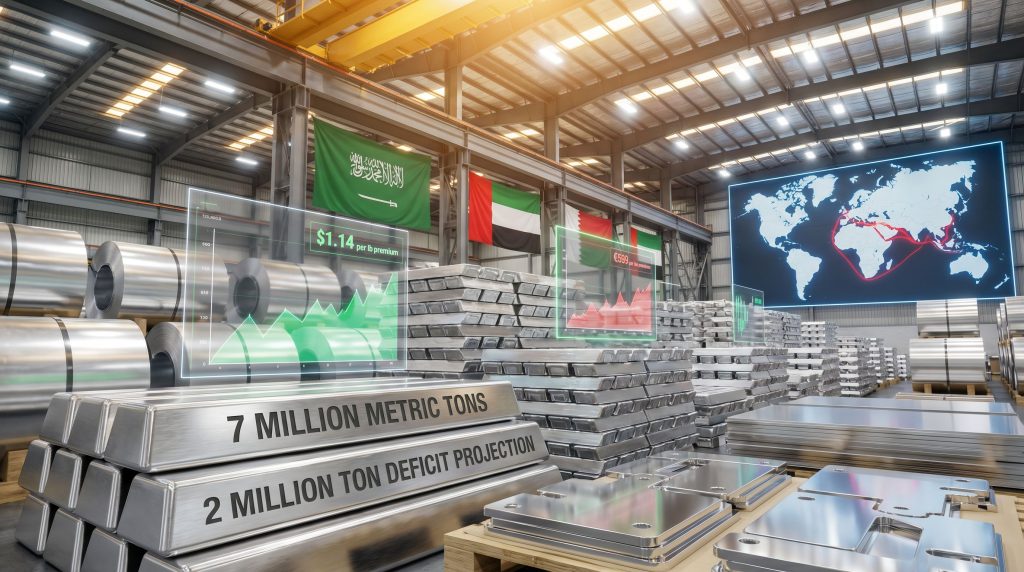
Market disruptions often follow predictable patterns, building gradually through identifiable warning signals before reaching critical thresholds. However, certain commodity crises emerge with such unprecedented scale and timing that they fundamentally redefine risk assessment frameworks across global supply chains. The aluminum sector now confronts precisely such a scenario, where traditional hedging mechanisms and inventory buffers prove inadequate against forces that exceed conventional forecasting capabilities. This black swan aluminum supply shock demonstrates how geopolitical tensions can transform into global commodity crises.
When geopolitical instability intersects with concentrated production geography, the resulting supply chain vulnerabilities can trigger cascading effects that transform regional conflicts into global commodity crises. The current aluminum market exemplifies this dynamic, as Middle Eastern production disruptions create shortage conditions that ripple through international manufacturing, construction, and transportation sectors with mathematical precision. Furthermore, the mining industry evolution has become increasingly vulnerable to such systematic shocks.
What Defines a Black Swan Event in Commodity Markets?
Understanding Market Disruption Classifications
The aluminum market currently demonstrates characteristics that distinguish genuine black swan events from routine supply chain disruptions. According to leading commodity analysis, this crisis represents "the largest single supply shock a base metals market has suffered in the post-2000 era," establishing a quantitative benchmark for evaluating unprecedented market events.
This classification carries specific implications for risk assessment frameworks. Black swan events, by definition, combine three critical characteristics: extreme rarity, massive impact, and retrospective predictability that creates false confidence in forecasting models. The current black swan aluminum supply shock fulfills these criteria through its scale relative to global production capacity and the inadequacy of existing inventory buffers.
Key disruption metrics include:
• Middle East production capacity: 7 million metric tons annually (approximately 9% of global supply)
• Projected minimum deficit: 2 million tons through year-end 2026
• Global visible inventory: 1.5 million tons available
• Total global stock: Just over 3 million tons including non-visible units
• London Metal Exchange peak: $3,672 per ton reached April 16, 2026
The mathematical relationship between these figures reveals the core mechanism driving black swan classification. When minimum projected deficits (2 million tons) approach or exceed visible inventory levels (1.5 million tons), markets enter territory where normal price mechanisms must ration demand through extreme premium escalation rather than quantity adjustments.
The Anatomy of Unpredictable Supply Disruptions
Traditional commodity risk models rely on historical precedent to estimate potential disruption magnitude and duration. However, the current aluminum crisis emerged through a combination of geopolitical factors that fell outside conventional risk parameter boundaries. This highlights the fundamental unpredictability that separates black swan events from manageable supply constraints.
The disruption's unprecedented nature stems from its concentration within a critical geographic node. Consequently, while the Middle East accounts for only 9% of global aluminum production, this regional capacity operates as a strategic chokepoint where localized instability produces disproportionate global consequences.
Critical vulnerability factors include:
• Geographic concentration of smelting capacity in conflict-prone regions
• Feedstock dependency on maritime shipping routes (Strait of Hormuz)
• Limited alternative production capacity available for rapid activation
• Inventory-to-consumption ratios insufficient to absorb extended disruptions
• Energy-intensive production processes vulnerable to infrastructure damage
The cascade effect mechanism operates through multiple reinforcing feedback loops. Initial production losses trigger inventory drawdowns, which elevate spot prices and physical delivery premiums. Rising premiums signal scarcity to end-users, who compete for available supply through bidding processes that further escalate costs. This dynamic continues until either alternative supply sources activate or demand destruction occurs through substitution or production deferrals.
When big ASX news breaks, our subscribers know first
How Do Geopolitical Tensions Transform Into Supply Chain Catastrophes?
The Middle East Aluminum Production Nexus
The Middle Eastern aluminum production corridor represents a critical concentration of global smelting capacity that exemplifies supply chain vulnerability to geopolitical disruption. With 7 million metric tons of annual aluminum smelting capacity representing roughly 9% of estimated global supply for 2026, the region operates as a strategic production node where localized conflicts generate disproportionate international consequences.
Regional aluminum production demonstrates acute sensitivity to conflict conditions due to several technical factors. However, aluminum smelting requires substantial electrical power consumption, making facilities dependent on stable regional power grids and energy supply chains. Additionally, the production process relies heavily on alumina feedstock imports, with significant quantities flowing through the Strait of Hormuz maritime corridor.
Regional production vulnerabilities include:
• Energy infrastructure dependencies for continuous smelting operations
• Maritime shipping route concentration for feedstock delivery
• Limited geographic diversification of production facilities
• High capital costs preventing rapid production relocation
• Skilled workforce requirements constraining operational flexibility
Feedstock Flow Disruption Mechanics
The transformation from regional conflict to global supply chain crisis operates through disruption of critical input flows rather than direct facility damage. Furthermore, alumina feedstock represents the primary input for aluminum production, and significant quantities of this material flow through Middle Eastern shipping routes to reach regional smelting facilities.
When geopolitical tensions escalate to conflict levels, maritime shipping insurance costs increase substantially, effectively constraining commercial vessel movements through affected waterways. This mechanism creates supply chain bottlenecks even when production facilities themselves remain physically operational.
Feedstock disruption consequences:
• Shipping route insurance premium escalation
• Alternative routing through longer, more expensive pathways
• Inventory depletion at production facilities
• Reduced capacity utilization despite operational facilities
• Extended lead times for input material delivery
The cumulative effect of these disruption mechanisms explains why relatively localized geopolitical tensions can generate global aluminum shortages. Moreover, market participants must navigate not only direct production losses but also the complex logistics of maintaining feedstock flows through alternative channels with higher costs and extended delivery timeframes.
What Makes This Aluminum Crisis Unprecedented in Scale?
Comparative Historical Analysis
The current black swan aluminum supply shock achieves unprecedented status through multiple quantitative and qualitative factors that distinguish it from previous post-2000 commodity market crises. This assessment positions this event as the largest single supply shock a base metals market has suffered in the modern era, providing a defined historical benchmark for comparison purposes.
This historical ranking carries significant implications for market participants and risk management frameworks. In addition, previous base metal supply disruptions during the post-2000 period included various mine closures, transportation bottlenecks, and regional political instabilities, yet none achieved the current magnitude in terms of absolute production capacity affected relative to global supply ratios.
Scale comparison metrics:
• Production capacity affected: 7 million metric tons (9% of global supply)
• Minimum deficit projection: 2 million tons through year-end
• Regional dependency percentages: 22% (U.S.), 18.5% (Europe)
• Price impact: Four-year highs reaching $3,672 per ton
• Premium escalation: Record $1.14 per lb in U.S. markets
The unprecedented scale emerges through the combination of production capacity concentration, limited inventory buffers, and constrained alternative supply activation capabilities. While previous disruptions affected smaller production percentages or occurred when global inventory levels provided adequate buffering capacity, the current crisis intersects maximum vulnerability factors simultaneously.
Quantitative Impact Assessment
The mathematical relationship between production losses, available inventory, and demand requirements reveals the core mechanism driving unprecedented crisis conditions. With Middle Eastern production representing 7 million metric tons annually and disruptions potentially affecting 2 million tons through year-end, the market faces capacity losses equivalent to 28.6% of regional production.
Critical Inventory Analysis
Global visible inventory: 1.5 million tons
Total global stock: Just over 3 million tons
Minimum deficit projection: 2 million tons
Coverage ratio: Insufficient to maintain normal market operations
These figures demonstrate why conventional market mechanisms prove inadequate for managing the current disruption. In addition, normal aluminum market operations rely on inventory buffers to smooth temporary production variations and provide time for alternative supply activation. However, when projected deficits approach or exceed total available inventory, markets must rely on demand rationing through price mechanisms rather than quantity-based adjustments.
The unprecedented nature of this arithmetic relationship explains the extreme premium escalation observed in physical aluminum markets. U.S. physical metal premiums reached record levels of $1.14 per lb ($2,521.50 per ton), while European premiums achieved nearly four-year highs of €599 per ton, reflecting acute scarcity conditions that exceed historical precedent.
How Do Regional Markets Face Differential Exposure Risks?
United States Market Vulnerability
The United States aluminum market demonstrates acute vulnerability to Middle Eastern supply disruptions through multiple reinforcing dependency mechanisms. Import data reveals that of the 3.4 million tons of primary and alloyed aluminum imported annually by the U.S., the Middle East accounts for nearly 22%, representing approximately 748,000 tons of annual supply sourced from the affected region.
This import dependency intersects with limited domestic production expansion capabilities to create exceptional vulnerability conditions. Furthermore, the U.S. aluminum sector operates with minimal idled capacity available for rapid reactivation, constraining the market's ability to compensate for external supply losses through domestic production increases.
U.S. market exposure factors:
• Middle East import dependency: 22% of 3.4 million ton total imports
• Physical metal premium escalation: Record $1.14 per lb ($2,521.50 per ton)
• Limited domestic smelting capacity for supply replacement
• Low inventory buffers relative to consumption requirements
• Constrained alternative sourcing from other global suppliers
The severity of U.S. market vulnerability manifests through premium escalation dynamics. Physical aluminum delivery premiums function as scarcity indicators, representing the price buyers must pay above London Metal Exchange futures prices to obtain immediate material delivery. The record $1.14 per lb premium indicates market participants' willingness to pay substantial premiums rather than face production disruptions in aluminum-dependent industries.
European Supply Chain Fragility
European aluminum markets exhibit significant but somewhat differentiated exposure patterns compared to U.S. markets. Europe imported approximately 1.2 million tons of primary and alloyed aluminum from the Middle East during the previous year, representing 18.5% of total regional imports according to Trade Data Monitor.
The European market's response to supply disruptions reveals through premium structures that reached nearly four-year highs of €599 per ton in early April 2026. However, this premium escalation represents a somewhat lower magnitude than U.S. market conditions, suggesting potential differences in inventory positions, alternative sourcing capabilities, or demand elasticity between regions.
European market characteristics:
• Middle East import dependency: 18.5% of 1.2 million ton total imports
• Premium escalation: €599 per ton (four-year high)
• Lower relative premium compared to U.S. market conditions
• Potential intra-European trade flexibility
• Limited domestic production expansion capacity
European market fragmentation by individual countries creates both vulnerability and potential flexibility dynamics. Consequently, while the continent collectively faces significant Middle Eastern import dependency, individual European nations maintain varying degrees of exposure based on their specific supply chain structures, domestic recycling infrastructure, and intra-European trade relationships.
Chinese Market Insulation Factors
China's aluminum market operates under fundamentally different constraints that limit both vulnerability to Middle Eastern disruptions and capacity to compensate for global supply shortages. As the world's top aluminum producer, China faces an annual output limit of 45 million tons that functions as a binding constraint on production expansion capabilities.
This production ceiling prevents China from significantly increasing aluminum exports to compensate for Middle Eastern supply losses, despite the country's dominant global production position. The constraint operates through regulatory, environmental, or infrastructure limitations that restrict total output regardless of international market conditions or price incentives.
Chinese market constraints:
• Annual production ceiling: 45 million tons (regulatory/infrastructure limit)
• Domestic demand prioritisation over export market expansion
• Limited flexibility for compensating global supply shortages
• Insulation from Middle Eastern supply chain dependencies
• Strategic focus on domestic market stability
The binding nature of China's production constraints explains why the world's largest aluminum producer cannot easily replace Middle Eastern capacity losses. Rather than treating Chinese production as flexible capacity available for global market stabilisation, the 45 million ton ceiling operates as a structural limitation that prioritises domestic aluminum availability over international export revenue or market intervention capabilities.
What Investment Strategies Emerge During Supply Shock Periods?
Aluminum Producer Equity Analysis
Supply shock conditions fundamentally alter the investment dynamics for aluminum producers, creating opportunities for companies with unaffected production capacity to capture exceptional margin expansion through elevated pricing environments. Producers operating outside the Middle Eastern disruption zone benefit from acute supply scarcity without experiencing operational constraints, enabling them to maximise output at premium pricing levels.
The investment thesis for aluminum producers during supply shock periods centres on margin expansion potential rather than volume growth. With global demand remaining relatively stable while supply capacity contracts, producers with operational facilities can achieve substantially higher realised prices for their output compared to normal market conditions. This represents a significant opportunity similar to bauxite project benefits during supply constraints.
Producer investment considerations:
• Geographic diversification away from affected regions
• Maximum capacity utilisation from operational facilities
• Margin expansion through elevated aluminum pricing
• Limited competition from idled global capacity
• Extended duration potential for favourable pricing conditions
Investment analysis must also consider each producer's specific exposure to input cost inflation, particularly energy expenses that represent significant operational costs for aluminum smelting. Producers with long-term energy supply contracts or access to lower-cost power sources maintain superior margin expansion potential during supply shock periods.
Downstream Industry Impact Assessment
Industries dependent on aluminum inputs face substantially different investment dynamics during supply shock periods, with sector-specific vulnerability varying based on aluminum intensity, substitution possibilities, and demand elasticity characteristics. Transportation, construction, and packaging sectors represent primary aluminum consumption categories, each exhibiting distinct vulnerability patterns.
The transportation sector, including automotive and aerospace manufacturing, demonstrates high aluminum intensity with limited short-term substitution capabilities. These industries typically operate with established supply chain relationships and technical specifications that prevent rapid material substitution, creating vulnerability to cost inflation that must be absorbed through margin compression or end-product price increases.
Downstream sector vulnerability analysis:
• Transportation: High aluminum intensity, limited substitution flexibility
• Construction: Moderate intensity, some alternative material options
• Packaging: Variable intensity, potential substitution to steel or plastic
• Electronics: Specialised applications, quality requirements limiting alternatives
• Industrial machinery: Long-term contracts, design change constraints
Investment strategies for downstream sectors must evaluate each company's aluminum cost exposure relative to total production costs, pricing power for passing through input cost increases, and strategic flexibility for managing supply chain disruptions through alternative sourcing or material substitution initiatives. Effective diversification investing strategies become crucial during such periods.
How Do Physical Metal Markets Respond to Extreme Scarcity?
London Metal Exchange Dynamics
Physical aluminum markets demonstrate extreme price discovery mechanisms during supply shock conditions, with the London Metal Exchange serving as the primary venue for global aluminum price formation. LME aluminum futures reached $3,672 per ton on April 16, 2026, representing a four-year high that reflects market participants' assessment of supply shortage severity and duration expectations.
The price discovery process during extreme scarcity operates through multiple interconnected mechanisms that amplify volatility and create substantial deviations from normal trading patterns. Furthermore, futures curve structures, inventory relationships, and delivery logistics all contribute to price formation dynamics that differ substantially from normal market conditions.
LME market characteristics during crisis:
• Peak pricing: $3,672 per ton (four-year high)
• Futures curve backwardation reflecting immediate delivery scarcity
• Increased trading volatility and bid-ask spread expansion
• Correlation breakdown with normal market relationships
• Extended delivery queues at LME-approved warehouses
Physical Premium Explosion Analysis
The most dramatic manifestation of extreme aluminum scarcity emerges through physical delivery premium escalation, where buyers pay substantial premiums above LME futures prices to secure immediate material delivery. U.S. physical metal premiums reached record levels of $1.14 per lb ($2,521.50 per ton), while European premiums achieved €599 per ton, representing nearly four-year highs.
Physical premiums function as real-time scarcity indicators that reflect actual supply-demand imbalances more accurately than futures prices, which incorporate expectations about future supply recovery. The magnitude of current premium levels indicates acute physical shortage conditions that exceed historical precedent for aluminum markets.
Premium escalation mechanisms:
• Immediate delivery competition among buyers
• Warehouse stock drawdowns accelerating premium increases
• Transportation cost increases for alternative sourcing
• Quality specifications limiting substitution possibilities
• Contract fulfilment obligations driving premium acceptance
| Region | Premium Level | Historical Context |
|---|---|---|
| United States | $1.14/lb ($2,521.50/ton) | Record high |
| Europe | €599/ton | Nearly four-year high |
| Asia | Data unavailable | Requires verification |
The divergence between regional premium levels reflects different inventory positions, alternative sourcing capabilities, and demand elasticity characteristics across global markets. Understanding these regional differentials provides insights into supply chain resilience and vulnerability patterns that influence investment and sourcing strategies.
The next major ASX story will hit our subscribers first
What Recovery Scenarios Could Unfold?
Optimistic Resolution Pathways
Recovery scenario analysis requires examining potential pathways for resolving the underlying geopolitical tensions that triggered aluminum supply disruptions. Optimistic scenarios centre on diplomatic resolution of the U.S.-Israeli conflict with Iran, enabling resumed aluminum production and feedstock flow normalisation through affected shipping routes.
Analysis suggests potential improvement in alumina flows via the Strait of Hormuz that could enable some Middle Eastern smelters to restart production during the current quarter. This assumption underlies conservative deficit projections, suggesting that even modest conflict de-escalation could significantly improve supply conditions.
Optimistic recovery elements:
• Diplomatic settlement enabling facility restart within quarters
• Strait of Hormuz shipping route normalisation
• Partial production capacity restoration (potentially 30-50% of affected facilities)
• Alternative feedstock routing establishment
• Insurance cost normalisation for maritime shipping
Recovery timeline considerations depend heavily on the specific mechanisms for conflict resolution and the extent of any infrastructure damage that occurred during disruption periods. Facilities that remained physically operational but temporarily idled due to feedstock constraints could resume production relatively rapidly once supply chains normalise.
Extended Disruption Implications
Extended disruption scenarios examine consequences of prolonged geopolitical instability that prevents aluminum production normalisation over longer timeframes. Under these conditions, global aluminum markets must achieve supply-demand balance through demand destruction mechanisms rather than supply restoration.
Demand destruction occurs through multiple pathways: industrial production deferrals, material substitution initiatives, and end-product price increases that reduce consumption across aluminum-intensive sectors. The threshold analysis suggests that sustained price levels above historical norms will trigger behavioural changes that permanently alter consumption patterns. This mirrors challenges identified in the broader critical minerals surge affecting multiple commodity sectors.
Extended disruption consequences:
• Permanent demand destruction through substitution acceleration
• Alternative material technology development investments
• Geographic supply chain restructuring away from volatile regions
• Strategic inventory accumulation by major consumers
• Government intervention through strategic reserve releases
Long-term Industry Restructuring
Prolonged supply shock conditions typically catalyse structural industry transformation that persists beyond crisis resolution. The aluminum sector may experience permanent geographic diversification of production capacity, with investment flows redirected toward politically stable regions that offer long-term supply security.
Technology acceleration represents another significant restructuring pathway, with extreme scarcity driving investment in recycling efficiency improvements, alternative lightweight materials development, and aluminum intensity reduction initiatives across end-use applications.
Structural transformation drivers:
• Investment capital reallocation toward stable production regions
• Technology development for recycling and efficiency improvements
• End-user industry supply chain diversification requirements
• Government policy support for domestic production capacity
• Strategic material designation driving national security considerations
These structural changes typically outlast the initial crisis conditions, creating permanent shifts in global aluminum supply chain architecture that influence long-term investment opportunities and risk management requirements.
How Should Portfolio Managers Navigate Commodity Black Swans?
Risk Management Framework Updates
Traditional portfolio risk management approaches prove inadequate during black swan commodity events, requiring fundamental framework updates that account for correlation breakdown and extreme volatility conditions. Conventional hedging relationships between commodities, currencies, and equity markets often fail during crisis periods, leaving portfolios exposed to unhedged risks.
The black swan aluminum supply shock demonstrates how geopolitical events can trigger commodity price movements that exceed normal volatility parameters and correlation patterns. However, portfolio managers must develop risk management frameworks that anticipate these relationship breakdowns rather than relying on historical correlation patterns for hedging effectiveness.
Risk management framework elements:
• Tail risk hedging through options strategies designed for extreme scenarios
• Geographic diversification beyond traditional correlation analysis
• Liquidity management maintaining flexibility during market dislocations
• Scenario planning incorporating low-probability, high-impact events
• Dynamic hedging adjustment capabilities for changing market conditions
Effective commodity black swan navigation requires accepting that certain risks cannot be hedged through conventional means and must be managed through position sizing, geographic diversification, and maintaining adequate liquidity reserves for navigating extended periods of market disruption. Understanding tariffs impact on markets also becomes crucial during such periods.
Sector Allocation Adjustments
Portfolio allocation strategies must incorporate lessons from aluminum supply shock dynamics to improve resilience against future commodity black swan events. This requires evaluating sector exposure not only through direct commodity investment positions but also through indirect exposure via companies dependent on specific materials for their operational success.
The current aluminum crisis demonstrates how supply chain dependencies create hidden portfolio risks that may not be apparent through traditional sector classification systems. Companies classified as technology, automotive, or construction may carry substantial aluminum exposure that becomes apparent only during supply shock conditions.
Portfolio allocation considerations:
• Direct vs. indirect commodity exposure analysis across holdings
• Supply chain resilience evaluation for individual company positions
• Geographic risk distribution avoiding concentrated regional dependencies
• Alternative material exposure for companies facing substitution opportunities
• Government strategic reserve and intervention potential analysis
| Exposure Type | Risk Level | Mitigation Strategies |
|---|---|---|
| Direct commodity producers | High | Geographic diversification |
| Manufacturing end-users | Medium-High | Supply chain analysis |
| Alternative materials | Low-Medium | Substitution opportunity evaluation |
| Service sectors | Low | Indirect cost pass-through assessment |
According to commodity market analysis, effective portfolio management during black swan events requires comprehensive understanding of both direct and indirect exposures across all holdings. Consequently, investors must maintain flexibility to adjust allocations rapidly as market conditions evolve.
Disclaimer: This analysis is based on publicly available information and market observations as of April 21, 2026. Aluminum market conditions remain highly volatile and subject to rapid changes based on geopolitical developments, supply chain restoration, and demand dynamics. Investment decisions should consider multiple scenarios and maintain appropriate risk management strategies. Past performance does not guarantee future results, and commodity investments carry substantial risks including potential total loss of capital. Readers should conduct independent research and consider consulting qualified financial advisors before making investment decisions.
Ready to Navigate Commodity Black Swan Events?
Discovery Alert's proprietary Discovery IQ model delivers real-time alerts on significant mineral discoveries, helping investors identify opportunities that emerge from market disruptions like the current aluminum supply shock. Access comprehensive analysis of historic discovery returns and begin your 14-day free trial today to position yourself ahead of the next major commodity shift.