May 13, 2026
The Hidden Logic of Converting Coal Into Chemicals: Why Industrial Resource Strategy Is Reshaping Asia's Energy Map
When resource-rich nations reach a tipping point where the cost of importing processed chemicals exceeds the cost of building domestic conversion infrastructure, economic policy tends to shift decisively. This inflection point, well documented in the histories of chemical industrialisation in Germany, the United States, and China, is now arriving in India with considerable force. The India coal gasification incentive scheme is repositioning the country's extraordinary domestic coal endowment — historically treated as a power generation input — as the feedstock backbone of an entirely new industrial chemicals sector. Understanding why this matters requires looking beyond the headline incentive figures and into the structural economics driving the decision.
When big ASX news breaks, our subscribers know first
Why India's Coal Gasification Incentive Scheme Represents a Structural Policy Shift
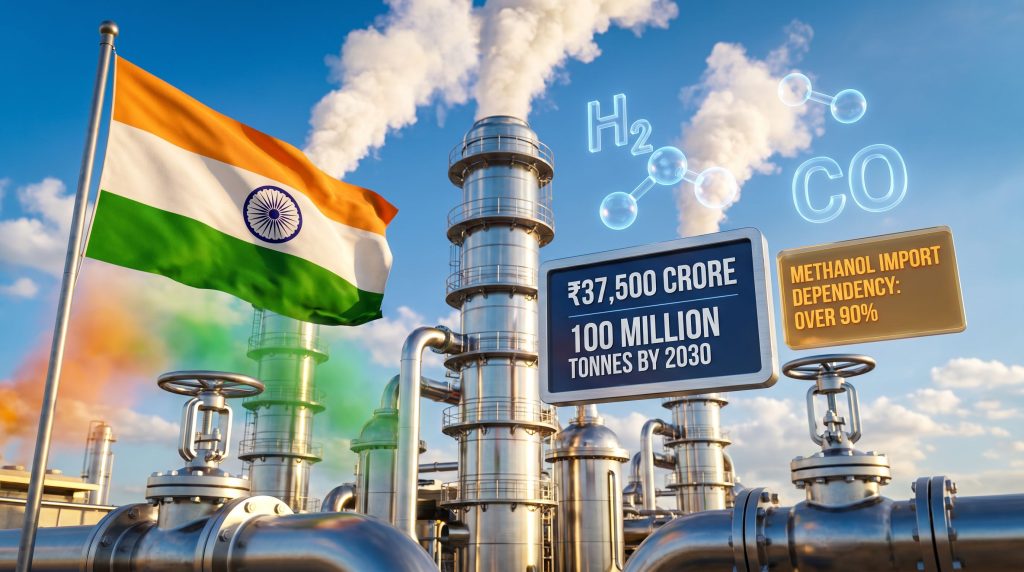
India's Cabinet Committee on Economic Affairs (CCEA), chaired by Prime Minister Narendra Modi, approved a ₹37,500 crore incentive scheme in May 2026 targeting the accelerated development of surface coal and lignite gasification infrastructure across the country. This is not a conventional subsidy programme. It is a deliberate attempt to redirect the economic value embedded in India's vast coal reserves away from combustion and toward high-value chemical synthesis.
The scheme, known as V-KALP, sits within the broader Atmanirbhar Bharat (self-reliance) policy framework. Its explicit mandate is to reduce India's dependence on imported volumes of LNG, urea, ammonium nitrate, ammonia, methanol, and coking coal through domestic production enabled by coal-to-syngas conversion. Furthermore, the India LNG import structure makes this substitution strategy particularly compelling from a cost-reduction standpoint. Each of these commodities represents a different dimension of India's current account vulnerability.
What distinguishes V-KALP from conventional energy policy is the scale of the leverage it is designed to generate. The ₹37,500 crore government incentive outlay is expected to catalyse approximately ₹3,000 lakh crore (₹30 trillion) in total project investment, implying a capital multiplier that reflects genuine private sector co-investment rather than simple budget expenditure.
India's coal consumption accounts for over 55% of the country's total energy mix, and as the world's second-largest producer and consumer of coal, the nation holds a structural feedstock advantage that few other economies can replicate at comparable scale. According to Union Information and Broadcasting Minister Ashwini Vaishnaw, India's documented coal reserves stand at 401 million tonnes, sufficient to sustain current utilisation rates for approximately 200 years (ET EnergyWorld, May 13, 2026).
Understanding Coal Gasification: The Thermochemical Process Behind the Policy
Coal gasification is a thermochemical conversion process that transforms solid coal feedstock into synthetic gas, commonly referred to as syngas. Rather than burning coal to generate heat or electricity directly, gasification subjects coal to high temperatures under controlled oxygen conditions, breaking down its molecular structure and releasing a gaseous mixture composed primarily of hydrogen (H₂) and carbon monoxide (CO).
This syngas stream is not an end product in itself. Its real value lies in what can be derived from it downstream:
- Methanol: Produced through catalytic conversion of syngas, methanol is a chemical building block used in solvents, fuel additives, and dozens of industrial applications
- Ammonia and urea: Syngas-derived hydrogen reacts with atmospheric nitrogen to produce ammonia, which in turn becomes urea and ammonium nitrate for fertiliser applications
- Acetic acid and chemical intermediates: Higher-value organic chemicals produced through further processing of methanol
- Hydrogen: Either used directly as an industrial feedstock or, with CCUS integration, positioned as a lower-emissions hydrogen pathway
- Synthetic fuels: Longer-chain hydrocarbons synthesised from syngas through Fischer-Tropsch processes
It is worth clarifying a common misconception. Coal gasification is distinct from coal combustion. Where combustion releases energy through direct oxidation, gasification captures the chemical potential of coal in a more controllable gaseous form. The emission profile is meaningfully different, and critically, gasification creates the physical infrastructure needed to integrate carbon capture, utilisation, and storage (CCUS) technologies at the point of conversion. This distinction is what allows Indian policymakers to describe coal gasification as a cleaner utilisation pathway rather than simply a continuation of conventional coal use.
The V-KALP scheme focuses specifically on surface gasification and lignite gasification, treating underground coal gasification (UCG) as a separate demonstration category. This distinction matters because surface gasification benefits from greater engineering maturity, more predictable cost profiles, and cleaner integration with downstream chemical plants.
How the V-KALP Scheme Works: Architecture, Incentives, and Eligibility
The V-KALP scheme represents a significant structural departure from the ₹8,500 crore framework approved in January 2024. Where the earlier programme operated through a tiered categorical model with differentiated funding allocations, V-KALP consolidates the incentive structure into a single unified framework.
Key Scheme Parameters at a Glance
| Parameter | V-KALP (2026) | Predecessor Scheme (2024) |
|---|---|---|
| Total Incentive Outlay | ₹37,500 crore | ₹8,500 crore |
| Scale-Up Factor | ~4.4× | Baseline |
| Maximum Per-Project Incentive | ₹3,000 crore | Tiered by category |
| Eligible Participants | PSUs and private sector (unified) | Category-dependent |
| Coal Gasification Volume Target | 75 million tonnes | Not specified at this level |
| National Capacity Target (2030) | 100 million tonnes | Partial contribution |
| Total Investment Mobilisation Target | ~₹30 trillion | Not publicly quantified |
The removal of categorical restrictions is a deliberate policy signal. By creating a single per-project cap applicable to both public sector undertakings (PSUs) and private participants, the government is communicating that private capital is not merely welcome but actively required to hit the 2030 capacity target. No PSU-led deployment programme alone could mobilise ₹30 trillion at the pace required.
Project eligibility is defined around surface coal and lignite gasification for fuels and chemicals production, with power generation explicitly excluded as a primary qualifying output. This boundary is important because it directs incentive capital toward the import substitution goal rather than simply expanding electricity capacity.
The scoring methodology incorporates investment weighting at 35% based on the bidder's proposed investment relative to the highest bid, a mechanism designed to favour committed capital deployment over speculative applications.
The transition from tiered categories to a unified framework signals a deliberate shift toward private capital mobilisation at scale, rather than incremental PSU-led deployment. This structural change reflects the government's recognition that ₹30 trillion in total project investment cannot be achieved through public sector balance sheets alone.
What India's 2024 Coal Gasification Programme Delivered: A Progress Baseline
Evaluating V-KALP's ambitions requires an honest assessment of what the predecessor ₹8,500 crore programme actually achieved. The 2024 scheme operated across three distinct categories, each with separate budget allocations and participant eligibility rules.
2024 Scheme Category Performance
| Category | Budget Allocated | Status |
|---|---|---|
| Category I (PSUs only) | ₹4,050 crore | 7 projects under active implementation; 7-year commissioning window to 2030-31 |
| Category II (PSUs and private) | ₹3,850 crore | Request for Proposals issued; pipeline active |
| Category III (Demonstration/Small-Scale) | ₹600 crore | Letter of Award issued to Kartikay Vayunandana Pvt Ltd |
| Total | ₹8,500 crore | Multiple stages progressing |
The Category III award to Kartikay Vayunandana Pvt Ltd is noteworthy beyond its modest scale. The project involves a ₹793 crore facility in Maharashtra with an annual production capacity of 75,900 tonnes of acetic acid. Acetic acid is a high-value chemical intermediate used in adhesives, coatings, textile processing, and food preservation. Its production from a syngas pathway demonstrates that India's coal gasification ambitions extend well beyond commodity fuels and fertilisers into broader chemical value chains.
Round II procurement activity confirmed the programme's execution momentum:
- RFPs issued: 30 September 2025
- Pre-bid conference: 10 October 2025
- Clarifications issued: 22 October 2025
The October 2025 clarification round addressed three areas specifically: indigenous technology requirements for demonstration projects, CCUS integration pathways, and flexible debt structuring arrangements. Each of these adjustments reflects learning from the Round I process and signals active de-risking of private sector participation.
The progression from Cabinet approval in January 2024 to active RFP issuance within 20 months demonstrates credible policy execution capability and meaningful market readiness for the significantly larger V-KALP framework. In addition, ongoing India coal trading reform initiatives complement this execution momentum by improving the market structures through which coal feedstock is allocated and priced.
India's Import Dependency Exposure: The Commodity Economics Driving the Policy
The import substitution rationale underlying the India coal gasification incentive scheme is not abstract. Each of the commodities targeted by the policy represents a measurable drain on India's foreign exchange reserves and a structural vulnerability to global price volatility and supply disruption.
India's Import Exposure Across Key Industrial Commodities
| Commodity | Current Import Dependency | Gasification Substitution Pathway |
|---|---|---|
| Crude oil | ~83% imported | Syngas as alternative chemical feedstock, reducing oil-derived chemical inputs |
| Methanol | Over 90% imported | Direct syngas-to-methanol conversion via catalytic synthesis |
| Ammonia | 13-15% imported | Syngas hydrogen reacts with nitrogen via Haber-Bosch process |
| Urea and fertilisers | Substantial import reliance | Ammonia intermediate converted to urea for agricultural applications |
| LNG | Significant seaborne volumes | Domestic syngas as substitute fuel and chemical feedstock |
| Coking coal | Significant import volumes | Syngas-derived reducing agents for steel sector applications |
The methanol dependency figure is particularly striking. At over 90% import reliance, methanol is arguably India's single most acute chemical import vulnerability. Methanol serves as a foundational building block for dozens of downstream chemicals, and its production directly from syngas is one of the most technically mature and commercially proven gasification pathways available.
Ammonia, while at a lower absolute import dependency of 13-15%, represents a strategic vulnerability for India's agricultural sector. Ammonia is the precursor to virtually all nitrogen-based fertilisers, and price volatility in global ammonia markets translates directly into farm-level input cost instability. India's food security calculus, given its population size and agricultural workforce, elevates ammonia import substitution to near-strategic priority status.
The crude oil figure of ~83% import dependency provides the broadest macroeconomic context. While coal gasification cannot substitute for petroleum transportation fuels at meaningful scale in the near term, the chemical feedstock applications of syngas-derived products do reduce the volume of oil-derived chemical intermediates India needs to import separately.
At current import dependency levels across these commodities, even partial substitution through domestic gasification capacity would generate substantial annual foreign exchange savings, with direct implications for India's current account balance and rupee management objectives.
The next major ASX story will hit our subscribers first
Coal Gasification and India's Energy Transition: Reconciling Fossil Fuels With Climate Commitments
Critics sometimes frame coal gasification as inconsistent with India's renewable energy commitments and its net-zero ambitions. The policy rationale, however, operates across a more nuanced multi-decade timeline than this framing suggests.
India's Dual-Track Energy Logic: A Three-Phase Framework
Phase 1: Near-Term (2026 to 2035)
India cannot execute a rapid coal phase-out without triggering energy security and industrial cost crises of significant magnitude. Coal provides over 55% of India's total energy mix, and the country's industrial and population-driven demand growth is accelerating rather than plateauing. Gasification allows cleaner, higher-value utilisation of an unavoidable domestic resource while import dependencies are progressively reduced.
Phase 2: Medium-Term (2035 to 2045)
Gasification infrastructure built today can be progressively retrofitted for increased hydrogen production as green hydrogen economics improve. The CCUS integration pathways already referenced in Round II project clarifications provide the physical infrastructure needed to shift from grey hydrogen (syngas-derived) to blue hydrogen (syngas-derived with carbon capture) without rebuilding the entire conversion plant.
Phase 3: Long-Term (2045 and beyond)
Chemical and fertiliser production chains built on syngas infrastructure can transition feedstock inputs as renewable energy costs decline to levels that make electrolytic green hydrogen cost-competitive with gasification-derived hydrogen. The transition becomes a feedstock substitution rather than an infrastructure reconstruction.
This phased logic has precedent. Germany's chemical industry, built largely on coal-derived syngas in the early twentieth century, transitioned progressively to natural gas and later to renewable-energy-derived inputs over decades without abandoning the underlying chemical processing infrastructure.
The Geopolitical Timing Factor
The May 2026 approval timing is not disconnected from the geopolitical environment. Ongoing tensions across West Asia have elevated LNG supply risk and price volatility across Asian spot markets. India's strategic decision to reduce reliance on seaborne LNG imports through domestic syngas capacity mirrors energy security frameworks adopted by major economies following the European energy crisis of 2022, where over-reliance on single-source fossil fuel imports produced severe economic consequences.
Minister Vaishnaw explicitly referenced the current geopolitical situation as a factor in the Cabinet's deliberation, framing the coal gasification decision as a necessary element of India's self-reliance strategy (ET EnergyWorld, May 13, 2026). Resource-rich nations converting domestic fossil assets into higher-value chemical products, rather than remaining dependent on processed imports, is a pattern with strong global precedents.
The Role of Coal India Ltd and Public Sector Partners in Execution
Coal India Limited (CIL), the world's largest coal mining company by output, is central to the scheme's feedstock supply architecture. Several structural mechanisms connect CIL to the gasification programme:
- Joint venture formation: CIL is pursuing JV partnerships with BHEL (Bharat Heavy Electricals Limited) and GAIL (Gas Authority of India Limited) to develop integrated gasification projects, combining mining access, engineering capability, and gas distribution expertise
- Non-regulated sector (NRS) linkage auctions: Coal auction structures are being designed to supply feedstock to gasification project operators, with floor pricing aligned to regulated sector benchmarks to ensure supply cost predictability
- Revenue share incentive mechanism: Coal auction participants who commit to gasifying 10% or more of their coal output are eligible for a 50% revenue share rebate, creating a direct financial incentive to embed gasification into mining operations rather than treating it as a separate downstream activity
This last mechanism is particularly significant from a project economics perspective. By tying the revenue share rebate to a minimum gasification commitment threshold, the policy creates a cost structure advantage for vertically integrated operators who combine coal production with on-site gasification, reducing feedstock logistics costs and improving overall project economics.
Sector-Level Impact: Which Industries Stand to Benefit Most
The downstream effects of a successfully scaled India coal gasification incentive scheme extend across multiple sectors of the economy.
Fertiliser and Agriculture
Urea and ammonium nitrate are direct gasification outputs, and reduced import dependency could stabilise domestic fertiliser pricing cycles. India's agricultural sector employs hundreds of millions of people, and farm-level input cost stability has direct food security implications.
Petrochemicals and Industrial Chemicals
Methanol, acetic acid, and dozens of chemical intermediates can be produced domestically through gasification pathways. The Kartikay Vayunandana acetic acid project provides proof-of-concept at commercial scale for this category.
Steel and Metallurgy
Coking coal substitution through syngas-derived reducing agents could partially insulate India's steel sector from the supply disruptions and price spikes that have historically accompanied geopolitical events. Consequently, Indian steel prices remain sensitive to exactly these kinds of upstream input cost pressures, making domestic syngas alternatives strategically valuable.
Emerging Hydrogen Economy
The gasification programme provides a near-term pathway to hydrogen production at industrial scale, with CCUS integration creating the technical infrastructure for a subsequent transition to lower-emissions blue hydrogen production. Furthermore, broader steel decarbonisation efforts globally are accelerating demand for hydrogen-based reduction technologies, reinforcing the strategic logic of India's gasification investment.
Global Market Implications: What 100 Million Tonnes of Gasification Capacity Means for Commodity Trade
If India successfully develops 100 million tonnes of annual coal gasification capacity by 2030, the downstream effects on global commodity markets would be material. However, the global steel outlook also reflects the broader industrial transition underway, within which India's gasification build-out is one significant moving part.
| Commodity Market | Potential Disruption Mechanism |
|---|---|
| Global methanol | India's >90% import dependency reduction removes a major demand source from Asian and Middle Eastern spot markets |
| LNG trade flows | Reduced Indian seaborne LNG demand could ease pricing pressure across Asian spot benchmarks |
| Ammonia and urea | Contraction of Indian fertiliser imports would affect export revenues of major ammonia producers in the Middle East and Russia |
| Thermal coal imports | Increased domestic utilisation of Indian coal for gasification could progressively reduce India's imported thermal coal requirements |
For investors and commodity market participants, India's coal gasification scale-up represents both a demand-side disruption risk for commodity exporters currently supplying the Indian market and a significant project development and technology supply opportunity for engineering, capital, and infrastructure providers positioning themselves within India's domestic industrial build-out. According to the official government press release, the scheme is also projected to generate 50,000 direct and indirect jobs, adding a labour market dimension to the investment case that reinforces its political durability.
Disclaimer: This article contains forward-looking statements, market projections, and policy analysis based on publicly available information. Actual outcomes may differ materially from projections. This content does not constitute financial, investment, or legal advice. Readers should conduct independent due diligence before making any investment decisions related to the sectors or companies discussed.
Want to Track the Commodity Shifts India's Coal Gasification Boom Is Creating?
As India's V-KALP scheme reshapes demand dynamics across methanol, ammonia, LNG, and coking coal markets, Discovery Alert's proprietary Discovery IQ model delivers real-time ASX alerts on the mineral and resource discoveries most likely to benefit from these structural shifts — explore historic discoveries and their market-moving returns, then start your 14-day free trial to position yourself ahead of the next major opportunity.