May 21, 2026
The bp kaskida deepwater project represents a groundbreaking advancement in ultra-deepwater oil extraction, marking a significant milestone in offshore energy development. This ambitious venture exemplifies how geological opportunity intersects with technological innovation to unlock resources that remained unreachable for decades. Furthermore, the evolution from shallow water drilling to ultra-deepwater operations has fundamentally transformed how the industry approaches reservoir development, particularly in challenging environments where traditional techniques prove inadequate.
Understanding Ultra-Deepwater Development Complexities in the Gulf of Mexico
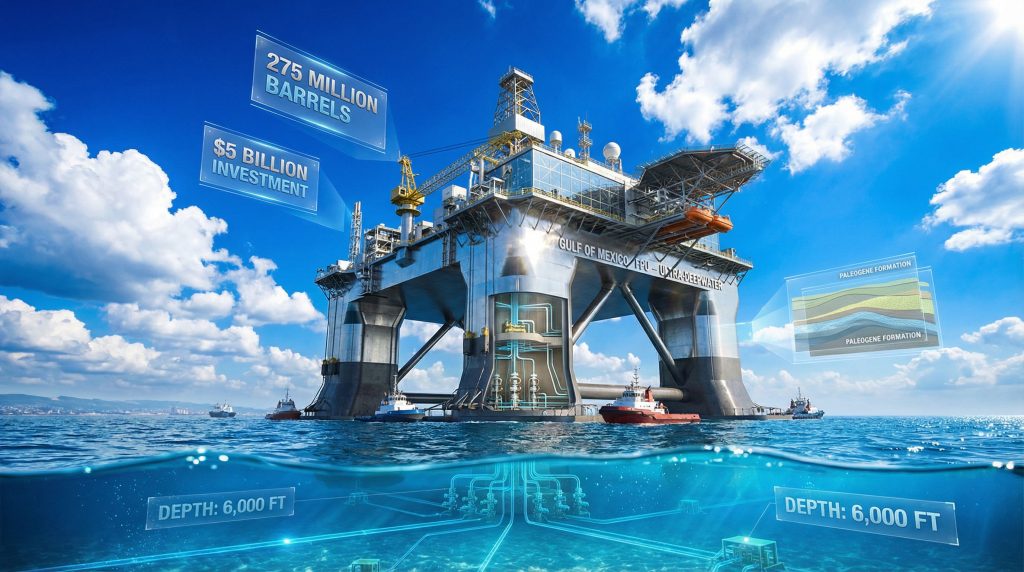
The bp kaskida deepwater project exemplifies the intersection of geological opportunity and technological capability that defines modern offshore energy development. Located in Keathley Canyon Block 292, approximately 250 miles southwest of New Orleans, this development represents a watershed moment for ultra-deepwater operations in waters exceeding 6,000 feet in depth.
The project's geological significance extends far beyond its individual production potential. The Kaskida field sits within the broader Paleogene formation, a geological structure that industry experts believe contains approximately 10 billion barrels of discovered resources across multiple field developments. This massive resource base represents one of the largest undeveloped hydrocarbon accumulations in the Gulf of Mexico, highlighting the strategic importance of advancing extraction technologies capable of managing extreme pressure and temperature conditions.
The initial development phase targets 275 million barrels of oil equivalent, with production scheduled to commence in 2029 following a comprehensive $5 billion investment program. This substantial capital commitment reflects both the technical complexity of ultra-deepwater operations and the long-term economic potential of accessing previously unreachable reserves.
Water depth challenges at this location require specialised floating production systems designed to withstand harsh marine environments whilst maintaining operational efficiency. The extreme depth necessitates advanced mooring technologies, extended risers, and sophisticated control systems capable of managing production across vast vertical distances between the seabed and surface facilities. In addition, these developments require consideration of broader oil price movements that could impact project economics.
When big ASX news breaks, our subscribers know first
Technical Barriers That Delayed Development for Two Decades
The bp kaskida deepwater project remained undeveloped for nearly 20 years following its initial discovery around 2006, primarily due to technological limitations in managing high-pressure, high-temperature reservoir conditions. Industry reports indicate that the field's geological characteristics presented formidable challenges that existing equipment and operational procedures could not adequately address.
High-pressure reservoir management requires specialised equipment capable of withstanding extreme operational parameters. While specific pressure ratings for the Kaskida field remain confidential, ultra-deepwater developments typically encounter pressures exceeding 20,000 psi, necessitating advanced wellhead equipment, specialised completion technologies, and enhanced safety systems designed to prevent catastrophic pressure-related failures.
The evolution of subsea technology since 2006 has been remarkable, encompassing advances in:
• Materials science developments enabling equipment to withstand extreme pressure and temperature conditions
• Seismic imaging technology providing enhanced reservoir characterisation capabilities
• Automated drilling systems reducing human error and improving operational precision
• Real-time monitoring capabilities enabling continuous assessment of downhole conditions
• Enhanced blowout prevention systems incorporating multiple redundancies and fail-safe mechanisms
Economic viability thresholds also played a crucial role in development timing. Ultra-deepwater projects require sustained oil price environments above specific break-even points to justify massive capital investments. The combination of technical complexity, extended development timelines, and substantial upfront costs meant that market conditions needed to align with technological capabilities to make development economically attractive.
Consequently, these drilling activity trends have influenced project timing. The Kaskida development represents a convergence of these factors, where technological advancement finally enabled economically viable extraction from what industry sources describe as having high pressure and forbidding geology that previously prevented development.
Modern Safety Protocols and Risk Mitigation Strategies
The approval of the bp kaskida deepwater project occurs against the backdrop of the 2010 Deepwater Horizon disaster, which resulted in 11 fatalities and created the worst oil spill in U.S. history. This catastrophic event fundamentally transformed safety requirements and regulatory oversight for deepwater operations throughout the Gulf of Mexico.
Advanced blowout prevention systems now incorporate multiple layers of technological redundancy designed to prevent well control incidents. Modern BOP configurations typically feature:
• Dual redundant control systems with independent hydraulic and electrical backup capabilities
• Real-time pressure monitoring providing continuous assessment of wellbore conditions
• Automated shutdown sequences triggered by predetermined pressure or flow anomalies
• Enhanced shear ram capabilities designed to cut through drill pipe under emergency conditions
• Subsea accumulator systems ensuring adequate hydraulic power for emergency operations
The regulatory framework governing ultra-deepwater operations has evolved significantly since 2010. The Bureau of Ocean Energy Management (BOEM) now requires comprehensive safety management systems, enhanced environmental impact assessments, and detailed emergency response protocols before approving major deepwater developments.
Risk mitigation through technological advancement extends beyond blowout prevention to encompass:
- Seismic imaging advances enabling precise reservoir characterisation and hazard identification
- Automated drilling systems reducing human factor contributions to operational incidents
- Enhanced emergency response infrastructure including rapid deployment spill containment systems
- Improved weather forecasting and operational decision-making protocols
Despite these technological improvements, environmental groups and some lawmakers continue to express concerns about residual catastrophic risks associated with ultra-deepwater drilling, particularly in ecologically sensitive marine environments.
Critical Safety Consideration: Modern ultra-deepwater operations incorporate technological redundancies and safety protocols developed specifically in response to lessons learnt from the Deepwater Horizon incident, though debate continues regarding whether these measures adequately address inherent risks of extreme-depth drilling.
Economic Impact Analysis Across Multiple Sectors
The $5 billion investment in the bp kaskida deepwater project generates substantial economic multiplier effects across the Gulf Coast region, creating opportunities in marine services, equipment manufacturing, and professional support sectors.
Direct investment flows during the development phase activate supply chains throughout Louisiana, Texas, and Mississippi, with fabrication yards, marine transportation companies, and specialised equipment manufacturers positioned to capture significant contract values. The project's scale requires substantial infrastructure investments in port facilities, supply bases, and logistics networks supporting ultra-deepwater operations.
| Economic Sector | Estimated Impact | Peak Activity Period |
|---|---|---|
| Marine Transportation | $400M – $600M | 2027-2030 |
| Subsea Equipment Manufacturing | $800M – $1.2B | 2026-2028 |
| Port and Logistics Services | $150M – $300M | 2028-2032 |
| Engineering and Technical Services | $200M – $400M | 2026-2029 |
| Regional Supply Chain Activation | $300M – $500M | 2027-2031 |
Employment creation spans both high-skilled technical positions and supporting service roles. Ultra-deepwater operations typically require specialised personnel including subsea engineers, drilling specialists, marine technicians, and safety coordinators commanding premium wage rates due to technical expertise requirements and offshore working conditions.
Energy security implications extend beyond regional economic benefits to national strategic considerations. The project's planned production of 275 million barrels during its initial phase contributes meaningfully to domestic energy production, potentially reducing import dependency and enhancing supply chain resilience during global market volatility periods.
However, these economic benefits must be considered alongside broader us economic factors that could influence project returns. The broader Paleogene formation development potential suggests that successful Kaskida operations could catalyse additional ultra-deepwater investments, creating sustained economic activity in the Gulf Coast region over multiple decades.
What Are the Technology Innovation and Floating Production Systems?
The bp kaskida deepwater project employs cutting-edge floating production technology specifically designed for ultra-deepwater applications. The development utilises a semi-submersible floating production unit (FPU) engineered to operate effectively in the challenging marine environment 250 miles from shore.
Semi-submersible design specifications provide enhanced stability in rough sea conditions compared to ship-shaped platforms, utilising partially submerged hulls and sophisticated dynamic positioning systems to maintain precise location over subsea infrastructure. These platforms incorporate:
• Advanced mooring systems designed for water depths exceeding 6,000 feet
• High-capacity processing equipment enabling separation, treatment, and export of produced hydrocarbons
• Redundant power generation ensuring continuous operations during adverse weather conditions
• Helicopter landing facilities supporting personnel transportation and emergency evacuation
• Marine offloading capabilities for crude oil export via shuttle tankers
Subsea architecture for the Kaskida development features a six-well subsea configuration connected to the floating production unit through specialised risers and control systems. This subsea infrastructure represents some of the most technically advanced equipment available for ultra-deepwater applications:
- High-pressure wellheads rated for extreme downhole conditions
- Subsea manifolds enabling production from multiple wells through consolidated infrastructure
- Flow control systems allowing operators to optimise production from individual wells
- Chemical injection capabilities for hydrate prevention and flow assurance
- Integrated monitoring systems providing real-time production and equipment status data
Digital integration represents a fundamental shift towards automated operations and predictive maintenance strategies. Modern ultra-deepwater developments incorporate comprehensive sensor networks generating continuous data streams regarding equipment performance, reservoir behaviour, and environmental conditions.
The integration of artificial intelligence and machine learning algorithms enables predictive maintenance protocols that can identify potential equipment failures before they occur, significantly reducing unplanned downtime and associated production losses in remote offshore environments where maintenance access is challenging and expensive.
Environmental Considerations and Marine Protection Protocols
Environmental oversight for the bp kaskida deepwater project reflects heightened regulatory scrutiny following the 2010 Deepwater Horizon incident, with comprehensive protocols designed to protect Gulf of Mexico marine ecosystems whilst enabling responsible resource development.
Marine ecosystem protection measures encompass multiple phases of project development and operations:
• Pre-development environmental surveys establishing baseline conditions for marine life populations, water quality, and seabed characteristics
• Real-time monitoring systems tracking environmental parameters throughout drilling and production operations
• Marine mammal protection protocols including acoustic monitoring and activity restrictions during sensitive migration periods
• Fisheries coordination ensuring commercial and recreational fishing activities can continue with minimal disruption
• Vessel traffic management reducing collision risks and underwater noise impacts
Carbon footprint management increasingly influences operational planning for ultra-deepwater developments. While specific emissions targets for Kaskida remain undisclosed, industry best practices include:
- Flare gas minimisation through enhanced processing and gas injection technologies
- Energy efficiency optimisation reducing power consumption for production operations
- Methane leak detection and repair programs minimising fugitive emissions
- Electrification initiatives where technically and economically feasible
Decommissioning planning represents a critical component of project lifecycle management, with operators required to demonstrate financial capability and technical plans for eventual facility removal. Ultra-deepwater decommissioning presents unique challenges due to water depth, weather constraints, and specialised equipment requirements for safe infrastructure removal.
The regulatory approval process for major deepwater developments now requires comprehensive environmental impact assessments, spill response preparedness demonstrations, and ongoing compliance monitoring throughout project operations.
Strategic Implications for Gulf of Mexico Development
The approval of the bp kaskida deepwater project establishes important precedents for future ultra-deepwater development in the Gulf of Mexico, particularly within the Paleogene formation where multiple discoveries await technical and economic viability.
Paleogene formation development potential extends far beyond individual field boundaries, with geological assessments indicating substantial additional resources throughout the region. The successful development of Kaskida could serve as a technological and regulatory template for accessing these broader resource opportunities, potentially unlocking billions of barrels of additional reserves.
Technology transfer opportunities emerge from successful ultra-deepwater developments, with innovations in high-pressure equipment, subsea systems, and safety protocols applicable to similar projects worldwide. The Gulf of Mexico has historically served as a proving ground for technologies subsequently deployed in international deepwater provinces.
Infrastructure synergies may develop as additional projects come online, potentially enabling shared logistics, supply chain optimisation, and coordinated emergency response capabilities across multiple developments in the region.
The project represents BP's return to major Gulf of Mexico development after a 16-year hiatus following the Deepwater Horizon incident, potentially signalling broader industry confidence in ultra-deepwater economics and regulatory frameworks. Furthermore, successful project execution could influence oil price rally insights and market perceptions of deepwater development viability.
How Will Investment Scenarios and Long-Term Development Potential Unfold?
Phase development strategies for the bp kaskida deepwater project suggest substantial additional investment opportunities beyond the initial $5 billion commitment. The broader Paleogene formation resources could justify total investments exceeding $10 billion across multiple development phases, contingent upon initial phase performance and sustained economic conditions.
Second and third phase potential may include:
• Additional drilling targets within the Kaskida field structure
• Enhanced recovery technologies maximising ultimate resource extraction
• Tie-back opportunities from nearby discoveries to existing infrastructure
• Processing capacity expansions accommodating increased production volumes
Comparable project activation across the Gulf of Mexico could accelerate if Kaskida demonstrates successful ultra-deepwater operations. Several operators hold discoveries in similar geological settings that await technological validation and favourable economic conditions for development.
Market response indicators will likely focus on:
- Initial production performance relative to technical expectations
- Operating cost management in the ultra-deepwater environment
- Safety record throughout construction and early operations phases
- Regulatory approval efficiency for potential follow-on developments
- Technology reliability under extreme operational conditions
The project's success could influence broader investment allocation decisions within BP's global portfolio, potentially prioritising additional Gulf of Mexico opportunities over international alternatives where regulatory, technical, or political risks may be higher. Moreover, tariffs impact on markets could affect the competitive landscape for energy investments globally.
The next major ASX story will hit our subscribers first
Geopolitical Context and Energy Security Implications
The bp kaskida deepwater project development occurs within a complex geopolitical environment where domestic energy production capabilities increasingly influence national security considerations and international trade relationships.
Domestic production enhancement from ultra-deepwater developments contributes to energy independence objectives by reducing reliance on oil imports from potentially unstable international sources. The Gulf of Mexico's proximity to major U.S. refining centres provides strategic supply chain advantages during global market disruptions.
Regulatory environment stability in the United States contrasts favourably with international jurisdictions where changing political conditions may threaten long-term investment security. This regulatory predictability encourages substantial capital commitments required for ultra-deepwater projects with multi-decade operational timelines.
Technology leadership in ultra-deepwater development strengthens U.S. companies' competitive positioning in global markets, with innovations developed in Gulf of Mexico operations subsequently deployed in international projects, generating technology export opportunities and maintaining industrial competitiveness.
The project approval process demonstrates the balance between environmental protection and energy security objectives, with regulatory agencies weighing catastrophic risk mitigation against domestic production benefits and economic considerations.
This analysis is based on publicly available information and industry assessments. Actual project performance, economic impacts, and development timelines may vary significantly from estimates and projections presented. Offshore oil and gas investments involve substantial risks including technical challenges, environmental hazards, regulatory changes, and commodity price volatility that could materially affect project outcomes.
Interested in the Next Major Mineral Discovery?
Discovery Alert provides instant notifications on significant ASX mineral discoveries, powered by its proprietary Discovery IQ model, helping subscribers identify actionable opportunities ahead of the broader market. Explore why historic discoveries can generate substantial returns by visiting Discovery Alert's dedicated discoveries page and begin your 14-day free trial today to position yourself ahead of the market.