May 14, 2026
Brazil's energy sector stands at a pivotal moment as the country prepares to launch its first dedicated battery recycling breakthrough and storage auction, positioning itself as a regional leader in grid modernisation initiatives. This procurement represents more than a simple technology acquisition – it signals a fundamental shift toward sophisticated energy infrastructure capable of supporting the nation's ambitious renewable energy targets while addressing persistent grid reliability challenges.
Furthermore, the Brazil energy storage auction emerges from the country's recognition that traditional grid infrastructure cannot adequately support the rapid expansion of variable renewable energy sources. Brazil's electricity matrix, historically dominated by hydroelectric generation, faces increasing pressure from climate variability and growing industrial demand that requires more flexible, responsive grid management solutions.
Understanding Brazil's Energy Storage Market Revolution
The Strategic Context Behind Brazil's BESS Initiative
The Brazil energy storage auction emerges from the country's recognition that traditional grid infrastructure cannot adequately support the rapid expansion of variable renewable energy sources. Brazil's electricity matrix, historically dominated by hydroelectric generation, faces increasing pressure from climate variability and growing industrial demand that requires more flexible, responsive grid management solutions.
Grid stability challenges driving storage demand include frequency regulation difficulties during peak demand periods and the need to integrate intermittent solar and wind resources without compromising system reliability. Unlike traditional thermal power plants that provide consistent baseload generation, renewable energy sources require sophisticated balancing mechanisms to maintain grid stability across different time scales.
International comparison reveals that Brazil's approach follows successful models implemented in California, where storage mandates have driven technological innovation, and Australia, where grid-scale battery deployments have demonstrated significant economic and reliability benefits. However, Brazil's unique energy matrix composition and regional infrastructure characteristics require tailored solutions rather than direct replication of international frameworks.
Table: Brazil BESS Market Fundamentals
| Component | Specification |
|---|---|
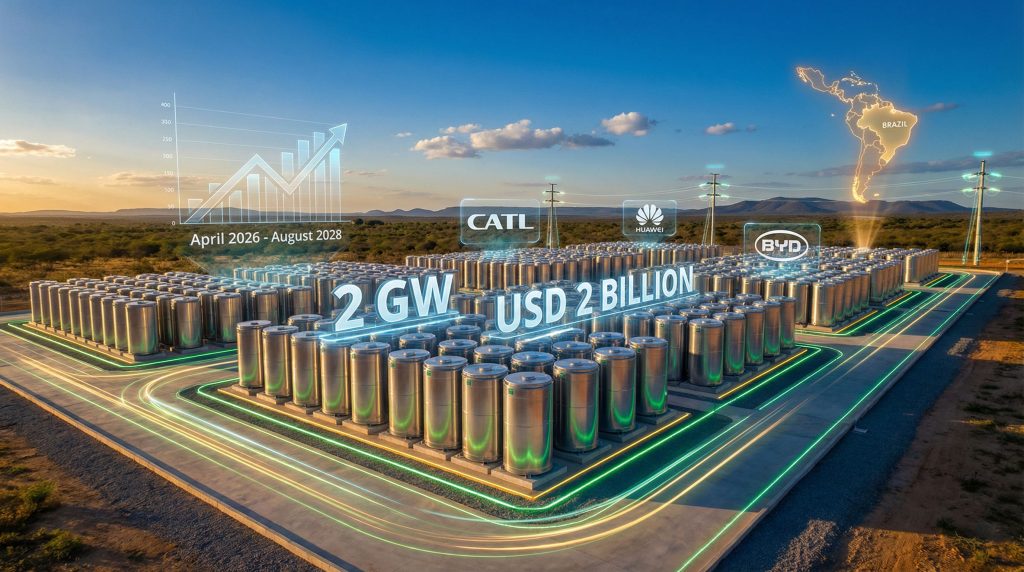
| Auction Timeline | April 2026 |
| Supply Commencement | August 2028 |
| Contract Duration | 10-year power availability agreements |
| Revenue Structure | MW-based capacity payments |
| Technology Focus | New battery energy storage systems |
Market Size and Economic Impact Assessment
The Brazil energy storage auction represents a substantial commitment to grid modernisation, with the procurement targeting significant capacity additions that will fundamentally alter the country's electricity infrastructure landscape. The investment mobilisation anticipated through this initiative extends beyond direct technology costs to include grid integration infrastructure, control systems, and operational framework development.
Economic impact analysis suggests that storage deployment will create multiplier effects throughout Brazil's energy sector, potentially reducing overall electricity costs through improved grid efficiency and reduced need for expensive peaking power plants. The capacity payment structure provides revenue certainty for project developers while ensuring grid operators have access to flexible resources when needed most.
Regional economic benefits include job creation in installation, maintenance, and monitoring activities, particularly in areas selected for storage deployment. The technology transfer potential associated with international manufacturer participation could establish Brazil as a regional hub for battery energy storage expertise and manufacturing capabilities.
Technical Requirements and Performance Standards
Battery energy storage systems participating in the auction must meet stringent technical specifications designed to ensure grid compatibility and reliable operation across Brazil's diverse climatic conditions. Performance requirements include rapid response capabilities for frequency regulation, sustained discharge capacity for load balancing, and advanced control systems for seamless grid integration.
Safety standards reflect international best practices for large-scale battery installations, incorporating fire suppression systems, thermal management protocols, and emergency shutdown procedures. Environmental considerations include battery recycling provisions and land use minimisation requirements that align with Brazil's broader sustainability objectives.
System integration protocols require compatibility with Brazil's existing grid infrastructure while providing upgrade pathways for future technological advances. Interoperability standards ensure that storage systems can communicate effectively with grid control centres and coordinate with other distributed energy resources.
When big ASX news breaks, our subscribers know first
How Will Brazil's April 2026 Auction Structure Work?
Technical Requirements and Bidding Framework
The Brazil energy storage auction implements a competitive procurement mechanism designed to secure the most cost-effective storage solutions while maintaining technical performance standards. Bidding procedures emphasise transparency and fair competition among qualified participants, with evaluation criteria balancing price competitiveness against technical capability and project viability.
Supply commencement requirements establish August 2028 as the mandatory operational date, providing approximately two years and eight months for equipment procurement, installation, and commissioning activities. This timeline reflects realistic project development schedules while ensuring grid operators receive committed storage capacity within a defined timeframe.
Contract structure innovations distinguish this auction from traditional energy procurements by focusing on power availability rather than energy delivery quantities. This approach recognises that storage systems provide value through their ability to respond rapidly to grid needs rather than simply delivering predetermined electricity volumes.
Key Auction Characteristics:
- Competitive Framework: Multiple qualified bidders competing on price and technical merit
- Performance Guarantees: Binding commitments for operational availability and response times
- Revenue Certainty: Fixed capacity payments providing predictable project economics
- Technology Neutrality: Open to various battery chemistries meeting technical specifications
Regulatory Evolution and Market Preparation
Brazil's energy storage regulatory framework represents a significant evolution from traditional electricity market structures, incorporating lessons learned from international storage deployments while addressing unique national grid characteristics. The Ministry of Mines and Energy's consultation process has involved extensive stakeholder engagement to develop technically sound and commercially viable auction parameters.
Grid usage payment structure considerations reflect the complex challenge of fairly compensating storage systems that both consume and inject electricity depending on grid conditions. Regulatory clarity on these mechanisms provides essential certainty for project financing and long-term commercial viability.
Market preparation activities include grid code modifications to accommodate storage system operational characteristics, interconnection standard updates, and control system protocol development. These regulatory foundations ensure that storage deployment proceeds smoothly and delivers anticipated grid benefits.
Competitive Evaluation and Selection Process
Auction evaluation methodology balances multiple criteria beyond simple price competition, recognising that storage system value extends beyond cost considerations to include technical performance, reliability, and long-term operational sustainability. Scoring mechanisms weight these factors according to their relative importance for grid stability and economic efficiency.
Bidder qualification requirements ensure that participating companies have demonstrated technical competence, financial capacity, and operational experience necessary for successful project delivery. Pre-qualification processes eliminate unsuitable participants while maintaining robust competition among capable providers.
Contract award procedures provide transparent selection criteria and clear timelines for project development milestones. Performance monitoring frameworks include ongoing compliance verification and penalty mechanisms for non-performance, ensuring that awarded projects deliver promised grid benefits.
Which International Players Are Positioning for Market Entry?
Chinese Technology Giants' Strategic Moves
Contemporary Amperex Technology Co. Limited (CATL) has engaged directly with Brazil's government leadership, meeting with Minister Alexandre Silveira in January 2026 to discuss auction participation strategies and technical capability presentations. CATL's global leadership in battery manufacturing provides significant competitive advantages in terms of cost competitiveness, supply chain integration, and technological sophistication.
Huawei's strategic positioning extends beyond battery hardware to encompass comprehensive digital energy solutions, leveraging the company's R&D Centre in Shanghai that specialises in semiconductors, wireless networks, and digital solutions for electricity sector applications. This integrated approach addresses both physical storage infrastructure and intelligent control systems required for effective grid integration.
Table: Major International Participants
| Company | Core Competency | Strategic Advantage |
|---|---|---|
| CATL | Battery cell manufacturing | Global production scale and cost leadership |
| Huawei | Digital energy integration | Advanced control systems and grid intelligence |
| Additional firms | Comprehensive BESS solutions | Technology diversity and competitive options |
International engagement strategy by Brazil's Minister demonstrates recognition that successful storage deployment requires access to proven technologies and experienced manufacturers. The January 2026 diplomatic outreach, which included meetings with multiple Chinese technology leaders, signals government commitment to establishing bilateral partnerships that extend beyond simple equipment procurement.
In addition, companies are increasingly focusing on innovative lithium battery tech that could provide enhanced performance characteristics for grid-scale applications. This technological evolution contributes significantly to the competitiveness of storage solutions in emerging markets.
Competitive Landscape Analysis
Technology transfer considerations play a crucial role in international participation, as Brazil seeks to develop domestic capabilities while accessing advanced battery technologies. Local content requirements and manufacturing incentives could influence competitive positioning by favouring companies willing to establish regional production facilities or technology transfer agreements.
Supply chain localisation requirements may create opportunities for partnerships between international manufacturers and Brazilian engineering firms, potentially leading to joint venture arrangements that combine global technology expertise with local market knowledge and operational capabilities.
Partnership opportunities with Brazilian energy companies include collaboration with major utilities for project development, integration with existing infrastructure assets, and joint investment in grid modernisation initiatives. These strategic alliances could provide international participants with essential local expertise while offering Brazilian companies access to advanced storage technologies.
Market Entry Strategies and Investment Considerations
International companies pursuing Brazil energy storage auction participation must navigate complex regulatory requirements, cultural considerations, and local business practices while demonstrating technical competence and financial commitment. Market entry strategies vary from direct participation to partnership arrangements with established Brazilian energy sector participants.
Risk assessment for international investors includes regulatory compliance requirements, currency fluctuation exposure, and long-term contract enforceability considerations. Political risk factors and policy stability assessments influence investment decision-making and project structuring approaches.
Technology localisation benefits include reduced import dependency, enhanced supply chain resilience, and potential export opportunities to other Latin American markets. Companies establishing regional manufacturing capabilities may gain competitive advantages in future procurement cycles while contributing to Brazil's industrial development objectives.
What Are the Long-Term Strategic Implications?
Grid Integration and Renewable Energy Synergies
Battery energy storage systems function as critical enablers for renewable energy expansion by providing the flexibility required to manage variable generation patterns and maintain grid stability. Integration mechanisms include frequency regulation services that stabilise grid operations and load-shifting capabilities that optimise renewable energy utilisation during periods of peak demand.
Load shedding reduction potential represents a significant economic benefit, as storage systems can provide backup power during grid stress conditions and reduce the frequency of forced outages that impose costs on both utilities and electricity consumers. Grid reliability improvements extend beyond emergency response to include enhanced power quality and reduced transmission losses.
Renewable energy balancing mechanisms enabled by storage deployment allow grid operators to accommodate higher penetration levels of solar and wind generation without compromising system reliability. This capability accelerates renewable energy adoption while maintaining the dispatchable generation characteristics required for stable electricity supply.
Regional Energy Security Enhancement
Brazil's leadership in energy storage deployment positions the country as a regional technology and policy leader, potentially influencing energy sector development throughout Latin America. Regional integration opportunities include cross-border electricity trading, shared grid stability resources, and collaborative technology development initiatives.
Moreover, this initiative aligns with broader energy transition investments happening across the region, where countries are recognising the strategic importance of modernising their energy infrastructure to support sustainable development goals.
Scenario Analysis: Consumer Cost Impact
- Scenario 1: Successful storage deployment reduces peak electricity costs through optimised generation dispatch
- Scenario 2: Grid stability improvements lower overall system costs and reliability premiums
- Scenario 3: Technology cost reductions accelerate additional storage investments and cumulative benefits
Industrial sector benefits include more reliable electricity supply for energy-intensive manufacturing operations and reduced exposure to grid instability events that can disrupt production schedules. Enhanced grid flexibility supports industrial competitiveness by providing stable, cost-effective electricity access.
Economic Development and Technology Transfer
Long-term economic implications extend beyond immediate infrastructure investments to include industrial development opportunities, technology transfer benefits, and potential export market development. Storage deployment creates foundation capabilities that support broader electrification initiatives and energy sector modernisation.
Technology learning curve effects suggest that early storage deployment will drive cost reductions and performance improvements that benefit subsequent procurement cycles. Brazilian companies participating in initial projects gain experience and capabilities that position them for expanded roles in future developments.
Regional market leadership opportunities include serving as a hub for Latin American storage technology development, providing technical expertise for neighbouring countries' grid modernisation initiatives, and establishing manufacturing capabilities that serve broader regional demand.
How Does This Compare to Global Energy Storage Trends?
Benchmarking Against International BESS Programs
California's storage mandate program provides a relevant comparison point, demonstrating how regulatory requirements can drive rapid technology adoption and cost reductions. California's experience shows that well-designed procurement mechanisms accelerate storage deployment while fostering competitive markets that benefit consumers through reduced costs.
European capacity market mechanisms offer alternative approaches to storage compensation, emphasising system-wide benefits rather than individual project returns. These frameworks demonstrate how storage systems contribute to overall grid reliability while providing revenue streams that support long-term project viability.
Australian grid-scale storage deployment exemplifies rapid technology adoption in response to grid stability challenges, with large-scale battery installations proving their value through measurable grid performance improvements and cost savings. Australia's experience demonstrates that storage systems can provide multiple grid services simultaneously while maintaining competitive economics.
Table: Global BESS Auction Comparison
| Region | Procurement Model | Key Features |
|---|---|---|
| Brazil | Capacity-based auction | 10-year MW availability contracts |
| California | Utility mandate program | Storage requirements with competitive procurement |
| Australia | Market-based deployment | Merchant revenue and grid services |
| Europe | Capacity market integration | System-wide reliability compensation |
Investment Climate and Market Maturation
Brazil's storage auction represents a significant commitment to market development that signals long-term policy support and regulatory stability. Investment climate assessment indicates favourable conditions for storage technology deployment, supported by clear regulatory frameworks and government commitment to energy sector modernisation.
Learning curve implications suggest that early projects will drive technology cost reductions and performance improvements that benefit the entire market. Technology cost trajectory projections through 2030 indicate continued declining costs for battery systems, improving project economics for both developers and electricity consumers.
Market maturation indicators include increasing competition among technology providers, improving project financing conditions, and expanding domestic technical capabilities. These trends support sustained market growth and technology advancement beyond initial auction cycles.
Technology Innovation and Performance Evolution
Battery technology advancement trends indicate continued improvements in energy density, cycle life, and cost performance that enhance storage system economics. Innovation drivers include competition among manufacturers, research and development investments, and operational experience from deployed systems.
Grid integration technology evolution encompasses advanced control systems, predictive maintenance capabilities, and enhanced safety protocols that improve storage system performance and reliability. Digital technology integration enables sophisticated optimisation algorithms that maximise storage value delivery.
Performance benchmarking against international installations provides verification that storage technologies deliver promised grid benefits while meeting safety and reliability standards. Operational experience from global deployments informs best practices for system design, installation, and operation.
What Challenges and Opportunities Lie Ahead?
Technical and Regulatory Hurdles
Grid code adaptation requirements represent a significant implementation challenge, as existing electricity market rules and technical standards were developed for conventional generation technologies rather than bidirectional energy storage systems. Regulatory framework updates must address storage system operational characteristics while maintaining grid stability and market efficiency.
Environmental permitting considerations for large-scale installations include land use requirements, environmental impact assessments, and community engagement processes. Permitting timelines and requirements influence project development schedules and may require streamlined procedures to meet auction implementation deadlines.
Interconnection standards and safety protocols require updates to accommodate storage system characteristics, including rapid charge-discharge cycling, bidirectional power flow, and advanced control system integration. Technical standard development ensures safe, reliable storage operation while facilitating efficient grid integration.
Furthermore, the success of this Brazil energy storage auction will be influenced by the global critical minerals demand surge, which affects the availability and pricing of key components required for battery manufacturing.
Market Development Scenarios and Risk Assessment
Scenario 1: Rapid Deployment Success assumes that auction implementation proceeds smoothly, with successful technology deployment leading to expanded storage procurement programs and accelerated market development. This scenario anticipates positive outcomes that encourage additional investment and policy support.
Scenario 2: Implementation Delays considers potential challenges that could affect the 2028 supply target, including regulatory complications, technology supply constraints, or project development difficulties. Risk mitigation strategies address these potential delays while maintaining overall program objectives.
Scenario 3: Technology Cost Acceleration examines the impact of faster-than-expected battery cost reductions on project economics and market development. Accelerated cost declines could improve auction competitiveness while supporting expanded storage deployment beyond initial targets.
According to Bloomberg's recent analysis, Brazil is positioned for significant growth in the battery sector, with Chinese companies well-positioned to capture substantial market share through strategic partnerships and technological expertise.
Investment Risks and Mitigation Strategies
Technology risk considerations include battery performance degradation, technological obsolescence, and safety concerns that could affect project viability. Risk mitigation approaches include performance guarantees, insurance mechanisms, and technology diversification strategies.
Regulatory risk factors encompass potential policy changes, contract enforceability issues, and grid code modifications that could affect project economics. Legal framework development and contract structuring address these risks while providing investment certainty.
Market risk assessment includes electricity price volatility, competition from alternative technologies, and changes in grid service requirements. Financial structuring and contract design mechanisms provide protection against these commercial risks while maintaining project viability.
The next major ASX story will hit our subscribers first
Strategic Investment Considerations for Market Participants
Due Diligence Framework for Potential Bidders
Market entry cost analysis encompasses technology procurement expenses, installation costs, grid interconnection requirements, and ongoing operational expenditures. Comprehensive cost assessment enables accurate bidding strategies and realistic project economics evaluation.
Local partnership evaluation criteria include technical competence, financial capacity, regulatory compliance capabilities, and cultural compatibility considerations. Strategic alliance selection influences project success probability and long-term market positioning.
Technology certification requirements include compliance with Brazilian technical standards, grid code compatibility verification, and safety protocol adherence. Certification processes ensure technology suitability while providing regulatory compliance assurance.
Additionally, companies must consider the broader context of regional lithium supply strategy developments, as secure access to critical materials becomes increasingly important for long-term project viability and cost management.
Long-Term Market Outlook and Growth Potential
Pipeline development for future Brazilian storage procurements suggests sustained market growth beyond the initial auction, with expanding opportunities for technology providers and project developers. Market expansion indicators include increasing renewable energy deployment and ongoing grid modernisation requirements.
Integration with broader energy transition policies includes coordination with renewable energy development programs, grid infrastructure investments, and electrification initiatives. Policy alignment ensures storage deployment supports comprehensive energy sector transformation.
Export potential for successful project developers includes opportunities to replicate Brazilian experience in other Latin American markets, leveraging technical expertise and operational knowledge gained through initial deployments. Regional expansion possibilities multiply investment returns while supporting broader market development.
As highlighted in recent regulatory analysis, the 2025 regulatory changes could significantly impact how the 2026 battery energy storage auction unfolds, creating both opportunities and challenges for market participants.
The Brazil energy storage auction represents a watershed moment for Latin American energy markets, demonstrating how strategic policy frameworks can accelerate technology adoption while creating sustainable economic benefits. Success in this initiative will establish Brazil as a regional leader in energy storage deployment, providing a model for other emerging markets seeking to modernise their electricity infrastructure.
Disclaimer: This analysis is based on publicly available information as of January 2026. Energy storage markets are subject to rapid technological and regulatory changes that may affect project viability and market conditions. Potential investors should conduct independent due diligence and seek professional advice before making investment decisions.
Ready to Invest in the Next Major Mineral Discovery?
Discovery Alert instantly alerts investors to significant ASX mineral discoveries using its proprietary Discovery IQ model, turning complex mineral data into actionable insights for critical materials like lithium that power Brazil's emerging battery storage sector. Understand why major mineral discoveries can lead to substantial market returns whilst beginning your 14-day free trial today to position yourself ahead of the market in this rapidly evolving energy transition landscape.