August 14, 2026
Brazil's ambitious fossil fuel phase-out plan represents a pivotal moment for Latin America's largest economy, with institutional pressures mounting for accelerated decarbonisation across the region. While global attention focuses on renewable electricity achievements, the deeper challenge lies in transforming primary energy consumption patterns that remain heavily dependent on fossil fuel inputs across industrial and transportation sectors. Furthermore, the success of this initiative will significantly influence mining industry innovation and energy transition essentials across the continent.
Understanding Brazil's Comprehensive Decarbonisation Framework
Institutional Architecture and Policy Development Timeline
Brazil's approach to fossil fuel phase-out centres on coordinated ministerial action following presidential directive from December 8, 2025. The energy, environment, and finance ministries received explicit instructions to develop comprehensive roadmap documentation by February 6, 2026, with international presentation scheduled for Colombia's climate summit in April 2026.
The policy framework incorporates 46 distinct recommendations across three strategic categories: energy transition guidelines, financing mechanisms, and governance structures. These recommendations emerged from extensive consultation processes involving civil society organisations, scientific communities, and industry representatives through Brazil's Energy Transition Forum coordination mechanisms.
Key Implementation Milestones:
- February 2026: Ministerial roadmap submission to presidential office
- April 2026: International presentation at Colombia climate conference
- 2027: Energy Transition Fund operational launch targeting fossil fuel revenue reallocation
- 2028: Thermal plant retirement programme initiation across priority regions
Financial Mechanisms and Revenue Transformation
The transition strategy emphasises fossil fuel revenue redirection toward clean energy infrastructure development. Financial architecture includes dedicated fund establishment utilising existing petroleum royalties and production taxes for worker retraining programmes, industrial transformation initiatives, and renewable energy deployment acceleration.
Investment priorities target three primary sectors: power generation infrastructure modernisation, transportation fuel diversification, and heavy industry decarbonisation. The fund structure aims to address regional employment vulnerabilities while maintaining economic competitiveness during transition periods.
When big ASX news breaks, our subscribers know first
Energy Security Challenges in Decarbonisation Context
Current Energy Portfolio Analysis
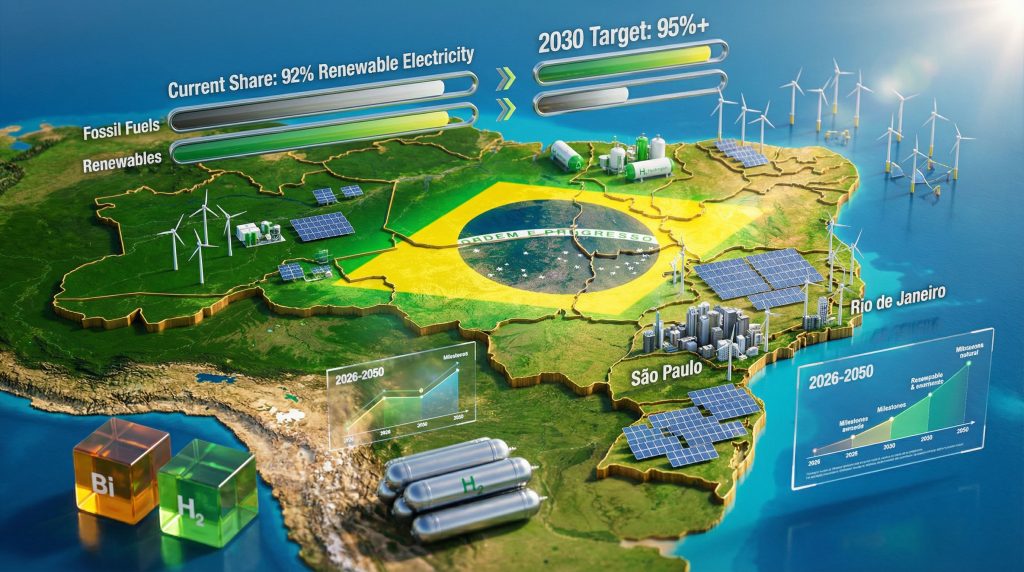
Brazil's energy profile presents complex transition dynamics requiring careful balance between security objectives and environmental commitments. The electricity sector demonstrates advanced renewable penetration at 92% clean generation, primarily through hydroelectric, wind, and biomass sources, with 2030 targets approaching 95% renewable electricity.
However, primary energy consumption reveals deeper transformation challenges:
| Energy Category | Current Share | 2030 Target | Implementation Barriers |
|---|---|---|---|
| Renewable Electricity | 92% | 95%+ | Grid stability, storage infrastructure |
| Primary Energy (Fossil) | 65% | 45% | Industrial heating, transport fuels |
| Biofuels Integration | 18% | 25% | Feedstock sustainability, land use competition |
Production Expansion Contradictions
Brazil faces fundamental policy tensions through simultaneous crude oil expansion objectives and fossil fuel phase-out commitments. Current production capacity of 4 million barrels daily targets increase to 5.3 million barrels by 2030, representing 32.5% growth during the proposed transition period.
This production expansion encompasses new exploratory frontiers including the Pelotas basin and environmentally sensitive equatorial margin regions. The contradiction between increased extraction and phase-out policies requires explicit resolution within the comprehensive roadmap framework.
Regional Implementation Variations
Geographic diversity creates distinct transformation pathways across Brazil's regions:
Amazon Region Challenges:
- Diesel-dependent remote communities requiring distributed solar solutions
- Indigenous territory energy access through mini-grid deployment
- Environmental protection coordination with energy infrastructure development
Industrial Hub Transformation:
- São Paulo and Rio de Janeiro petrochemical complex fuel switching
- Steel production decarbonisation through renewable-powered electric arc furnaces
- Port facility electrification for maritime transport connections
Rural Electrification Priorities:
- Agricultural region energy access expansion
- Biomass utilisation from agricultural residues
- Transportation fuel diversification in remote areas
Environmental Coalition Acceleration Strategies
Civil Society Policy Positions
Environmental organisations, coordinated through the 60-member Observatorio do Clima coalition, advocate for immediate implementation rather than gradual transition approaches. These groups position accelerated timelines as economically advantageous through job creation projections reaching 2.3 million renewable sector positions by 2030.
Their policy framework emphasises sectoral targeting over economy-wide approaches, with particular focus on power generation thermal plant replacement and industrial fuel switching mechanisms. The coalition forwarded comprehensive recommendations to government officials on January 29, 2026, serving dual purposes for domestic policy guidance and international climate architecture development.
Immediate Implementation Mechanisms
Environmental groups propose several accelerated transition tools:
Exploration Restrictions:
- Complete moratorium on new fossil fuel exploration permits
- Hydraulic fracturing prohibition across all Brazilian territories
- Elimination of crude oil block auction processes
Industrial Transformation Requirements:
- Mandatory natural gas and oil usage reduction through alternative fuel substitution
- Green hydrogen, biomass, and electricity deployment for industrial heating
- Carbon capture and storage project investment discontinuation
Financial System Restructuring:
- Fossil fuel subsidy elimination across all sectors
- Enhanced Petrobras renewable energy investment mandates
- National transition financing fund establishment using petroleum revenues
Major Implementation Obstacles and Constraints
Structural Economic Dependencies
Brazil's federal budget demonstrates significant dependence on Petrobras dividend contributions and petroleum sector tax revenues, creating fiscal pressures that complicate rapid phase-out implementation. Regional economies in oil-producing states face employment transition challenges requiring comprehensive workforce retraining and economic diversification programmes.
Critical Policy Paradox: Brazil's simultaneous commitment to 32.5% crude production growth through 2030 while implementing fossil fuel phase-out policies creates fundamental contradictions requiring explicit resolution mechanisms.
Geographic and Infrastructure Limitations
Amazon Region Complexities:
- Remote area energy access currently relies on diesel transportation and storage
- Solar mini-grid deployment requires substantial infrastructure investment
- Environmental protection regulations limit certain renewable project types
Industrial Hub Constraints:
- Existing petrochemical facilities require fuel switching rather than replacement
- Heavy industry heating applications lack immediate alternative fuel availability
- Port and transportation infrastructure optimised for fossil fuel handling
Political Resistance Factors:
- International competitiveness concerns from energy-intensive industries
- Regional employment dependencies in petroleum-producing states
- Shareholder expectations for continued Petrobras production expansion
International Benchmarking and Competitive Analysis
Global Transition Model Comparisons
Brazil's phase-out strategy requires evaluation against international precedents to assess feasibility and competitive positioning:
| Country | Phase-Out Target | Renewable Share | Transition Fund | Unique Advantages |
|---|---|---|---|---|
| Brazil | 2050 (proposed) | 92% electricity | Under development | Biofuel expertise, critical minerals |
| Norway | 2035 | 98% electricity | $1.4 trillion sovereign wealth | Oil fund diversification |
| Denmark | 2030 | 80% total energy | €35 billion green transition | Wind technology leadership |
| Costa Rica | 2050 | 99% electricity | $4.1 billion climate fund | Hydroelectric dominance |
Competitive Positioning Advantages
Brazil possesses several strategic advantages supporting accelerated transition implementation:
Existing Infrastructure Foundation:
- Advanced renewable electricity grid with 92% clean generation
- Established biofuel production and distribution networks
- Critical mineral reserves supporting battery and renewable technology manufacturing
Technical Expertise and Capacity:
- Sugarcane-based ethanol production knowledge transferable to advanced biofuels
- Offshore wind development potential along extensive coastline
- Green hydrogen production capability through abundant renewable electricity
Economic Opportunity Assessment and Market Development
Investment Attraction Potential
Brazil's transition strategy positions the country for substantial foreign direct investment flows targeting renewable energy project development. International technology transfer agreements offer opportunities for green hydrogen production scaling and carbon credit market development through verified emission reductions.
Priority Investment Sectors:
- Green hydrogen electrolyser deployment for domestic consumption and export markets
- Battery material processing facilities utilising domestic lithium and rare earth reserves
- Sustainable aviation fuel production through advanced biofuel technologies
In addition, Brazil's mineral wealth positions it strategically for lithium industry innovations and battery metals investment opportunities that could support the global energy transition.
Industrial Transformation Scenarios
Manufacturing sector decarbonisation presents both challenges and opportunities across key industries:
Steel Industry Evolution:
- Electric arc furnace adoption powered by renewable electricity
- Green hydrogen utilisation for direct reduction iron production
- Scrap metal recycling capacity expansion reducing primary production requirements
Cement Sector Adaptation:
- Alternative fuel substitution including biomass and waste-derived options
- Carbon capture utilisation for remaining process emissions
- Energy efficiency improvements reducing overall fuel consumption
Chemical Industry Restructuring:
- Bio-based feedstock substitution for petroleum-derived inputs
- Green ammonia production for fertiliser manufacturing
- Polymer recycling technology deployment reducing virgin material requirements
The next major ASX story will hit our subscribers first
Implementation Timeline and Milestone Achievement
Short-Term Transformation Targets (2026-2028)
Initial implementation phases focus on policy framework establishment and infrastructure development preparation:
2026 Priority Actions:
- Comprehensive roadmap finalisation and international presentation
- Energy Transition Fund legal framework establishment
- Stakeholder consultation process completion across affected regions
2027-2028 Implementation Initiation:
- Fund operational launch with initial project financing
- Thermal power plant retirement programme pilot projects
- Worker retraining programme deployment in petroleum-dependent communities
Medium-Term Infrastructure Development (2029-2035)
Mid-decade objectives emphasise large-scale infrastructure deployment and industrial transformation acceleration:
Transportation Sector Evolution:
- Fleet electrification reaching 15% penetration across major urban centres
- Alternative fuel distribution network expansion including hydrogen and advanced biofuels
- Maritime and aviation sector sustainable fuel integration
Industrial Decarbonisation Scaling:
- Green hydrogen production capacity establishment targeting export market development
- Manufacturing sector fuel switching programmes in major industrial centres
- Carbon capture utilisation deployment for remaining emissions sources
This comprehensive approach to minings transformation decarbonisation will significantly impact Brazil's extractive industries and their environmental footprint.
Long-Term Vision Realisation (2036-2050)
Final transformation phases target complete fossil fuel elimination across priority sectors:
Power Generation Completion:
- Full fossil fuel phase-out across electricity generation infrastructure
- Energy storage deployment enabling 24/7 renewable electricity supply
- Grid modernisation supporting variable renewable energy integration
Economy-Wide Decarbonisation:
- Transportation sector achieving 80% alternative fuel utilisation
- Industrial heating conversion to renewable electricity and biomass
- Net-zero emissions target fulfilment through comprehensive sectoral transformation
Technology Integration and Innovation Priorities
Grid Modernisation and Energy Storage
Variable renewable energy integration necessitates substantial grid infrastructure upgrades and energy storage deployment. Technology priorities include battery storage systems, pumped hydro facilities, and smart grid management systems enabling real-time supply-demand balancing.
Critical Technology Deployments:
- Lithium-ion battery manufacturing utilising domestic mineral resources
- Compressed air energy storage for long-duration applications
- Hydrogen production and storage for seasonal energy management
International Collaboration Frameworks
Brazil's transition success depends partly on international technology transfer and knowledge sharing arrangements. Technical partnerships with leading renewable energy nations offer opportunities for accelerated learning and capacity building. Moreover, collaboration with international climate organisations will be crucial for knowledge sharing and best practices.
Priority Collaboration Areas:
- Green hydrogen production technology from European and Australian leaders
- Offshore wind development expertise from Denmark and United Kingdom
- Energy storage system integration from battery technology innovators
Social Equity and Just Transition Principles
Worker Protection and Community Investment
Fossil fuel phase-out implementation requires comprehensive attention to affected workers and communities, particularly in petroleum-producing regions where economic dependencies create transition vulnerabilities.
Retraining Programme Components:
- Technical skills development for renewable energy installation and maintenance
- Manufacturing sector employment opportunities in clean technology production
- Entrepreneurship support for small business development in green economy sectors
Energy Access and Affordability Considerations
Transition policies must address potential energy cost impacts on vulnerable populations while ensuring universal access to reliable electricity supply. Furthermore, these considerations align with global fossil fuel phase-out initiatives being discussed at international climate conferences.
Equity Protection Mechanisms:
- Progressive tariff structures protecting low-income households
- Rural electrification expansion through distributed renewable systems
- Energy efficiency programmes reducing consumption requirements and costs
The success of Brazil's fossil fuel phase-out plan depends on resolving fundamental contradictions between production expansion and decarbonisation objectives while maintaining energy security and economic competitiveness. Implementation timeline acceleration faces significant political and economic constraints, though the country's renewable electricity advantages and biofuel expertise provide competitive positioning for transition success.
Disclaimer: This analysis involves forecasts and projections that are inherently uncertain. Energy transition timelines and economic impacts may vary significantly from current projections based on technological developments, policy changes, and market conditions.
Ready to Capitalise on Energy Transition Opportunities?
Discovery Alert's proprietary Discovery IQ model delivers real-time alerts on significant ASX mineral discoveries, instantly empowering subscribers to identify actionable opportunities in critical minerals essential for renewable energy transformation. Explore Discovery Alert's dedicated discoveries page to understand why major mineral discoveries can lead to substantial market returns, then begin your 14-day free trial today to position yourself ahead of the energy transition investment wave.