July 17, 2026
When the Lights Stay On at Any Cost: The Economics of the Global Energy Crisis Driving Countries Back to Coal
There is a concept in energy economics known as the fuel of last resort. It describes the generation source a grid operator will always return to when alternatives fail, prices spike, or supply chains fracture. For most of the world, that fuel has never truly changed. Despite decades of climate pledges, falling renewable costs, and coordinated international commitments, coal retains a structural role in the global power system that geopolitical shocks have a habit of exposing with brutal clarity.
The global energy crisis driving countries back to coal is not a single event. It is the cumulative result of maritime chokepoint vulnerability, infrastructure sequencing failures, extreme weather demand surges, and the cold arithmetic of grid stability under pressure. Understanding why this is happening, which countries are most affected, and what it means for the clean energy transition requires separating short-term emergency dispatch logic from long-term structural trend analysis.
When big ASX news breaks, our subscribers know first
The Strait of Hormuz Problem: Why Geography Is Undermining Climate Policy
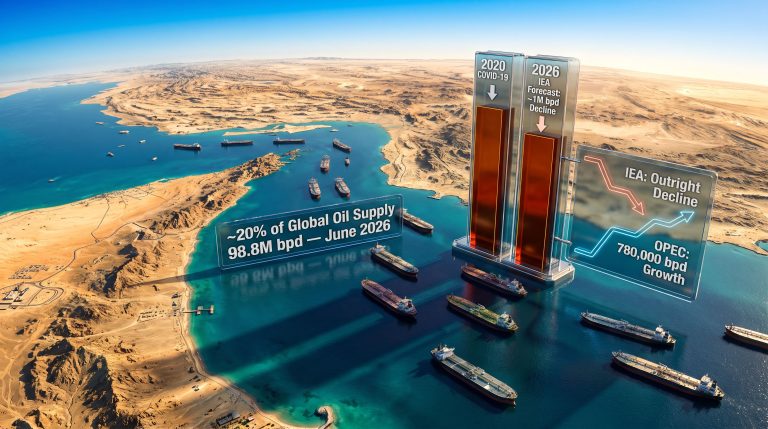
Approximately 20% of the world's traded liquefied natural gas transits through the Strait of Hormuz, a narrow maritime corridor connecting the Persian Gulf to the Gulf of Oman. For import-dependent economies, this geographic concentration creates a systemic vulnerability that no climate policy framework has adequately addressed.
When tensions escalate in the Middle East and LNG flows through Hormuz become constrained, the cascading effects reach power grids thousands of kilometres away within days. Countries that have structured their energy transition strategies around natural gas as a coal replacement bridge fuel are suddenly exposed to the exact risk they were trying to manage.
The asymmetric exposure profile is significant:
- India routes approximately 60% of its LNG imports through the Strait of Hormuz
- South Korea and Japan are among the world's most LNG-dependent economies, with limited domestic alternatives
- Southern European markets face pipeline supply constraints that increase their reliance on LNG tanker routes
Key Insight: The structural compulsion to maintain domestic coal capacity as a supply disruption hedge is not irrational policy backsliding. For heavily import-dependent economies, it represents a logical risk management response to geopolitical realities that international climate frameworks have not yet resolved.
This dynamic creates a genuine tension at the heart of modern energy policy. Furthermore, the energy security trade-offs between decarbonisation objectives are not always complementary, and when they diverge under crisis conditions, grid stability typically wins.
Reading the Data Correctly: What a Coal Comeback Actually Means
Before accepting the framing that coal is experiencing a broad structural renaissance, the data demands careful disaggregation. Analysis of global coal-fired generation data from early 2026 shows the picture is far more nuanced than crisis-driven headlines suggest.
Global fossil fuel power generation actually declined in March 2026, even as select countries increased coal dispatch. Solar and wind output growth offset the majority of fossil fuel shortfalls across key markets. Critically, no coal units globally were returned from retirement or had scheduled decommissioning delayed during this period, according to clean air research findings.
The regional breakdown reveals four distinct patterns of coal re-engagement:
| Region | Coal Trend | Primary Driver | Duration Outlook |
|---|---|---|---|
| India | Rising sharply | Heatwave + LNG price spike | Short-to-medium term |
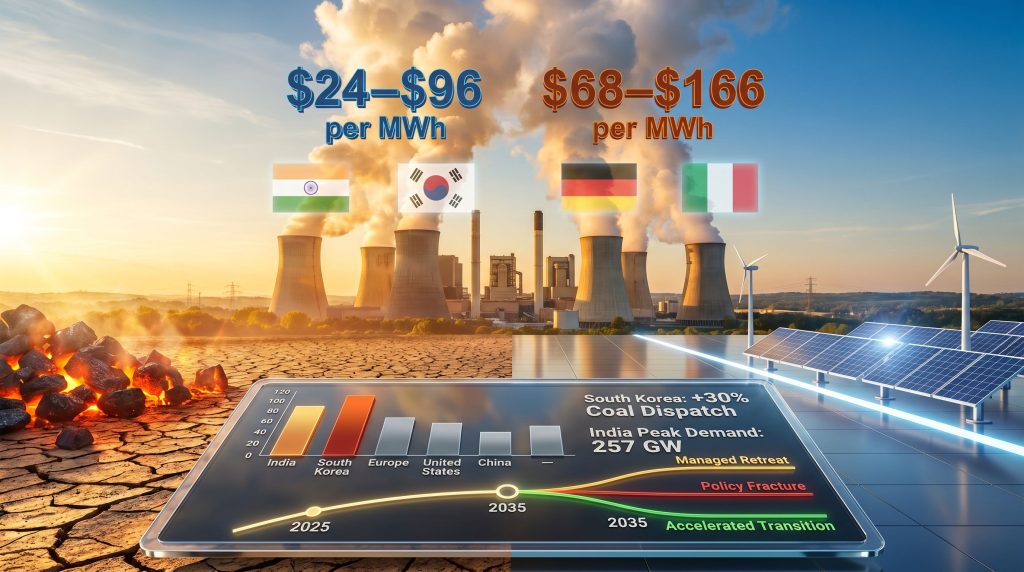
| South Korea | Rising (+30%+ in dispatch) | LNG supply disruption | Short term |
| Germany | Delayed phase-out consideration | Hydrogen-ready plant delays | Medium term |
| Italy | Phase-out extended to 2038 | Geopolitical energy insecurity | Policy-dependent |
| China | Modest coastal increase | Gas-to-coal switching | Short term |
| Europe (broader) | Flat to declining | Renewables offsetting demand | Long term declining |
| United States | Flat to declining | Structural market forces | Long term declining |
The distinction between cyclical fuel switching and structural coal revival matters enormously for investors, policymakers, and climate analysts. In addition, three categories of coal re-engagement exist with fundamentally different long-term implications:
- Existing coal plants operating at higher utilisation rates during price spikes
- Delayed decommissioning of plants scheduled for closure
- Genuine new coal capacity investment
The available evidence in 2026 predominantly reflects category one, with elements of category two in Germany and Italy. Category three remains largely absent from Western markets, which is why characterising the current period as a permanent coal revival overstates the structural shift.
Four Country Archetypes: How Different Economies Are Responding
India: The Emergency Dispatch Model
India's coal resurgence in 2026 represents the convergence of two simultaneous crises. Peak power demand reached an all-time high of 257 GW, driven by temperatures exceeding 45°C across multiple regions during an exceptional heatwave event. Simultaneously, LNG supply disruptions pushed gas prices to levels that made coal the economically rational dispatch choice for grid operators.
Coal-fired plants are supplying upwards of 75% of load during peak demand periods, with government directives ordering imported-coal plants to operate at full capacity. Idle gas-fired infrastructure has been instructed to restart in parallel to prevent grid failure.
What makes India's situation particularly revealing is the structural nature of its exposure. With roughly 60% of LNG imports transiting Hormuz, the country has no short-term alternative to coal when gas supply becomes constrained. This reflects a deeper energy poverty management challenge in a country where affordable electricity access remains a development priority alongside decarbonisation objectives.
South Korea: The Regulatory Rollback Model
South Korea's response involved dismantling a regulatory constraint rather than simply dispatching existing capacity harder. The government abolished the spring-season operational cap that had historically restricted coal plant output to 80% of installed capacity, allowing plants to run at full utilisation during the LNG price spike.
Coal-fired electricity generation consequently increased by more than one-third. Russian coal imports surged 95% in the first quarter of 2026, a geopolitically significant development given Western sanctions postures, though one that reflects the pragmatic supply diversification calculus of energy-starved Asian economies.
Nuclear reactor utilisation was simultaneously ramped to approximately 80% as a complementary grid-stabilisation measure. The strategic question for analysts is whether removing regulatory coal caps during an emergency normalises such interventions and weakens future climate policy credibility.
Germany: The Infrastructure Sequencing Failure
Germany's coal situation represents perhaps the most instructive policy lesson of the current crisis. The country's Coal Exit Law of 2020 mandates a phased shutdown of all coal and lignite power stations with a final deadline of 2038, a timeline widely regarded as technically achievable given the planned replacement pathway.
That pathway involves up to 15 gigawatts of hydrogen-ready gas-fired power capacity, intended to provide dispatchable baseload backup for intermittent renewables. However, the auctioning and construction of this replacement capacity has fallen materially behind schedule.
Chancellor Merz acknowledged in March 2026 that Germany may need to decelerate coal plant closures to protect industrial competitiveness. Coal plants currently held in reserve mode are under consideration for return to active market participation. Industry groups have been pressing lawmakers to enable this transition for months.
Strategic Warning: Germany's predicament illustrates a critical infrastructure sequencing risk that other transition economies face. Retiring dispatchable coal capacity before operationally equivalent replacement infrastructure is commissioned creates grid vulnerability that eventually forces policy reversals. The sequence matters as much as the destination.
Italy: The Legislative Reversal Model
Italy's lower house of parliament voted in early 2026 to extend the national coal phase-out deadline from 2025 to 2038, a 13-year delay representing the most explicit legislative reversal of a climate commitment seen in a major European economy. The four remaining coal stations, primarily operated by Italian utility Enel, have been formally reclassified as strategic emergency assets eligible for reactivation if gas and oil prices remain elevated.
The precedent risk extends beyond Italy's own grid. When legislated phase-out dates are reversed under crisis pressure in one jurisdiction, it signals to markets and investors across other economies that coal retirement timelines are inherently negotiable. This erodes the policy credibility that underpins long-term renewable energy solutions and investment decisions.
The Renewables Counter-Argument: Why the Transition Remains Structurally Intact
Despite the political noise around coal's short-term comeback, the economics of new energy capacity tell a different story. The Levelised Cost of Energy (LCOE) for solar and onshore wind now ranges from approximately $24 to $96 per MWh, compared to $68 to $166 per MWh for new coal plant construction.
This cost differential means that even when coal is being dispatched operationally during price spikes, the economic case for building new coal capacity is weak in most global markets. The marginal cost of running an already-built coal plant can be competitive against spot LNG prices during supply squeezes, but that is a fundamentally different calculation from the capital cost of new coal construction.
Several parallel developments suggest the transition has more structural momentum than crisis headlines imply:
- The International Energy Agency has identified the current oil price shock as a catalyst for a surge in global electric vehicle sales, representing a permanent structural demand shift away from liquid fuels
- European solar capacity additions are accelerating as governments and households seek insulation from fossil fuel price volatility
- Supply shocks that expose LNG import dependency are simultaneously creating the political conditions that accelerate domestic renewable investment
The same geopolitical crisis forcing short-term coal dispatch increases is also making the strongest possible economic and national security argument for domestic renewable energy generation. Countries that frame clean energy deployment as an energy independence strategy rather than purely a climate strategy are finding the political barriers considerably lower. For a broader perspective on these dynamics, the global energy crisis and its influence on coal demand is well documented across energy markets.
Coal's Climate Cost: The Numbers Behind the Emissions Concern
The climate stakes of even short-term coal rebounds are substantial. Coal is estimated to be responsible for approximately 40% of all global greenhouse gas emissions and accounts for roughly 70% of energy-related combustion emission increases. Per unit of energy produced, coal emits approximately twice the CO2 of natural gas, making even temporary substitution climatically costly.
A less widely understood compounding risk is the political economy of coal plant life extension. Emergency dispatch decisions that extend the operational life of high-emission assets do not just produce near-term emissions. They create financial constituencies, workforce dependencies, and regulatory precedents that generate active resistance to future closures.
There is also an asymmetry in transition speed that climate budget arithmetic does not fully capture. Building renewable generation, storage, and grid infrastructure takes years. Restarting a mothballed coal plant takes days. This structural asymmetry creates a persistent bias toward fossil fuel emergency responses whenever transition infrastructure falls behind schedule. The global coal supply challenges further complicate this picture, as market pressures continue to shape how governments respond under duress.
The next major ASX story will hit our subscribers first
Three Futures for Coal Through 2035
The trajectory of coal over the next decade will be shaped by the interaction of geopolitical stability, gas price volatility, and the pace of transition infrastructure deployment. Three plausible scenarios frame the range of outcomes:
Scenario A: The Managed Retreat (Base Case)
Crisis-driven coal rebounds remain short-term and geographically contained. Renewable deployment continues accelerating, G7 coal exit commitments remain nominally intact with some timeline flexibility, and coal's global power generation share continues a gradual structural decline.
Scenario B: The Policy Fracture (Downside Risk)
Prolonged geopolitical instability sustains elevated gas prices for three to five years. Multiple governments follow Italy's legislative extension precedent. New coal investment begins re-emerging in Asia, justified through energy security narratives. The 2030 to 2035 coal exit window becomes effectively non-operational in practice, even if formal policy remains unchanged.
Scenario C: The Accelerated Transition (Upside)
Crisis conditions catalyse emergency-speed investment in domestic renewables, storage, and grid infrastructure. Governments reframe energy independence as a national security imperative indistinguishable from climate policy. LNG supply disruptions permanently shift the LCOE calculus toward domestically generated renewables, and the global energy crisis driving countries back to coal ultimately proves to be the final argument that accelerates rather than delays the transition.
FAQ: Understanding Coal's Role in the 2026 Energy Crisis
Is the global energy crisis causing a permanent coal revival?
The available evidence does not support a permanent or universal coal revival. While specific countries have increased coal utilisation or delayed phase-out timelines, global coal-fired generation remained broadly flat in early 2026, with solar and wind output offsetting fossil fuel shortfalls in many markets. The current pattern reflects crisis-driven emergency dispatch more than structural reinvestment in coal capacity.
Which countries face the highest coal re-engagement risk from LNG disruptions?
Nations routing a majority of LNG imports through the Strait of Hormuz face the highest structural exposure. India, which sources approximately 60% of its LNG through this corridor, South Korea, and Japan carry the greatest vulnerability to supply disruption-driven fuel switching. Furthermore, the broader implications for resource and energy exports add another layer of complexity for commodity-dependent economies navigating these disruptions.
Is coal still cost-competitive with renewables in 2026?
For new capacity construction, coal is generally not cheaper than renewables. Solar and onshore wind LCOE ranges from approximately $24 to $96 per MWh, while new coal plants cost $68 to $166 per MWh to build and operate. However, the marginal dispatch cost of already-built coal infrastructure can be competitive during LNG price spikes, which explains short-term utilisation increases without implying new coal investment economics are viable.
What is the COP26 commitment framework's current status?
More than 40 countries pledged at COP26 to phase down unabated coal power by 2030 to 2040. The G7 subsequently agreed to exit unabated coal between 2030 and 2035, the first such commitment by the world's largest economies. Legislative extensions in Italy and delayed timelines under consideration in Germany represent stress fractures in this framework, but not wholesale abandonment. Research tracking countries phasing out coal fastest suggests meaningful progress continues in several regions, even as others face setbacks. The definitional distinction between unabated coal and coal with carbon capture technology also provides some policy flexibility within the existing commitment architecture.
This article is intended for informational purposes only and does not constitute financial, investment, or policy advice. Forecasts, scenario projections, and cost estimates reflect available data at time of writing and are subject to change. Readers should conduct their own research before making investment or policy decisions.
For ongoing coverage of global coal markets, LNG dynamics, and the energy transition, visit OilPrice.com's Coal coverage.
Want to Know Which ASX Energy and Minerals Discoveries Could Define the Next Decade?
As geopolitical shocks reshape global energy markets and accelerate demand for transition minerals, Discovery Alert's proprietary Discovery IQ model delivers real-time alerts on significant ASX mineral discoveries — turning complex market signals into actionable investment insights the moment they emerge. Explore historic discoveries and their returns to understand the scale of opportunity, then begin your 14-day free trial at Discovery Alert to position yourself ahead of the market.