May 21, 2026
How Does Brazil's Multi-Agency Mining Regulation System Create Unique Challenges?
Sigma Lithium Brazil regulatory news highlights the extraordinary complexity of the country's overlapping federal oversight framework, where multiple agencies can reach contradictory conclusions about identical mining facilities. This multi-layered system distinguishes Brazilian mining governance from traditional single-agency regulatory frameworks found elsewhere in Latin America.
The intersection of technical mining standards with occupational safety mandates generates a distinctive regulatory environment where geotechnical assessments and workplace safety evaluations operate under separate authorities. Consequently, this creates potential for simultaneous clearance and shutdown orders affecting the same operations.
Understanding ANM's Role in Mining Safety Oversight
The ANM conducts comprehensive technical evaluations focusing on geotechnical stability and structural integrity of mining operations. Their assessment methodology includes visual field evaluations, documentation reviews, and anomaly identification specifically targeting destabilisation risks in waste rock structures.
Furthermore, the agency's approach emphasises graduated risk classifications rather than binary safe/unsafe determinations. Recent regulatory actions demonstrate this nuanced approach through detailed technical site visits examining waste rock pile configurations and drainage system adequacy.
During these evaluations, ANM inspectors examine erosion patterns to determine whether observed conditions constitute immediate threats or manageable maintenance issues. This technical focus distinguishes ANM assessments from broader occupational safety evaluations conducted by other agencies.
How Labor Ministry and Mining Agency Jurisdictions Overlap
The Brazilian Labor Ministry operates under separate statutory authority, conducting workplace safety inspections that can result in immediate operational closures based on occupational hazard assessments. However, this creates scenarios where mining operations receive divergent risk classifications from different agencies examining identical facilities.
The jurisdictional overlap becomes particularly complex when Labor Ministry inspectors identify workplace conditions as presenting grave and imminent risk requiring immediate closure. Meanwhile, ANM technical teams may conclude that observed conditions represent regulatory compliance issues rather than imminent safety threats.
Moreover, neither agency's conclusions automatically supersede the other's authority, creating unprecedented regulatory challenges for mining operators.
Key Regulatory Bodies and Their Jurisdictions:
• ANM (Agência Nacional de Mineração): Technical mining operations, geotechnical assessments, structural stability evaluations
• Labor Ministry: Occupational safety enforcement, workplace hazard assessment, immediate closure authority
• State Environmental Agencies: Regional environmental compliance oversight
• Municipal Authorities: Local community impact assessment and zoning compliance
Comparison with Chilean and Argentine Lithium Regulatory Frameworks
Chile's Servicio Nacional de Geología y Minería (SERNAGEOMIN) operates as the primary technical authority for mining safety, with more centralised decision-making authority compared to Brazil's multi-agency model. Similarly, Argentina lithium insights reveal that Argentine mining regulation through the Secretaría de Minería concentrates technical oversight within a single federal framework.
This contrasts with Chile and Argentina's more uniform national standards applied across lithium-producing regions. Brazil's federal system creates additional complexity through state-level regulatory variations, particularly in environmentally sensitive regions like Minas Gerais.
When big ASX news breaks, our subscribers know first
Why Do Waste Rock Management Standards Differ Between Brazilian States?
Brazilian mining regulations operate under a federal framework that allows state-level implementation variations, creating geographic disparities in waste rock management requirements. Minas Gerais, Brazil's primary lithium-producing state, has implemented enhanced safety protocols influenced by regional geological conditions.
These enhanced requirements address regional geological characteristics including clay-rich substrates and high seasonal precipitation patterns that increase erosion potential. The state mandates comprehensive surface water drainage systems for all waste rock facilities.
Minas Gerais Specific Geotechnical Requirements
Minas Gerais state authorities have established stringent waste rock pile specifications that exceed federal minimum standards in several key areas. These standards reflect lessons learned from regional mining incidents and geological risk assessments specific to Minas Gerais terrain.
Furthermore, the state requires specific engineering requirements for slope stability and water management infrastructure. These enhanced protocols demonstrate the complex regulatory landscape that characterises the mining industry evolution occurring throughout South America.
Minas Gerais Enhanced Requirements:
• Surface drainage systems: Mandatory for all waste rock facilities regardless of size
• Slope stability factors: Enhanced safety margins above federal minimums
• Monitoring protocols: Real-time stability monitoring for facilities above specified tonnage thresholds
• Community proximity buffers: Extended safety distances for waste rock piles near populated areas
Federal vs State-Level Safety Protocol Enforcement
The Brazilian federal system allows states to implement more restrictive standards than federal minimums, but prevents states from adopting less stringent requirements. This creates a regulatory floor established by federal agencies like ANM, with state authorities able to enhance safety mandates.
Enforcement mechanisms vary significantly between federal and state levels. Federal ANM inspectors focus on technical compliance with national mining standards, while state environmental agencies emphasise regional environmental protection and community impact mitigation.
Consequently, this dual enforcement system can result in different interpretation of identical technical conditions across jurisdictions.
Impact of Historical Mining Disasters on Current Regulations
Major mining incidents in Minas Gerais, including tailings dam failures in Mariana (2015) and Brumadinho (2019), have influenced current waste rock management protocols throughout the state. While these incidents involved tailings dams rather than waste rock piles, the regulatory response expanded safety oversight to all mining waste management systems.
Current Minas Gerais regulations reflect heightened sensitivity to structural stability issues and community proximity risks. State authorities now require enhanced documentation for waste rock pile design, more frequent stability monitoring, and expanded community consultation processes.
For instance, companies must now navigate complex permitting processes that require comprehensive safety documentation, as detailed in this mining permitting guide.
"Minas Gerais waste rock standards now require safety factors above 1.3 with mandatory surface drainage systems to prevent water accumulation and localised erosion that could compromise structural integrity, reflecting lessons from regional mining incidents."
How Do Regulatory Conflicts Affect Lithium Production Timelines?
Multi-agency regulatory conflicts can extend production disruptions significantly beyond initial safety assessment periods. The Brazilian system's lack of hierarchical authority between ANM technical evaluations and Labor Ministry safety determinations creates potential for prolonged operational uncertainty.
Recent Sigma Lithium Brazil regulatory news demonstrates the complex timeline implications of Brazil's dual-agency system. In January 2026, labour inspectors ordered immediate closure of Brazil's largest lithium operation citing grave and imminent workplace risks.
However, subsequent ANM technical evaluation concluded no imminent destabilisation risk existed in the same facilities, illustrating the regulatory complexity facing mining operators.
Multi-Agency Assessment Processes and Timeline Implications
This type of regulatory conflict typically involves several distinct phases that can significantly impact production schedules:
Phase 1: Initial Assessment (15-30 days)
- Labor Ministry workplace safety inspection
- Immediate closure determination if grave/imminent risk identified
- Company notification and compliance deadline establishment
Phase 2: Technical Review (30-45 days)
- ANM independent technical evaluation
- Geotechnical documentation review and field assessment
- Agency-specific risk determination and recommendations
Phase 3: Resolution Process (60-120 days)
- Multi-agency coordination attempts
- Legal challenge preparation and filing
- Judicial or administrative resolution of conflicting assessments
Legal Challenge Mechanisms Available to Mining Companies
Mining companies facing conflicting agency assessments can pursue multiple legal avenues simultaneously. Administrative appeals within each agency allow companies to present additional technical evidence supporting operational safety.
Meanwhile, federal court injunctions can seek to override agency closure orders based on conflicting technical assessments. The Brazilian legal system provides several escalation paths for regulatory disputes.
• Administrative Review: Direct appeal to issuing agency with additional technical documentation
• Federal Court Injunction: Request for judicial override of agency closure based on conflicting technical evidence
• Supreme Court Appeal: Constitutional challenge to agency authority or procedural compliance
• Inter-agency Mediation: Formal request for federal coordination between conflicting agencies
Production Restart Protocols Following Safety Suspensions
Operational restart procedures vary significantly depending on which agency ordered the initial suspension. Labor Ministry closures typically require demonstration of hazard elimination and workplace safety compliance.
In contrast, ANM technical suspensions focus on geotechnical stability verification and regulatory compliance documentation. Companies must often satisfy both agencies simultaneously even when their initial assessments conflicted.
This creates complex compliance requirements where technical solutions must address both occupational safety concerns and geotechnical stability requirements.
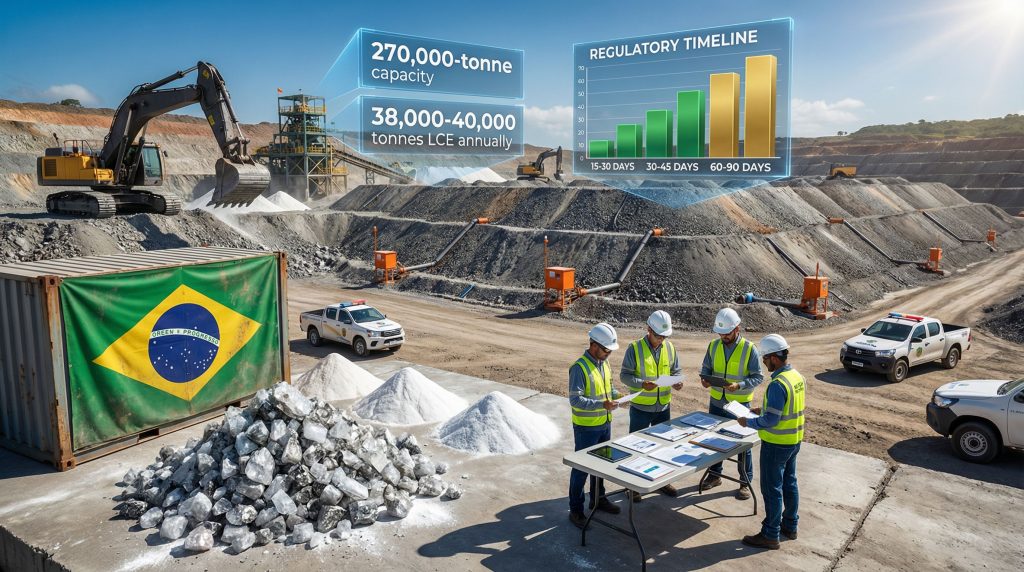
Brazilian Lithium Regulatory Timeline Comparison
| Phase | Typical Duration | Key Stakeholders | Appeal Options |
|---|---|---|---|
| Initial Safety Assessment | 15-30 days | Labor Ministry, ANM | Administrative Review |
| Technical Evaluation | 30-45 days | ANM, State Agencies | Federal Court |
| Resolution Process | 60-90 days | Multiple Agencies | Supreme Court |
What Are the Economic Implications of Temporary Mining Suspensions?
Regulatory suspensions of major lithium operations create cascading economic impacts that extend beyond immediate production losses. Brazil's largest lithium operation, with annual capacity of 270,000 tonnes of lithium concentrate, represents approximately 15% of the country's total lithium production capacity.
Making operational disruptions nationally significant, these suspensions affect global supply chains and market stability. Furthermore, the economic implications extend to employment, local communities, and international investor confidence.
Production Capacity Impact Analysis for 270,000-Tonne Operations
Large-scale lithium operations generate substantial monthly output that compounds quickly during suspension periods. A facility producing 270,000 tonnes annually generates approximately 22,500 tonnes of lithium concentrate monthly.
This represents roughly 3,000-3,200 tonnes of lithium carbonate equivalent (LCE) per month. Extended operational disruptions, such as the approximately four-month suspension period experienced from October 2025 through early February 2026, result in significant foregone production.
This particular suspension potentially eliminated 90,000 tonnes of lithium concentrate output, equivalent to approximately 12,000-13,000 tonnes of LCE.
Monthly Production Loss Calculations:
• Lithium concentrate: 22,500 tonnes per month
• LCE equivalent: 3,000-3,200 tonnes per month
• Four-month suspension impact: ~90,000 tonnes concentrate (12,000+ tonnes LCE)
• Market value impact: Varies with commodity pricing fluctuations during suspension period
Supply Chain Disruption Effects on Global Lithium Markets
Brazilian lithium operations serve critical supply chain functions for global battery manufacturers and electric vehicle producers. Temporary suspensions force downstream customers to identify alternative supply sources, potentially at premium pricing or reduced quality specifications.
The concentration of lithium production among relatively few large-scale operations amplifies individual facility impacts on global supply chains. When Brazil's largest operation experiences extended downtime, battery manufacturers must quickly secure replacement tonnage.
Consequently, this situation mirrors challenges seen at other major operations like the Thacker Pass lithium mine in the United States, where regulatory delays have similarly affected production timelines.
According to Reuters, Brazil's mining regulator has confirmed that waste piles at the country's largest lithium operation pose no immediate risk, providing clarity following months of regulatory uncertainty.
"Brazil's largest lithium operation represents approximately 15% of the country's total lithium concentrate capacity, with annual output equivalent to 38,000-40,000 tonnes of lithium carbonate equivalent (LCE)."
Investor Confidence Metrics During Regulatory Uncertainty
Regulatory conflicts create investor uncertainty that extends beyond individual company stock performance to broader sector capital allocation decisions. Conflicting agency assessments raise questions about regulatory predictability and operational risk management in Brazil's lithium sector.
International lithium investors closely monitor Brazilian regulatory developments as indicators of country-level investment risk. Extended regulatory disputes or unclear resolution procedures can influence capital deployment decisions for expansion projects.
Moreover, these concerns affect new operation development throughout Brazil, particularly as the country competes with established producers in Chile and Australia.
Investment Impact Factors:
• Regulatory predictability: Clarity of future compliance requirements and agency coordination
• Resolution timeline certainty: Typical duration for resolving multi-agency conflicts
• Legal precedent establishment: Court decisions affecting future regulatory dispute resolution
• Operational risk quantification: Insurance and financing cost implications of regulatory uncertainty
How Do Geotechnical Safety Standards Apply to Lithium Mining Operations?
Brazilian geotechnical safety standards for lithium mining operations emphasise structural stability verification through comprehensive engineering analysis rather than visual inspection alone. These standards require detailed documentation of waste rock pile design, stability calculations, and ongoing monitoring protocols.
The standards ensure long-term structural integrity while addressing the specific challenges of lithium extraction operations. Furthermore, recent developments in Australia lithium innovations provide comparative frameworks for Brazilian regulatory evolution.
Waste Rock Pile Stability Requirements and Safety Factors
Brazilian mining regulations mandate minimum safety factors above 1.3 for waste rock pile design, with enhanced requirements in geologically sensitive regions or areas with high precipitation patterns. These safety factors account for multiple loading conditions including saturated soil conditions.
Engineering calculations must demonstrate adequate stability under various scenarios including heavy rainfall infiltration, groundwater level fluctuations, and potential seismic loading. The safety factor requirement provides engineering margin above theoretical failure conditions.
This accounts for design uncertainties and material property variations that could affect long-term stability.
Safety Factor Applications:
• Static conditions: Minimum 1.3 safety factor under normal loading
• Saturated conditions: Enhanced safety factors during peak rainfall periods
• Seismic loading: Additional safety margin for earthquake-prone regions
• Long-term stability: Settlement and material degradation considerations
Surface Water Drainage System Mandates
Mandatory surface water drainage systems serve as primary protection against water accumulation that could compromise waste rock pile stability. These systems must intercept surface runoff before it contacts waste rock materials.
Additionally, they must channel water around pile perimeters to prevent infiltration and potential erosion. Drainage system design requirements address both immediate water management and long-term erosion prevention.
Systems must handle design storm events while maintaining structural integrity over operational timeframes extending multiple decades beyond active mining completion.
Community Risk Assessment Protocols
Brazilian regulations require enhanced safety protocols for waste rock facilities located near populated areas, schools, or other community infrastructure. These protocols include expanded safety buffers, more frequent monitoring requirements, and community notification procedures.
Community risk assessments must evaluate potential impact zones under various failure scenarios, even when such failures are considered highly unlikely under normal design conditions. This analysis establishes emergency response procedures and evacuation protocols.
Erosion vs Structural Failure: Understanding the Technical Distinctions
Brazilian mining regulators distinguish between localised erosion processes and structural stability threats when evaluating waste rock pile conditions. Localised erosion may create surface irregularities or small-scale instability without indicating broader structural failure risk.
Technical assessments focus on identifying whether observed erosion represents surface-level maintenance issues or indicators of deeper structural problems. This distinction affects regulatory response timing and severity.
The January 2026 regulatory conflict involving Brazil's largest lithium operation illustrated this technical distinction. Labor inspectors characterised observed conditions as structural rupture risk while mining regulators classified the same conditions as localised erosion requiring drainage system improvements.
What Role Does Technical Documentation Play in Regulatory Compliance?
Comprehensive technical documentation serves as the foundation for regulatory compliance verification in Brazilian lithium mining operations. Mining companies must maintain detailed engineering records, monitoring data, and safety analysis documentation.
These records must demonstrate ongoing compliance with both federal and state safety requirements. Moreover, documentation quality significantly influences regulatory assessment outcomes and operational continuity.
Required Geotechnical Reports and Monitoring Systems
Brazilian mining regulations mandate regular geotechnical reporting that documents waste rock pile performance, stability monitoring results, and any observed changes in structural conditions. These reports must be prepared by qualified engineering professionals.
Furthermore, reports must be submitted according to prescribed schedules determined by facility size and risk classification. Monitoring systems must provide continuous data collection regarding waste rock pile stability, groundwater conditions, and surface drainage system performance.
Real-time monitoring capabilities enable early detection of developing stability issues before they progress to emergency conditions requiring immediate intervention.
Required Documentation Categories:
• Design calculations: Original engineering analysis supporting waste rock pile construction
• Monitoring data: Continuous stability and performance measurements
• Inspection reports: Regular professional assessments of structural conditions
• Maintenance records: Documentation of corrective measures and system improvements
Visual Inspection Protocols vs Comprehensive Engineering Analysis
Brazilian regulatory agencies employ different assessment methodologies depending on inspection purpose and available timeframes. Visual field evaluations provide rapid assessment capabilities for emergency response situations.
However, comprehensive engineering analysis offers detailed technical evaluation for long-term safety verification. Visual inspections focus on identifying obvious indicators of structural distress, drainage system functionality, and general facility maintenance conditions.
These inspections can be conducted rapidly but may not detect subsurface instability or gradual structural degradation not yet visible at surface levels. Comprehensive engineering analysis involves detailed technical review of design calculations, monitoring data trends, and materials testing results.
Documentation Standards for Operational Restart Approvals
Operational restart following regulatory suspension requires extensive documentation demonstrating correction of identified deficiencies and verification of ongoing safety compliance. Companies must provide evidence that all regulatory concerns have been addressed through appropriate engineering solutions.
Additionally, companies must demonstrate management system improvements that prevent recurrence of compliance issues. Restart documentation typically includes updated geotechnical analysis, corrective measure completion verification, and enhanced monitoring protocol implementation.
Restart Documentation Requirements:
• Corrective measure completion: Verification of required safety improvements
• Updated safety analysis: Current assessment of facility stability and risk levels
• Enhanced monitoring protocols: Improved systems for ongoing safety verification
• Management system updates: Procedural improvements to prevent future compliance issues
The next major ASX story will hit our subscribers first
How Do Mining Companies Navigate Conflicting Regulatory Assessments?
Mining companies facing contradictory regulatory assessments must develop comprehensive legal and technical strategies that address each agency's specific concerns while maintaining operational viability. This requires simultaneous engagement with multiple regulatory bodies using tailored approaches.
Recent Sigma Lithium Brazil regulatory news demonstrates the complexity of managing conflicting agency determinations while pursuing legal remedies. Companies must balance aggressive legal challenges against maintaining cooperative relationships with regulatory agencies.
Strategic Legal Response Options During Multi-Agency Reviews
Companies experiencing conflicting agency assessments can pursue parallel legal strategies targeting different aspects of regulatory authority. Administrative appeals allow direct engagement with individual agencies using technical evidence specific to each agency's evaluation criteria.
Meanwhile, judicial challenges address broader procedural or constitutional issues affecting regulatory authority. Effective legal strategy requires careful timing coordination to avoid prejudicing one legal avenue while pursuing others.
Multi-Track Legal Strategy Components:
• Administrative appeals: Direct agency engagement with additional technical evidence
• Judicial injunctions: Court orders overriding agency closure decisions
• Inter-agency coordination requests: Formal requests for federal agency coordination
• Constitutional challenges: Challenges to agency authority or due process compliance
Evidence Preparation for Administrative and Judicial Appeals
Successful appeals require comprehensive technical evidence packages that address specific deficiencies identified by each regulatory agency. Evidence preparation must account for different technical standards and evaluation criteria used by different agencies.
Potentially, this requires multiple technical analyses of identical facility conditions. Technical evidence effectiveness depends on engaging qualified experts familiar with Brazilian mining regulations and agency-specific evaluation procedures.
Companies must also prepare evidence addressing procedural compliance issues, including demonstration of good faith regulatory cooperation and prompt response to agency requests.
According to Mining.com, Brazil's mining regulator has determined that waste facilities at major lithium operations do not present imminent destabilisation risks, providing crucial technical evidence for ongoing regulatory discussions.
Stakeholder Communication During Regulatory Disputes
Regulatory disputes affecting major mining operations require careful stakeholder communication strategies that maintain investor confidence while avoiding prejudicial statements. Companies must balance transparency obligations with legal strategy preservation.
Communication strategies must address diverse stakeholder groups including investors, local communities, regulatory agencies, and supply chain partners. Each stakeholder group requires tailored messaging addressing their specific concerns and information needs.
Regulatory Assessment Outcomes Matrix
| Agency | Risk Classification | Recommended Action | Timeline Impact |
|---|---|---|---|
| Labor Ministry | Grave/Imminent | Immediate Closure | 60-90 days |
| ANM | No Immediate Risk | Corrective Measures | 30-45 days |
| Combined Assessment | Varies | Negotiated Resolution | 90-120 days |
What Are the Broader Implications for Brazil's Lithium Industry Development?
Brazil's lithium regulatory framework evolution will significantly influence the country's position in global critical minerals supply chains. Current regulatory conflicts and resolution mechanisms establish precedents that will guide future mining project development.
Furthermore, these developments affect international investment allocation decisions throughout South America's lithium sector. The resolution of current Sigma Lithium Brazil regulatory news will create lasting impacts on sector development.
Regulatory Precedent Setting for Future Operations
Current regulatory disputes create legal precedents that will influence future mining operations throughout Brazil's lithium-producing regions. Court decisions and inter-agency coordination mechanisms developed through current conflicts will establish standard procedures.
The resolution of multi-agency conflicts demonstrates Brazilian regulatory system maturity and predictability to international investors evaluating long-term capital commitments. Effective conflict resolution mechanisms enhance regulatory certainty.
Brazilian lithium companies and regulators have opportunities to establish global best practices for managing complex regulatory environments involving multiple oversight agencies with overlapping jurisdiction.
International Investment Confidence in Brazilian Mining Sector
Brazil's lithium regulatory framework directly affects international investor perceptions of country-level mining investment risks. Regulatory predictability and efficient dispute resolution mechanisms influence capital allocation decisions for both individual project development.
Additionally, these factors affect broader Brazilian mining sector investment. International lithium market participants closely monitor Brazilian regulatory developments as indicators of supply chain reliability and operational risk management.
Effective regulatory frameworks enhance Brazil's competitive position against established lithium suppliers in Chile, Australia, and Argentina. Current regulatory conflicts provide opportunities for Brazil to demonstrate sophisticated mining governance capabilities.
Comparison with Global Lithium Regulatory Best Practices
Brazilian lithium regulation can benefit from comparative analysis with established mining jurisdictions including Australia's Department of Industry, Science, Energy and Resources oversight. Chile's National Geology and Mining Service coordination with environmental agencies provides another model.
Canada's provincial mining regulation systems offer additional frameworks for consideration. International best practices emphasise integrated regulatory frameworks that coordinate technical mining oversight with environmental protection and occupational safety requirements.
Brazil's multi-agency system offers potential advantages through specialised expertise while requiring enhanced coordination mechanisms.
Long-term Strategic Planning Considerations for Mining Companies
Mining companies developing Brazilian lithium projects must incorporate regulatory complexity into long-term strategic planning, including operational risk management, capital allocation decisions, and supply chain reliability commitments.
Strategic planning considerations include:
• Regulatory compliance integration: Comprehensive management systems addressing all applicable agencies
• Risk mitigation strategies: Technical and legal contingency planning for regulatory disputes
• Stakeholder relationship management: Proactive engagement with all regulatory agencies and community groups
• Operational flexibility: Design and operational procedures accommodating regulatory uncertainty
"This regulatory situation occurs as Brazil positions itself as a key player in the global lithium supply chain, with multiple projects in development across Minas Gerais and neighbouring states."
Frequently Asked Questions About Brazilian Lithium Mining Regulations
What triggers a mining safety suspension in Brazil?
Mining safety suspensions in Brazil can be triggered by either ANM technical assessments identifying geotechnical stability risks or Labor Ministry inspections determining workplace safety hazards. Each agency operates under independent statutory authority enabling suspension decisions based on their specific evaluation criteria.
Labor Ministry suspensions typically focus on immediate workplace safety threats, while ANM suspensions address technical mining safety compliance and structural integrity concerns. Companies may face suspension by one agency while receiving clearance from another.
How long do regulatory appeals typically take?
Brazilian regulatory appeals follow structured timelines varying by appeal type and agency involved. Administrative reviews within individual agencies typically require 30-60 days for initial response, while federal court injunctions may be granted within 15-30 days.
However, these injunctions require 60-120 days for final resolution. Supreme Court appeals involving constitutional challenges or inter-agency jurisdiction disputes can extend 6-18 months depending on case complexity and court scheduling.
Can operations continue during safety assessments?
Operational continuity during safety assessments depends on which agency initiated the assessment and their preliminary risk determination. Labor Ministry suspensions typically mandate immediate cessation of operations pending hazard resolution.
In contrast, ANM technical evaluations may allow continued operations with enhanced monitoring requirements. Companies receiving conflicting agency assessments face complex operational decisions regarding continued production.
What documentation is required for operational restart?
Operational restart documentation requirements depend on the specific deficiencies identified during regulatory assessment and the agencies involved in suspension decisions. Companies must typically provide corrective action completion verification, updated safety analysis, and enhanced monitoring protocol implementation.
ANM restart approvals focus on technical compliance demonstration including geotechnical stability verification and regulatory compliance documentation. Labor Ministry restart approvals emphasise workplace safety hazard elimination and occupational safety protocol implementation.
Future Outlook: Regulatory Evolution in Brazil's Critical Minerals Sector
Brazil's lithium regulatory framework continues evolving as the country establishes its position in global critical minerals supply chains. Current regulatory challenges provide opportunities for framework refinement that could enhance both mining safety outcomes and operational predictability.
The ongoing Sigma Lithium Brazil regulatory news situation serves as a catalyst for broader regulatory system improvements. Furthermore, these developments influence the broader mining industry evolution occurring throughout South America.
Anticipated Changes to Mining Safety Protocols
Brazilian mining safety protocols are likely to evolve toward more integrated assessment procedures that coordinate technical mining oversight with occupational safety evaluation. This integration could reduce conflicting agency assessments while maintaining specialised expertise.
Future protocol development may emphasise preventive safety management through enhanced monitoring requirements and predictive analysis capabilities. Real-time monitoring systems and artificial intelligence applications could enable early detection of developing safety concerns.
Advanced geotechnical monitoring technologies, including satellite-based stability assessment and automated drainage system monitoring, may become mandatory for large-scale operations or facilities located near populated areas.
Integration of Environmental and Safety Oversight Systems
Brazilian regulatory agencies are exploring enhanced coordination mechanisms that streamline multi-agency oversight while preserving specialised technical expertise. Integrated assessment procedures could reduce regulatory uncertainty while maintaining comprehensive safety and environmental protection standards.
Future regulatory development may establish formal inter-agency coordination protocols that require joint assessment procedures for major mining operations. These protocols could include joint field evaluations, coordinated technical analysis, and unified regulatory response procedures.
Environmental impact assessment integration with mining safety evaluation could provide more comprehensive facility oversight while reducing duplicative assessment procedures that create regulatory uncertainty.
Strategic Recommendations for Mining Company Compliance Programs
Mining companies operating in Brazil's evolving regulatory environment should develop comprehensive compliance programs that address all applicable oversight agencies through integrated management systems. These programs should emphasise proactive safety management rather than reactive compliance response.
Recommended Compliance Program Elements:
• Integrated monitoring systems: Comprehensive data collection addressing all regulatory agency requirements
• Proactive maintenance programs: Preventive measures addressing potential safety concerns before regulatory detection
• Stakeholder engagement protocols: Regular communication with all oversight agencies and community groups
• Emergency response procedures: Rapid response capabilities for addressing regulatory concerns or safety incidents
Companies should invest in advanced monitoring technologies and predictive analysis capabilities that enable early detection of developing safety or environmental concerns. Proactive identification and resolution of potential issues can prevent regulatory conflicts and operational disruptions.
Disclaimer: This analysis is based on available information regarding Brazilian mining regulations and recent regulatory developments. Regulatory requirements and procedures may change, and companies should consult with qualified Brazilian legal and technical advisors for current compliance guidance. The information presented should not be considered legal advice or regulatory compliance guidance for specific operations or circumstances.
Looking to Capitalise on South American Lithium Opportunities?
Discovery Alert's proprietary Discovery IQ model provides real-time alerts on significant ASX mineral discoveries across all commodities, including critical minerals like lithium. With Brazilian regulatory complexities creating market volatility and opportunities, subscribers gain instant access to actionable insights that help identify emerging discoveries ahead of the broader market. Begin your 14-day free trial today to position yourself advantageously in the evolving critical minerals landscape.