May 14, 2026
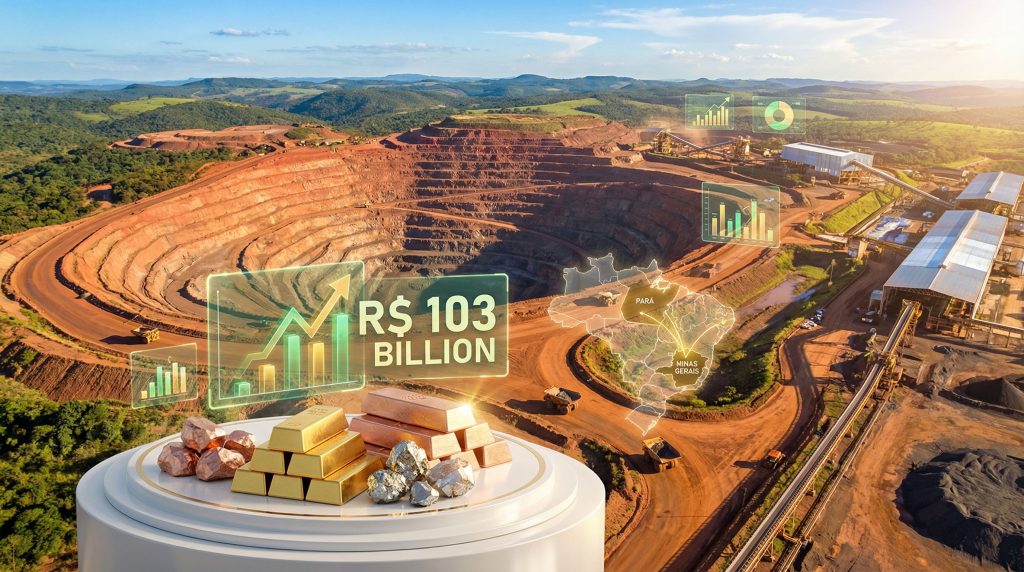
Global commodity markets continue to reshape economic landscapes across emerging economies, with resource-rich nations experiencing dramatic shifts in export dynamics and industrial revenue streams. The intersection of international trade patterns, currency fluctuations, and supply chain optimization creates complex revenue generation mechanisms that extend far beyond simple extraction economics. Understanding these multifaceted drivers requires examining how production efficiency gains, pricing power variations, and export market positioning influence overall sector performance.
What Drives Brazil Mining Sector Revenue Increase in Modern Markets?
The Brazilian mining industry has demonstrated resilience through sophisticated revenue optimization strategies that leverage both volume growth and value enhancement. During the first quarter of 2026, the Brazil mining sector revenue increase achieved a 77.9 billion reais ($15.6 billion) revenue milestone, representing a 6% year-over-year increase according to Brazil's mining sector posted higher Q1 revenue, as reported by the Brazilian Mining Industry Association (Ibram). This growth pattern reflects the industry's ability to navigate complex global market dynamics while maintaining operational efficiency.
Export performance metrics reveal the sophisticated nature of revenue generation in modern mining operations. Sector exports reached 87.9 million metric tons in Q1 2026, with only a modest 0.9% volume increase year-over-year. However, export revenues surged by 21.5% to $11.4 billion, demonstrating how pricing optimization and currency dynamics can amplify revenue growth beyond simple tonnage increases.
Commodity Price Dynamics and Market Forces
The divergence between volume growth and revenue expansion illustrates the critical role of commodity pricing in sector performance. When export volumes increase minimally while revenues surge dramatically, this typically indicates favorable price movements across key commodity categories or enhanced export pricing strategies. The 21.5% export revenue growth against 0.9% volume growth suggests that pricing power and market positioning played dominant roles in Q1 2026 performance.
Currency exchange rate effects add another layer of complexity to revenue analysis. With the Brazilian real trading at approximately 4.9947 per US dollar during the reporting period, export competitiveness benefits from both favorable exchange rates and improved international demand conditions. Furthermore, understanding iron ore price trends provides valuable context for Brazil's mining sector revenue increase.
Production Volume vs. Value Analysis
Modern mining operations increasingly focus on value optimization rather than pure volume maximization. The Q1 2026 data demonstrates this strategic shift, where modest production increases generated substantial revenue growth through enhanced market positioning and operational efficiency improvements.
Infrastructure investments in processing capabilities, transportation networks, and export facilities enable mining companies to capture greater value from existing production volumes. This approach reduces environmental impact while maximising economic returns, aligning with global sustainability trends and investor expectations. Additionally, market volatility hedging strategies have become increasingly important for managing revenue fluctuations.
When big ASX news breaks, our subscribers know first
How Do Different Commodities Contribute to Brazil Mining Revenue Increase?
Commodity diversification remains a cornerstone of Brazilian mining sector strength, with different mineral categories contributing varying revenue streams and growth trajectories. The sector's revenue composition reflects both traditional strengths and emerging opportunities in global commodity markets.
Iron Ore Market Dominance and Challenges
Iron ore continues to represent the largest single revenue contributor, generating 37.5 billion reais and accounting for 48% of total sector revenue in Q1 2026. Despite this dominance, iron ore revenues declined 3% year-over-year, highlighting the complex dynamics affecting traditional commodity markets.
Iron Ore Performance Metrics:
| Metric | Q1 2026 Value | Year-over-Year Change |
|---|---|---|
| Export Volume | 84.8 million tons | +0.8% |
| Export Value | $6.2 billion | +2.4% |
| Total Revenue | 37.5 billion reais | -3.0% |
| Sector Share | 48% | Declining |
The iron ore market faces unique challenges from global competition, particularly from Australian and West African suppliers who benefit from different cost structures and logistical advantages. Brazilian iron ore operations must continuously improve efficiency and product quality to maintain market share in an increasingly competitive environment.
Price volatility remains a persistent challenge for iron ore producers, with global steel demand patterns, infrastructure spending cycles, and geopolitical tensions creating unpredictable revenue swings. The modest export volume growth combined with revenue decline suggests pricing pressures that may persist across future quarters. Moreover, iron ore demand insights indicate how global demand patterns continue evolving.
Emerging Growth Opportunities Beyond Iron Ore
While iron ore data dominates available statistics, Brazil's mining sector encompasses numerous other commodities that contribute to revenue diversification. The sector includes operations across copper, gold, manganese, and niobium, though specific revenue breakdowns for these commodities require additional industry reporting.
The strategic importance of critical minerals for energy transition technologies creates new revenue opportunities for Brazilian mining companies. Minerals essential for battery production, renewable energy infrastructure, and electric vehicle manufacturing command premium pricing and enjoy growing global demand.
Which Export Markets Drive Brazil Mining Sector Revenue Increase?
International trade relationships form the backbone of Brazilian mining revenue generation, with export markets providing the primary avenue for value realisation. The $11.4 billion in Q1 2026 export revenues demonstrates the sector's deep integration with global commodity markets and supply chains.
Global Trade Dynamics and Revenue Impact
Export revenue growth of 21.5% significantly outpaced volume growth, indicating favourable international market conditions and improved pricing power for Brazilian commodities. This performance suggests strong global demand for Brazilian mineral products and effective market positioning by domestic producers.
The substantial gap between revenue growth and volume growth indicates that pricing power and market positioning drove the majority of Q1 2026 export performance improvements.
Trade route optimisation and logistics efficiency improvements enable Brazilian mining companies to capture greater value from international sales. Investments in port infrastructure, railway capacity, and shipping arrangements reduce transportation costs while improving delivery reliability to key markets. However, trade impact analysis reveals how geopolitical factors can significantly affect trade flows.
Export Volume vs. Value Optimisation
The Q1 2026 export data reveals sophisticated revenue optimisation strategies:
- Total Export Volume: 87.9 million metric tons (+0.9% YoY)
- Total Export Revenue: $11.4 billion (+21.5% YoY)
- Implied Average Price: Approximately $130 per metric ton
- Price Growth: Roughly 20.5% year-over-year
This pricing performance indicates either significant commodity price appreciation, favourable product mix shifts toward higher-value minerals, or enhanced export pricing strategies. The ability to generate substantial revenue growth from minimal volume increases demonstrates operational sophistication and market positioning strength.
How Do Major Brazilian Mining Companies Contribute to Sector Revenue?
Industry consolidation around major players provides stability and operational efficiency that supports sustained revenue growth. The Brazilian Mining Industry Association (Ibram) represents key companies including Vale, Gerdau, ArcelorMittal, and Mosaic, which collectively drive significant portions of sector performance.
Corporate Strategy and Market Positioning
These major operators benefit from economies of scale, advanced technology implementation, and diversified commodity portfolios that reduce revenue volatility. Their operational capabilities enable Brazil to maintain competitive positioning in global commodity markets despite cost pressures and regulatory challenges.
Integrated operations across mining, processing, and logistics provide these companies with greater value capture opportunities compared to smaller, single-asset operators. This vertical integration supports the revenue optimisation strategies evident in Q1 2026 performance data. Furthermore, the BHP strategic pivot demonstrates how major miners are adapting their approaches to changing market conditions.
Investment in Operational Excellence
Major mining companies drive sector innovation through investments in:
- Advanced extraction technologies
- Environmental compliance systems
- Digital optimisation platforms
- Supply chain integration capabilities
- Workforce development programmes
These investments support long-term revenue sustainability while addressing environmental and social governance expectations from international stakeholders and investors.
What Role Does Currency Exchange Play in Revenue Growth?
Currency dynamics significantly influence Brazilian mining sector revenue, particularly given the export-oriented nature of operations. The 4.9947 reais per US dollar exchange rate during Q1 2026 affected competitiveness and revenue translation between domestic and international markets.
Exchange Rate Impact on Export Competitiveness
Favourable exchange rate positioning enhances Brazilian commodity competitiveness in international markets by reducing effective costs when translated to foreign currencies. This competitive advantage supports the pricing power evident in Q1 2026 export performance.
Real-denominated revenue figures provide insight into domestic economic impact, while dollar-denominated export revenues reflect international market positioning. The divergence between these metrics often indicates currency effects on overall sector performance.
How Do Infrastructure Investments Support Revenue Expansion?
Transportation infrastructure quality directly affects mining sector revenue potential through cost optimisation and market access improvements. Brazilian mining operations rely on extensive railway networks, port facilities, and processing plants to deliver commodities to international markets efficiently.
Logistics Network Optimisation
Investment in transportation corridors reduces the delivered cost of Brazilian commodities, improving competitiveness and enabling higher net revenues. Port capacity expansions and railway efficiency improvements support the volume growth evident in Q1 2026 performance.
Modern logistics networks also provide flexibility to respond to changing market conditions, allowing mining companies to optimise delivery schedules and target high-value market opportunities as they emerge.
Technology Integration and Efficiency Gains
Digital technologies enable mining operations to optimise production scheduling, equipment utilisation, and quality control processes. These efficiency improvements support the revenue growth strategies demonstrated in recent sector performance.
Automation and data analytics help mining companies reduce operational costs while maintaining or improving production volumes, contributing to the favourable revenue-to-volume ratios observed in Q1 2026 data.
The next major ASX story will hit our subscribers first
What Economic Indicators Suggest Future Revenue Trends?
Forward-looking analysis of Brazilian mining sector revenue requires examining global economic trends, commodity demand forecasts, and domestic policy developments that may influence future performance. Current market positioning provides a foundation for sustained growth, though various risk factors warrant consideration.
Global Demand Pattern Analysis
International infrastructure spending, industrial production growth, and energy transition investments drive demand for Brazilian mineral products. The 21.5% export revenue growth in Q1 2026 suggests robust international market conditions that may support continued sector expansion.
Emerging market industrialisation and developed economy infrastructure modernisation create sustained demand for construction materials, manufacturing inputs, and energy storage materials produced by Brazilian mining operations. According to Brazil's gold and copper drive growth, diversification across precious metals and industrial commodities strengthens the sector's resilience.
Risk Factors and Market Volatility
Commodity markets face inherent volatility from geopolitical tensions, economic cycles, and supply disruptions that can significantly impact revenue predictability. The iron ore revenue decline of 3% year-over-year demonstrates how individual commodity challenges can affect overall sector performance.
Key Risk Considerations:
- Global economic growth variations affecting commodity demand
- International trade policy changes impacting export markets
- Currency fluctuation effects on competitiveness and revenue translation
- Environmental regulation compliance costs and operational restrictions
- Competition from other major commodity-producing nations
Frequently Asked Questions About Brazil Mining Sector Revenue Increase
Which companies drive the majority of Brazil's mining revenue?
The Brazilian Mining Industry Association (Ibram) represents major sector participants including Vale, Gerdau, ArcelorMittal, and Mosaic. These companies collectively contribute significant portions of the 77.9 billion reais in Q1 2026 sector revenue through their diversified operations and international market presence.
Vale, as Brazil's largest mining company, plays a particularly important role in iron ore production and export, contributing substantially to the 37.5 billion reais in iron ore revenue that represents 48% of total sector revenue.
How does Brazil's mining performance compare to other major producers?
Brazilian mining operations compete globally with Australian iron ore producers, Chilean copper companies, and other major commodity suppliers. The 6% revenue growth achieved in Q1 2026 demonstrates competitive positioning, though comparative performance analysis requires additional market data for complete assessment.
Brazil's advantages include large-scale operations, established infrastructure networks, and diverse commodity portfolios that provide revenue stability across different market cycles.
What percentage of Brazil's GDP comes from mining activities?
Mining sector contribution to Brazilian GDP reflects both direct revenue generation and indirect economic multiplier effects through employment, supplier relationships, and tax contributions. The 77.9 billion reais in Q1 2026 revenue represents substantial economic activity, though specific GDP percentage calculations require additional macroeconomic data.
How do mining revenues affect Brazil's trade balance?
Mining exports contribute significantly to Brazil's trade balance through the $11.4 billion in Q1 2026 export revenues. This export performance helps offset imports and supports currency stability, contributing to overall economic balance and international competitiveness.
The 21.5% growth in export revenues demonstrates the sector's increasing contribution to Brazil's international trade position and foreign exchange earnings.
Conclusion: Brazil Mining Sector Revenue Trajectory and Strategic Implications
The Brazilian mining sector's Q1 2026 performance demonstrates sophisticated revenue optimisation capabilities that extend beyond simple volume production. The 6% revenue growth to 77.9 billion reais reflects successful adaptation to global market dynamics, operational efficiency improvements, and strategic positioning in international commodity markets.
Key Performance Indicators and Growth Sustainability
Revenue growth sustainability depends on maintaining the favourable dynamics evident in Q1 2026 performance:
- Export revenue growth (21.5%) significantly exceeding volume growth (0.9%)
- Pricing power demonstrated across major commodity categories
- Operational efficiency enabling value optimisation from existing production capacity
- Market positioning supporting competitive advantage in international trade
The divergence between iron ore performance (-3% revenue decline) and overall sector growth (+6%) indicates successful revenue diversification across multiple commodity categories and market segments.
Strategic Positioning for Long-Term Growth
Brazilian mining operations benefit from several competitive advantages that support sustained revenue expansion:
Natural Resource Advantages:
- Large-scale mineral deposits across multiple commodity categories
- Established production infrastructure and processing capabilities
- Experienced workforce and technical expertise
- Strategic geographic positioning for key export markets
Operational Excellence Factors:
- Technology integration improving efficiency and cost control
- Environmental compliance systems supporting long-term social licence
- Diversified commodity portfolios reducing revenue volatility
- Infrastructure investments supporting export competitiveness
The $11.4 billion in Q1 2026 export revenues demonstrates Brazil's continued relevance in global commodity markets, while the substantial revenue growth rates indicate potential for expanded market share and enhanced profitability.
Future revenue growth will likely depend on maintaining operational excellence, adapting to evolving environmental requirements, and capitalising on emerging opportunities in critical minerals for energy transition technologies. The sector's demonstrated ability to optimise revenue from existing production capacity provides a strong foundation for sustained growth in dynamic global markets.
Disclaimer: This analysis is based on industry association data and market observations. Mining sector investments involve significant risks including commodity price volatility, operational challenges, and regulatory changes. Past performance does not guarantee future results.
Looking to Capitalise on Brazil's Mining Sector Growth?
Discovery Alert's proprietary Discovery IQ model delivers real-time alerts on significant ASX mineral discoveries, instantly empowering subscribers to identify actionable opportunities ahead of the broader market. Begin your 14-day free trial today with Discovery Alert and secure your market-leading advantage whilst global commodity markets continue reshaping investment landscapes.