June 13, 2026
Brazil's offshore energy infrastructure operates within complex technical frameworks where ultra-deepwater developments represent the pinnacle of engineering achievement. The integration of advanced drilling technologies with massive processing facilities creates operational challenges that demand sophisticated risk management strategies. When examining major deepwater gas projects, the convergence of geological complexity, capital intensity, and technical innovation reveals insights into the evolving economics of offshore energy development, particularly as the industry addresses growing energy transition challenges.
Ultra-Deepwater Engineering Specifications and Technical Architecture
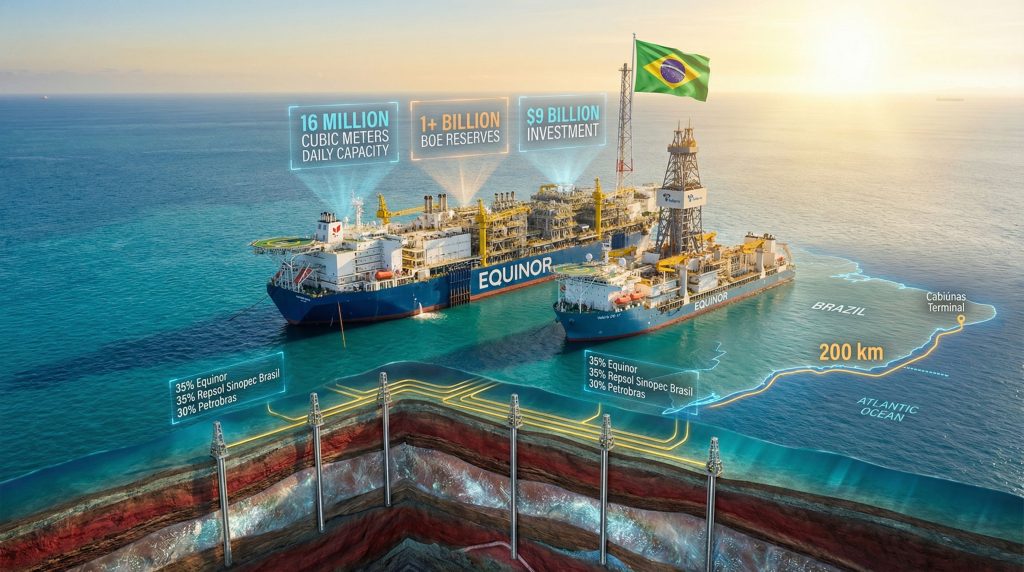
The Equinor Raia gas project in Campos Basin operates at unprecedented technical specifications that demonstrate the advanced capabilities required for Brazil's pre-salt formations. Operating at 2,900-meter water depths, the project utilizes the Valaris DS-17, a seventh-generation ultra-deepwater drillship capable of operations exceeding 3,000-meter depths.
The six-well drilling campaign initiated on March 24, 2026, employs specialized equipment designed for Brazil's challenging pre-salt geological environment. These formations, lying beneath approximately 2,000 meters of salt layers, require high-pressure/high-temperature well design considerations and advanced wellbore stability management systems.
Key technical specifications include:
- Advanced dynamic positioning systems for precise well placement
- Dual active heave compensation systems for drilling operations
- High-capacity mud systems for ultra-deepwater well control
- Extended reach drilling capabilities for optimal reservoir contact
- Real-time pressure management and formation evaluation systems
The FPSO integration architecture operates through parallel construction workflows, where offshore drilling activities proceed simultaneously with floating production unit fabrication and commissioning. This approach compresses development timelines while managing the complex logistics of deepwater equipment deployment.
Pipeline engineering requirements span 200 kilometers from the offshore FPSO to the Cabiúnas terminal in Rio de Janeiro state. The subsea infrastructure must withstand the challenging Campos Basin environment while maintaining gas transport integrity across significant distances.
When big ASX news breaks, our subscribers know first
Production Capacity Analysis Within Brazil's Energy Infrastructure Context
The Equinor Raia gas project in Campos Basin targets daily gas output of 16 million cubic meters, representing approximately 15% of Brazil's current national demand. This production scale positions Raia as a substantial contributor to Brazil's domestic energy security whilst creating potential for export market participation.
Production scale comparison:
| Metric | Raia Project | National Context |
|---|---|---|
| Daily Gas Output | 16 million m³ | ~107 million m³ total demand |
| Market Share | 15% of national demand | Reduces import dependency |
| Recoverable Reserves | 1+ billion BOE | Contributes to long-term supply |
| Infrastructure Impact | 200km pipeline addition | Expands Campos Basin capacity |
The Cabiúnas terminal connection creates downstream processing capabilities that handle gas separation, compression, and distribution to domestic markets. Terminal integration requires capacity expansion considerations to accommodate the additional 16 million cubic meters of daily throughput.
Recovery optimisation strategies focus on maximising extraction efficiency from pre-salt formations. These geological structures typically achieve recovery rates of 30-40% for oil fields, with gas field percentages varying based on reservoir characteristics and production methodology. The billion-barrel oil equivalent resource base suggests substantial extraction potential throughout the field's operational lifecycle.
Multi-stage production ramp-up planning allows for gradual capacity increases as additional wells come online and processing systems reach full operational capacity. This phased approach reduces initial operational risks whilst building toward peak production targets.
Critical Timeline Dependencies and Operational Milestones
The 2028 production target for the Equinor Raia gas project in Campos Basin requires precise coordination across multiple concurrent work streams. Drilling operations commenced March 24, 2026, establishing a 22-month development timeline from initial spud to production startup.
Critical path dependencies include:
- Six-well drilling campaign completion – Sequential well development with weather window optimisation
- FPSO deployment and positioning – Parallel fabrication and integration logistics
- Subsea infrastructure installation – Pipeline construction and subsea tree deployment
- Terminal connection and commissioning – Cabiúnas facility integration and capacity verification
- Safety and environmental compliance – Regulatory approval processes and operational readiness
The parallel execution strategy manages multiple complex operations simultaneously. Whilst drilling activities proceed offshore, FPSO integration and commissioning continue in parallel, reducing sequential delays typical of traditional step-wise development approaches.
Weather window planning becomes critical for Campos Basin operations, where seasonal patterns influence offshore construction activities. Equipment installation, pipeline laying, and FPSO positioning require specific meteorological conditions that constrain operational timing.
Risk mitigation protocols include equipment redundancy planning, critical system backup procedures, and maintenance scheduling designed to prevent production interruptions. Environmental and safety approval processes require continuous compliance monitoring throughout the development phase.
Investment Structure and Modern Offshore Development Economics
The $9 billion total investment in the Equinor Raia gas project in Campos Basin represents Equinor's largest international project commitment and demonstrates the capital intensity characteristic of ultra-deepwater developments. The partnership structure distributes this investment across three major operators: Equinor (35%), Repsol Sinopec Brasil (35%), and Petrobras (30%).
Investment distribution analysis:
| Component | Estimated Allocation | Technical Requirements |
|---|---|---|
| Drilling & Completion | 25-30% | Six wells, specialised equipment |
| FPSO Construction | 35-45% | Processing, storage, offloading |
| Subsea Infrastructure | 20-25% | Pipeline, subsea trees, controls |
| Terminal Integration | 10-15% | Cabiúnas facility upgrades |
| Project Management | 5-10% | Contingency, coordination |
The three-way partnership reflects modern offshore risk distribution strategies where capital requirements and technical expertise are shared among major international operators. Equinor provides deepwater technical leadership, Repsol Sinopec Brasil contributes financial capacity and operational expertise, whilst Petrobras offers domestic market access and regulatory facilitation as Brazil's national oil company.
Cost-per-BOE analysis positions Raia within competitive ranges for ultra-deepwater developments globally. The billion-barrel equivalent resource base spread across a $9 billion investment creates economic frameworks comparable to other major pre-salt projects in Brazil's offshore basins.
Revenue optimisation strategies depend on Brazilian domestic gas pricing mechanisms and potential export market participation. Long-term offtake agreements provide revenue security whilst operational efficiency targets focus on reducing per-unit production costs throughout the field's operational life.
Advanced Technology Integration for Deepwater Operations
The Valaris DS-17 drillship represents seventh-generation ultra-deepwater technology specifically designed for challenging pre-salt environments. This vessel incorporates advanced dynamic positioning systems, dual active heave compensation, and high-capacity mud systems essential for operations at 2,900-meter water depths.
Pre-salt drilling methodology requires specialised approaches:
- High-pressure/high-temperature well design for subsalt formations
- Extended reach drilling techniques for maximum reservoir contact
- Advanced wellbore stability management through reactive mud systems
- Saltwater flow prevention via specialised casing and cement programs
- Real-time pressure management and formation evaluation capabilities
Furthermore, AI in drilling technology enables remote monitoring and control of production activities from onshore facilities. Real-time data transmission allows continuous optimisation of drilling parameters, production rates, and equipment performance.
Predictive maintenance protocols utilise artificial intelligence to analyse equipment performance patterns and predict potential failures before they impact operations. This approach reduces unplanned downtime and maintenance costs whilst extending equipment operational life.
Environmental monitoring integration ensures continuous compliance with Brazilian regulatory requirements whilst minimising ecological impact. Advanced flaring minimisation systems and emission reduction technologies support environmental sustainability objectives throughout the project's operational phase.
Strategic Positioning in Global Gas Market Dynamics
The Equinor Raia gas project in Campos Basin strengthens Brazil's position as a significant regional gas supplier whilst reducing historical import dependency. The 16 million cubic meters of daily production capacity provides domestic supply diversification and creates foundation infrastructure for potential future export development.
Brazil's evolving gas market position:
- Domestic supply security: Reduced vulnerability to regional supply disruptions
- Export infrastructure development: Cabiúnas terminal creates LNG export potential
- Regional market leadership: Enhanced South American energy integration capabilities
- International competitiveness: Brazilian gas production costs compete globally
The 200-kilometre pipeline to Cabiúnas terminal establishes critical infrastructure that supports both domestic consumption and potential export market participation. This terminal connection creates opportunities for future LNG facility development and international market access.
Industrial sector support includes reliable gas supply for manufacturing and petrochemical operations that require consistent, competitively priced energy inputs. The project's scale provides supply chain reliability that supports broader economic development initiatives.
"The project's strategic significance extends beyond immediate production volumes to encompass long-term energy infrastructure development that positions Brazil as a regional energy hub."
The next major ASX story will hit our subscribers first
Environmental Compliance and Sustainability Framework
Carbon footprint optimisation throughout the Equinor Raia gas project in Campos Basin incorporates advanced emission reduction technologies and operational efficiency measures. Flaring minimisation systems and gas capture technologies reduce atmospheric emissions whilst maximising resource utilisation.
Environmental impact mitigation strategies include marine ecosystem protection protocols designed to minimise disruption to Campos Basin biodiversity. Continuous environmental monitoring ensures compliance with Brazilian National Agency of Petroleum, Natural Gas and Biofuels (ANP) requirements and IBAMA environmental standards.
Sustainability initiatives encompass:
- Advanced emission monitoring and reduction systems
- Marine environmental protection protocols
- Energy efficiency optimisation across all operations
- Waste minimisation and recycling programmes
- Local community engagement and benefit-sharing arrangements
International sustainability reporting requirements align with ESG compliance frameworks and transparency measures demanded by global investors and regulatory bodies. These standards ensure operational practices meet evolving environmental expectations, with projects increasingly focusing on decarbonisation benefits across the energy sector.
Water quality monitoring and marine life protection measures address potential impacts from drilling activities, production operations, and pipeline installation. Specialised environmental response capabilities ensure rapid mitigation of any operational incidents.
Economic Impact and Regional Development Implications
Direct employment generation from the Equinor Raia gas project creates skilled technical positions across drilling operations, production management, and maintenance activities. The project's scale requires specialised expertise in ultra-deepwater operations, creating high-value employment opportunities.
Economic multiplier effects include:
- Supply chain development: Local suppliers and service providers benefit from project procurement
- Skills development programmes: Training initiatives build local technical capacity
- Infrastructure improvements: Regional transportation and logistics enhancements
- Tax revenue generation: Significant contributions to local and federal government budgets
Regional economic development extends beyond direct project employment to encompass broader industrial development initiatives. Gas availability supports downstream manufacturing and petrochemical operations that create additional employment and economic activity.
Technology transfer opportunities allow Brazilian companies to develop ultra-deepwater operational capabilities that support future offshore developments. This knowledge transfer creates long-term competitive advantages for Brazil's offshore energy sector.
Future Expansion Potential and Strategic Development Pathways
The Equinor Raia gas project establishes infrastructure foundations that support potential field expansion and additional resource development. The FPSO capacity and pipeline infrastructure create scalable platforms for future drilling campaigns and production increases.
Additional drilling targets within the Raia area offer resource expansion potential beyond the initial 1+ billion BOE estimates. Exploration upside and reservoir optimisation techniques may identify additional development opportunities that leverage existing infrastructure investments.
Strategic expansion considerations:
- Infrastructure scalability: Pipeline and processing capacity upgrade possibilities
- Technology advancement integration: Next-generation offshore development techniques
- Partnership expansion opportunities: Additional international collaboration potential
- Export market development: Future LNG facility integration capabilities
Market evolution toward cleaner energy sources positions natural gas as a transition fuel that supports Brazil's energy mix diversification. The project's long-term viability depends on gas demand patterns and competitive positioning relative to renewable energy alternatives, particularly as the industry embraces broader sustainability transformation initiatives.
International collaboration frameworks established through the Equinor-Repsol Sinopec Brasil-Petrobras partnership create templates for future offshore development projects. These relationships facilitate technology transfer, risk sharing, and capital efficiency for subsequent developments.
Moreover, the project benefits from comprehensive offshore development strategies that support data-driven operations across all phases of development and production.
Please note: This analysis contains forward-looking statements and projections that involve inherent risks and uncertainties. Actual results may differ materially from those projected. Investors should conduct their own due diligence and consult with financial advisors before making investment decisions related to offshore energy developments.
Ready to Capitalise on Infrastructure and Energy Sector Opportunities?
Discovery Alert's proprietary Discovery IQ model delivers real-time alerts on significant ASX mineral discoveries, including those supporting critical energy infrastructure projects, instantly empowering subscribers to identify actionable opportunities ahead of the broader market. Understand why historic discoveries can generate substantial returns by exploring Discovery Alert's dedicated discoveries page, showcasing exceptional outcomes from major mineral finds that support energy transition infrastructure.