
May 15, 2026
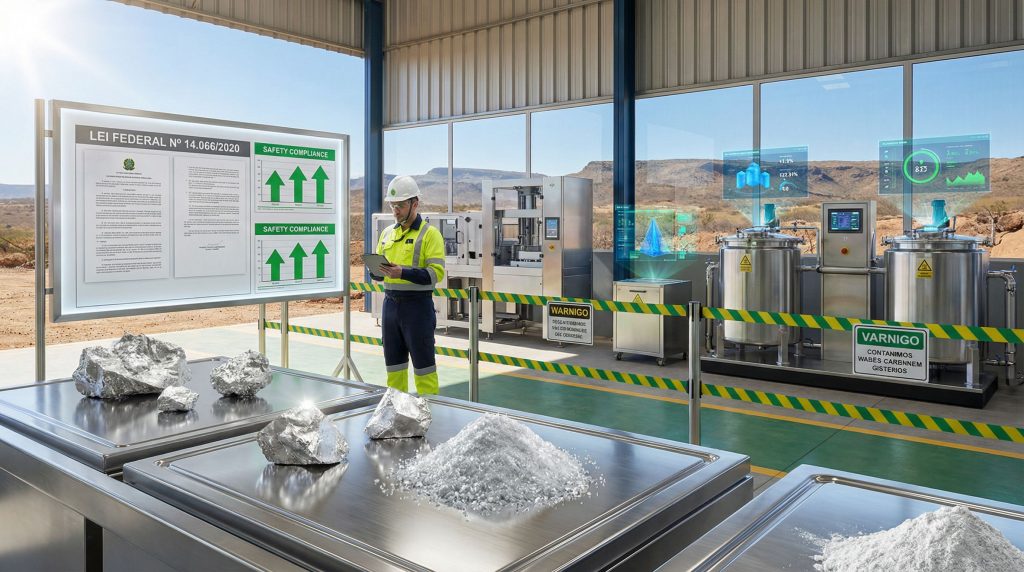
Brazilian Mining Sector Faces Intensified Safety Enforcement Amid Regulatory Transformation
The Brazilian mining industry operates within one of the world's most rapidly evolving regulatory environments, where safety compliance has become the primary determinant of operational viability. Recent developments where Brazil shuts down Sigma Lithium waste piles over safety concerns exemplify the aggressive enforcement mechanisms that federal and state authorities now implement, halting production based on preliminary risk assessments rather than waiting for catastrophic failures.
This regulatory transformation reflects a fundamental shift from reactive liability frameworks to proactive intervention strategies. Mining companies operating in Brazil must navigate an increasingly complex web of federal oversight, state environmental licensing, and labour safety protocols that operate independently yet intersect at critical operational junctions. Furthermore, comprehensive understanding of Brazil's mining permitting guide becomes essential for successful operations.
When big ASX news breaks, our subscribers know first
Federal Mining Safety Oversight Architecture
Brazil's mining safety governance operates through a multi-layered regulatory structure that distributes authority across federal agencies, state environmental bodies, and specialised labour inspection units. The Agência Nacional de Mineração (ANM), established through Law 13,575/2017, serves as the primary federal mining authority responsible for mineral concessions, operational licensing, and compliance oversight across all Brazilian mining operations.
The Labour Ministry maintains parallel jurisdiction through its Labour Inspection Secretariat, wielding independent authority to evaluate workplace safety conditions and issue enforcement orders. This dual-track regulatory approach creates operational complexity where mining companies must satisfy multiple agencies with potentially divergent priorities and assessment criteria.
Key Regulatory Bodies and Responsibilities:
• ANM: Federal mining permits, concession management, production oversight
• Labour Ministry: Workplace safety inspections, risk assessments, enforcement actions
• State Environmental Agencies: Environmental impact assessments, rehabilitation bonds
• CONAMA: Inter-agency coordination and national environmental policy implementation
Environmental licensing responsibilities fall primarily to state-level agencies, with Minas Gerais operations governed by SEMAD (Secretaria de Estado de Meio Ambiente e Desenvolvimento Sustentável). This creates a regulatory framework where federal mining permits, state environmental approvals, and labour safety compliance operate as independent but interconnected requirements for operational authorisation.
The compliance timeline structure reflects this multi-agency approach. Initial mining permits through ANM typically require 60-90 day review periods for standard applications, while environmental licensing through state agencies extends 6-12 months for major projects. Consequently, labour safety inspections operate on separate schedules with immediate enforcement authority for identified risks.
Waste Management Regulatory Framework:
Brazilian mining waste facilities undergo classification based on structural risk factors, waste volume, and community proximity. Annual structural integrity inspections are mandatory for all active tailings and waste storage facilities, with documentation requirements including geotechnical reports, hydrological assessments, and stability calculations.
The inter-agency coordination mechanism operates through the National Council of the Environment (CONAMA), though the Labour Ministry maintains independent inspection authority regardless of environmental licensing status. This regulatory architecture enables different agencies to issue independent enforcement orders based on their specific jurisdictional mandates, as demonstrated in recent cases involving comprehensive waste management solutions.
Historical Context Driving Safety Prioritisation
Brazil's contemporary mining safety regime emerged from two catastrophic failures that fundamentally altered regulatory philosophy and public policy priorities. The Mariana dam collapse on November 5, 2015, killed 19 people and released approximately 40 million cubic metres of mining waste into the Rio Doce River system, contaminating water supplies across a 670-kilometre downstream corridor.
The Brumadinho dam failure of January 25, 2019, represented an even more severe tragedy, resulting in 270 confirmed deaths and the release of 12 million cubic metres of tailings waste. The immediate legislative response, Federal Law 14,066/2020 enacted on August 27, 2020, implemented comprehensive mining dam safety protocols that extended regulatory authority beyond traditional environmental oversight.
| Disaster | Date | Deaths | Environmental Impact | Regulatory Response |
|---|---|---|---|---|
| Mariana | Nov 5, 2015 | 19 | 40M cubic metres waste; 670km river contamination | CONAMA Resolution 430 |
| Brumadinho | Jan 25, 2019 | 270 | 12M cubic metres waste; Paraopeba River contamination | Federal Law 14,066/2020 |
Economic Consequences and Industry Transformation:
Vale S.A. faced fines exceeding R$7 billion (approximately USD $1.4 billion at 2019 exchange rates) following Brumadinho, while the Mariana disaster ultimately resulted in settlement agreements exceeding USD $3.5 billion. These financial penalties established precedent that mining disasters create massive corporate liability exposure extending beyond immediate operational losses.
However, the regulatory evolution from 2015-2025 demonstrates accelerating enforcement intensity. Post-Mariana regulations focused on enhanced monitoring and documentation requirements, whilst post-Brumadinho reforms implemented mandatory risk classifications and real-time structural monitoring systems.
Community Protection Prioritisation:
Brazilian authorities now prioritise community health protection through mandatory safety buffer zones, respiratory health monitoring in mining-adjacent areas, and enhanced emergency response protocols. Mining waste storage facilities must maintain minimum distances from residential areas, with schools, hospitals, and public infrastructure receiving protected classification status.
The regulatory philosophy shift from retrospective liability to prospective enforcement explains why current enforcement actions occur based on structural concerns rather than waiting for catastrophic failures. For instance, this approach reflects political pressure to prevent disasters rather than respond to them after occurrence, particularly evident in recent Brazil prosecutors call for halt on lithium mining decisions.
Legal Framework for "Grave and Imminent Risk" Determinations
Brazilian mining law defines "Grave and Imminent Risk" (Risco Grave e Iminente) through Federal Law 14,066/2020 and the Consolidation of Labour Laws (CLT Article 136), establishing conditions that create immediate danger to worker safety and, following post-2019 regulatory expansion, surrounding communities.
Recent enforcement actions demonstrate how regulatory authorities apply these criteria in practice. Labour inspectors documented a "partial rupture" at a waste pile near a school in Poço Dantas, determining this constituted grave and imminent risk sufficient for immediate operational restrictions. The regulatory determination dismissed operator assertions of safety compliance, establishing precedent that third-party inspector findings supersede company claims in risk assessments.
Technical Assessment Criteria:
• Seismic activity exceeding baseline thresholds (typically >2.5 magnitude for mining-induced seismicity)
• Pore pressure ratios exceeding safe parameters (>0.8 typically indicates instability risk)
• Visible surface displacement or structural cracking documented in inspections
• Slope angle deviation from engineered specifications exceeding 5% safety margins
Community Exposure Risk Factors:
Facilities with potential failure consequences affecting populated areas within 2-5 kilometre radius receive "high consequence" classification under Brazilian standards. Schools, hospitals, and residential areas within potential inundation zones obtain protected status that influences regulatory risk determinations.
The assessment documentation requirements mandate third-party geotechnical evaluations, historical monitoring data analysis, current stability calculations, and comprehensive risk matrices. Slope stability analysis must employ recognised methodologies such as Bishop's simplified method or sophisticated finite element analysis techniques.
Appeal Process and Precedent Establishment:
Brazilian labour law provides companies opportunity to appeal enforcement orders through technical rebuttal documentation. Recent regulatory decisions demonstrate that inspectors' documented structural concerns take priority over operator safety assertions, representing an enforcement philosophy evolution prioritising precautionary intervention. Additionally, identifying potential regulatory risk factors early remains crucial for operational continuity.
Environmental contamination risk criteria include groundwater vulnerability mapping, soil permeability assessments indicating contaminant transport potential, and water quality baseline monitoring establishing pre-closure conditions for regulatory comparison.
Economic Impact of Waste Management Restrictions
Production capacity constraints from waste pile shutdowns create immediate operational and financial consequences that extend beyond direct revenue losses. When Brazilian authorities restrict access to established waste storage infrastructure, mining operations face fundamental constraints on processing throughput and waste management pathways, as evidenced when Brazil shuts down Sigma Lithium waste piles over safety concerns.
Immediate Operational Consequences:
Lithium extraction through spodumene ore processing generates substantial processing waste requiring permanent storage. When established waste pile infrastructure becomes unavailable, mining operations must implement alternative disposal strategies that typically include reduced processing throughput, alternative waste storage methods with different engineering requirements, or complete production suspension until compliant infrastructure develops.
Companies facing waste management restrictions report that losing access to prohibited waste facilities causes "significant operational and economic impacts" that can "jeopardise the continuity of mining activity." This reflects the fundamental operational necessity of waste storage infrastructure in mineral processing operations.
Financial Market Response Patterns:
Financial markets demonstrate sensitivity to regulatory compliance uncertainty in critical minerals sectors. Bank of America's recent downgrade of a Brazilian lithium producer, citing "lack of clarity on when production would resume," triggered a 15% single-day stock decline, demonstrating investor assessment that regulatory constraints threaten core asset productivity.
| Impact Category | Immediate Effects | Extended Consequences |
|---|---|---|
| Production Capacity | Complete operational halt | Market share loss to competitors |
| Stock Performance | 15% single-day decline | 29% broader market rout |
| Analyst Coverage | Investment bank downgrades | Reduced institutional interest |
| Operational Timeline | Indefinite suspension | Uncertain resumption schedule |
Alternative Cost Structure Analysis:
Mining companies must evaluate alternative waste management strategies that typically involve significantly higher operational costs. Dry stacking technology represents one alternative to traditional tailings storage but requires substantial capital investment in specialised equipment and infrastructure modification.
Direct and Indirect Cost Framework:
• Direct Costs: Lost production revenue, compliance infrastructure investment, legal consulting fees
• Indirect Costs: Market confidence deterioration, future permitting challenges, increased regulatory scrutiny
• Opportunity Costs: Delayed expansion projects, reduced exploration investment, competitive disadvantage
The Brazilian lithium sector's position as the "previously largest lithium producer" in the country demonstrates how regulatory enforcement can rapidly alter market leadership positions. Companies that maintained annual production capacity of 270,000 metric tons of lithium concentrate can lose entire market position through regulatory compliance challenges.
Production resumption timelines remain uncertain when companies indicate they are "advancing plans to resume production" without specific operational pathways or compliance schedules. This uncertainty creates ongoing financial market volatility and investment risk assessment challenges.
Alternative Waste Management Technologies and Compliance Pathways
Brazilian mining operations increasingly evaluate alternative waste management technologies that align with evolving regulatory requirements whilst maintaining operational efficiency. Dry stacking technology represents the most significant departure from traditional tailings pond systems, offering enhanced structural stability and reduced environmental risk profiles.
Technical Solutions for Regulatory Compliance:
Underground backfilling using processed waste materials provides dual benefits of waste disposal and mine structural support. This approach requires careful engineering analysis to ensure waste material compatibility with underground environments and long-term structural integrity requirements.
Waste rock co-disposal with tailings creates integrated waste management systems that can improve overall facility stability through strategic material placement and engineered slope designs. These systems require comprehensive geotechnical analysis and ongoing monitoring to maintain regulatory compliance.
Progressive Rehabilitation Strategies:
• Phased rehabilitation during active mining operations reduces final closure liabilities
• Real-time waste placement optimisation minimises environmental impact footprints
• Integrated vegetation establishment programmes accelerate ecosystem recovery
• Community consultation throughout project lifecycle builds stakeholder acceptance
Regulatory Compliance Documentation Requirements:
Environmental management plan updates require approval through state environmental agencies with detailed technical specifications for proposed waste management modifications. Community consultation requirements mandate transparent communication with local stakeholders regarding proposed changes to waste management infrastructure.
Progressive rehabilitation bonds provide financial guarantees for environmental restoration commitments, whilst third-party monitoring and verification systems ensure ongoing compliance with approved waste management protocols. Moreover, implementing digital monitoring advances enhances real-time compliance tracking and reporting capabilities.
The next major ASX story will hit our subscribers first
International Regulatory Comparison and Competitive Implications
Brazil's mining safety regulatory environment demonstrates both similarities and distinctions compared to other major mining jurisdictions worldwide. Australian mining safety standards emphasise similar structural integrity requirements but operate through different enforcement mechanisms and agency coordination structures.
Chilean lithium brine regulations focus primarily on water resource management and environmental protection, reflecting the different geological characteristics of brine-based versus hard rock lithium extraction. Canadian tailings management requirements incorporate federal and provincial jurisdiction coordination similar to Brazil's federal-state regulatory structure.
Global Regulatory Intensity Comparison:
| Jurisdiction | Primary Focus | Enforcement Approach | Community Involvement |
|---|---|---|---|
| Brazil | Structural safety, disaster prevention | Proactive intervention | Mandatory consultation |
| Australia | Worker safety, environmental protection | Risk-based assessment | Industry consultation |
| Chile | Water resource protection | Environmental monitoring | Limited community role |
| Canada | Federal-provincial coordination | Collaborative oversight | Indigenous rights priority |
Investment Attractiveness Implications:
Brazil's regulatory intensity creates both challenges and opportunities for international mining investment. Enhanced safety requirements increase operational costs but may provide competitive advantages for companies demonstrating superior compliance capabilities and community engagement.
Operational cost structures in Brazil reflect regulatory compliance investments that may not be required in other jurisdictions, potentially affecting project economics and investment returns. However, regulatory predictability and clear enforcement standards can provide operational certainty that supports long-term investment planning.
ESG Compliance and International Markets:
European Union critical minerals supply chain due diligence expectations align closely with Brazil's enhanced community consultation and environmental protection requirements. This regulatory alignment may provide Brazilian operations with competitive advantages in ESG-focused international markets.
International investors increasingly evaluate mining projects based on comprehensive risk assessments that include regulatory compliance track records, community relations, and environmental management performance. Brazil's stringent regulatory environment may attract investment capital specifically seeking low-risk, high-compliance operations. Furthermore, understanding broader industry evolution trends helps position operations for long-term success.
Emerging Policy Trends and Strategic Implications
Brazilian mining policy development demonstrates accelerating emphasis on digital monitoring technologies, real-time safety data collection, and automated compliance reporting systems. Digital monitoring requirements for real-time safety data represent the next evolution in Brazilian mining oversight, potentially requiring substantial technology investment by operators.
Technology Integration Requirements:
• Real-time seismic monitoring with automated alert systems
• Drone-based structural integrity assessments for waste facilities
• IoT sensor networks for continuous pore pressure and stability monitoring
• Blockchain-based compliance documentation and audit trails
Community Participation Enhancement:
Mandatory community consultation requirements continue expanding beyond traditional environmental impact assessments to include ongoing operational oversight and emergency response planning. Indigenous rights protection in mining project approvals reflects broader international trends toward enhanced indigenous consultation and consent protocols, as highlighted in Brazil mining regulator halts lithium activities reports.
Climate Resilience Integration:
Climate resilience standards for mining infrastructure acknowledge that traditional engineering approaches may be insufficient for extreme weather events associated with climate change. These requirements may mandate enhanced structural specifications, alternative waste management technologies, and improved emergency response capabilities.
Policy Timeline Projections:
• 2026-2027: Enhanced digital monitoring implementation across major mining operations
• 2027-2028: Strengthened community consultation requirements with expanded stakeholder participation
• 2028-2030: Climate-resilient infrastructure mandates with updated engineering standards
Critical Minerals Strategy Balance:
Brazil's critical minerals strategy must balance production objectives with enhanced safety requirements, creating policy tensions between economic development priorities and risk management mandates. Regional development priorities in mining-dependent areas influence regulatory decisions through political pressure for continued economic activity.
International trade considerations for lithium exports may favour operations demonstrating superior safety and environmental performance, potentially creating export advantages for compliant Brazilian operations in global markets prioritising supply chain sustainability.
Risk Mitigation and Compliance Strategy Framework
Mining companies operating in Brazil's evolving regulatory environment require comprehensive compliance strategies that anticipate regulatory changes rather than respond to enforcement actions. Proactive compliance strategies emphasise early engagement with regulatory authorities during project planning phases, establishing collaborative relationships before operational challenges emerge.
Stakeholder Management Best Practices:
Community stakeholder management requires transparent communication protocols that extend beyond minimum regulatory requirements. Investment in safety technology beyond mandatory standards demonstrates commitment to operational excellence and may provide regulatory goodwill during compliance assessments.
Integrated environmental management systems implementation creates operational frameworks that address multiple regulatory requirements simultaneously, reducing administrative complexity and ensuring comprehensive compliance coverage.
Risk Assessment Framework:
• Regulatory Change Monitoring: Systematic tracking of policy developments and enforcement trends
• Multi-jurisdictional Compliance: Diversified operations reducing concentration risk in single regulatory environments
• Financial Planning: Insurance and contingency reserves for regulatory enforcement scenarios
• Relationship Management: Ongoing engagement with communities, regulators, and industry associations
Operational Excellence Standards:
Companies successfully navigating Brazil's regulatory environment demonstrate consistent patterns of exceeding minimum compliance requirements, investing in community relationships, and maintaining transparent communication with regulatory authorities. These operational approaches create competitive advantages through reduced regulatory risk and enhanced operational predictability.
Insurance and financial planning for regulatory contingencies requires sophisticated risk assessment that acknowledges the potential for immediate operational shutdowns based on inspector findings. Companies must maintain financial reserves sufficient to sustain operations through extended compliance resolution processes.
Future-Oriented Compliance Investment:
Investment in next-generation safety technologies and monitoring systems positions companies advantageously for anticipated regulatory enhancements whilst demonstrating commitment to operational excellence that may influence regulatory relationships and enforcement priorities.
Disclaimer: This analysis is based on publicly available regulatory information and industry reporting as of January 2026. Mining regulations continue evolving rapidly in Brazil, and companies should consult qualified legal and regulatory experts for specific compliance guidance. Investment and operational decisions should consider comprehensive risk assessments that account for regulatory uncertainty and potential policy changes.
Looking to Navigate Brazil's Complex Mining Regulatory Environment?
Discovery Alert's proprietary Discovery IQ model provides real-time insights into ASX mining operations, helping investors identify companies with strong regulatory compliance track records across international jurisdictions. Stay ahead of regulatory developments that can dramatically impact mining investments by exploring Discovery Alert's discoveries page to understand how regulatory challenges create both risks and opportunities in the mining sector.