May 15, 2026
The Growing Skills Crisis Reshaping Global Mining Education
Few industries face a more pressing talent paradox than mining. On one hand, demand for critical minerals has never been stronger, with the global energy transition requiring vast quantities of copper, lithium, zinc, and silver to build the infrastructure of a decarbonised economy. On the other hand, the technical complexity of extracting those minerals is accelerating faster than the industry's ability to train the professionals who will manage it.
This is not simply a matter of filling vacant roles. The gap is qualitative. Traditional mining engineering curricula and professional development pathways were designed for a world of deterministic models, conventional risk frameworks, and largely manual decision-making. The industry now operates in an environment shaped by probabilistic data analysis, artificial intelligence, real-time geotechnical monitoring, and international sustainability standards that carry significant financial and regulatory weight.
The result is a structural mismatch that industry observers have tracked for years: projects managed by technically capable teams still routinely exceed budgets and timelines, not because of poor intentions, but because the methodological frameworks guiding decisions are increasingly misaligned with the complexity those decisions involve.
Against this backdrop, the cursos del World Mining Congress en Lima sobre inteligencia artificial en minería represent something more significant than a professional development calendar entry. They reflect a deliberate, globally coordinated attempt to close the capability gap where it matters most, before the industry's next generation of megaprojects enters execution phase.
When big ASX news breaks, our subscribers know first
What Is the World Mining Congress 2026 and Why Does Lima Matter?
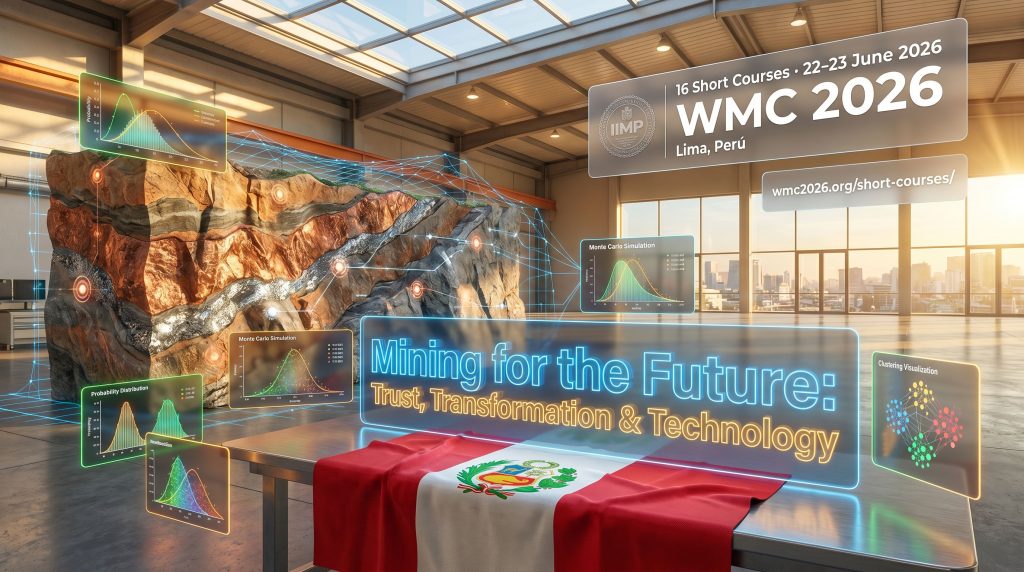
The World Mining Congress is one of the most technically rigorous forums in the global mining calendar. Its 2026 edition, organised under the theme Mining for the Future: Trust, Transformation and Technology, is scheduled for 24 to 26 June 2026 at the Lima Convention Center in Peru.
The selection of Lima as host city reflects more than logistical convenience. Peru consistently ranks among the world's top producers of copper, zinc, silver, and gold, and the mining sector represents one of the most significant pillars of the country's economic output. Positioning Lima as the venue for the WMC 2026 acknowledges Peru's centrality in the global critical minerals supply chain and its role as a hub for Latin American mining expertise.
Short Courses: Applied Learning Before the Main Congress
Running on 22 and 23 June 2026, the two days immediately preceding the main congress, a programme of 16 specialised short courses will be delivered in person at the headquarters of the Instituto de Ingenieros de Minas del Perú (IIMP), located at Calle Los Canarios 155, La Molina, Lima.
| Programme Detail | Information |
|---|---|
| Short Course Dates | 22 and 23 June 2026 |
| Delivery Format | In-person |
| Language | English |
| Venue | IIMP, La Molina, Lima |
| Certification | Official certificate issued by the IIMP |
| Total Courses Available | 16 short courses |
| Course Duration | 4 to 8 hours per course |
| Target Audience | Professionals, executives, and decision-makers |
| Registration | wmc2026.org/short-courses/ |
The IIMP's institutional endorsement adds measurable professional value to each course. As Peru's primary technical body for mining engineering, its certification carries recognition across Latin American and international mining labour markets, making completion meaningful beyond the learning experience itself.
Understanding the Four Pillars of Mining Transformation Addressed by These Courses
The short course programme at WMC 2026 can be understood through four intersecting themes, each addressing a distinct dimension of the industry's current transformation:
- Artificial intelligence in exploration and safety operations
- Geomechanical design and the reduction of operational uncertainty
- Quantitative risk management for complex capital projects
- Sustainability-aligned mine planning under international reporting frameworks
Each of these pillars responds to a documented failure mode in conventional mining practice. Furthermore, the following sections examine five of the programme's most strategically relevant courses in depth.
Separating AI Promise from AI Performance in Mineral Exploration
Instructor: Prof. Jef Caers, Earth and Planetary Sciences, Stanford University
Target audience: C-Suite executives and senior corporate leaders
One of the most persistent challenges facing mining executives today is that AI in mineral exploration has become simultaneously overmarketed and underimplemented. Vendors promise transformative exploration outcomes. Early-stage tools frequently fail to deliver. The gap between expectation and result often comes down not to the underlying technology, but to three factors that are rarely discussed openly: data quality, statistical rigour, and validation discipline.
This course, titled Artificial Intelligence in Mineral Exploration: Separating Hype from Reality, addresses exactly that tension. Prof. Jef Caers, a recognised authority at the intersection of earth sciences and data science, brings an academic framework designed to equip executives not with enthusiasm for AI, but with the critical evaluation tools needed to distinguish genuinely valuable implementations from expensive distractions.
What the Course Covers
- Application of probabilistic models to geological datasets, moving beyond single-outcome predictions toward distributions of possible outcomes
- Uncertainty quantification methodologies that allow geological risk to be expressed numerically rather than qualitatively
- Cost reduction strategies through smarter pre-field data analysis, targeting high-probability mineralisation zones before mobilising exploration crews
- Common implementation failures: weak statistical foundations, model overfitting, and training dataset bias
A critical insight for senior decision-makers: most AI adoption failures in mineral exploration originate not in the technology itself, but in the quality of input data and the absence of rigorous validation protocols. Executives who understand this distinction are far better positioned to assess vendor claims and allocate technology investment effectively.
This framing is particularly important in an industry where the cost of a misguided drilling campaign can run into tens of millions of dollars. The ability to assess when AI genuinely improves exploration decisions, as distinct from when it adds process complexity without outcome benefit, is a competitive differentiator at the boardroom level.
Collaborative Intelligence: Merging Geology, Geophysics, and Remote Sensing
Instructors: Shae Akbarpour, Mikayla Sambrooks, and Alastair Tait, Fleet Space Technologies
Target audience: Geologists, geophysicists, and technical exploration teams
Where the Stanford course focuses on executive-level evaluation, this programme addresses the technical teams responsible for actual implementation. Collaborative Intelligence in Mineral Exploration: Bridging Geology, Geophysics, and AI teaches participants how to integrate multiple data streams under a unified analytical architecture rather than processing each independently.
The distinction matters more than it might initially appear. Traditional exploration workflows treat geological logs, geophysical surveys, and remote sensing data as separate inputs, often interpreted by different specialists who later attempt to reconcile their conclusions. Collaborative intelligence approaches fuse these streams computationally, allowing patterns invisible to any single dataset to emerge from the combination.
Technical Methods Covered
- Clustering and dimensionality reduction techniques for identifying structural patterns in complex, multivariate geological datasets
- Decision tree models for structuring drilling commitments based on integrated evidence rather than individual specialist judgment
- Hyperspectral and remote sensing data integration, combining satellite imagery, airborne surveys, and field measurements into coherent terrain models
- Geophysical-geological-AI workflows that pair automated data processing with expert interpretation, reducing interpretation subjectivity without eliminating domain knowledge
Comparing the Two AI Exploration Courses
| Dimension | Prof. Caers (Stanford) | Fleet Space Technologies |
|---|---|---|
| Primary focus | Strategic evaluation of AI for executives | Technical implementation of collaborative AI |
| Core audience | C-Suite and corporate leadership | Geologists and geophysical teams |
| Key tools | Probabilistic models, uncertainty quantification | Clustering, decision trees, hyperspectral sensing |
| Distinct value | Critical decision-making frameworks | Integrated technical workflows |
Together, these two courses address the full vertical of AI adoption in exploration, from the boardroom investment decision to the field-level analytical workflow. Organisations that develop capability at both levels are significantly better positioned to extract measurable value from their technology investments.
Performance-Based Geomechanics: Building Underground Designs That Learn from Reality
Instructor: Kathy Kalenchuk, President, RockEng; international specialist in rock mechanics and geomechanical engineering
Target audience: Geotechnical engineers and underground mine design teams
Underground mining presents a fundamental epistemic challenge. The conditions of a rock mass cannot be fully characterised from surface investigation alone. Variability in joint orientation, stress conditions, water pressure, and rock quality means that any design based on pre-construction data is necessarily working with incomplete information.
The conventional response to this uncertainty has been conservatism: over-engineer supports, apply generous safety factors, and accept the cost premium as the price of uncertainty. The performance-based design philosophy taught in this course takes a fundamentally different approach.
The Performance-Based Design Methodology
Rather than treating the initial design as fixed, performance-based design treats it as a starting hypothesis that is continuously tested and refined against actual excavation behaviour. The methodology involves:
- Establishing measurable performance criteria before excavation begins, defining what acceptable rock mass behaviour looks like in quantitative terms
- Instrumenting the excavation with monitoring systems capable of detecting deformation, stress change, and acoustic emission in real time
- Calibrating numerical models against observed behaviour during early excavation stages, updating input parameters as real data replaces assumptions
- Iterative design refinement throughout the project lifecycle, with formal decision points for modifying support systems based on accumulated performance data
This approach is especially relevant in high-seismicity zones and geological environments with heterogeneous rock masses, conditions that characterise many Andean operations across Peru, Chile, and Bolivia. In these contexts, designs that cannot adapt to observed behaviour carry disproportionate risk.
The shift from prescriptive to performance-based thinking represents one of the more significant methodological advances in underground geomechanics over the past two decades, and the WMC 2026 course provides structured access to its practical application.
The next major ASX story will hit our subscribers first
Why Large Mining Projects Keep Failing Budget and Schedule Targets
Instructor: Pouya Zangeneh, Endowed Chair in Engineering Project Management, University of Calgary; over 15 years of experience in mining, energy, and infrastructure megaprojects
Target audience: Project managers, engineers, and investment decision-makers
The track record of large-scale mining projects globally is well documented and consistently concerning. Cost overruns and schedule delays are not exceptions, they are statistical regularities. Research across capital-intensive industries consistently shows that projects using conventional deterministic risk frameworks systematically underestimate both the probability and severity of adverse outcomes.
The reasons are structural rather than individual. In addition, they include:
- Underestimation of interdependencies between risk factors, where a procurement delay cascades into construction delays, which cascade into commissioning delays
- Use of inappropriate probability distributions for tail-risk events, particularly those that assume normal distributions for inherently skewed outcomes
- Absence of dynamic updating mechanisms that would allow risk profiles to be revised as project conditions evolve
- Confusion between risk (quantifiable probability of known outcomes) and uncertainty (unknown unknowns that cannot be assigned probabilities), leading to inadequate contingency provisions
Consequently, teams who understand these distinctions — including how to apply a rigorous definitive feasibility study framework — are far better equipped to deliver projects within sanctioned parameters.
Quantitative Tools Covered in the Course
| Tool Type | Application in Mining Projects |
|---|---|
| Monte Carlo simulation | Generating probability distributions for cost and schedule outcomes |
| Sensitivity analysis | Identifying which variables drive the most outcome variance |
| Correlation modelling | Capturing dependencies between risk factors |
| Real options analysis | Evaluating investment flexibility under uncertainty |
| Risk matrices | Qualitative prioritisation of risk categories |
| Scenario workshops | Identifying emergent risks not captured in baseline models |
For project teams working on expansions or new developments across Latin America, where social, environmental, and regulatory risk factors add layers of complexity beyond technical uncertainty, the ability to model these interdependencies rigorously is not an academic exercise. It is a project survival skill.
Aligning Mining Projects with International Sustainability Standards
Instructors: Ulises Neri and David Avilés, specialists in resource management, energy, and sustainability; active participants in UNFC and UNRMS implementation processes led by the UNECE
Target audience: Mine planners, sustainability managers, and investor relations professionals
The financial environment for mining projects has shifted materially over the past five years. Access to capital increasingly depends on a project's ability to demonstrate alignment with internationally recognised environmental, social, and governance criteria. Two frameworks have emerged as particularly important for mining operations seeking credible sustainability credentials. Furthermore, the sustainable mining transformation underway globally makes familiarity with these standards increasingly non-negotiable.
Understanding UNFC and UNRMS
| Framework | Full Name | Issuing Body | Primary Function |
|---|---|---|---|
| UNFC | United Nations Framework Classification for Resources | UNECE | Standardised classification and evaluation of mineral and energy resources |
| UNRMS | United Nations Resource Management System | UNECE | Integrated management of resource lifecycles with sustainability criteria |
These frameworks allow mining projects to communicate their environmental, social, and economic performance in a standardised format that regulators, financiers, and community stakeholders can independently assess and compare. For projects seeking access to sustainability-linked financing instruments or listing in ESG-screened investment indices, UNFC and UNRMS alignment is becoming less optional and more foundational.
What the Course Covers
- Integration of ESG criteria into project planning from pre-feasibility stages, rather than as a retrospective compliance exercise
- Application of the UN Sustainable Development Goals most relevant to mining operations, including goals related to clean water, climate action, responsible consumption, and economic development
- Practical methods for calculating and reporting carbon footprint in line with Paris Agreement commitments
- Communication strategies for engaging investors, regulators, and host communities using internationally recognised sustainability language
AI-Driven Safety: Building the Case for Predictive Over Reactive Systems
Instructor: Raúl Benavides, mining engineer and chairman of the board of CETEMIN
Target audience: Safety managers, operations teams, and mine site leaders
Safety management in mining has historically operated on a reactive model. Incidents occur, investigations identify contributing factors, and protocols are updated to prevent recurrence. While this approach produces incremental improvement, it has a fundamental limitation: it depends on incidents happening before systemic risks are identified.
Predictive AI models invert this logic. By continuously analysing data streams from equipment sensors, geotechnical instruments, wearable devices, and operational systems, these models identify statistical precursors to dangerous conditions before those conditions manifest as incidents. This represents one of the most compelling applications of AI in mining operations available to practitioners today.
Categories of Risk That Predictive AI Can Detect
- Incipient equipment failures: vibration patterns, thermal signatures, and power consumption anomalies that precede mechanical breakdown
- Unsafe behavioural patterns: signals from wearable sensors indicating fatigue, physiological stress, or proximity violations in high-risk zones
- Critical geotechnical conditions: deformation rates, pore pressure changes, and microseismic signatures associated with slope instability or underground support failure
- Structural anomalies: vibration frequencies in tailings facilities or underground support systems that indicate load distribution problems
The shift from reactive to predictive safety represents one of the most consequential applications of AI in mining, not because it generates the most commercially visible return, but because the value it creates is measured in lives protected and catastrophic losses avoided.
In operations with high equipment density and simultaneous underground and surface activity, the integration of predictive models into safety management systems creates a capability that no amount of additional supervision or procedural enforcement can replicate at scale.
Practical Considerations for WMC 2026 Short Course Participants
For professionals considering participation, several practical points are worth noting:
- All courses are delivered entirely in English, which reflects the international composition of the expected participant base
- Each course runs for 4 to 8 hours, allowing participants to attend multiple sessions across the two-day programme
- Completion earns an official IIMP certificate, providing formal professional recognition that carries weight in Latin American and international mining recruitment contexts
- Registration is managed through the official short course portal at wmc2026.org/short-courses/
- The courses function as a gateway to the main congress programme, allowing participants to arrive at the WMC 2026 conference on 24 June with significantly enriched technical context for the debates and presentations that follow
Moreover, professionals who attend with a grounding in interpreting drill results and other core technical competencies will find the course content particularly well-structured for building upon existing knowledge.
The convergence of six specialist courses addressing AI in exploration, geomechanics, quantitative risk management, sustainability frameworks, collaborative intelligence, and predictive safety in one two-day programme represents a rare concentration of applied expertise. For mining professionals navigating an industry in structural transformation, the cursos del World Mining Congress en Lima sobre inteligencia artificial en minería offer one of the most practically relevant professional development opportunities available in 2026.
This article is intended for informational and educational purposes. Readers should independently verify course details, instructor credentials, and registration requirements directly through official WMC 2026 channels before making professional or financial commitments.
Want to Stay Ahead of the Next Major Mineral Discovery?
As the mining industry embraces AI and advanced exploration techniques, the ability to act on significant ASX mineral discoveries in real time has never been more valuable — Discovery Alert's proprietary Discovery IQ model delivers instant alerts on major finds across copper, lithium, zinc, silver, and beyond, turning complex data into actionable investment insights. Explore historic examples of discoveries that generated exceptional returns and begin your 14-day free trial at Discovery Alert to position yourself ahead of the broader market.