June 11, 2026
Understanding the Strategic Shift Toward Existing Mine Sites
The global mining landscape has undergone a fundamental transformation in recent years, driven by unprecedented mineral demand and evolving investment strategies. While traditional exploration focused on discovering entirely new deposits, the industry has increasingly embraced a different approach: intensifying operations where mining infrastructure already exists.
This shift represents more than simple operational efficiency. Mining companies worldwide are recognising that expanding existing permitted sites offers compelling advantages over developing virgin territories from scratch. Furthermore, the strategic implications extend far beyond immediate financial returns, encompassing regulatory positioning, risk management, and long-term competitive advantage in an increasingly complex global minerals market.
Defining Brownfield vs. Greenfield Mining Operations
Brownfield mining expansion involves intensifying or extending operations at sites where mining activities have previously been established and permitted. This contrasts sharply with greenfield development, which requires establishing entirely new mining operations in previously undeveloped locations.
The operational distinctions are significant:
• Infrastructure leverage: Existing processing facilities, transportation networks, and power systems
• Regulatory framework: Established permitting processes and compliance structures
• Workforce continuity: Experienced personnel and operational expertise already in place
• Community relationships: Existing stakeholder engagement and social licence foundations
Brownfield sites benefit from proven ore body understanding, established metallurgical processes, and demonstrated operational viability. These factors collectively reduce both technical and financial uncertainty compared to greenfield projects, where geological, processing, and operational risks remain largely unquantified until development progresses.
The Economic Rationale Driving Expansion Decisions
Recent analysis reveals that 60% of major company exploration budgets in 2024 were allocated to existing or adjacent mine sites, representing more than double the investment levels observed in 2016. This dramatic reallocation reflects systematic industry recognition of brownfield expansion's financial advantages.
The economic appeal stems from multiple factors:
Capital Efficiency: Existing infrastructure significantly reduces upfront investment requirements compared to greenfield development. Processing facilities, tailings management systems, and transportation networks represent substantial sunk costs that can be leveraged for expansion activities.
Timeline Acceleration: Brownfield expansions typically achieve production within 3-5 years, compared to 7-12 year development cycles for greenfield projects. This timeline compression directly impacts return on investment calculations and competitive positioning.
Risk Mitigation: Established operations provide proven track records for geological understanding, metallurgical performance, and operational parameters. This operational history reduces uncertainty premiums that financial markets typically apply to new project financing.
Closure Cost Deferral: Perhaps most significantly, brownfield mining expansion allows companies to defer substantial mine closure and rehabilitation costs. These obligations, which can range from tens of millions to billions of dollars depending on site scale, are postponed as long as active operations continue.
When big ASX news breaks, our subscribers know first
Global Investment Patterns and Regional Leadership
The geographic distribution of brownfield mining expansion reveals distinct patterns of regional specialisation and competitive advantage. Analysis of 366 brownfield sites across 58 countries provides unprecedented insight into global capital allocation trends and strategic positioning.
Regional Capital Allocation Leadership
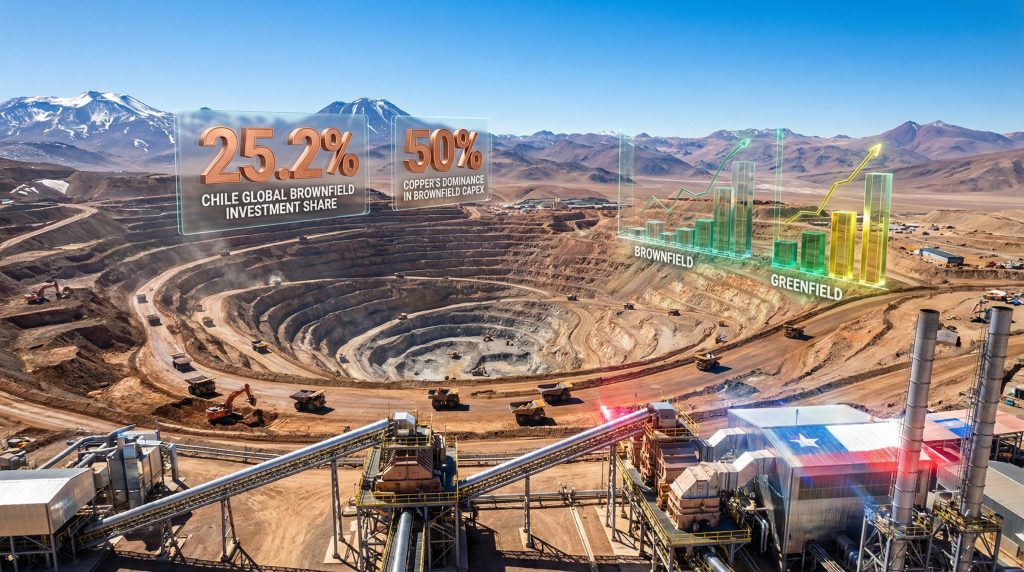
Chile has emerged as the dominant destination for brownfield investment, capturing 25.2% of total worldwide capital allocation. This leadership position reflects the country's established copper mining infrastructure, favourable regulatory environment, and proven geological endowment. Chile's Atacama and Antofagasta regions host multiple world-class copper operations with significant expansion potential.
United States commands 11.4% of global brownfield investment, driven primarily by precious metals operations in Nevada, base metals projects in Arizona, and critical minerals development across multiple states. American brownfield expansion benefits from advanced mining technology adoption and established regulatory frameworks.
Australia accounts for 10.1% of worldwide brownfield capital, with expansion activities concentrated in Western Australia's iron ore and gold regions, Queensland's coal and base metals districts, and emerging critical minerals projects across multiple jurisdictions.
| Region | Global Investment Share | Primary Commodities | Key Advantages |
|---|---|---|---|
| Chile | 25.2% | Copper, lithium | Established infrastructure, favourable policy |
| United States | 11.4% | Gold, copper, critical minerals | Technology leadership, regulatory clarity |
| Australia | 10.1% | Iron ore, gold, coal | Operational expertise, infrastructure quality |
| Other Regions | 53.3% | Diversified | Emerging opportunities, lower costs |
Commodity-Specific Investment Dynamics
Copper dominates brownfield capital allocation, reflecting the metal's central role in renewable energy infrastructure and digital technology advancement. Global copper demand projections suggest sustained supply deficits through the 2030s, driving aggressive expansion at existing copper operations worldwide.
Critical minerals including cobalt, platinum, and rare earth elements represent rapidly growing brownfield investment categories. These materials are essential for:
• Battery technology and energy storage systems
• Electronic component manufacturing
• Catalytic processes and industrial applications
• Defense and aerospace technologies
Gold and iron ore maintain significant brownfield investment levels, though their relative share has declined as critical minerals capture increasing capital allocation. These traditional commodities benefit from established global markets and proven expansion economics.
Environmental and Social Risk Amplification
While brownfield mining expansion offers compelling economic advantages, it also generates complex environmental and social challenges that are often inadequately addressed during expansion approval processes. The cumulative impacts of successive expansions can fundamentally alter the original risk profile of mining operations.
Environmental Impact Multiplication
Brownfield expansion typically involves significant increases in waste generation, water consumption, and land disturbance beyond original permit parameters. Research indicates that more than 50% of analysed brownfield sites are located within 20 kilometres of critical ecosystems, with 20% positioned within 50 kilometres of pristine wilderness areas.
Waste Management Challenges: Expansion activities often require additional tailings storage facilities, waste rock dumps, and processing infrastructure. These additions can stress existing environmental management systems and exceed original containment design parameters.
Water Resource Impacts: Mining expansion frequently increases freshwater consumption and processing water requirements. In water-stressed regions, this escalation can create conflicts with agricultural users, municipal systems, and ecological preservation requirements.
Cumulative Land Disturbance: While individual expansion phases may appear modest, successive modifications can cumulatively transform the environmental footprint far beyond original impact assessments. This incremental growth often proceeds without comprehensive re-evaluation of aggregate environmental consequences.
The Juukan Gorge Precedent
The 2020 destruction of a 47,000-year-old Indigenous cultural heritage site at Juukan Gorge, Australia, illustrates how brownfield expansion can generate irreversible cultural and environmental damage. This incident occurred as part of a legally permitted iron ore mine expansion, highlighting gaps in cultural heritage protection during brownfield development.
The Juukan Gorge destruction demonstrates that legal compliance does not guarantee culturally appropriate or socially responsible mining expansion. Indigenous communities worldwide face similar risks as brownfield expansion accelerates near traditional territories and sacred sites.
Key Lessons for Stakeholder Engagement:
• Enhanced consultation protocols: Meaningful engagement with Indigenous communities and local stakeholders throughout expansion planning
• Cultural heritage assessment: Comprehensive evaluation of cultural significance beyond initial permitting requirements
• Adaptive management approaches: Flexibility to modify expansion plans based on community input and cultural considerations
• Benefit-sharing mechanisms: Equitable distribution of economic benefits from expansion activities
Regulatory Oversight Gaps in Mine Lifecycle Management
Mining regulatory frameworks typically focus intensive oversight on two distinct phases: pre-approval assessment and post-closure rehabilitation. This regulatory structure creates a "missing middle" during active operations when expansions frequently occur with reduced scrutiny and public engagement.
Front-End Regulatory Intensity
Initial mine permitting involves comprehensive environmental impact assessments, social impact studies, and extensive public consultation processes. These front-end evaluations establish baseline conditions, impact predictions, and mitigation commitments that form the foundation for operational approval.
However, once operations commence, regulatory attention typically shifts to routine compliance monitoring rather than comprehensive impact re-assessment. This transition creates opportunities for incremental expansion that may cumulatively exceed original impact projections without triggering enhanced regulatory review.
Step-by-Step Expansion Approval
Brownfield expansions often proceed through incremental approval processes that evaluate individual modifications without comprehensive assessment of cumulative impacts. This regulatory approach can mask the aggregate environmental and social consequences of multiple expansion phases.
Common Expansion Categories:
• Production capacity increases: Enhanced processing throughput within existing facilities
• Pit extensions: Expansion of open-cut mining areas beyond original boundaries
• Underground development: New extraction areas or mining methods
• Infrastructure modifications: Additional waste storage, processing equipment, or transportation facilities
Each modification may individually appear modest, but collective impacts can fundamentally alter the mining operation's risk profile and community effects.
Enhanced Oversight Recommendations
Cumulative Impact Assessment: Regulatory frameworks should require periodic comprehensive re-evaluation of aggregate impacts from all expansion activities, not merely individual modification assessments.
Community Consultation Requirements: Significant expansions should trigger renewed public consultation and stakeholder engagement processes, particularly involving Indigenous communities and local residents.
Independent Monitoring: Third-party environmental and social monitoring can provide objective assessment of expansion impacts and compliance with original commitments.
Geographic Risk Assessment and Vulnerability Analysis
The global distribution of brownfield sites reveals significant clustering in regions with complex environmental, social, and governance challenges. Understanding these risk patterns is essential for investors, regulators, and communities evaluating expansion proposals.
Multi-Factor Risk Analysis
Research encompassing 366 brownfield sites across 58 countries reveals that more than half operate in locations characterised by multiple complex risk factors including social conflict potential, ecosystem fragility, and governance limitations.
| Risk Category | High-Risk Sites (%) | Primary Concerns |
|---|---|---|
| Social Conflict | 35% | Community tensions, land rights disputes |
| Ecosystem Proximity | 50% | Biodiversity impacts, habitat fragmentation |
| Water Stress | 40% | Freshwater availability, competing uses |
| Governance Weakness | 25% | Regulatory enforcement, corruption risks |
Biodiversity Proximity Analysis
The concentration of brownfield sites near critical ecosystems raises significant conservation concerns. Over 50% of analysed sites operate within 20 kilometres of biodiversity hotspots, while 20% are positioned within 50 kilometres of pristine wilderness areas.
This proximity creates multiple conservation risks:
• Habitat fragmentation: Mining expansion can bisect wildlife corridors and migration routes
• Water system impacts: Altered hydrology affecting downstream ecosystems
• Air quality degradation: Dust and emissions affecting sensitive species
• Noise and vibration: Disturbance of wildlife behaviour and breeding patterns
Climate Change Vulnerability
Brownfield sites face increasing operational risks from climate change impacts, including extreme weather events, water availability changes, and temperature variations. These climate risks can compromise waste containment systems, disrupt operations, and escalate environmental liabilities.
Climate Adaptation Priorities:
• Extreme weather resilience: Enhanced infrastructure design for storm, flood, and drought conditions
• Water security planning: Diversified water sources and conservation technologies
• Temperature management: Adaptation to changing thermal conditions affecting processing and safety
• Emergency response protocols: Enhanced preparation for climate-related operational disruptions
Economic Performance Analysis and Alternative Development Models
While brownfield mining expansion offers compelling financial advantages, comprehensive economic analysis must consider opportunity costs, alternative land use options, and long-term sustainability factors that may not be apparent in traditional project evaluation frameworks.
Brownfield vs. Greenfield Financial Comparison
| Metric | Brownfield Expansion | Greenfield Development |
|---|---|---|
| Capital Requirements | 60-80% of greenfield costs | Baseline comparison |
| Development Timeline | 3-5 years | 7-12 years |
| Operational Risk | Lower (proven systems) | Higher (unproven operations) |
| Regulatory Risk | Lower (established permits) | Higher (new approvals) |
| Community Risk | Variable (existing relationships) | Higher (new stakeholders) |
Return on Investment Advantages: Brownfield projects typically generate internal rates of return 2-4 percentage points higher than comparable greenfield developments due to reduced capital requirements, accelerated cash flow generation, and lower operational uncertainty.
Risk-Adjusted Returns: When adjusted for technical, regulatory, and social risks, brownfield expansions often outperform greenfield alternatives by even larger margins, particularly in jurisdictions with complex permitting processes or challenging stakeholder environments.
Alternative Site Utilisation Opportunities
Mining sites possess unique characteristics that may support alternative economic development pathways as mineral extraction concludes. These alternatives can generate sustainable economic benefits for local communities while avoiding the environmental and social risks associated with continued brownfield mining expansion.
Renewable Energy Development: Former mining sites often possess excellent solar and wind resources, existing electrical infrastructure, and cleared land areas suitable for renewable energy installations. Several Australian and American mine sites have successfully transitioned to solar energy production.
Industrial Facility Development: Established transportation infrastructure, utilities, and skilled workforces make former mining sites attractive for manufacturing, logistics, and processing operations. Strategic location near transportation hubs can support diverse industrial activities.
Conservation and Recreation: Restored mining sites can provide valuable conservation habitat, recreational opportunities, and tourism revenue. Careful planning can create wetlands, wildlife corridors, and recreational facilities that generate sustainable local economic benefits.
The next major ASX story will hit our subscribers first
Industry Best Practices and Risk Mitigation Strategies
Leading mining companies have developed sophisticated approaches to managing brownfield mining expansion risks while maintaining operational efficiency and stakeholder support. These best practices provide frameworks for sustainable expansion that balance economic objectives with environmental and social responsibilities.
Stakeholder Engagement Excellence
Proactive Community Consultation: Successful brownfield expansion requires continuous stakeholder engagement that extends beyond minimum regulatory requirements. This includes regular community meetings, transparent impact reporting, and participatory decision-making processes for significant operational changes.
Cultural Heritage Protection: Enhanced protocols for identifying, assessing, and protecting cultural heritage sites throughout expansion planning. This includes partnerships with Indigenous communities, archaeological surveys, and adaptive management approaches when heritage sites are discovered.
Benefit-Sharing Mechanisms: Equitable distribution of economic benefits through local employment programs, supplier development initiatives, infrastructure investments, and community development funds tied to expansion activities.
Environmental Management Innovation
Advanced Waste Management: Implementation of dry stacking technologies, paste backfill systems, and other innovations that reduce tailings storage footprints and environmental risks. These technologies can significantly reduce long-term environmental liabilities while enabling continued expansion.
Water Conservation and Recycling: Closed-loop water systems, desalination technologies, and water treatment innovations that reduce freshwater consumption and eliminate discharge impacts. Advanced water management can enable expansion in water-stressed regions while improving environmental performance.
Biodiversity Offset Programs: Comprehensive habitat restoration and species protection initiatives that compensate for expansion impacts through habitat creation, species protection, and ecosystem enhancement activities in adjacent areas.
Technological Integration and Automation
Remote Operation Systems: Advanced automation and remote control technologies that reduce workforce requirements, improve safety performance, and minimise community disturbance during expansion activities.
Real-Time Environmental Monitoring: Continuous air quality, water quality, and noise monitoring systems that provide immediate feedback on expansion impacts and enable rapid response to environmental concerns.
Predictive Maintenance and Analytics: Data-driven operations and machine learning systems that optimise equipment performance, reduce environmental incidents, and improve operational efficiency during expansion phases.
Future Market Dynamics and Industry Evolution
The trajectory of brownfield mining expansion will be shaped by evolving market demands, technological capabilities, and regulatory frameworks that are currently in development. Understanding these future dynamics is essential for strategic planning and investment decision-making.
Critical Minerals Supply Chain Imperatives
Global demand for critical minerals essential to renewable energy systems, digital infrastructure, and defence applications continues accelerating. This demand surge creates compelling incentives for brownfield expansion at sites containing copper, lithium, cobalt, rare earth elements, and other strategic materials.
Supply Security Priorities: Government policies increasingly prioritise domestic critical mineral production to reduce dependence on potentially unstable supply chains. This policy environment favours brownfield expansion that can rapidly increase production without lengthy development timelines.
Technology Demand Drivers:
• Electric vehicle adoption: Massive demand growth for lithium, cobalt, and nickel
• Renewable energy infrastructure: Copper and rare earth element requirements for wind and solar systems
• Digital technology expansion: Precious metals and specialty minerals for electronics manufacturing
• Defence applications: Strategic mineral stockpiling and supply chain security initiatives
Regulatory Framework Evolution
Enhanced Cumulative Impact Assessment: Regulatory systems worldwide are evolving to address the cumulative impact assessment gaps identified in current brownfield expansion oversight. Future frameworks will likely require comprehensive re-evaluation of aggregate impacts from multiple expansion phases.
Climate Resilience Requirements: New regulations will increasingly mandate climate adaptation planning, greenhouse gas emissions reduction, and operational resilience to extreme weather events as brownfield sites adapt to changing environmental conditions.
Community Consent Protocols: Strengthened requirements for community consultation, Indigenous engagement, and stakeholder participation in expansion decisions will become standard across major mining jurisdictions.
Technology Innovation Opportunities
Environmental Impact Reduction: Mine reclamation innovation technologies in waste processing, water treatment, and ecosystem restoration will enable more sustainable brownfield expansion with reduced environmental footprints and improved community acceptance.
Operational Efficiency Enhancement: Advanced automation, artificial intelligence, and remote operation systems will enable expansion with reduced workforce requirements and improved safety performance.
Community Benefit Integration: Digital platforms and blockchain systems will enable more transparent benefit-sharing, real-time impact monitoring, and community participation in expansion governance and oversight.
Industry Transformation Trends
The mining sector is undergoing significant transformation driven by environmental pressures, technological advancement, and changing stakeholder expectations. Industry evolution trends indicate that brownfield expansion will increasingly incorporate sustainable mining practices and environmental responsibility requirements.
Companies that successfully integrate these emerging trends will maintain competitive advantage in an evolving regulatory landscape. However, those that continue traditional expansion approaches may face increased regulatory resistance and stakeholder opposition.
Frequently Asked Questions About Brownfield Mining Expansion
What makes brownfield expansion more attractive than new mine development?
Brownfield expansion leverages existing infrastructure, established regulatory permits, proven operational systems, and experienced workforces. This reduces capital requirements by 20-40%, accelerates production timelines by 4-7 years, and minimises technical and regulatory risks compared to greenfield development.
How do environmental risks differ between brownfield and greenfield projects?
Brownfield sites face cumulative impact risks from successive expansions that may exceed original environmental assessments, while greenfield projects undergo comprehensive upfront environmental evaluation. Brownfield expansion can stress existing environmental management systems, while greenfield development designs new systems from scratch based on current best practices.
Which countries lead global brownfield mining investment?
Chile dominates with 25.2% of global investment, followed by the United States (11.4%) and Australia (10.1%). These three countries collectively capture nearly half of worldwide brownfield capital allocation due to established mining infrastructure, favourable regulatory environments, and proven geological endowments.
What role do critical minerals play in driving brownfield expansion?
Critical minerals including copper, lithium, cobalt, and rare earth elements represent rapidly growing categories of brownfield investment. Global demand for these materials, driven by renewable energy systems, electric vehicles, and digital infrastructure, creates compelling incentives for expanding existing mines rather than developing new sites with lengthy approval timelines.
How can communities better influence brownfield expansion decisions?
Communities can engage through enhanced consultation processes, request independent environmental monitoring, advocate for cumulative impact assessments, and participate in benefit-sharing negotiations. Successful community influence requires early engagement, technical expertise, and sustained advocacy throughout expansion planning and approval processes.
According to a recent comprehensive study, global mining has now become a predominantly brownfield industry, with expansion activities outpacing new mine development for the first time in modern mining history.
Disclaimer: This analysis includes forward-looking statements and industry projections that involve uncertainties and assumptions. Actual developments in brownfield mining expansion may differ materially from the scenarios and trends described. Readers should conduct independent research and consult qualified professionals before making investment or policy decisions based on this information.
Want to Capitalise on Mining Expansion Opportunities?
Discovery Alert's proprietary Discovery IQ model delivers instant alerts on significant ASX mineral discoveries, transforming complex exploration data into actionable investment insights that help investors position themselves ahead of major market movements. Whether targeting established brownfield sites or emerging greenfield opportunities, explore how historic discoveries can generate substantial returns and begin your 30-day free trial to gain a competitive edge in today's rapidly evolving mining investment landscape.