
June 9, 2026
Understanding Brownfield Mining Strategy in Today's Resource Sector
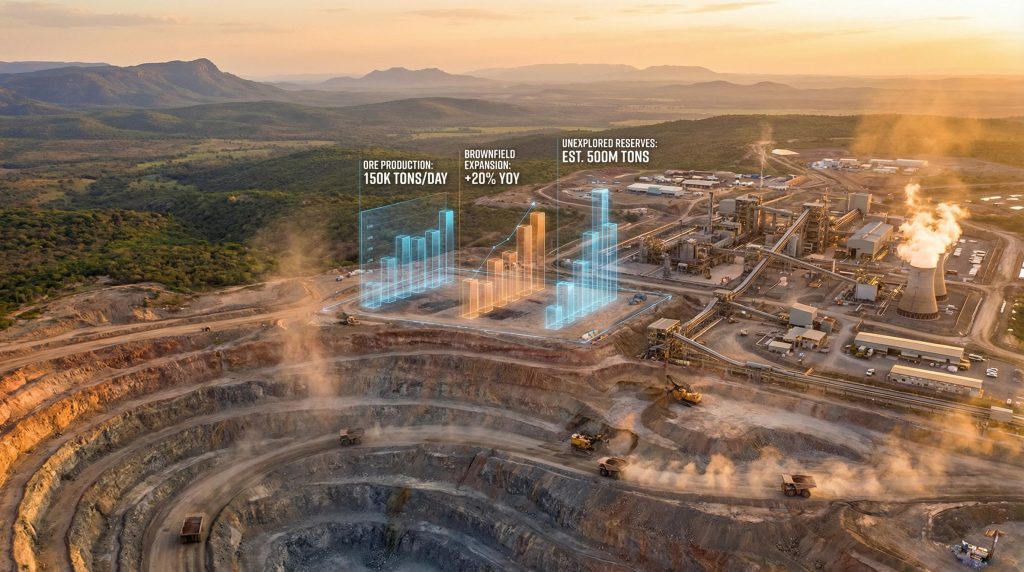
Modern mining operations increasingly rely on a sophisticated brownfield mining strategy that prioritizes expansion over exploration. This shift represents one of the most significant strategic transformations in the extractive industries, fundamentally altering how companies allocate capital and assess risk in an era of mounting mineral demand.
The contemporary mining landscape reflects a calculated response to evolving market pressures, regulatory complexities, and financial constraints that have reshaped industry priorities. Rather than pursuing untested prospects in remote locations, mining companies have gravitated toward optimising existing operations through technological enhancement and systematic expansion programmes.
When big ASX news breaks, our subscribers know first
Defining Brownfield vs. Greenfield Mining Operations
Brownfield mining strategy centres on expanding or enhancing existing mining operations rather than developing entirely new sites. This approach leverages established infrastructure, proven reserves, and operational knowledge to maximise resource extraction from known deposits.
Key distinctions between these operational approaches include:
• Infrastructure requirements: Brownfield sites utilise existing processing plants, transportation networks, and utility connections
• Regulatory pathways: Established operations benefit from existing permits and environmental baseline data
• Technical certainty: Known geological conditions reduce exploration risk and engineering uncertainties
• Community relationships: Existing workforce and local stakeholder agreements provide operational stability
Greenfield operations, by contrast, require comprehensive site development from initial exploration through full production. These projects demand substantial upfront investment in infrastructure development, environmental impact assessments, and community engagement programmes before any revenue generation begins.
The Economic Logic Behind Brownfield Expansion
Financial analysis consistently demonstrates the economic advantages of brownfield development over greenfield exploration. Furthermore, capital efficiency metrics reveal significant cost differentials between expansion and discovery-based projects.
Brownfield operations typically require 60-70% less initial capital investment compared to equivalent greenfield projects. This reduction stems from leveraging existing infrastructure, established supply chains, and proven operational systems.
The regulatory environment further enhances brownfield economics through streamlined permitting processes. Environmental monitoring systems, baseline studies, and stakeholder consultation frameworks already exist, reducing both timeline and compliance costs. Community acceptance, often the most challenging aspect of new mine development, benefits from established employment relationships and demonstrated environmental stewardship.
How Brownfield Strategy Transforms Mining Economics
Capital Allocation Patterns in Modern Mining
Global mining capital expenditure patterns reveal a pronounced shift toward brownfield investment. Industry analysis indicates that approximately 75% of global mining capex now flows to brownfield expansion projects, with only 25% allocated to greenfield development.
This allocation pattern reflects risk-adjusted return calculations that favour predictable expansion over speculative exploration. In addition, brownfield projects typically deliver internal rates of return 3-5 percentage points higher than comparable greenfield investments, primarily due to reduced execution risk and shorter payback periods.
Return on investment comparisons demonstrate clear advantages:
• Brownfield expansion projects: 12-18% IRR with 3-5 year payback periods
• Greenfield development: 8-14% IRR with 6-10 year payback periods
• Exploration programmes: Highly variable returns with significant failure rates
Infrastructure Leverage and Operational Synergies
Brownfield mining strategy maximises return on existing infrastructure investments through systematic capacity optimisation. Processing plants originally designed for specific throughput rates often accommodate 20-40% capacity increases through technological upgrades and operational improvements.
Transportation and logistics systems provide another layer of competitive advantage. Established rail connections, port facilities, and shipping contracts reduce per-unit transportation costs while ensuring reliable supply chain access. These advantages become increasingly valuable as global logistics networks face capacity constraints and cost inflation.
| Infrastructure Component | Brownfield Advantage | Typical Cost Savings |
|---|---|---|
| Processing facilities | Capacity optimisation | 40-60% vs. new construction |
| Transportation networks | Established routes | 25-35% per unit shipped |
| Power and utilities | Grid connections | 50-70% vs. remote development |
| Workforce housing | Existing communities | 30-50% vs. new settlements |
What Drives the Industry Shift Toward Brownfield Development?
Regulatory Environment and Permitting Advantages
Contemporary environmental regulations create substantial barriers to new mine development while providing clear pathways for brownfield expansion. Permitting timelines for greenfield projects now average 7-10 years in developed mining jurisdictions, compared to 2-4 years for brownfield expansions.
Environmental baseline data collection, often requiring multiple years of monitoring before project approval, already exists for operating mines. This historical data enables rapid environmental impact assessments for expansion proposals while demonstrating compliance with evolving regulatory standards.
Social licence considerations further favour brownfield development:
• Community familiarity: Local stakeholders understand mining operations and economic benefits
• Employment continuity: Expansion projects preserve existing jobs while creating new opportunities
• Infrastructure sharing: Schools, healthcare facilities, and civic improvements benefit broader communities
• Environmental stewardship: Demonstrated compliance builds trust for future expansion proposals
Financial Market Preferences and Risk Assessment
Capital markets increasingly favour predictable returns over speculative exploration ventures. Institutional investors, particularly pension funds and insurance companies, prefer brownfield projects that offer steady cash flows with quantifiable risk profiles.
Debt financing accessibility reflects this preference, with brownfield expansion projects securing funding at interest rates typically 200-400 basis points below comparable greenfield financing. However, insurance and bonding costs similarly favour established operations with proven safety records and environmental compliance histories.
Additionally, these capital allocation insights demonstrate how financial markets reward operational predictability.
Mining companies that maintain 60-70% brownfield focus while allocating 15-20% to exploration activities achieve optimal risk-adjusted returns while preserving long-term growth options.
Technical Approaches to Brownfield Mining Optimisation
Resource Extension Methodologies
Brownfield mining strategy employs multiple technical approaches to maximise resource recovery from existing deposits. Each methodology offers distinct advantages depending on geological conditions, economic factors, and operational constraints.
Pit deepening operations extend open-pit mining through systematic excavation of deeper ore zones. This approach typically requires slope stability analysis, dewatering system upgrades, and haulage route optimisation to maintain operational efficiency at greater depths.
Underground conversion projects transition surface operations to underground mining methods as open-pit limits are reached. These complex undertakings require substantial capital investment but often access higher-grade ore bodies while reducing surface environmental impact.
Adjacent ore body development leverages existing infrastructure to exploit nearby mineral deposits. This strategy minimises development costs while expanding resource base through shared processing facilities and transportation networks.
Technology Integration for Brownfield Enhancement
Advanced mining technologies enable significant productivity improvements in brownfield operations. Automated mining systems, including autonomous haul trucks and remotely operated equipment, increase operational efficiency while reducing safety risks in established mining environments.
Digital twin modelling creates virtual replicas of mining operations, enabling real-time optimisation of extraction sequences, equipment utilisation, and processing parameters. These systems provide data-driven mining innovations that maximise recovery rates while minimising operational costs.
Ore sorting technologies represent another frontier in brownfield optimisation. Advanced sensor systems identify and separate ore from waste rock before processing, reducing energy consumption and increasing mill throughput for existing facilities.
Why Brownfield Strategy May Signal Industry Vulnerability
The Discovery Gap Challenge
While brownfield mining strategy offers immediate economic advantages, it creates long-term supply security concerns. Global exploration investment has declined significantly over the past decade, with exploration budgets falling approximately 40% since peak levels in the mid-2010s.
This exploration investment decline coincides with increasing mineral demand driven by renewable energy transitions and technological advancement. Consequently, the resulting discovery gap threatens long-term supply security as existing deposits face inevitable depletion.
Major mining companies now exhibit aging deposit portfolios:
• Average mine age: Increasing from 15-20 years to 25-30 years globally
• Reserve replacement ratios: Falling below 100% for many commodities
• Discovery rates: Declining despite technological advancement in exploration methods
Resource Depletion and Grade Decline Patterns
Statistical analysis of global mining operations reveals concerning trends in ore quality and extraction costs. For instance, recent studies show that average copper grades have declined from approximately 1.5% in 1980 to below 0.8% currently, requiring increased processing of waste material for equivalent metal production.
Strip ratios in open-pit operations have increased correspondingly, with many operations now moving 3-4 tons of waste rock for every ton of ore processed. This trend increases energy consumption, environmental impact, and operational costs while reducing net present value of mining projects.
Environmental intensity escalation affects multiple operational parameters:
• Energy consumption per unit of metal: Increasing 2-3% annually across major commodities
• Water usage requirements: Rising due to lower ore grades and deeper operations
• Waste rock generation: Growing proportionally with strip ratio increases
• Processing chemical consumption: Increasing with ore complexity and grade decline
The next major ASX story will hit our subscribers first
Strategic Limitations of Brownfield-Dependent Mining
Geographic Concentration Risks
Brownfield mining strategy concentrates operations in established mining regions, creating vulnerability to localised political, regulatory, and infrastructure risks. Many global mining companies now derive 60-80% of production from 2-3 key jurisdictions, amplifying exposure to policy changes or social unrest.
Infrastructure bottlenecks in mature mining regions increasingly constrain expansion potential. Rail networks, port facilities, and power systems designed for historical production levels struggle to accommodate growing throughput requirements from multiple brownfield expansion projects.
Community fatigue emerges as operations intensify:
• Environmental impact accumulation: Longer mine lives increase cumulative effects on local ecosystems
• Social acceptance erosion: Extended operations may exhaust community patience with mining activities
• Economic dependency concerns: Over-reliance on single-industry employment creates vulnerability
• Infrastructure strain: Housing, healthcare, and education systems face capacity constraints
Innovation Stagnation and Technological Lock-in
Legacy systems in brownfield operations often constrain adoption of emerging mining technologies. Existing processing equipment, designed for specific ore characteristics, may not accommodate alternative extraction or beneficiation methods that could improve efficiency.
Sunk cost bias influences equipment and process decisions, leading operators to maximise utilisation of existing assets rather than investing in potentially superior alternatives. This tendency creates competitive disadvantages as newer operations deploy cutting-edge technologies from initial development.
Technological lock-in effects include:
• Processing constraints: Existing facilities limit ore type flexibility and recovery optimisation
• Equipment lifecycle misalignment: Different replacement schedules prevent integrated technology upgrades
• Skills gap development: Workforce expertise may lag emerging industry practices
• Capital allocation inefficiency: Maintenance of aging systems diverts resources from innovation investment
How to Balance Brownfield Efficiency with Future Discovery
Portfolio Diversification Strategies
Successful mining companies maintain balanced project portfolios that optimise current returns while ensuring future supply security. Industry analysis suggests optimal allocation of 60-70% of capital to brownfield expansion, 15-20% to exploration activities, and 10-15% to emerging opportunities.
This diversification approach recognises that brownfield mining strategy provides essential cash flow generation while exploration investments create future growth options. The key lies in maintaining exploration capability during profitable brownfield operation phases, incorporating exploration investment insights to guide decision-making.
Strategic diversification mechanisms include:
• Geographic spread: Operations across multiple jurisdictions reduce political and regulatory risk
• Commodity mix: Diverse metal portfolios provide market cycle protection
• Development stage variety: Projects at different development phases ensure pipeline continuity
• Partnership structures: Joint ventures and option agreements share exploration risks
Exploration Investment Models
Joint venture structures enable companies to maintain exploration exposure while sharing financial and technical risks. These arrangements often pair established operators with specialised exploration companies, combining operational expertise with discovery-focused technical capabilities.
Option agreement strategies provide another mechanism for exploration participation. Companies acquire rights to earn interests in promising prospects through staged exploration investments, creating exposure to discovery upside while limiting downside risk.
Regional consolidation approaches offer synergistic development opportunities by combining multiple brownfield operations with shared infrastructure and processing facilities. This strategy maximises efficiency while creating economies of scale for exploration programmes. These industry evolution trends are reshaping how companies structure their operations.
What This Means for Mining Investment and Strategy
Implications for Resource Security Planning
Government and industrial planners increasingly recognise supply chain vulnerability associated with brownfield-dependent mining. Strategic mineral stockpiling programmes reflect concerns about discovery gap implications for critical material availability.
Resource security frameworks must account for the timeline disconnect between immediate brownfield productivity and long-term exploration requirements. Furthermore, policy initiatives increasingly incentivise exploration investment through tax credits, research grants, and regulatory streamlining programmes.
Alternative sourcing integration becomes essential:
• Recycling technology advancement: Urban mining and electronic waste recovery supplement primary production
• Substitution research: Material science innovations reduce dependence on scarce minerals
• International cooperation: Bilateral agreements secure access to diverse supply sources
• Strategic reserve management: Government stockpiles buffer short-term supply disruptions
Future-Proofing Mining Operations
Scenario planning exercises help mining companies prepare for resource transition periods when brownfield operations reach economic limits. Technology roadmaps identify operational flexibility requirements for evolving market conditions and regulatory environments.
Sustainability metrics integration in project evaluation ensures that brownfield mining strategy aligns with environmental, social, and governance expectations. These considerations increasingly influence investment decisions and operational licensing requirements. However, comprehensive brownfield analysis provides frameworks for understanding these complex trade-offs.
Future-proofing elements include:
• Flexible processing systems: Equipment capable of handling diverse ore types and qualities
• Renewable energy integration: Power systems that adapt to evolving energy infrastructure
• Water recycling capabilities: Closed-loop systems that minimise fresh water consumption
• Community transition planning: Economic diversification strategies beyond mining dependence
Frequently Asked Questions About Brownfield Mining Strategy
Is brownfield mining more environmentally sustainable?
Environmental sustainability comparisons between brownfield and greenfield mining reveal complex tradeoffs. Brownfield operations benefit from existing infrastructure and established environmental management systems, reducing new land disturbance and development impacts.
However, extended mining operations create cumulative environmental effects that may exceed those of shorter-duration greenfield projects. Longer mine lives, deeper excavations, and intensified processing requirements gradually increase environmental intensity per unit of production.
Comparative environmental considerations include:
• Cumulative vs. distributed impacts: Concentrated long-term effects versus dispersed short-term disturbance
• Infrastructure efficiency: Shared facilities reduce per-unit environmental footprint
• Rehabilitation timing: Delayed closure may postpone ecosystem restoration benefits
• Technology advancement: Older operations may lack environmental controls available to new projects
How do brownfield projects affect local communities?
Brownfield mining strategy creates both opportunities and challenges for local communities. Employment stability represents a primary benefit, as expansion projects preserve existing jobs while creating additional opportunities for local workers and suppliers.
However, extended mining operations may create economic dependency that limits community diversification. Infrastructure development responsibilities, initially welcomed by communities, may become burdensome as maintenance requirements increase over time.
Long-term community impacts encompass:
• Economic stability vs. diversification: Steady employment versus limited economic alternatives
• Infrastructure lifecycle management: Asset ownership and maintenance responsibility allocation
• Social cohesion effects: Population stability versus community evolution and change
• Intergenerational planning: Career opportunities for younger residents and succession planning
What role does brownfield strategy play in critical mineral supply?
Critical mineral supply security increasingly depends on brownfield mining strategy as new discoveries become scarcer and more challenging to develop. Strategic minerals essential for renewable energy and defence applications rely heavily on expansion of existing operations.
International trade considerations favour domestic brownfield development over imports from potentially unreliable sources. Supply chain resilience planning prioritises known domestic production capacity expansion over overseas greenfield investments.
Strategic mineral security factors include:
• Domestic production expansion: Reducing import dependence through brownfield optimisation
• Allied source development: Brownfield investments in partner nations ensure stable supply relationships
• Supply chain integration: Vertical integration strategies linking mining, processing, and manufacturing operations
• Emergency production capability: Maintaining surge capacity for national security requirements
The Future of Brownfield Mining in Resource Development
Emerging Technologies Reshaping Brownfield Operations
Artificial intelligence applications in resource optimisation enable unprecedented precision in ore grade control and processing efficiency. Machine learning algorithms analyse geological data, equipment performance, and market conditions to optimise extraction sequences and maximise recovery rates.
Renewable energy integration strategies transform brownfield operations into sustainable production centres. Solar, wind, and battery storage systems reduce operational costs while meeting environmental compliance requirements and corporate sustainability goals.
Circular economy principles increasingly influence brownfield mining through waste stream valorisation and resource recovery optimisation. Previously discarded materials become valuable inputs for expanded production processes.
Policy and Regulatory Evolution
Government incentive programmes increasingly recognise the strategic importance of brownfield mining in supply security planning. Tax credits for exploration investment, accelerated depreciation schedules for technology upgrades, and streamlined expansion permitting reflect policy support for balanced development approaches.
International cooperation frameworks facilitate technology sharing, best practices exchange, and coordinated supply security planning among allied nations. These agreements recognise that brownfield mining strategy must operate within global mineral supply contexts.
Climate change adaptation requirements influence brownfield mining through water management, energy efficiency, and environmental resilience planning. Operations must demonstrate adaptability to evolving environmental conditions and regulatory expectations.
Disclaimer: This analysis discusses industry trends and strategic considerations based on available information. Mining investments involve significant risks, and readers should conduct thorough due diligence and consult qualified professionals before making investment decisions. Market conditions, regulatory environments, and technological capabilities continue evolving rapidly in the mining sector.
Looking to Capitalise on ASX Mining Opportunities?
Discovery Alert's proprietary Discovery IQ model delivers instant notifications when significant mineral discoveries hit the ASX, helping investors identify brownfield expansion opportunities and greenfield breakthroughs before the broader market reacts. Whether you're tracking established operations scaling production or seeking the next major discovery that could transform a junior explorer, explore Discovery Alert's historic discovery examples and begin your 30-day free trial today to position yourself ahead of market movements.