May 23, 2026
Burkina Faso gold mining reforms have transformed West African mineral extraction as resource-rich nations increasingly prioritise domestic value capture over traditional foreign investment models. This continental shift reflects growing recognition that extractive industries must contribute more directly to national development objectives beyond simple export revenues.
Understanding the Strategic Shift in West African Resource Control
Burkina Faso's mining sector transformation represents a comprehensive regulatory overhaul extending far beyond conventional policy adjustments. The nation achieved unprecedented production metrics in 2025, with 94 tonnes of gold extracted – a remarkable increase of over 30 tonnes compared to 2024 figures. This surge demonstrates how strategic governance reforms can translate into measurable economic outcomes.
The production milestone encompasses multiple extraction categories, including industrial operations, artisanal mining activities, and state asset recoveries. Furthermore, this success aligns with broader mining industry evolution trends across resource-rich nations. Minister Yacouba Zabré Gouba's performance report to Prime Minister Rimtalba Jean Emmanuel Ouédraogo revealed an 89.66 percent achievement rate under the ministry's performance contract.
Artisanal mining contributed significantly to this success, generating approximately 42 tonnes of the total output – representing nearly 45% of national production. This substantial contribution from traditionally informal sector activities indicates that formalisation initiatives have successfully improved productivity while maintaining community-level participation in extractive activities.
The operationalisation of SOPAMIB (Burkina Faso Mining Participation Company) emerged as a critical driver of sector performance improvements. This state entity now manages government participation across the mining value chain while coordinating oversight of the country's 15 industrial mining operations. Enforcement efforts against illicit gold trading recovered approximately 10 kilograms of gold from illegal supply chains during 2025, demonstrating improved regulatory capacity.
When big ASX news breaks, our subscribers know first
Enhanced Government Participation Models
The restructured participation framework introduces sophisticated mechanisms for state involvement in mining ventures that extend beyond traditional royalty collection. SOPAMIB functions as the primary vehicle for government equity stakes, managing both direct state interests and coordinating the integration of recovered assets into the national mining portfolio.
This approach represents a fundamental shift from passive revenue collection toward active participation in mining economics. The state now maintains operational influence over project development decisions while securing enhanced revenue streams through equity returns alongside traditional fiscal mechanisms.
Key Participation Mechanisms:
- Direct equity stakes through SOPAMIB management
- Enhanced oversight authority over industrial operations
- Formalised artisanal sector integration programs
- Coordinated asset recovery and nationalisation processes
- Strategic planning for domestic mining expansion initiatives
The government's 2026 objectives include developing "at least 10 semi-mechanised mining projects, all led entirely by local private investors," indicating continued prioritisation of domestic entrepreneurship. However, this approach must navigate the complex mining permitting process to ensure regulatory compliance whilst maintaining operational efficiency.
Revenue Optimisation Through Dynamic Fiscal Structures
Burkina Faso gold mining reforms incorporate responsive mechanisms that adjust government revenue capture based on commodity market conditions and operational performance metrics. The substantial production increases achieved in 2025 demonstrate how reformed governance structures can enhance both volume output and revenue efficiency.
The integration of artisanal mining formalisation with industrial-scale operations creates multiple revenue streams for government coffers. Cooperative organisation of small-scale miners through SOPAMIB coordination has improved productivity while ensuring appropriate fiscal contributions from previously informal activities.
Revenue Enhancement Strategies:
- Performance-based fiscal arrangements linking production to government returns
- Coordinated oversight of industrial and artisanal mining activities
- Asset recovery programmes targeting illicit gold trading networks
- Direct state participation through SOPAMIB equity management
- Infrastructure development funded through mining revenue allocation
The ministry's achievement of an 89.66 percent performance rate indicates successful implementation of reformed fiscal mechanisms. This metric reflects improved revenue collection, enhanced production oversight, and effective coordination between various mining sector stakeholders.
Operational Changes in the Regulatory Environment
The current regulatory framework emphasises enhanced state control over mining activities through strengthened oversight mechanisms and participation requirements. Industrial operations now function under more intensive government supervision, while artisanal activities receive formal organisational support through cooperative development programmes.
SOPAMIB's mandate encompasses both direct operational involvement and broader sector coordination responsibilities. The company manages state equity interests whilst facilitating the transition of artisanal miners into formal cooperative structures that improve safety standards, productivity metrics, and revenue capture mechanisms.
Regulatory Enhancement Areas:
- Strengthened oversight of industrial mining operations
- Formal organisation of artisanal mining through cooperative structures
- Enhanced enforcement against illegal gold trading activities
- Coordinated development of semi-mechanised mining projects
- Strategic planning for Bureau of Mines and Geology restructuring
The planned 2026 reorganisation of the Bureau of Mines and Geology represents continued institutional development aimed at improving regulatory efficiency. Moreover, these reforms complement broader regional initiatives to establish a critical minerals reserve framework that ensures strategic resource security.
Infrastructure Development Supporting Mining Expansion
The correlation between mining sector performance and infrastructure development demonstrates coordinated government strategy linking extractive revenues to community development objectives. During 2025, substantial progress occurred across multiple infrastructure categories that directly support mining operations and broader economic activity.
Electricity Access Expansion:
- 160,000 households newly connected to the national electricity grid
- 131 rural localities gaining first-time power access
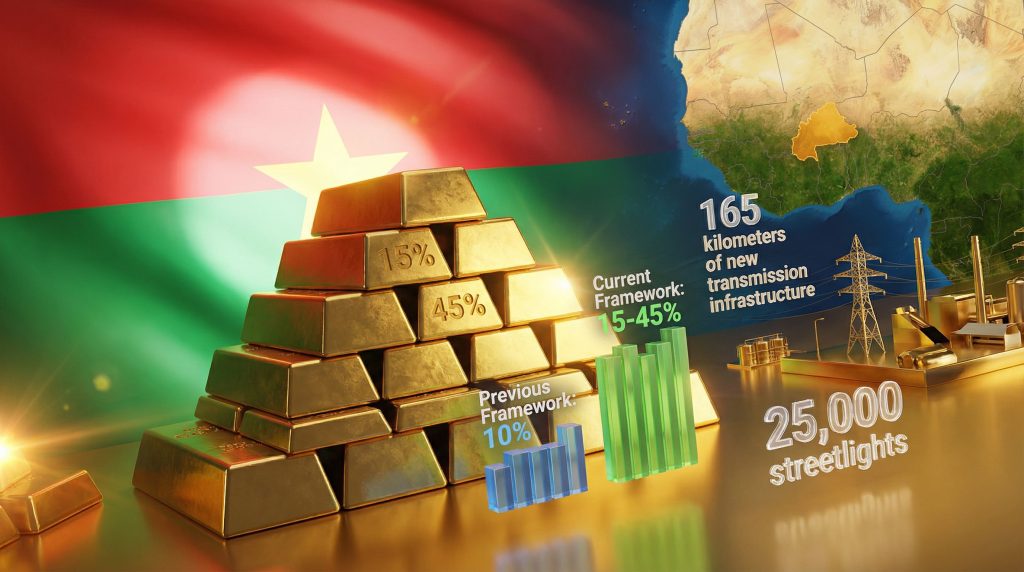
- 165 kilometres of transmission infrastructure deployed
- 500 kilometres of low-voltage distribution lines installed
These electrical grid enhancements provide essential infrastructure for mining operations while improving living conditions in mining-adjacent communities. The substantial scale of household connections and rural electrification creates favourable conditions for expanded economic activity beyond direct mining operations.
Urban Security Infrastructure:
- Over 25,000 streetlights installed across urban and peri-urban areas
- Enhanced security conditions supporting mining logistics and workforce mobility
- Improved transportation safety for mining-related activities
The comprehensive streetlight installation programme creates improved security environments that facilitate mining sector logistics, equipment transportation, and workforce management. These infrastructure investments demonstrate direct linkages between mining revenue generation and community development initiatives.
SOPAMIB's Role in State Mining Operations
The Burkina Faso Mining Participation Company represents the government's primary mechanism for direct involvement in mining sector activities. SOPAMIB's operationalisation during 2025 coincided with the record production performance, indicating successful integration of state participation mechanisms with operational efficiency objectives.
SOPAMIB Operational Responsibilities:
- Managing state equity interests across mining operations
- Coordinating oversight of 15 industrial mining facilities
- Organising artisanal mining into formal cooperative structures
- Facilitating development of domestically-led mining projects
- Supporting enforcement against illegal gold trading networks
The company's success in coordinating artisanal mining formalisation resulted in 42 tonnes of gold production from small-scale operations – a substantial increase that demonstrates effective organisational improvements. This formalisation process maintains community-level participation while improving safety standards, productivity metrics, and revenue capture mechanisms.
SOPAMIB's mandate extends to supporting the development of semi-mechanised mining projects led by domestic private investors. The government's target of establishing at least 10 such projects during 2026 indicates continued expansion of local participation in mining activities beyond traditional artisanal or large-scale industrial categories.
The next major ASX story will hit our subscribers first
Implications for International Mining Companies
International operators must navigate an evolved regulatory environment that emphasises enhanced state participation while maintaining operational viability. The successful production increases achieved during 2025 demonstrate that reformed governance structures can accommodate both government sovereignty objectives and continued mining sector productivity.
Compliance Considerations:
- Coordination with SOPAMIB on state participation mechanisms
- Enhanced reporting requirements under strengthened oversight protocols
- Integration with formalised artisanal mining cooperative structures
- Compliance with domestic procurement and local content preferences
- Coordination with infrastructure development and security initiatives
The substantial production increases achieved across both industrial and artisanal mining categories indicate that regulatory reforms have not impeded operational efficiency. Companies operating under the current framework benefit from improved infrastructure, enhanced security conditions, and coordinated sector development initiatives.
Risk management strategies must account for continued evolution of the regulatory environment, particularly planned institutional restructuring and expanded domestic participation requirements. In addition, global trade war impacts continue to influence international commodity markets, requiring adaptive operational strategies.
Regional Context and Competitive Positioning
Burkina Faso gold mining reforms align with broader West African movements toward enhanced domestic control over mineral resources. The success achieved during 2025 provides a demonstration model for resource-rich nations seeking to maximise extractive industry contributions to national development objectives.
The substantial production increases and successful infrastructure development create competitive advantages for continued investment attraction while maintaining enhanced state participation levels. This balance between sovereignty objectives and operational efficiency provides a framework potentially applicable across regional mining jurisdictions.
Regional Mining Policy Trends:
- Enhanced state participation in extractive activities
- Formal organisation of artisanal mining sectors
- Infrastructure development funded through mining revenues
- Domestic capacity building in mining technical expertise
- Coordinated enforcement against illegal resource trading
The record production performance achieved under reformed governance structures demonstrates that enhanced state control can coexist with operational efficiency and continued investment attraction. Consequently, this success provides valuable insights for regional mining policy development and international investor adaptation strategies.
What Challenges Do International Companies Face?
International mining companies operating in Burkina Faso face significant regulatory complexities as the government strengthens its mining claims framework requirements. Companies must adapt to enhanced state participation models whilst maintaining operational viability under evolving regulatory conditions.
The new mining code enhances state participation through SOPAMIB coordination and increased oversight requirements. This regulatory evolution requires companies to develop comprehensive compliance strategies that accommodate enhanced government involvement in mining operations.
Furthermore, security considerations remain paramount for international operators, particularly given ongoing regional instability concerns. However, the government's substantial investment in urban security infrastructure, including over 25,000 streetlights, demonstrates commitment to improving operational environments for mining activities.
Future Developments and Policy Evolution
The government's 2026 reform agenda encompasses continued institutional development, expanded domestic participation, and deeper integration of mining revenues with national development objectives. The planned Bureau of Mines and Geology restructuring indicates ongoing commitment to strengthening regulatory capacity and technical oversight capabilities.
2026 Development Priorities:
- Institutional restructuring for improved regulatory efficiency
- Development of 10+ domestically-led semi-mechanised mining projects
- Continued artisanal mining formalisation through cooperative development
- Enhanced infrastructure integration supporting mining operations
- Achievement of stated "energy and mining sovereignty" objectives
The targeting of semi-mechanised mining project development represents strategic expansion beyond traditional artisanal and industrial categories. These projects aim to build domestic technical capacity while maintaining community-level participation in mining activities.
Continued infrastructure development priorities include sustained electrical grid expansion, enhanced urban security systems, and improved transportation networks supporting mining logistics. For instance, the government has demonstrated remarkable progress, with Burkina Faso achieving record gold production as mining and energy reforms deliver measurable results.
The government's commitment to achieving energy and mining sovereignty indicates continued policy evolution toward comprehensive domestic control over strategic resource sectors. This objective encompasses enhanced state participation, improved regulatory capacity, and expanded domestic technical capabilities across the extractive industries value chain.
"Since Captain Ibrahim Traoré took power in 2022, the government has demonstrated unprecedented commitment to transforming Burkina Faso's mining sector through comprehensive regulatory reforms," according to recent government statements.
Disclaimer: This analysis is based on publicly available information and government statements. Mining sector investments involve significant risks, and regulatory frameworks may continue evolving. Investors should conduct comprehensive due diligence and seek professional advice before making investment decisions in Burkina Faso's mining sector.
Could This Signal New Opportunities in African Mining Markets?
Discovery Alert's proprietary Discovery IQ model delivers real-time alerts on significant mineral discoveries across global markets, instantly empowering subscribers to identify actionable opportunities ahead of broader market movements. Understand why major mineral discoveries can generate substantial returns by exploring historic examples of exceptional market outcomes, then begin your 14-day free trial today to position yourself ahead of emerging opportunities.