June 10, 2026
The intersection of global commodity markets and advanced metallurgical processes has transformed byproducts in chinese zinc and lead smelting from secondary revenue streams into critical profit drivers. Modern smelting operations now derive 30-45% of total revenues from sophisticated recovery systems that extract valuable materials from what were previously considered waste streams.
Traditional smelting economics centred on treatment charge margins from converting concentrates to refined metals. However, evolving market dynamics have shifted this paradigm toward integrated recovery systems that generate substantial income from sulfuric acid, precious metals, and various industrial chemicals. This transformation reflects broader industrial trends where resource optimisation and circular economy principles drive operational strategies.
What Are the Primary Byproducts Generated in Chinese Zinc and Lead Smelting?
Chinese smelting operations generate multiple valuable secondary products through integrated metallurgical processes. The tariffs impact on global commodity flows has intensified focus on domestic byproduct recovery systems that collectively contribute 30-45% of total smelter revenues.
Sulfuric Acid Production Systems
Zinc smelting operations produce 3-4 tonnes of sulfuric acid per tonne of zinc concentrate processed through sophisticated SO₂ capture and conversion technologies. Modern facilities maintain 98% concentration standards for industrial applications, requiring specialised storage infrastructure including tank farms and distribution networks.
The production process involves roasting temperature control between 850-950°C for optimal SO₂ generation, with acid plant efficiency ratings reaching 95-98% SO₂ conversion rates. Environmental compliance systems ensure mercury emissions remain below 50 mg/m³ for stack emissions while dust collection achieves >99.5% particulate removal efficiency.
Precious Metal Recovery Operations
Lead concentrate processing yields significant precious metal streams with 85-95% recovery efficiency from high-grade materials. Furthermore, gold-silver ratio analysis reveals that silver extraction represents the most valuable component, utilising electrolytic refining and specialised recovery circuits to maximise yield.
Gold recovery systems employ electrowinning technologies and cupellation processes to extract precious metals from concentrate streams. Copper byproducts typically contain 0.5-2% copper content in concentrates, creating additional revenue opportunities for operators focused on premium material procurement.
Mercury capture technologies utilise activated carbon and condensation systems to comply with environmental regulations while recovering valuable materials that would otherwise represent waste disposal costs.
Industrial Waste Stream Management
Slag composition analysis reveals complex mixtures of iron oxides, silicates, and residual metals that require specialised handling protocols. Dust collection systems generate baghouse and electrostatic precipitator outputs containing recoverable metal values.
Leach residue processing involves jarosite and goethite handling protocols designed to minimise environmental impact while extracting remaining valuable materials. These systems represent significant operational complexity but contribute to overall facility profitability through comprehensive material recovery.
When big ASX news breaks, our subscribers know first
How Do Treatment Charges Impact Byproduct Revenue Strategies?
Treatment charge dynamics directly influence smelter operational strategies and material procurement decisions. Current market conditions have created unprecedented pressure on primary revenue streams, forcing operators to optimise secondary income sources through byproducts in chinese zinc and lead smelting operations.
Treatment Charge Dynamics in 2026
Zinc Concentrate Treatment Charges:
| Date | Price Range (USD/tonne) | Trend |
|---|---|---|
| December 26, 2025 | $40-70 | Baseline |
| January 9, 2026 | $40-60 | Declining upper range |
Lead Concentrate Treatment Charges:
| Grade Category | December 24, 2025 | November 28, 2025 | Monthly Change |
|---|---|---|---|
| High Silver | -$220 to -$180 | -$160 to -$140 | -$60 to -$80 deterioration |
| Low Silver | -$180 to -$150 | -$140 to -$120 | -$40 to -$30 deterioration |
Revenue Offset Mechanisms
Treatment charges represent fees that miners pay smelters to convert ores into refined metal. With both zinc and lead concentrate treatment charges remaining at relatively low levels throughout 2026, byproducts have become critical to smelter profit margins for offsetting high raw material procurement costs.
The negative territory positioning of lead concentrate treatment charges indicates a fundamental market reversal where smelters pay premiums to access concentrate rather than receiving processing fees. This structural shift makes byproduct revenue streams essential for operational sustainability.
Recent tender results demonstrate this dynamic clearly. The Antamina tender for Q1 2026 shipment closed at negative $7 per tonne, indicating buyers paid premiums to secure high-quality concentrates in an expected tighter market. Similarly, Australia's Dugald River clean units closed at $20-30 per tonne for February-March delivery.
Operating rate sustainability depends on maintaining production despite low primary treatment charges, requiring sophisticated margin protection strategies through diversified income stream development.
Why Is Sulfuric Acid Becoming Critical to Smelter Profitability?
Sulfuric acid markets have experienced dramatic transformation due to global supply disruptions and geopolitical factors. Price escalation has converted what was traditionally a commodity byproduct into a strategic margin component for smelting operations.
Global Supply Disruption Analysis
Russian sulfur export reductions created significant market tightness throughout 2025. As the world's second-largest sulfur producer, Russia's 40% decline in sulfur exports tightened international supply conditions dramatically.
Sulfuric Acid Price Progression:
| Period | Price Range (Yuan/Tonne) | USD Equivalent | Percentage Change |
|---|---|---|---|
| January 2025 | 300-440 | $43-63 | Baseline |
| June 2025 | 600-750 | $86-108 | +70% |
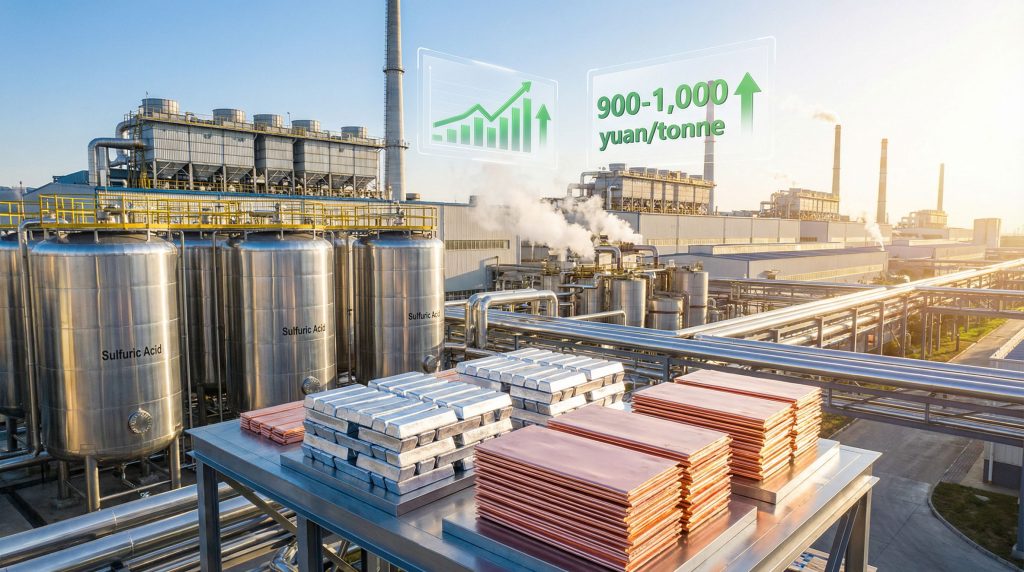
| December 2025 | 900-1,000 | $129-144 | +185% |
Market participants expect continued supply tightness to support elevated pricing throughout 2026. In addition, a Hong Kong-based trader confirmed that profit gains from acid will continue helping smelters compensate for expectedly low treatment charges during the current year.
Production Economics and Capacity Utilisation
Capital expenditure requirements for new acid plants range from $15-25 million per facility, while major facility upgrades require $50-100 million investments. These substantial investments reflect the strategic importance of sulfuric acid production capability.
Environmental compliance costs include emission control and monitoring systems designed to meet stringent regulatory standards. Process integration requires sophisticated SO₂ capture and conversion technologies as core smelter infrastructure components.
The economics have shifted so dramatically that smelters now show reduced interest in oxidised lead concentrate, previously considered regular raw material for lead smelting, due to its low sulfur yields which are insufficient to generate adequate byproduct revenue.
What Role Does Silver Play in Lead Smelter Economics?
Silver represents the most significant precious metal byproduct for lead smelting operations, contributing 25-40% of total lead smelter income. Price performance and industrial demand dynamics have elevated silver from secondary revenue to primary profitability driver.
Precious Metal Market Integration
Silver Price Performance Metrics:
- January 15, 2026 (intraday peak): 23,688 yuan per kg
- January 16, 2026 (closing): 22,483 yuan per kg
- January 2025 (comparative): 7,872 yuan per kg
- Year-over-year increase: 185.6% appreciation
Silver prices nearly doubled throughout 2025 amid macroeconomic volatility and resilient industrial demand. The Shanghai Futures Exchange registered historically high intraday values, reflecting strong market fundamentals across electronics manufacturing, solar panels, and medical applications.
Operational Dependency Metrics
Processing efficiency maintains 90-95% silver recovery rates from high-grade concentrates through sophisticated electrowinning and refining processes. Market volatility exposure includes price swings of 15-20% within monthly periods, creating both opportunity and risk for operators.
Industry sources confirm that even with lead treatment charges dropping to deeply negative territory, profits from silver and other byproducts can sustain high operating rates at lead smelters. This dependency relationship demonstrates how precious metal markets directly influence smelting facility utilisation rates.
Revenue contribution analysis shows silver representing the largest single byproduct income source for lead operations, making smelters increasingly sensitive to precious metal market dynamics and macroeconomic conditions affecting investment demand.
How Are Chinese Smelters Adapting Their Feedstock Strategies?
Chinese smelting operations face significant feedstock supply constraints requiring strategic procurement approach modifications. Furthermore, China price trends show import dependency ratios of 65% of zinc and 55% of lead concentrates sourced internationally, creating vulnerability to global supply chain disruptions.
Concentrate Supply Chain Optimisation
Global Supply Changes in 2026:
- Positive additions: ~350,000 tonnes increased zinc concentrate volume
- Key new sources: Kipushi and Gamsberg mines (Africa), Ozenoye mine (Russia)
- Production declines: Antamina mine (Peru), Red Dog Mine (US), Cannington mine (Australia)
Quality premium targeting focuses on copper and precious metal-rich ores that maximise byproduct recovery potential. A Shanghai-based trader noted that China's increasing smelting capacity will stimulate strong buying interest, especially for concentrate units rich in copper and precious metals.
Geographic diversification strategies emphasise African and Russian mine developments to reduce dependency on traditional South American suppliers experiencing production challenges due to ore degradation and reserve exhaustion.
Raw Material Procurement Tactics
Tender strategy evolution includes negative treatment charge acceptance for premium materials, representing a fundamental shift from traditional smelter economics. Long-term contract structures spanning 12-18 months provide supply security while spot market participation maintains 20-30% of total procurement volumes for flexibility.
Recent tender results demonstrate this strategic shift clearly:
- Antamina units: Negative $7 per tonne for Q1 2026 shipment
- Dugald River clean units: $20-30 per tonne for February-March delivery
These pricing levels indicate smelters view concentrate access as worth paying premium prices, directly offsetting negative treatment charges through byproduct recovery value optimisation.
What Are the Technical Challenges in Byproduct Recovery?
Metallurgical process optimisation requires sophisticated control systems and environmental compliance infrastructure. However, data-driven operations help address technical challenges spanning temperature control, chemical processing efficiency, and regulatory compliance across multiple byproduct streams.
Metallurgical Process Optimisation
Critical Process Parameters:
- Roasting temperature control: 850-950°C for optimal SO₂ generation
- Leaching efficiency: pH control and residence time management
- Electrolytic cell performance: Current density and voltage optimisation
- Recovery rate targets: >90% for precious metals, >95% for sulfuric acid production
Process integration requires coordination between multiple recovery systems operating simultaneously. Equipment performance monitoring ensures consistent byproduct quality while maximising yield from concentrate inputs.
Environmental Compliance Requirements
Regulatory Standards:
- Mercury emissions: <50 mg/m³ stack emission limits
- Dust collection: >99.5% particulate removal efficiency
- Wastewater treatment: Heavy metal concentration controls
- Slag management: Hazardous waste containment protocols
Environmental compliance represents significant operational complexity and capital investment. Modern facilities require sophisticated monitoring systems, automated material handling, and process optimisation software to meet regulatory requirements while maintaining profitability.
Digital monitoring systems provide real-time byproduct quality tracking, enabling operators to optimise recovery rates and ensure consistent product specifications. AI-driven efficiency improvements help reduce labour costs and improve safety performance across complex metallurgical operations.
The next major ASX story will hit our subscribers first
How Do Geopolitical Factors Influence Byproduct Markets?
Geopolitical developments significantly impact byproduct market dynamics through supply chain disruptions, trade restrictions, and policy interventions. Current market conditions reflect complex interactions between global commodity flows and national security considerations.
Supply Chain Vulnerability Assessment
Russian Supply Impact:
- Pre-2025 market share: ~25% of global sulfur exports
- 2025 reduction: 40% decline in Russian sulfur exports
- Market consequence: International supply tightening and price escalation
Trade restriction impacts affect raw material flows beyond direct sanctions targets. Alternative sourcing strategies emphasise Middle Eastern and Canadian suppliers, but logistics and capacity constraints limit substitution effectiveness.
Supply chain resilience requires diversified procurement strategies and enhanced inventory management. Smelters must balance supply security against inventory carrying costs while maintaining operational flexibility.
Policy Risk Evaluation
Chinese Domestic Policy Considerations:
In December 2025, China's National Development and Reform Commission convened meetings on stabilising phosphate fertiliser markets. These discussions called for ensuring fertiliser supply around the 2026 spring planting season and prioritising domestic availability of key raw materials, including sulfuric acid.
Export control mechanisms represent potential policy tools that could cap domestic sulfuric acid price increases by limiting international sales. Price ceiling implementations remain possible through government intervention, creating uncertainty for smelter planning processes.
Domestic priority policies guarantee fertiliser industry supply access, potentially constraining industrial sulfuric acid availability during peak agricultural seasons. These policy dynamics add complexity to smelter revenue planning and byproduct marketing strategies.
What Investment Opportunities Exist in Byproduct Infrastructure?
Capital allocation priorities reflect the strategic importance of byproducts in chinese zinc and lead smelting for modern operations. Investment opportunities span technology upgrades, capacity expansion, and process optimisation across multiple recovery streams.
Capital Allocation Priorities
Infrastructure Investment Requirements:
- Acid plant modernisation: $50-100 million for major facility upgrades
- Precious metal recovery enhancement: Electrowinning and refining capacity expansion
- Waste heat recovery systems: Energy efficiency improvement projects
- Digital integration: Process monitoring and optimisation software implementation
Technology integration prospects include automated material handling systems designed to reduce labour costs and improve safety performance. Real-time byproduct quality tracking enables optimal recovery rate maintenance while ensuring consistent product specifications.
Technology Integration Prospects
Advanced System Capabilities:
- Digital monitoring: Real-time commodity price integration and yield optimisation
- Process automation: AI-driven efficiency improvements across recovery systems
- Quality control: Automated testing and specification compliance verification
- Inventory management: Dynamic pricing and sales optimisation algorithms
Investment returns depend on byproduct price sustainability and regulatory stability. Facilities with superior recovery rates and processing efficiency achieve competitive advantages through lower unit costs and higher yield percentages.
Partnership development with downstream customers provides stable revenue streams and reduces market volatility exposure. Long-term supply agreements enable more predictable cash flows while maintaining pricing flexibility for spot market opportunities.
How Should Investors Evaluate Smelter Byproduct Exposure?
Investment analysis requires comprehensive evaluation of revenue diversification benefits, operational leverage implications, and risk-return profile assessment. Consequently, industry innovation trends indicate that byproduct exposure creates both opportunity and volatility that investors must carefully analyse.
Risk-Return Profile Analysis
Performance Evaluation Metrics:
| Metric Category | Industry Leading | Average Performance |
|---|---|---|
| Byproduct Recovery Rates | >95% precious metals | 85-90% precious metals |
| Cost Per Tonne Processing | <$50 USD | $60-80 USD |
| Revenue Diversification | >40% byproduct income | 25-35% byproduct income |
| Environmental Compliance | Zero violations | Occasional penalties |
Revenue diversification benefits reduce dependency on primary metal margins while creating exposure to multiple commodity markets. Volatility assessment must consider correlation analysis between byproduct prices and macroeconomic conditions.
Operational leverage implications affect fixed cost absorption through byproduct sales. Facilities with higher byproduct contribution ratios demonstrate greater resilience during primary metal market downturns but increased sensitivity to secondary market volatility.
Performance Metrics and Benchmarking
Investment Considerations:
- Operational flexibility: Ability to adjust production based on relative byproduct margins
- Market intelligence: Real-time commodity price monitoring and sales optimisation
- Technology integration: Process efficiency and yield optimisation capabilities
- Regulatory compliance: Environmental performance and permit maintenance
Benchmarking requires analysis of recovery rate efficiency, processing cost structures, and environmental compliance scores. Superior operators achieve competitive advantages through technological superiority and operational excellence across multiple byproduct streams.
Risk assessment includes regulatory compliance scoring, as environmental violations create significant financial liability and operational disruption. Modern facilities with advanced pollution control systems demonstrate lower regulatory risk profiles.
What Does the Future Hold for Byproduct-Dependent Operations?
Market evolution scenarios encompass multiple potential outcomes affecting byproduct values and operational strategies. Strategic positioning requires operational flexibility and market intelligence systems capable of adapting to changing conditions.
Market Evolution Scenarios
Scenario Analysis Framework:
Scenario 1 – Continued Supply Tightness:
- Persistent geopolitical tensions maintaining Russian supply restrictions
- Sulfuric acid prices remaining elevated above $120 USD per tonne
- Silver prices supported by industrial demand and investment flows
- Smelter margins enhanced through sustained byproduct premiums
Scenario 2 – Geopolitical Normalisation:
- Trade restriction relaxation allowing Russian sulfur export recovery
- Sulfuric acid price moderation toward $80-100 USD per tonne
- Increased supply competition reducing byproduct margin contribution
- Return toward traditional treatment charge-based economics
Scenario 3 – Technology Disruption:
- Advanced recovery technologies improving byproduct yields
- Process automation reducing operational costs
- Environmental regulations driving technology investment requirements
- Competitive advantages for technologically superior operators
Strategic Positioning Requirements
Operational Excellence Priorities:
Market participants widely expect Chinese lead and zinc smelters will remain reliant on byproducts in chinese zinc and lead smelting revenues throughout 2026. However, this reliance creates inherent uncertainty as precious metal prices maintain high sensitivity to macroeconomic conditions while acid prices face exposure to both geopolitical factors and domestic policy directions.
A market analyst emphasised that large portions of current pricing drivers reflect cyclical and sentiment-boosted conditions. If macroeconomic conditions change, precious metal prices could correct quite rapidly, affecting smelter profitability significantly.
Successful strategic positioning requires:
- Operational flexibility enabling production adjustments based on relative margin opportunities
- Partnership development with downstream customers for stable revenue streams
- Market intelligence systems providing real-time commodity price monitoring and sales optimisation
- Technology investment in process efficiency and environmental compliance systems
Future success depends on maintaining superior byproduct recovery rates while managing exposure to volatile commodity markets and evolving regulatory requirements. Operators with diversified byproduct portfolios and advanced processing capabilities will achieve sustainable competitive advantages in this transformed market environment.
Investment decisions should consider the speculative nature of commodity markets and potential volatility in byproduct pricing. This analysis is for informational purposes and does not constitute investment advice.
Ready to Position Yourself in the Changing Metals Market?
Discovery Alert's proprietary Discovery IQ model delivers instant notifications on significant ASX mineral discoveries, enabling you to identify opportunities ahead of market movements. With byproducts becoming increasingly critical to smelter profitability and precious metal prices driving revenue streams, understanding which companies are making breakthrough discoveries positions you to capitalise on market shifts before they become widely recognised.