
June 6, 2026
Central Africa's industrial landscape sits at a critical inflection point where traditional resource extraction models face mounting pressure to evolve toward integrated value creation systems. The region's vast natural endowments have historically flowed outward as unprocessed commodities, leaving limited economic multiplier effects within local economies. This paradigmatic shift toward localised processing and manufacturing represents one of the most significant economic transformation opportunities across the continent, paralleling the broader mining industry evolution occurring globally.
The emergence of integrated industrial zones near strategic maritime infrastructure signals a fundamental restructuring of how Central African economies can capture value from their resource base. Rather than serving merely as export conduits, these developments aim to establish comprehensive manufacturing ecosystems that process raw materials into finished goods for both regional and international markets.
How Does the Cameroon Kribi Industrial Zone Redefine Regional Value Creation Models?
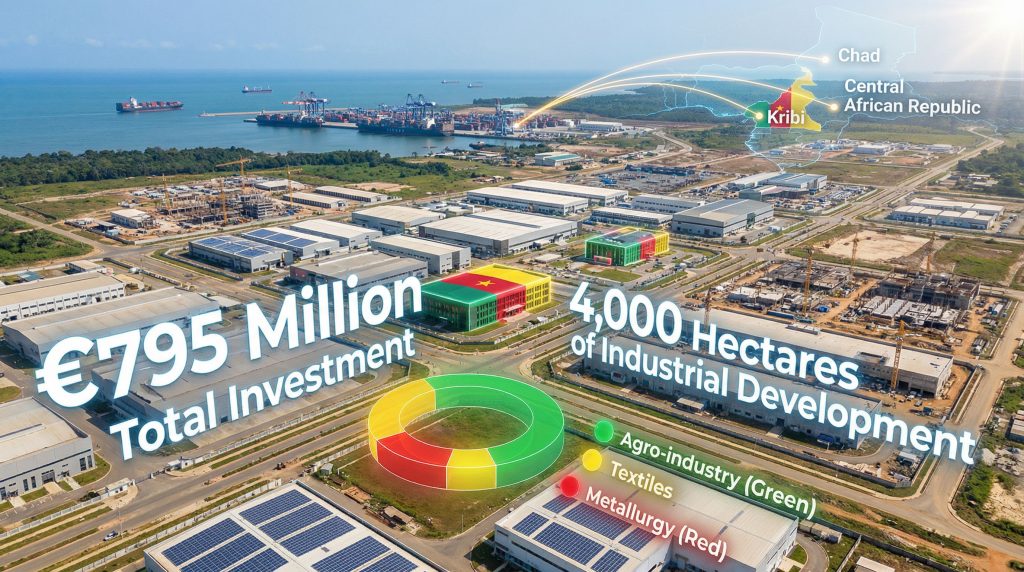
The Cameroon Kribi Industrial Zone transforms the traditional export-oriented port model into an integrated production hub spanning 4,000 hectares of strategically positioned industrial land. Since the deep-water port's commissioning in December 2018, Kribi has functioned primarily as a logistics platform for Chad and Central African Republic, with most traffic consisting of unprocessed raw materials destined for international markets.
This developmental approach represents a deliberate shift away from purely transactional port operations toward comprehensive industrial clustering. The zone's proximity to deep-water infrastructure creates significant advantages for material handling and finished product distribution, potentially reducing logistics costs by 15-25% compared to inland processing facilities.
Strategic Positioning Within Central Africa's Economic Corridor
The Cameroon Kribi Industrial Zone leverages its position as the primary maritime gateway for landlocked Central African states, handling cargo flows that extend deep into the continental interior. Chad and Central African Republic depend heavily on this corridor for international trade, creating captive market demand for processed goods manufactured within the zone.
Current trade patterns show these landlocked economies importing significant volumes of consumer goods, construction materials, and processed agricultural products that could potentially be manufactured locally. The integrated industrial zone model aims to capture this import substitution opportunity while maintaining export competitiveness through port proximity.
Key Regional Market Access Advantages:
• Direct multimodal connectivity to Chad's N'Djamena corridor
• Strategic positioning for Central African Republic trade flows
• Reduced transport costs for finished goods distribution
• Access to regional consumer markets exceeding 25 million people
Industrial Cluster Development Framework
The zone employs sectoral clustering methodology designed to create synergies between complementary manufacturing activities. Heavy industry operations position near port infrastructure for efficient raw material handling, while medium-scale manufacturing and agri-food processing occupy intermediate zones with dedicated research and development facilities integrated throughout.
This spatial organisation fosters technology transfer, supplier network development, and shared infrastructure utilisation. Companies within each cluster can benefit from specialised logistics, common waste treatment systems, and coordinated energy supply arrangements.
Between 2018 and 2025, approximately 400 billion CFA francs has already been invested by private industrial operators establishing facilities across cocoa processing, cement manufacturing, flour milling, and logistics operations. These existing operations provide a foundation for expanded clustering around proven industrial activities.
When big ASX news breaks, our subscribers know first
What Investment Architecture Powers the €795 Million Development?
The Cameroon Kribi Industrial Zone operates through a sophisticated multi-stakeholder financing structure designed to distribute development risk while leveraging specialised expertise from each consortium member. Total project valuation reaches €795 million (approximately $860 million USD), with the first construction phase requiring €400 million in committed funding.
Multi-Stakeholder Financing Structure Analysis
| Financing Component | Amount | Primary Contributors | Strategic Role |
|---|---|---|---|
| Phase 1 Construction | €400 million | AfDB, EU Global Gateway, IFC | Infrastructure & Heavy Industry |
| Total Project Value | €795 million | Multi-stakeholder Consortium | Integrated Development |
| Private Investment (2018-2025) | 400 billion CFA | Industrial Companies | Operational Facilities |
The African Development Bank leads multilateral financing alongside European Union Global Gateway programme resources and International Finance Corporation private sector expertise. This combination provides concessional funding terms while ensuring commercial viability standards.
Partnership Ecosystem Dynamics
Port Authority of Kribi (PAK) serves as the development anchor, establishing the Kribi Port Industrial Zone (KPIZ) as a dedicated project entity responsible for integrated zone management. Private consortium partners bring complementary capabilities across logistics, manufacturing, and local market expertise.
Africa Global Logistics, a Mediterranean Shipping Company subsidiary, provides global maritime logistics integration and container handling optimisation. Their involvement ensures seamless connectivity between industrial operations and international shipping networks.
Arise Integrated Industrial Platforms contributes proven industrial park development and management expertise across multiple African markets. Their track record includes successful zone operations in Gabon, Benin, and other West African locations.
Belmont Investments, owned by Cameroonian businessman Colin Mukete, provides local market knowledge and regulatory navigation capabilities. Mukete's existing shareholding in Kribi Container Terminal creates operational synergies between port and industrial zone activities.
The consortium structure reflects deliberate risk distribution across public infrastructure providers, multilateral development institutions, global logistics operators, and local business networks. This approach mitigates single-point-of-failure risks while combining diverse expertise areas.
How Does Kribi's Strategic Layout Maximise Industrial Efficiency?
The 4,000-hectare development employs phased sectoral clustering to optimise material flows, shared infrastructure utilisation, and operational synergies between complementary industrial activities. Current energy supply of 14 MVA requires expansion to 100 MVA mid-term capacity to support full zone operations.
Phased Development Strategy
The zone's master plan organises industrial activities spatially based on material handling requirements, environmental considerations, and market access needs. Heavy industry clusters position closest to port infrastructure, enabling direct vessel-to-factory material transfer for bulk commodities like iron ore, timber, and agricultural products.
Medium-scale manufacturing and agri-food processing occupy intermediate zones with dedicated transport corridors connecting to both port facilities and inland distribution networks. Research and development facilities integrate throughout the zone to facilitate technology transfer and innovation spillovers.
Spatial Organisation Benefits:
• Reduced internal transport costs through optimised facility positioning
• Shared utility infrastructure across complementary industrial clusters
• Environmental impact mitigation through coordinated waste management
• Enhanced security and operational coordination across zone activities
Infrastructure Integration with Deep-Water Port Operations
The Cameroon Kribi Industrial Zone's proximity to deep-water port infrastructure creates significant competitive advantages for material-intensive manufacturing operations. Direct vessel discharge capability eliminates double-handling costs for bulk raw materials while enabling efficient finished product export through the same facilities.
Multimodal connectivity systems integrate road, potential rail, and maritime transport modes to serve both landlocked regional markets and international destinations. This transportation hub model particularly benefits Chad and Central African Republic trade flows that currently rely heavily on the Kribi corridor.
Energy Infrastructure Development Requirements:
• Integrated Renewable Energy Generation Complex incorporating biomass and solar power
• Biomass supply sourced from palm residues and forest clearing operations
• Solar power integration targeting sustainable industrial operations
• Grid connectivity upgrades to support 100 MVA mid-term demand projections
The energy infrastructure gap represents both a challenge and opportunity for sustainable industrial development. Furthermore, planned renewable energy integration could provide competitive electricity costs while addressing environmental concerns related to the former rainforest area conversion.
Which Industries Will Drive the Zone's Economic Impact?
The Cameroon Kribi Industrial Zone targets sectors aligned with Cameroon's National Development Strategy (SND30), emphasising value addition across natural resource-based industries and consumer goods manufacturing. Existing operational facilities provide proven industrial capability across multiple sectors.
Primary Manufacturing Sectors
Agro-industry represents the largest opportunity sector given Cameroon's substantial agricultural production across cocoa, coffee, palm oil, rubber, and food crops. Existing cocoa processing facilities demonstrate successful operations, with expansion potential across the agricultural value chain.
Textiles and apparel manufacturing targets both regional market demand and potential export opportunities through preferential trade agreements. The sector benefits from proximity to cotton-producing regions and port access for raw material imports and finished product exports.
Metallurgy and metal processing leverages potential iron ore resources and regional demand for construction materials, industrial equipment, and consumer durables. The sector requires significant energy input, making renewable energy development critical for competitiveness.
The zone's sectoral focus reflects alignment with Cameroon's National Development Strategy priorities, targeting industries that can leverage natural resource endowments while creating substantial employment opportunities and export revenues.
Existing Operational Facilities (2018-2025)
Proven Industrial Operations:
• Cocoa processing facilities with established supply chains and export markets
• Cement manufacturing serving regional construction demand
• Flour milling operations processing imported wheat and local grains
• Logistics and warehousing infrastructure supporting regional trade flows
These operational facilities demonstrate successful industrial zone development while providing employment and economic activity foundations for expanded clustering. Total private investment of approximately 400 billion CFA francs between 2018-2025 validates commercial viability across multiple sectors.
Planned Industrial Expansions
Timber and wood processing represents significant expansion potential given Cameroon's forest resources and growing regional demand for construction materials, furniture, and paper products. Sustainable forestry practices integration remains critical for long-term sector viability.
Fast-moving consumer goods (FMCG) manufacturing targets regional market demand across household products, personal care items, and packaged foods. Market access advantages through port connectivity create competitive positioning for serving Chad, Central African Republic, and broader Central African markets.
Construction materials manufacturing beyond existing cement operations could include steel products, building materials, and infrastructure components. Regional infrastructure development across Central Africa creates substantial market opportunities.
Fisheries and seafood processing leverages coastal location advantages and regional protein demand. Integration with port operations enables both fresh and processed seafood distribution across landlocked markets.
What Challenges Could Impact the Zone's Success Timeline?
The Cameroon Kribi Industrial Zone has experienced significant development delays, with the original July 2025 launch postponed following complex partner negotiations. Morocco's Tanger Med Special Agency withdrawal from the initial consortium created additional complications requiring partnership restructuring.
Historical Development Delays Analysis
Partnership Coordination Challenges:
• Morocco's TMSA withdrawal requiring alternative expertise sourcing
• Extended negotiation periods among remaining consortium members
• Financing timeline adjustments to accommodate partnership changes
• Regulatory approval processes across multiple stakeholder jurisdictions
The withdrawal of Morocco's Tanger Med Special Agency, initially planned as a key technical partner, demonstrates the complexity of international industrial zone partnerships. TMSA's expertise in successful zone development was expected to accelerate implementation timelines and operational efficiency.
Energy Infrastructure Requirements
Current energy supply of 14 MVA represents a critical constraint for industrial zone expansion. Projected mid-term demand of 100 MVA requires substantial infrastructure investment and coordination with national grid development plans.
Energy Development Priorities:
• Biomass generation utilising palm residues and forest clearing materials
• Solar power integration for sustainable industrial operations
• Grid connectivity upgrades to support expanded industrial demand
• Energy storage systems to ensure reliable industrial power supply
The Integrated Renewable Energy Generation Complex development represents both an opportunity for competitive energy costs and a potential bottleneck if implementation delays occur. Energy security remains fundamental to attracting energy-intensive manufacturing operations.
How Does Cameroon Kribi Industrial Zone Compare to Other African Industrial Zones?
The Cameroon Kribi Industrial Zone differentiates itself through integrated port-industrial zone development, multi-country market access, and renewable energy integration approaches. Scale advantages and risk-distributed financing models provide competitive positioning relative to other African industrial developments.
Competitive Positioning Analysis
| Development Factor | Cameroon Kribi Industrial Zone | Regional Competitors | Competitive Advantage |
|---|---|---|---|
| Land Area | 4,000 hectares | 500-2,000 hectares typical | Scale economies potential |
| Port Integration | Direct deep-water access | Limited connectivity | Logistics cost advantages |
| Regional Access | Chad, CAR transit hub | National market focus | Expanded market reach |
| Energy Approach | Renewable integration planned | Grid dependency typical | Sustainability positioning |
Financing Model Differentiation:
The multi-stakeholder approach combining African Development Bank, European Union, and International Finance Corporation resources contrasts with typical single-source industrial zone financing. This structure provides enhanced credibility, technical expertise diversity, and reduced implementation risk.
Strategic Differentiation Factors
Integrated Value Chain Development: Unlike traditional free zones focused on assembly operations, the Cameroon Kribi Industrial Zone emphasises comprehensive value chains from raw material processing through finished product manufacturing and export.
Research and Development Integration: Planned R&D facilities embedded within industrial clusters create innovation spillovers and technology transfer opportunities typically absent in basic industrial zone models.
Regional Market Hub Strategy: Positioning as a manufacturing hub for Central Africa's 25+ million consumer market creates scale advantages over zones serving primarily national markets.
Sustainable Energy Integration: Planned renewable energy systems differentiate from zones dependent on national grid power, potentially providing competitive energy costs and environmental benefits.
The next major ASX story will hit our subscribers first
What Long-Term Economic Scenarios Could Emerge from Kribi's Development?
The Cameroon Kribi Industrial Zone's success could catalyse regional economic transformation, shifting Central Africa from raw material export dependency toward integrated manufacturing competitiveness. Multiple scenarios exist based on execution effectiveness and external market conditions.
Regional Value Chain Transformation Scenarios
Optimistic Scenario (High Success):
Successful industrial clustering drives 15-20% regional trade growth through import substitution and export expansion. Local value addition increases 25-40% across targeted sectors, creating substantial employment and export revenue growth.
Moderate Scenario (Partial Success):
Gradual industrial development achieves 8-12% improvement in local value addition with steady but limited expansion across core sectors. Regional integration proceeds incrementally with modest trade flow optimisation.
Conservative Scenario (Delayed Implementation):
Implementation delays and energy infrastructure constraints limit initial development pace. Market penetration remains constrained until fundamental infrastructure gaps resolve.
Employment and Skills Development Projections
Direct industrial employment across manufacturing sectors could reach 25,000-40,000 positions at full development, with indirect employment through supplier networks potentially doubling total job creation impact. Skills development requirements span technical manufacturing, logistics coordination, and business management capabilities.
Workforce Development Priorities:
• Technical manufacturing skills across targeted industrial sectors
• Logistics and supply chain management capabilities
• Quality control and production management expertise
• Environmental and safety compliance training programmes
Technology transfer through international partnerships creates opportunities for advanced manufacturing techniques adoption and local capability building. Research and development facility integration supports innovation ecosystem development beyond basic manufacturing operations.
Strategic Implications for Central Africa's Industrial Future
The Cameroon Kribi Industrial Zone represents a paradigmatic shift from resource extraction toward integrated manufacturing that could establish replicable development models across Central Africa. Success depends on effective partnership management, sustainable energy infrastructure development, and regional market integration coordination.
The project's multi-stakeholder approach and sectoral clustering methodology provide lessons for similar developments across countries with significant port infrastructure and regional transit advantages. However, the resource export challenges faced by many resource-dependent economies highlight the critical importance of implementing innovative supply strategies that can be adapted to local contexts.
Furthermore, global energy transition strategies increasingly favour integrated value chains that combine manufacturing capabilities with sustainable energy infrastructure. This alignment positions the Cameroon Kribi Industrial Zone advantageously within evolving international trade dynamics.
Critical Success Factors:
• Partnership coordination across diverse international and local stakeholders
• Energy infrastructure development meeting industrial zone demand requirements
• Regional trade facilitation enabling efficient cross-border commercial flows
• Skills development programmes supporting industrial workforce requirements
Long-term regional competitiveness increasingly depends on value addition capabilities rather than raw material extraction volumes. The Cameroon Kribi Industrial Zone's development trajectory will significantly influence Central Africa's industrial transformation potential and economic diversification strategies across the broader region.
Investment Disclaimer: This article presents analysis of industrial development projects and economic trends for informational purposes. Readers should conduct independent research and consult qualified advisors before making investment decisions. Economic projections and development timelines involve significant uncertainties and risks.
Are You Exploring Investment Opportunities in Central African Industrial Development?
Discovery Alert's proprietary Discovery IQ model provides instant notifications on significant ASX mineral discoveries, empowering investors to identify actionable opportunities in resource-rich regions like Central Africa before broader market awareness develops. Begin your 14-day free trial today and gain the market-leading advantage needed to capitalise on emerging industrial and mining sector developments.