June 19, 2026
The complex dynamics surrounding Canada's copper processing sector have reached a critical juncture, particularly evident in the ongoing regulatory negotiations that have resulted in no resolution on Horne smelter agreement between Glencore and Quebec authorities. This situation exemplifies the broader challenges facing established industrial operations as they navigate evolving environmental regulations whilst maintaining operational viability. Furthermore, the implications extend far beyond individual facility disputes, revealing fundamental questions about how resource-dependent economies balance industrial competitiveness with environmental stewardship.
The strategic importance of integrated smelter-refinery complexes within North America's mineral processing landscape cannot be overstated. Such facilities represent critical infrastructure that took decades to develop and require substantial ongoing capital commitments to maintain operational efficiency. When regulatory uncertainty emerges around these cornerstone operations, the implications cascade through supply chains, regional economies, and long-term investment planning across the entire mining sector.
What Makes the Horne Smelter Dispute a Critical Test Case for Canadian Mining Policy?
The ongoing regulatory negotiations between Glencore and Quebec authorities represent more than a facilities management issue. This situation has evolved into a defining moment that could establish precedents for how Canada approaches the modernisation of legacy industrial operations. Moreover, it addresses the challenge of maintaining international competitiveness in base metal processing whilst ensuring environmental compliance.
Strategic Context of Canada's Copper Processing Landscape
Canada's position within global copper refining networks depends heavily on integrated operations that combine smelting and refining capabilities. The Horne smelter and Canadian Copper Refinery (CCR) complex exemplifies this integrated approach. Consequently, raw materials undergo multiple processing stages at a single location, providing significant economic advantages through reduced transportation costs and shared infrastructure.
The broader implications extend to Canada's role as a reliable supplier within North American supply chains. Copper processing capacity represents strategic infrastructure that supports everything from electrical grid development to renewable energy installations. When major facilities face operational uncertainty, it affects not only immediate stakeholders but also long-term resource security planning across multiple industries.
International regulatory approaches to legacy facilities vary significantly, with some jurisdictions implementing phased transition periods. Others require immediate compliance with new standards. The path chosen in Quebec could influence regulatory frameworks across other Canadian provinces, particularly those with mining industry trends affecting similar industrial operations.
The C$300 Million Investment Decision Framework
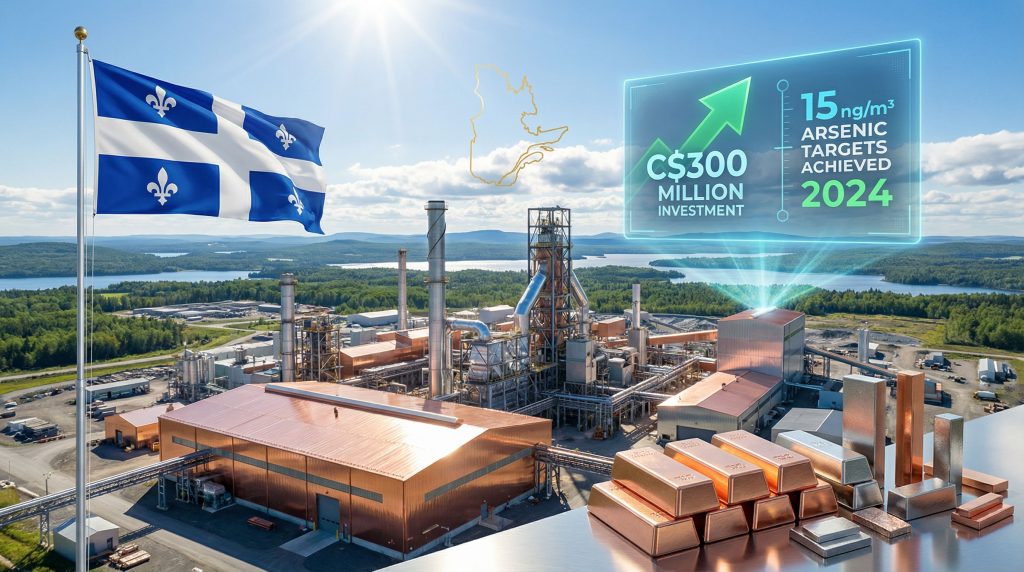
Glencore Canada's proposed environmental improvement program carries an estimated cost of approximately C$300 million. This represents one of the largest single environmental compliance investments in Canadian base metal processing. According to company statements, this financial commitment requires stability and predictability in regulatory frameworks to justify the capital allocation.
The investment timeline extends beyond simple capital deployment, encompassing complex engineering implementations and environmental performance validations. Additionally, it includes operational adjustments required to achieve the targeted 15 ng/m³ arsenic emission levels. This involves sophisticated emission control technologies that must be integrated with existing smelting operations without compromising production efficiency.
Risk-return analysis for such substantial retrofits typically considers multiple scenarios. These include regulatory stability, commodity price forecasts, and competitive positioning within global copper markets. The uncertainty surrounding permit renewals creates additional complexity in financial modelling, particularly when evaluating net present value calculations over extended operational periods.
Investment protection mechanisms become crucial when dealing with regulatory transitions affecting established industrial operations. Companies require assurance that capital commitments made to achieve specific environmental targets will be recognised under future regulatory frameworks. This prevents situations where additional requirements emerge shortly after major compliance investments.
When big ASX news breaks, our subscribers know first
Which Regulatory Models Could Break the Current Deadlock?
Examining international precedents reveals several potential frameworks that could address the current impasse. These models demonstrate how other jurisdictions have successfully managed transitions for major industrial facilities facing similar regulatory challenges. Furthermore, they balance environmental objectives with operational continuity.
Transition Period Mechanisms in Global Mining Jurisdictions
Transition periods provide structured timelines that allow facilities to implement comprehensive environmental improvements whilst maintaining operational continuity. These frameworks typically incorporate milestone-based compliance schedules, interim performance targets, and regular progress assessments. Consequently, they ensure steady advancement toward final objectives.
The effectiveness of transition periods depends largely on their alignment with the technical complexities involved in major industrial retrofits. Engineering assessments, equipment procurement, installation schedules, and commissioning phases all require realistic timeframes. These must account for supply chain considerations and seasonal operational constraints.
Financial guarantee structures often accompany transition period agreements, providing regulatory authorities with assurance that committed investments will be completed as scheduled. These arrangements may include performance bonds, escrow accounts, or other financial instruments that protect public interests whilst providing operational flexibility.
Regulatory Certainty Frameworks That Enable Long-Term Investment
Fixed-term permit structures with built-in review cycles offer predictability for capital planning whilst maintaining regulatory oversight capabilities. These frameworks establish clear performance expectations, compliance monitoring protocols, and renewal criteria. Consequently, they allow both operators and regulators to plan effectively over extended periods.
Performance-based compliance alternatives focus on achieving specific environmental outcomes rather than prescriptive technological requirements. This approach provides operational flexibility whilst maintaining rigorous environmental standards. In addition, it allows facilities to optimise their improvement strategies based on site-specific conditions and technological capabilities.
Investment protection mechanisms within environmental agreements can include grandfathering provisions for approved improvement projects. They also feature guaranteed permit renewal processes for compliant operations and structured review procedures that prevent arbitrary regulatory changes. These elements provide the stability required for major capital commitments whilst preserving regulatory authority.
What Are the Economic Scenarios if No Resolution is Reached?
The economic implications of facility closure extend far beyond direct employment impacts. They affect regional supply chains, municipal tax revenues, and the broader competitiveness of Canadian mineral processing. Understanding these cascading effects provides important context for evaluating the costs and benefits of various resolution scenarios.
Facility Closure Impact Analysis
Regional employment effects encompass not only direct facility workers but also supporting industries, maintenance contractors, and transportation services. The Rouyn-Noranda region's economic structure reflects decades of development around integrated mineral processing operations. This creates extensive interdependencies that amplify closure impacts.
Copper supply chain disruptions across North America could affect downstream industries reliant on consistent refined copper supplies. The integrated nature of the Horne smelter and CCR operations means that closure would remove both primary smelting capacity and refined copper production. Consequently, this could create bottlenecks in continental supply networks.
Secondary economic impacts include reduced tax revenues for municipal and provincial governments. They also encompass decreased demand for regional services and potential population decline as workers relocate to other industrial centres. These effects often persist for years beyond initial facility closures, particularly in regions with limited economic diversification.
Alternative Processing Capacity Requirements
Canada's remaining copper smelting infrastructure faces capacity constraints that could be exacerbated by the loss of major facilities. Existing operations may lack sufficient capacity to process additional concentrate volumes. This potentially forces increased reliance on international processing services or delayed project developments.
Import dependency scenarios for refined copper products would alter Canada's trade balance. They could potentially expose domestic consumers to international price volatility and supply disruptions. The strategic implications of increased import reliance extend to national resource security considerations, particularly during periods of global supply chain stress.
Capital requirements for replacement facilities typically exceed retrofit costs by substantial margins. New construction involves not only processing equipment but also supporting infrastructure, environmental controls, and regulatory approvals. The timeline for developing replacement capacity often spans multiple years, creating interim supply gaps that affect market stability.
How Do Class Action Lawsuits Complicate Industrial Negotiations?
Legal proceedings related to environmental health impacts introduce additional complexity to regulatory negotiations. Settlement obligations and liability assessments can influence operational decision-making and investment priorities. These considerations become particularly significant when evaluating long-term operational commitments.
Legal Risk Assessment for Long-Term Operations
Precedent analysis from similar environmental litigation cases suggests that settlement costs can reach substantial amounts. This depends on the number of affected parties, demonstrated health impacts, and duration of exposure periods. These potential liabilities must be factored into operational planning and financial modelling for continued operations.
Insurance and liability considerations for ongoing operations may include increased premium costs and coverage limitations for environmental claims. They may also require additional risk mitigation measures. Insurance markets often adjust their approaches to industrial operations facing legal challenges, affecting both availability and cost of coverage.
Settlement cost projections and their impact on investment decisions create additional uncertainty in capital allocation planning. Companies must balance settlement obligations with operational improvement investments. This potentially affects the scope or timeline of environmental compliance projects.
Community Relations Strategies During Regulatory Transitions
Stakeholder engagement models from comparable situations demonstrate the importance of transparent communication and regular progress reporting. They also emphasise meaningful community involvement in decision-making processes. Effective engagement strategies can help build support for operational continuity whilst addressing legitimate community concerns.
Health monitoring and compensation frameworks may include ongoing medical surveillance programs and baseline health assessments. They also feature structured compensation mechanisms for documented impacts. These programs require coordination between industrial operators, health authorities, and community representatives to ensure effectiveness and credibility.
Public-private partnership approaches to environmental remediation can leverage combined resources and expertise. This helps address legacy environmental issues whilst supporting continued industrial activity. These collaborations often produce more comprehensive solutions than either sector could achieve independently.
What Investment Patterns Emerge from Similar Global Smelter Modernisations?
International experience with large-scale smelter environmental improvements provides valuable insights into investment requirements and technological approaches. These precedents help establish realistic expectations for both investment commitments and environmental performance achievements. Furthermore, they inform sustainability transformation strategies across the industry.
Capital Allocation Strategies for Legacy Facility Upgrades
Major smelter modernisation projects worldwide typically involve investment levels ranging from $200 million to $500 million. This depends on facility size, existing infrastructure, and environmental performance targets. These investments often focus on emission control systems, process optimisation, and workplace safety improvements.
Emission reduction achievements vary based on baseline conditions and technological approaches. Arsenic reduction projects typically achieve 50% to 70% improvements when implementing comprehensive control systems. The specific performance levels depend on feed material characteristics, process configurations, and control technology selection.
Timeline considerations for major retrofits typically span 18 to 36 months from project approval to full operational status. This accounts for engineering design, equipment procurement, construction activities, and commissioning phases. Regulatory approval processes can add substantial time to overall project schedules.
Regulatory outcomes from successful modernisation projects often include long-term operating permits ranging from 10 to 20 years. This provides operational certainty that justifies substantial capital investments. Performance-based permit conditions typically focus on emission limits rather than specific technological requirements.
Technology Selection for Emission Control Systems
Advanced scrubbing technologies for arsenic capture utilise various approaches, including wet scrubbing systems and dry sorbent injection. They also employ fabric filter collection methods. Technology selection depends on gas composition, temperature conditions, and integration requirements with existing process equipment.
Cost-effectiveness analysis of different technical approaches considers not only capital costs but also operating expenses. It also evaluates maintenance requirements and performance reliability over extended periods. The most effective solutions often combine multiple technologies optimised for specific facility conditions.
Maintenance and operational complexity considerations affect long-term performance sustainability and operating cost projections. Technologies requiring frequent maintenance or specialised expertise may face operational challenges. These can impact overall system effectiveness and economic performance.
Which Stakeholder Positions Will Determine the Final Outcome?
The resolution of the no resolution on Horne smelter agreement situation depends on alignment among multiple stakeholder groups with varying priorities and constraints. Understanding these positions provides insight into potential compromise solutions and negotiation dynamics. Moreover, it highlights the complexity of glencore smelting challenges facing the industry.
Government Policy Priorities in Resource-Dependent Regions
Balancing environmental protection with economic development represents a fundamental policy challenge for governments in resource-dependent regions. Officials must consider both immediate community health concerns and long-term economic sustainability when evaluating regulatory approaches. They must also assess compliance timelines and their broader implications.
Federal-provincial coordination on industrial policy becomes crucial when major facilities face regulatory uncertainty. Different levels of government may have varying priorities regarding economic development, environmental protection, and international competitiveness. Effective coordination mechanisms can help align policy approaches and reduce regulatory uncertainty.
International competitiveness considerations for Canadian mining influence government approaches to regulatory frameworks. Overly restrictive requirements could encourage investment migration to jurisdictions with more accommodating policies. Maintaining Canada's position as an attractive mining investment destination requires balancing environmental standards with operational practicality.
Corporate Risk Management in Uncertain Regulatory Environments
Portfolio optimisation strategies for multi-facility operators may involve reallocating investment priorities based on regulatory certainty. They also consider operational efficiency and market access considerations. Companies with multiple processing facilities can adjust their capital deployment strategies to focus on operations with more predictable regulatory environments.
Glencore Canada has emphasised that resolving certain key elements remains critical for securing the continuation of operations and the investments required to support the future of both facilities. The company stated that the next steps in this process will depend on the parties' ability to reach agreement quickly on viable conditions. These conditions must enable environmental improvements whilst supporting long-term operational sustainability.
Alternative investment allocation scenarios may include diverting planned improvement investments to other facilities or jurisdictions. This occurs if regulatory uncertainty persists and affects not only immediate operations but also long-term competitive positioning within global copper markets. Such decisions often influence copper-uranium investment strategies across multiple jurisdictions.
Stakeholder communication during extended negotiations requires careful balance between transparency and commercial sensitivity. Companies must provide sufficient information to maintain stakeholder confidence whilst protecting competitive positions and negotiating flexibility.
The next major ASX story will hit our subscribers first
What Does This Dispute Signal for Future Canadian Mining Regulations?
The outcome of this regulatory standoff will likely influence approaches to environmental compliance across Canada's mining sector. It potentially establishes precedents for similar situations involving legacy industrial operations and evolving environmental standards. Furthermore, it may shape the development of the bc mining claims framework and similar provincial initiatives.
Emerging Trends in Environmental Compliance Requirements
Tightening emission standards across base metal processing reflect growing emphasis on community health protection and environmental stewardship. These trends suggest that facility operators should anticipate continued evolution in regulatory requirements. Consequently, they should plan accordingly for ongoing compliance investments.
Integration of health impact assessments in permit processes represents an expanding approach to environmental regulation. This considers not only emission levels but also cumulative health effects on surrounding communities. This broader assessment framework may become standard practice for major industrial facilities.
Community consultation requirements for major industrial facilities are expanding beyond traditional public hearing processes. They now include ongoing engagement, health monitoring, and collaborative decision-making structures. These enhanced consultation processes reflect growing recognition of community rights in industrial development decisions.
Investment Climate Implications for Canada's Mining Sector
Regulatory predictability emerges as a crucial factor in capital allocation decisions. Investors seek assurance that compliance investments will provide long-term operational certainty. The resolution of the no resolution on Horne smelter agreement situation may influence investor confidence in Canadian mining projects more broadly.
Comparison with competing jurisdictions for mining investment reveals that regulatory frameworks significantly influence corporate investment decisions. Countries offering clearer compliance pathways and more predictable regulatory processes may gain competitive advantages. This attracts mining development capital and influences global investment flows.
Long-term strategic positioning of Canadian mineral processing depends partly on maintaining operational efficiency whilst meeting evolving environmental standards. Success in balancing these objectives could enhance Canada's reputation as a responsible mining jurisdiction. It also strengthens its position as a sustainable processing location.
Key Takeaways for Mining Industry Stakeholders
The Horne smelter regulatory standoff provides important lessons for mining industry participants regarding regulatory risk management and stakeholder engagement. It also offers insights into long-term operational planning in an evolving regulatory environment.
Strategic Planning Recommendations
Early engagement strategies for regulatory transitions should begin well before permit renewal deadlines. This allows sufficient time for comprehensive planning, stakeholder consultation, and technical solution development. Proactive approaches typically produce better outcomes than reactive responses to regulatory pressures.
Financial planning for environmental compliance investments requires realistic assessment of potential requirement evolution. It also demands adequate capital allocation for ongoing improvements. Companies should maintain financial flexibility to respond to regulatory developments whilst pursuing operational objectives.
Risk mitigation approaches for legacy facility operations should include regular environmental performance assessments and community engagement programs. They should also feature contingency planning for various regulatory scenarios. Diversified risk management strategies help maintain operational resilience during regulatory transitions.
Monitoring Indicators for Resolution Timeline
Critical negotiation milestones include regulatory authority responses to compliance proposals and stakeholder feedback on proposed solutions. Political developments affecting environmental policy priorities also serve as important indicators. These factors provide insight into likely negotiation outcomes and timelines.
Economic pressure points that could accelerate agreement include commodity price movements affecting operational economics. Competitive pressures from alternative processing facilities and regional economic impacts from operational uncertainty also influence negotiations. Market dynamics often influence regulatory negotiation urgency.
Political factors that may influence final outcomes include upcoming elections and public opinion regarding environmental versus economic priorities. Federal-provincial policy coordination on resource development also plays a role. Political considerations frequently affect regulatory negotiation strategies and acceptable compromise positions.
Disclaimer: This analysis is based on publicly available information and industry observations. Regulatory negotiations remain ongoing, and actual outcomes may differ from scenarios discussed. Readers should consult current official sources for the most up-to-date information on regulatory developments affecting Canadian mining operations.
Are You Tracking Canada's Latest Mining Regulatory Developments?
Stay ahead of critical mining industry developments like the Horne smelter negotiations with Discovery Alert's proprietary Discovery IQ model, which provides instant notifications on significant ASX mineral discoveries and regulatory shifts affecting global markets. Explore how major regulatory decisions impact mining investments and begin your 14-day free trial today to secure your competitive advantage in the evolving resources sector.