
July 28, 2026
Understanding Canada's Northern Infrastructure Gap
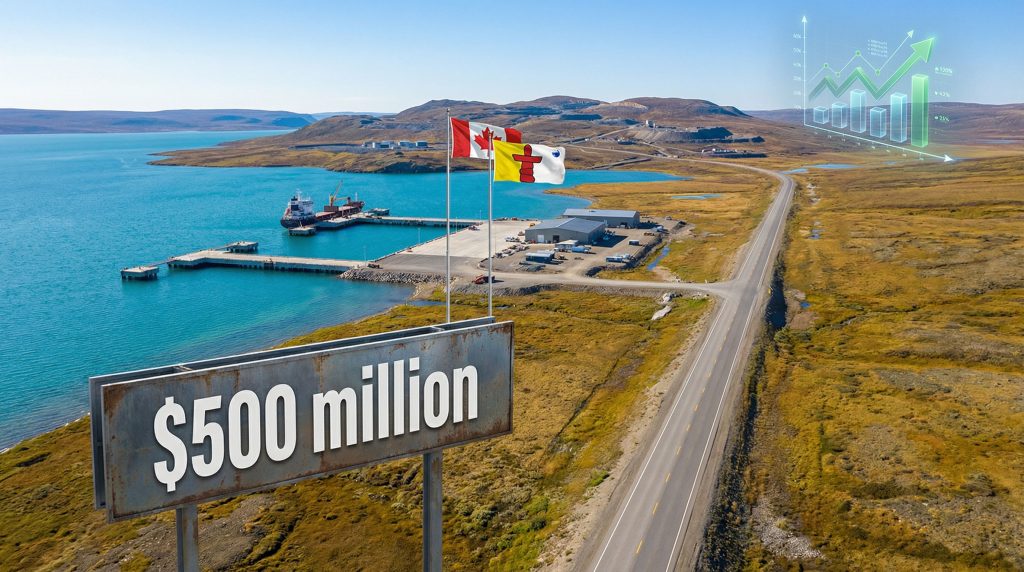
Arctic transportation networks face critical limitations that have constrained economic development across Canada's northern territories for decades. The Grays Bay Road and Port project represents a transformative solution addressing these infrastructure gaps through integrated transportation solutions. Current infrastructure relies heavily on seasonal access routes, creating substantial barriers to year-round commercial activity and community supply chains.
When big ASX news breaks, our subscribers know first
The Current State of Arctic Transportation Networks
Winter road systems dominate transportation across Nunavut and the Northwest Territories, operating for limited periods when ice conditions permit heavy vehicle access. These seasonal corridors typically function for 10-12 weeks annually, forcing communities and mining operations to stockpile essential supplies during narrow operational windows.
The 230-kilometre all-season road component of the Grays Bay Road and Port project represents a fundamental shift from this seasonal dependency model. Traditional winter roads require continuous ice monitoring, weight restrictions that limit cargo capacity, and complete shutdown during spring thaw periods that can extend for months.
Transportation costs in Arctic regions can exceed $1,000 per tonne for goods delivered to remote communities, compared to less than $100 per tonne for southern Canadian destinations. This cost differential creates significant economic pressures on northern businesses and mining operations, often determining project viability before geological considerations. Furthermore, the broader Canada economic challenges highlight the need for infrastructure that supports economic diversification.
Critical Minerals Access Bottlenecks
The Slave Geological Province contains substantial mineral deposits that remain economically inaccessible due to transportation infrastructure limitations. Mining companies regularly abandon otherwise viable projects when logistics costs exceed potential revenues, particularly for base metals and industrial minerals with lower per-unit values than precious metals.
Recent mine closures highlight these infrastructure constraints. Rio Tinto's Diavik diamond mine concluded operations on March 26, 2026, after 23 years yielding over 150 million carats of rough diamonds. While Diavik's closure resulted from resource depletion rather than transportation issues, it underscores the critical need for diversified mining infrastructure supporting multiple commodity types across Arctic regions.
Transportation bottlenecks prevent exploration companies from conducting cost-effective resource assessment programs in remote areas. Helicopter-supported drilling program costs can reach $15,000-$20,000 per day, compared to road-accessible drilling at $3,000-$5,000 daily rates. These cost differentials create exploration bias toward southern regions with existing road networks.
How Does the Grays Bay Infrastructure Transform Canada's Arctic Strategy?
The Grays Bay Road and Port project establishes Canada's first integrated Arctic transportation hub connecting deepwater shipping access with all-season terrestrial networks. This infrastructure combination addresses fundamental connectivity gaps that have limited northern economic development since Confederation.
Multi-Modal Transportation Hub Development
The project integrates three critical infrastructure components: a deepwater port with Northwest Passage access, the 230-kilometre all-season road, and airstrip facilities supporting emergency response and logistics coordination. This multi-modal approach creates redundant transportation options reducing weather-related disruptions.
Deepwater port specifications enable year-round vessel access, contrasting with existing Arctic ports requiring seasonal ice navigation. The Northwest Passage positioning provides strategic shipping corridor connections between Arctic communities and international markets, potentially reducing shipping distances to European and Asian destinations by thousands of kilometres compared to southern Canadian ports.
Airstrip integration supports emergency medical evacuations, search and rescue operations, and time-sensitive cargo delivery. Current Arctic communities often rely on weather-dependent charter flights for emergency services, creating life-threatening delays during severe weather periods. Permanent airstrip infrastructure with instrument landing systems enables operations during marginal weather conditions.
Economic Diversification Beyond Mining
Tourism potential increases substantially through improved Arctic accessibility. Adventure tourism, cultural tourism, and scientific tourism currently face significant logistical barriers due to transportation limitations. All-season road access enables tour operators to develop reliable itineraries without weather-related cancellations that plague current Arctic tourism operations.
Research station resupply operations benefit from predictable transportation scheduling. Arctic research facilities currently depend on summer shipping windows and chartered aircraft for equipment and supply delivery. Year-round access enables continuous research programs and reduces operational costs for government and academic institutions.
Commercial shipping opportunities through Northwest Passage routes create potential revenue streams beyond mining-specific usage. Climate change extends Arctic shipping seasons, making commercial navigation increasingly viable for international cargo transit between Atlantic and Pacific markets. This development aligns with the growing importance of critical minerals energy transition initiatives.
What Are the Financial Projections and Investment Structure?
ATCO's $10 million investment for a 40% equity stake in West Kitikmeot Resources indicates sophisticated financial structuring supporting the Grays Bay Road and Port project. This partnership demonstrates institutional confidence in Arctic infrastructure development as a stable, long-term investment opportunity.
Capital Investment Analysis
| Infrastructure Component | Primary Funding Source | Strategic Importance |
|---|---|---|
| All-season road (230km) | Federal/Private Partnership | Terrestrial connectivity |
| Deepwater port facilities | Infrastructure Bank/Private | Marine shipping access |
| Airstrip and support systems | Multi-stakeholder funding | Emergency response capability |
ATCO's equity participation rather than debt financing suggests the project structure anticipates long-term operational revenue streams compatible with utility company investment models. Utilities typically seek infrastructure assets generating stable cash flows over 20-30 year periods, indicating management's confidence in sustained demand for Arctic transportation services.
The Canada Infrastructure Bank's involvement provides federal support for strategically significant projects requiring private sector partnerships. Infrastructure Bank participation typically includes concessional financing terms enabling projects with strong public benefits but extended payback periods.
Revenue Generation Scenarios
Mining company toll payments represent the primary revenue source, with usage fees structured to provide transportation cost savings compared to current logistics arrangements. Companies currently spending $800-$1,200 per tonne for remote site supply could realise 40-60% cost reductions through all-season road access.
Port facility revenues include vessel berthing fees, cargo handling charges, and fuel supply services. Arctic shipping operations require specialised services including icebreaker escort coordination, cold-weather equipment maintenance, and extended layover capabilities during weather delays.
Economic multiplier effects extend beyond direct user fees. Reduced transportation costs enable marginal mining projects to achieve commercial viability, increasing territorial taxation revenues and employment. Northern communities benefit from reduced cost of living through efficient goods transportation, improving workforce retention and reducing government subsidy requirements.
Which Stakeholders Drive Project Implementation?
Multiple stakeholder categories coordinate to advance the Grays Bay Road and Port project, reflecting the infrastructure's strategic significance for both commercial and governmental objectives.
Corporate Partnership Structure
ATCO's investment profile demonstrates the project's appeal to established infrastructure operators. ATCO manages extensive utility and infrastructure assets across Western Canada, providing operational expertise for complex northern projects requiring specialised maintenance and management capabilities.
West Kitikmeot Resources filed an impact statement with the Nunavut Impact Review Board on March 1, 2026, indicating progression beyond preliminary planning stages. Environmental assessment submissions require substantial technical and financial commitments, suggesting the company has completed internal viability analyses supporting project advancement.
The Major Projects Office referral provides federal coordination for infrastructure projects with national strategic significance. This designation facilitates inter-departmental cooperation and expedited regulatory processes for projects supporting broader economic development objectives. Additionally, the mining claims framework in Canada provides important context for understanding how mineral rights and development permissions interact with such infrastructure projects.
Indigenous Community Engagement Framework
Indigenous communities maintain constitutionally protected rights requiring meaningful consultation for projects affecting traditional territories. Revenue-sharing agreements, employment targets, and environmental co-management represent standard components of northern infrastructure development projects.
Local employment opportunities extend beyond construction phases to include long-term operational positions in port management, road maintenance, and logistics coordination. Skills training programmes often accompany major infrastructure projects, providing community members with transferable expertise for future development opportunities.
Environmental monitoring partnerships enable Indigenous communities to participate directly in project oversight, combining traditional knowledge with scientific assessment methods. These arrangements address community concerns while providing valuable ecological data for adaptive management strategies.
How Does This Project Enhance Canada's Arctic Sovereignty?
Arctic sovereignty requires demonstrable civilian presence and economic activity supporting Canada's territorial claims under international law. Infrastructure development creates permanent installations reinforcing national jurisdiction over contested Arctic regions.
Geopolitical Strategic Positioning
Northwest Passage control benefits from civilian infrastructure establishing regular Canadian presence along disputed shipping routes. International maritime law recognises sovereign rights over internal waters, but requires consistent occupancy and usage patterns supporting territorial claims.
The deepwater port's dual-use capabilities support both civilian shipping and potential military logistics requirements. Arctic military operations require substantial supply chain infrastructure currently lacking across northern Canada, limiting defensive capabilities in remote regions.
NATO and NORAD strategic interests include Arctic early warning systems, search and rescue capabilities, and maritime domain awareness requiring ground-based infrastructure support. Civilian ports provide logistics hubs for military assets without requiring dedicated defence facilities.
International Trade Route Development
Arctic shipping corridors connecting Asian and European markets through Canadian waters generate transit fees and establish commercial shipping precedents supporting sovereignty claims. Regular commercial traffic creates international recognition of Canadian jurisdiction over Northwest Passage routes.
Competitive positioning against Russian Arctic infrastructure development requires substantial Canadian investments matching Russian icebreaker fleets and port facilities. Russia operates multiple nuclear-powered icebreakers supporting year-round Northern Sea Route navigation, creating competitive pressure for Canadian Arctic access.
Global supply chain integration for critical minerals export reduces Canadian dependence on southern transportation networks potentially vulnerable to international disruptions. Arctic export routes provide strategic redundancy for mineral shipments supporting national security objectives.
The next major ASX story will hit our subscribers first
Environmental and Regulatory Challenges
Arctic infrastructure projects face complex environmental assessment requirements addressing unique northern ecosystem conditions and climate change impacts.
Environmental Assessment Requirements
The Nunavut Impact Review Board evaluation process requires comprehensive environmental impact analysis including:
- Permafrost stability assessments for road and port foundation engineering
- Marine ecosystem impact studies covering Arctic char spawning areas and marine mammal migration routes
- Terrestrial wildlife corridor analysis addressing caribou migration patterns and denning site protection
- Traditional ecological knowledge integration combining Indigenous observations with scientific data
Climate change adaptation strategies require infrastructure design accommodating changing Arctic conditions. Warming temperatures affect permafrost stability, requiring specialised engineering solutions including thermosiphons, insulation systems, and flexible foundation designs preventing infrastructure damage from ground movement.
Regulatory Coordination Challenges
Federal, territorial, and Indigenous jurisdiction overlap creates complex regulatory environments requiring coordinated approval processes. Project developers must satisfy requirements from multiple authorities including Transport Canada, Environment and Climate Change Canada, territorial governments, and Indigenous leadership.
Water licensing for port operations requires extensive consultation addressing traditional fishing areas, marine transportation routes, and ceremonial site protection. Northern water bodies support subsistence activities essential for community food security, requiring careful impact mitigation strategies.
Environmental monitoring requirements continue throughout operational phases, requiring long-term funding commitments and adaptive management capabilities responding to changing environmental conditions or unexpected impacts. Moreover, insights from the Nunavut Climate Change Centre provide valuable data for understanding Arctic environmental conditions and their implications for infrastructure development.
Timeline and Implementation Phases
Project development follows structured phases addressing regulatory requirements, financing arrangements, and construction logistics specific to Arctic conditions.
Near-Term Milestones (2026-2028)
Environmental assessment completion requires 18-24 months following the March 1, 2026 impact statement submission. The Nunavut Impact Review Board coordinates with federal departments, territorial agencies, and Indigenous governments ensuring comprehensive evaluation of potential impacts.
Key regulatory milestones include:
- Environmental assessment board hearings with community consultation
- Federal cabinet approval for projects requiring government funding participation
- Territorial government permits for road construction and port development
- Indigenous community agreement ratification through traditional governance processes
Construction contract awards require specialised Arctic construction capabilities including equipment transportation, worker accommodation, and extended construction seasons accommodating weather limitations. Limited construction contractors possess Arctic experience, potentially affecting timeline and cost projections.
Long-Term Development Vision (2029-2035)
Phase 1 implementation focuses on core infrastructure completion enabling initial operations. Road construction typically requires 2-3 construction seasons for Arctic projects, with port development requiring additional specialised marine construction capabilities.
Phase 2 expansion considerations include connections to additional mining projects across the Slave Geological Province. Success of initial infrastructure operations will determine feasibility of expanded regional transportation networks.
Phase 3 integration with broader Arctic infrastructure networks could include connections to existing and planned northern transportation corridors, creating comprehensive regional development opportunities supporting multiple economic sectors.
Regional Economic Impact Assessment
Infrastructure development creates immediate construction employment and long-term operational positions supporting northern communities and territorial economic development objectives.
Direct Economic Benefits
Construction employment estimates suggest 200-400 positions during peak construction periods, with preference for northern residents and Indigenous community members. Skills training programmes often precede major construction activities, preparing community members for specialised infrastructure construction positions.
Employment categories include:
- Heavy equipment operators for road construction and site preparation
- Marine construction specialists for port and dock installation
- Logistics coordinators managing supply chain operations
- Environmental monitors ensuring compliance with assessment conditions
- Administrative support for project coordination and community liaison
Local business development opportunities extend beyond direct employment to include catering services, equipment rental, transportation services, and professional consulting. Northern businesses often participate through subcontracting arrangements with major construction firms.
Indirect Economic Multipliers
Reduced transportation costs enable marginal mining projects to achieve commercial viability, potentially increasing territorial mineral production and associated royalty revenues. Cost reductions of 40-60% for remote site logistics could enable development of copper, zinc, and rare earth deposits currently considered economically unviable.
Tourism industry development benefits from reliable transportation access enabling tour operators to develop predictable itineraries. Arctic tourism currently faces high cancellation rates due to weather-dependent transportation, limiting industry growth potential.
Emergency response capability improvements reduce community risks and potentially lower insurance costs for northern businesses and residents. Reliable medical evacuation access and enhanced search and rescue capabilities provide community safety benefits beyond economic considerations. Furthermore, innovation expo insights demonstrate how infrastructure development can catalyse technological advancement and knowledge transfer.
Risk Assessment and Mitigation Strategies
Arctic infrastructure projects face unique risks requiring specialised mitigation approaches addressing environmental conditions, regulatory complexities, and market uncertainties.
Construction and Operational Risks
Weather-related construction delays represent significant risk factors for Arctic projects. Construction seasons typically span 4-6 months annually, requiring precise scheduling and weather contingency planning. Cost overruns frequently result from extended construction timelines due to unexpected weather events.
Primary risk mitigation strategies include:
- Phased construction approach reducing weather exposure for individual project components
- Equipment pre-positioning and winter storage reducing annual mobilisation requirements
- Flexible construction scheduling accommodating weather delays without critical path impacts
- Specialised Arctic construction expertise reducing weather-related efficiency losses
Technology integration challenges include equipment performance in extreme cold conditions, communications infrastructure reliability, and maintenance access during severe weather periods. Arctic operations require redundant systems and enhanced maintenance protocols preventing service disruptions.
Market and Political Risk Factors
Commodity price volatility affects mining industry demand for transportation infrastructure, potentially reducing anticipated usage and revenue projections. Base metal price cycles create uncertainty for long-term infrastructure utilisation, particularly for projects with high fixed costs.
Federal government policy changes represent ongoing risks for projects requiring government funding participation. Infrastructure Bank commitments depend on sustained political support for Arctic development priorities across multiple election cycles.
International shipping route competition includes Russian Northern Sea Route development and potential Alaskan Arctic infrastructure projects. Global shipping companies may choose alternative Arctic routes based on cost, reliability, and geopolitical considerations affecting Canadian port utilisation.
Comparative Analysis with International Arctic Infrastructure
Successful Arctic infrastructure projects worldwide provide valuable lessons for Canadian northern development strategies and implementation approaches.
International Arctic Development Models
Norwegian Arctic infrastructure demonstrates successful integration of mining, shipping, and community development objectives. The Port of Kirkenes supports iron ore exports, cruise tourism, and community supply operations through year-round ice-free access, generating diverse revenue streams reducing dependence on single industries.
Norway's investment in Arctic research facilities, emergency response capabilities, and dual-use military-civilian infrastructure creates comprehensive northern presence supporting sovereignty objectives while generating economic benefits.
Russian Northern Sea Route development includes extensive icebreaker fleets, port infrastructure, and navigation support systems enabling year-round Arctic shipping. Russian Arctic infrastructure investment exceeds $100 billion over the past decade, creating competitive pressure for Canadian Arctic development.
Success Factors from Completed Northern Projects
Multi-stakeholder financing arrangements prove essential for Arctic infrastructure viability. Successful projects typically combine government strategic funding, private sector operational expertise, and community partnership agreements creating sustainable long-term management structures.
Environmental compliance and Indigenous engagement represent critical success factors requiring early integration into project planning rather than regulatory afterthoughts. Projects achieving smooth regulatory approval demonstrate sustained community consultation and environmental impact mitigation from initial planning stages.
Operational resilience requirements for Arctic infrastructure exceed southern Canadian standards due to harsh environmental conditions, extended supply chains, and limited emergency response access. Successful projects incorporate redundant systems, enhanced maintenance capabilities, and adaptive management strategies responding to changing conditions. Consequently, the Stantec engineering and environmental consulting services provide essential technical expertise for managing these complex Arctic infrastructure challenges.
Disclaimer: This analysis contains forward-looking projections and market assessments based on available information. Arctic infrastructure development involves substantial risks including environmental challenges, regulatory uncertainties, commodity price volatility, and potential cost overruns. Investment decisions should consider comprehensive due diligence beyond this general analysis. Economic projections represent estimates rather than guaranteed outcomes.
Ready to Invest in Canada's Next Critical Infrastructure Play?
Discovery Alert's proprietary Discovery IQ model delivers real-time alerts on significant mining discoveries across the ASX, helping investors identify infrastructure-dependent opportunities before the broader market recognises their potential. Explore Discovery Alert's historic discoveries page to understand how major mineral finds can generate substantial returns, then begin your 14-day free trial to position yourself ahead of the market.