June 6, 2026
Understanding Canada's Strategic Response to Global Steel Market Disruptions
The global steel industry faces mounting pressure from overcapacity, environmental regulations, and shifting trade relationships that challenge traditional market structures. In light of these changes, Canadian domestic steel protection measures have become a focal point for policy makers. In fact, Canadian domestic steel protection measures have led to renewed debates among industry experts, while many argue that Canadian domestic steel protection measures are essential for future competitiveness.
The Economic Context Behind Protection Policies
Canada’s steel sector is uniquely exposed due to a 65-70% import dependency. Manufacturers grapple with quality differences, cost pressures, and supply chain issues. Consequently, domestic producers must compete against imported steel that benefits from lower production costs. This has led to ongoing discussions about issues such as tariff impact considerations, which explore how tariffs shape investment markets.
The fundamental imbalance is stark: Canada produces approximately 12-13 million tons annually yet remains highly reliant on imports. Furthermore, traditional manufacturing powerhouses show much higher self-sufficiency. For instance, the European Union and the United States, despite their own challenges, illustrate different dynamics in domestic versus imported steel.
Focusing on sustainability and fair competition, policy experts argue that refining Canadian domestic steel protection measures could rebalance the industry. Meanwhile, numerous factors—from cost competitiveness to supply chain integration—must be carefully addressed to support domestic industry resiliency.
Carbon Tax Disparities and Competitive Imbalances
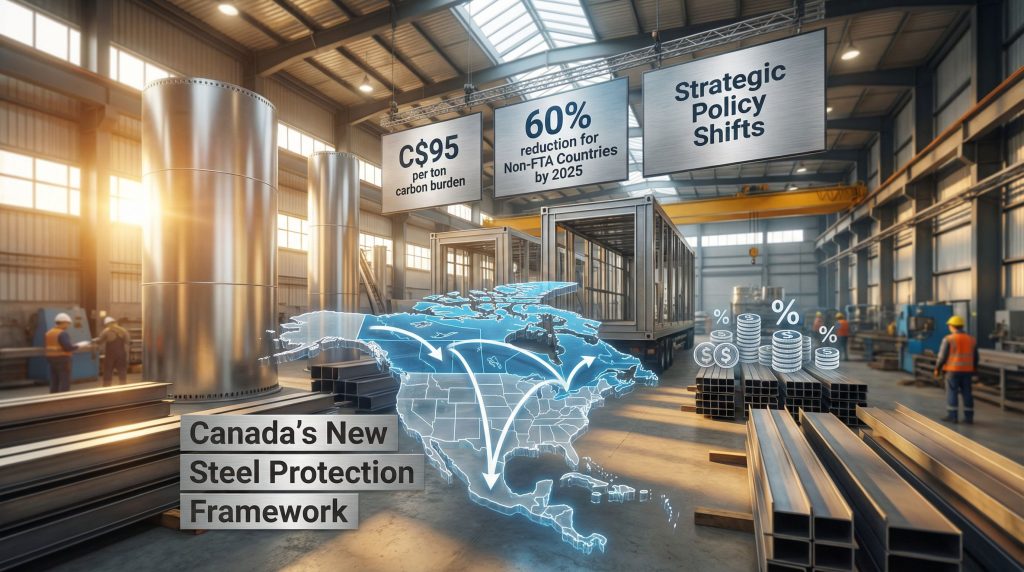
Environmental policy has created unexpected hurdles. Canadian producers face a C$95 per ton carbon burden under federal pricing systems while their imported competitors do not. This disparity creates a competitive gap that compels producers to cope with higher costs, which in turn influences investment decisions.
Moreover, analysts highlight that environmental policies inadvertently encourage controversy. For example, comparisons with the US tariff implications suggest that cost differentials could shift production capacities overseas. Additionally, market dynamics are further complicated by policies such as the Trump tariff effects, which add layers of complexity to global competition.
Components of Canada’s New Steel Protection Framework
Focusing on targeted measures, Canada recently implemented several strategies designed to rebalance its domestic industry. These include tariff rate quota (TRQ) restructuring, comprehensive tariffs on steel derivatives, and temporary tariff remission extensions.
Tariff Rate Quota Restructuring
In December 2025, Canada revised TRQ levels to address unequal competition. The new structure treats imports differently based on trading partner relationships. For instance, non-Free Trade Agreement countries now face a dramatic volume reduction. This measure is intended to protect domestic output and reinforces policy discussions around the US–China trade war impact.
The tiered approach implies:
• A 60% reduction for non-FTA countries
• A 25% reduction for non-CUSMA FTA partners
These measures encourage industries to update their import timing strategies and consider product substitution, ultimately bolstering domestic steel supply chains.
Steel Derivatives Tariff Implementation
Canada has also imposed 25% tariffs on steel-containing derivative products. This measure covers items valued at over $10 billion USD annually. In addition, it aims to close previous loopholes that allowed finished steel products to bypass raw material tariffs. Notably, this approach underscores the relevance of nuanced rules that can affect everything from wind towers to fasteners. Furthermore, emerging sectors such as Asian ferroalloys dynamics are also under review to ensure fair market practices.
Temporary Tariff Remission Extensions
Understanding that abrupt changes could disrupt supply chains, Canada introduced temporary tariff remissions for critical sectors. For instance:
• U.S. steel products are exempt until January 31, 2026
• Automotive and aerospace sectors receive exemptions until June 30, 2026
• Separate timelines apply for aluminium products
These extensions provide transitional relief, helping key industries adjust while maintaining overall protective measures.
Comparing Approaches: Canada Versus the United States
The Canadian model contrasts sharply with U.S. Section 232 policies. The United States employs a uniform tariff rate of 50% on steel imports, favouring simplicity over nuanced partner differentiation. In comparison, Canada’s quota system introduces complexity but allows for tailored responses to various trade partners.
Tariff Structure Analysis
The U.S. model applies a flat rate, while Canada’s system differentiates between trading partner categories. This ensures that sensitive industries can adapt by considering both technical and economic impacts. Moreover, the contrasting strategies have led to diverse market responses; while U.S. producers report clear tariff transmission effects, Canadian producers face unique challenges that require further policy evolution.
Market Impact Divergence
Data reveals that U.S. markets experienced price increases of nearly 25.87% year-over-year following tariff escalations, which indicate improved pricing power for domestic producers. Conversely, Canadian markets, where prices for products like Hollow Structural Sections remain weak, have spurred debates on using trade policy strategically. Furthermore, industry experts note that effective enforcement mechanisms must complement these measures to secure long-term market stability.
Enforcement Mechanism Differences
U.S. authorities benefit from a clear, predictable administration of tariffs. Canadian agencies, however, must manage complex quota allocations and numerous exemption processes. In addition, efforts are being made to streamline these systems, ensuring accurate product classifications and preventing circumvention—for instance, through enhanced collaboration with customs agencies.
Immediate Industry Consequences
Domestic producer stabilization effects and supply chain management have been immediate outcomes of the new measures. Early indications suggest higher capacity utilisation among domestic mills, though benefits vary by product category.
Domestic Producer Stabilisation
Recent data indicates that improved market conditions have allowed some producers to recover market share. Investments in modernisation have increased in response to reduced import pressures. In addition, companies are reassessing facility closures and capacity reductions, cautiously optimistic about the long-term effects of these policies.
Supply Chain Disruption Management
Critical challenges remain as supply chains adjust. Industries reliant on just-in-time delivery systems, particularly in automotive and aerospace sectors, are closely monitoring material availability. Moreover, strategic partnerships with U.S. producers persist despite trade frictions, illustrating that market integration can coexist with robust protection measures.
Policy Enforcement and Global Trade Dynamics
Robust enforcement by the Canada Border Services Agency is integral to the success of these policies. The agency has implemented technical collaboration frameworks and product specification verification protocols to curb circumvention.
Enhanced Enforcement Protocols
Customs officials now receive advanced training on steel product recognition. This initiative improves the ability to distinguish products that have undergone minimal processing, ensuring that tariff policies are enforced strictly. In addition, cooperation with industry associations enhances monitoring and compliance.
China-Specific Trade Measures
Canadian policies now include specialised tariffs on steel products containing Chinese material. This move aims to limit circumvention strategies like third-country processing. By focusing on the origin of steel content, Canadian authorities intend to reinforce the integrity of protection measures while maintaining balanced trade relationships.
Future Implications for North American Steel Markets
The shift in protection measures is fostering broader strategic debates within the region. North American trade agreements, such as USMCA, face pressure to accommodate divergent national approaches.
USMCA Renegotiation Dynamics
Industry experts believe that the current joint review process may prompt significant changes. Options under discussion include:
- Modified trilateral agreements with greater national flexibility
- Bilateral agreements replacing certain aspects of USMCA
- Sector-specific carve-outs that acknowledge the unique challenges of steel production
These discussions underscore the importance of cooperation and the need to maintain competitive North American value chains.
Investment Flow Redirection
Higher environmental compliance costs in Canada juxtaposed with lower costs in the U.S. are influencing investment allocations. Companies are evaluating factors such as market access, regulatory complexity, and labour differentials when deciding where to allocate capital. Moreover, domestic steel protection measures continue to evolve, ensuring that while cost pressures persist, long-term industrial competitiveness is prioritised.
Environmental and Economic Trade-offs in Policy Design
Canadian policy makers must balance rigid environmental standards with the need to support domestic industry competitiveness. Environmental regulations such as a C$95 per ton carbon tax impose significant costs on Canadian producers. However, these same policies drive investments in cleaner technologies and innovation.
Carbon Leakage Prevention
Measures to prevent carbon leakage—such as border carbon adjustments—are being evaluated. In addition, initiatives promoting the use of certified low-carbon steel are being discussed by industry experts. These policies serve as a reminder that Canadian domestic steel protection measures are not only defensive but also catalysts for sustainable innovation.
Economic Multiplier Effects
The steel industry underpins numerous downstream sectors. Protection measures have demonstrable multiplier effects:
• Preserving jobs in steel-producing regions
• Stimulating investments in infrastructure
• Supporting ancillary industries like mining and transport
Furthermore, these economic benefits highlight how strategic protection policies can promote both regional development and overall industrial growth.
Balancing Challenges and Opportunities
Despite the clear benefits, administrative complexity and market integration remain key challenges. Canadian authorities continue to work with industry stakeholders to improve exemption processes and refine tariff classifications. In doing so, policy makers are ensuring that necessary adjustments maintain both market stability and competitive dynamism.
In conclusion, evolving Canadian domestic steel protection measures are aimed at supporting local industry while navigating a complex global environment. External assessments, such as a recent government initiative, and detailed industry analysis further reinforce the importance of balanced, flexible policy frameworks. Ultimately, while short-term challenges persist, these measures may lay the foundation for a more resilient and competitive steel industry in North America.
Ready to Gain an Edge in Mineral Discoveries?
Discover how Canada's steel policies impact the market and why key mineral discoveries are your gateway to opportunity. Powered by Discovery Alert's proprietary Discovery IQ model, these insights can transform your investment strategy—start exploring on the Discovery Alert discoveries page and seize the potential today.