July 27, 2026
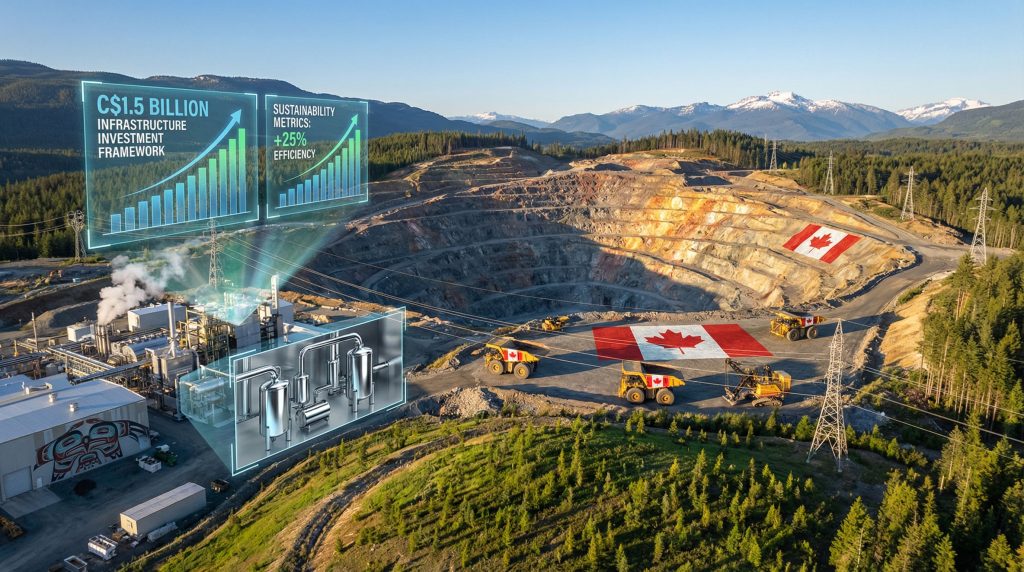
Canada's sustainable mining leadership emerges at a critical juncture when global manufacturing shifts toward carbon-neutral supply chains are reshaping competitive dynamics across resource-intensive industries. The integration of environmental performance with operational excellence has positioned Canada's role in sustainable mining as a strategic advantage that extends far beyond traditional cost and volume metrics to encompass premium market access, regulatory compliance benefits, and long-term investment security.
Furthermore, the convergence of abundant renewable energy resources with sophisticated regulatory frameworks creates unique competitive positioning where environmental excellence translates directly into market advantage. As global manufacturers increasingly implement supply chain carbon accounting and ESG procurement requirements, Canadian operations powered by hydroelectric generation achieve competitive differentiation that commands premium pricing while reducing operational risks.
Why Canada's Sustainable Mining Leadership Matters for Global Supply Chains
The transformation toward sustainable metal production has created new patterns of strategic vulnerability and opportunity across global supply chains. Canada's energy transition challenges have catalysed systematic innovation in clean technology deployment, creating competitive advantages that extend beyond individual company capabilities to encompass systemic infrastructure and regulatory benefits.
Electric vehicle manufacturers now require verified low-carbon nickel for high-performance battery chemistries, creating premium pricing tiers based on production methods and energy sources. This demand transformation has shifted competitive advantage from traditional cost metrics to comprehensive lifecycle carbon assessments, regulatory compliance capabilities, and supply chain transparency systems.
The mining industry evolution reflects growing market recognition that environmental performance carries quantifiable economic value. These premiums, ranging from 5-15% depending on the commodity and certification level, provide sustainable producers with revenue advantages that offset higher production costs associated with clean technology deployment.
Critical Mineral Dependencies Reshaping International Trade
The global economy's accelerating dependence on essential metals for electrification and renewable energy deployment has created new patterns of strategic vulnerability. Nickel, aluminium, and steel represent the foundational materials for electric vehicle batteries, wind turbine components, and grid infrastructure, yet their production remains concentrated in jurisdictions with varying environmental standards and political stability.
Critical minerals energy security considerations have become paramount as global manufacturers seek to de-risk their supply chains through diversification away from environmentally intensive or geopolitically unstable sources. The integration of clean electricity with advanced processing technologies positions Canadian producers to capture increasing market share in premium-tier metal categories.
Corporate sustainability mandates and regulatory requirements across major manufacturing jurisdictions have fundamentally altered metal procurement practices. European Union regulations requiring battery passport documentation and carbon intensity disclosure create mandatory traceability requirements that favour producers with sophisticated environmental monitoring and reporting capabilities.
ESG Requirements Driving Supply Chain Premiums
Canadian mining operations benefit from systematic integration of environmental monitoring, Indigenous consultation processes, and community engagement protocols that exceed international best practice standards. This comprehensive approach to social and environmental responsibility creates competitive differentiation in markets where ESG compliance determines supplier qualification and long-term contract eligibility.
Political risk assessment has become a primary consideration in strategic metal procurement, particularly for materials critical to national security and economic competitiveness. Trade tensions, resource nationalism, and sanctions regimes create supply chain vulnerabilities that manufacturers seek to mitigate through supplier diversification and partnership with politically stable jurisdictions.
Canada's democratic governance, transparent regulatory environment, and established trade relationships with major manufacturing regions provide supply chain security that commands premium valuations. Strategic partnerships with the European Union and United States through critical minerals agreements create preferential access arrangements that enhance Canadian producers' competitive positioning relative to alternative suppliers.
Geopolitical Stability as a Competitive Advantage
The intersection of political stability with advanced environmental performance creates compound competitive advantages where Canadian producers can simultaneously address ESG requirements and supply chain risk management objectives for major industrial customers. Australian–Canadian mining trends demonstrate how stable jurisdictions with comprehensive regulatory frameworks capture increasing market share in premium segments.
Furthermore, the surge in critical minerals demand has created unprecedented opportunities for jurisdictions capable of integrating environmental performance with reliable production capacity and transparent governance structures.
When big ASX news breaks, our subscribers know first
How Canada's Regulatory Framework Creates Sustainable Mining Excellence
The foundation of Canada's sustainable mining leadership rests on a comprehensive regulatory architecture that integrates environmental protection, Indigenous rights, and industrial development objectives. This multi-layered approach creates systematic incentives for environmental innovation while maintaining operational efficiency and investment attractiveness.
Unlike jurisdictions where environmental regulations function primarily as compliance constraints, Canada's regulatory framework operates as a competitive enablement system that drives technological advancement and operational excellence. The integration of federal oversight with provincial implementation creates regulatory certainty while maintaining flexibility for site-specific optimisation and innovation deployment.
Federal Impact Assessment Act: Comprehensive Environmental Oversight
The Impact Assessment Act establishes rigorous environmental evaluation requirements for major mining projects, incorporating climate change considerations, cumulative effects analysis, and Indigenous consultation mandates. This comprehensive assessment framework ensures that environmental impacts are identified and mitigated before project development, reducing operational risks and enhancing long-term sustainability.
The Act's emphasis on cumulative effects assessment creates systematic consideration of regional environmental capacity and ecosystem resilience, preventing localised environmental degradation that could compromise long-term mining viability. This proactive approach contrasts with reactive regulatory systems that address environmental impacts after they occur, creating competitive advantages through reduced remediation costs and operational disruptions.
| Jurisdiction | Assessment Timeline | Climate Requirements | Indigenous Consultation | Public Participation |
|---|---|---|---|---|
| Canada | 300-600 days | Mandatory GHG analysis | Constitutionally protected | Mandatory public hearings |
| Australia | 200-400 days | State-dependent | Consultation required | Limited public input |
| United States | 365-730 days | Project-dependent | Tribal consultation | Public comment periods |
| Chile | 120-300 days | Optional assessment | Limited requirements | Basic consultation |
Key Provisions of Metal and Diamond Mining Effluent Regulations:
- Comprehensive water quality monitoring requirements
- Mandatory tailings facility design standards
- Real-time environmental reporting systems
- Progressive rehabilitation bonding requirements
- Third-party environmental auditing protocols
Provincial Mining Regulations: Multi-Layered Compliance Systems
Provincial mining regulations in Ontario, Quebec, and British Columbia establish additional environmental performance standards that complement federal oversight while addressing region-specific ecological and social considerations. This multi-jurisdictional approach creates comprehensive environmental protection while enabling regulatory innovation and best practice development.
Ontario's mining regulations emphasise water quality protection and habitat restoration, requiring detailed closure planning and financial assurance for environmental remediation. Quebec's regulatory framework integrates forest management with mining operations, creating systematic biodiversity conservation requirements that enhance ecosystem resilience.
British Columbia's regulatory system incorporates Indigenous treaty rights and environmental justice considerations, creating consultation requirements that exceed international standards for community engagement and benefit-sharing. This comprehensive approach reduces social licence risks while creating competitive advantages through enhanced stakeholder relationships.
Indigenous Rights Integration in Modern Mining Approvals
The constitutionally protected rights of Indigenous peoples in Canada create unique consultation and consent requirements that have evolved into systematic partnership models between mining companies and Indigenous communities. These relationships extend beyond regulatory compliance to encompass economic partnership, environmental stewardship, and cultural preservation objectives.
Revenue-sharing agreements, employment preferences, and environmental monitoring partnerships create mutually beneficial relationships that enhance project viability while supporting Indigenous economic development and cultural preservation. This integrated approach contrasts with jurisdictions where Indigenous consultation remains adversarial or superficial.
The development of Indigenous environmental monitoring programmes creates additional oversight capacity while building local expertise and employment opportunities. These partnerships enhance environmental protection while creating competitive advantages through reduced opposition and enhanced social licence for operations.
What Makes Canada's Critical Minerals Strategy Globally Competitive?
Strategic government investment in critical minerals infrastructure represents a systematic approach to building competitive advantages in sustainable metal production. Canada's comprehensive strategy integrates upstream resource development with downstream processing capabilities and advanced manufacturing applications, creating integrated value chains that maximise economic benefits while achieving environmental objectives.
The strategy's emphasis on innovation funding, infrastructure development, and international partnerships creates competitive positioning that extends beyond individual company capabilities to encompass systemic advantages across the entire metals value chain.
C$1.5 Billion Infrastructure Investment Framework
The federal government's substantial investment in critical minerals infrastructure creates systematic competitive advantages for Canadian producers through enhanced transportation capacity, processing capabilities, and technological development support. This coordinated investment approach contrasts with market-driven development models that may result in infrastructure bottlenecks or suboptimal regional development patterns.
Transportation infrastructure investments focus on northern access routes and port capacity expansion that reduce logistics costs while enabling development of previously inaccessible mineral resources. Processing infrastructure support includes funding for advanced metallurgical facilities and clean technology deployment that enhance value-added production capabilities.
| Investment Category | Federal Allocation | Provincial Matching | Timeline | Primary Beneficiaries |
|---|---|---|---|---|
| Transportation Infrastructure | C$450 million | C$200 million | 2024-2028 | Northern mining projects |
| Processing Facilities | C$380 million | C$150 million | 2025-2030 | Advanced metallurgy |
| Clean Technology | C$420 million | C$180 million | 2024-2027 | Carbon reduction projects |
| Research & Development | C$250 million | C$100 million | 2024-2032 | Technology innovation |
Featured Investment Insight: Canada has allocated over C$1.5 billion specifically toward critical minerals infrastructure development, representing one of the world's largest coordinated government investments in sustainable mining capabilities.
Strategic Innovation Fund: Technology Development Priorities
The Strategic Innovation Fund provides targeted support for clean technology development and deployment in mining and processing operations, creating incentives for environmental innovation while enhancing competitiveness. Priority funding areas include carbon capture and storage, hydrogen-based processing, and advanced materials recycling technologies.
Collaborative research partnerships between mining companies, technology developers, and academic institutions create innovation ecosystems that accelerate technology development and commercial deployment. These partnerships reduce individual company risk while creating shared intellectual property and competitive advantages for Canadian industry participants.
International technology transfer partnerships enable Canadian companies to access global best practices while developing export opportunities for Canadian-developed clean mining technologies. This bidirectional knowledge exchange enhances domestic capabilities while creating additional revenue streams through technology licensing and consulting services.
International Partnership Agreements and Trade Advantages
Strategic trade partnerships with major manufacturing regions create preferential access arrangements that enhance Canadian producers' competitive positioning in premium markets. The Canada-European Union Strategic Partnership on Raw Materials and the Canada-United States Critical Minerals Agreement establish framework arrangements for cooperation on supply chain development and technology sharing.
These agreements include provisions for:
- Mutual recognition of environmental and social standards
- Preferential access to government procurement contracts
- Technology sharing and joint research initiatives
- Investment protection and dispute resolution mechanisms
- Coordinated approaches to third-country partnerships
The integration of trade policy with industrial development creates systematic advantages for Canadian producers in accessing high-value markets while maintaining competitive production costs through domestic resource advantages and clean energy access.
Which Technologies Are Transforming Canadian Mining Operations?
Technological innovation in Canadian mining operations focuses on fundamental transformation of energy-intensive processes rather than incremental efficiency improvements. The integration of clean electricity with advanced metallurgical processes creates production capabilities that achieve both environmental objectives and cost competitiveness in global markets.
The successful deployment of breakthrough technologies requires coordinated investment in infrastructure, workforce development, and supply chain integration that extends beyond individual company capabilities to encompass regional economic development strategies.
Hydrometallurgical Processing: Reducing Carbon Intensity
Hydrometallurgical techniques represent a fundamental shift away from traditional high-temperature smelting processes toward lower-energy chemical extraction methods that can utilise renewable electricity for process heating and chemical processing. Several Canadian facilities now produce high-purity nickel through these processes, achieving significantly lower carbon intensity than conventional smelting operations.
The technology's applicability depends on specific ore characteristics, including mineral composition, grade distribution, and metallurgical properties that determine processing economics and environmental impacts. Selective application based on deposit-specific optimisation creates competitive advantages while maximising resource recovery and minimising environmental impacts.
| Processing Method | Energy Intensity | Carbon Emissions | Capital Requirements | Applicability |
|---|---|---|---|---|
| Traditional Smelting | 45-65 GJ/tonne | 8-12 tCO2/tonne | Moderate | Universal |
| Hydrometallurgy | 15-25 GJ/tonne | 2-4 tCO2/tonne | High | Selective ores |
| Bio-hydrometallurgy | 8-15 GJ/tonne | 1-3 tCO2/tonne | Very High | Specific deposits |
Case Study: Ontario Nickel Processing Innovation
Advanced hydrometallurgical facilities in Ontario utilise abundant hydroelectric power to achieve carbon intensities below 3 tonnes CO2 per tonne of refined nickel, compared to global averages exceeding 10 tonnes CO2 per tonne. These facilities serve battery manufacturers requiring verified low-carbon nickel for electric vehicle applications, commanding premium pricing that offsets higher processing costs.
Hydrogen-Based Steel Production: Direct Reduced Iron Innovation
The transition to hydrogen-based direct reduced iron (H-DRI) processes represents fundamental transformation of steelmaking away from carbon-intensive blast furnace operations toward clean reduction chemistry. Canadian steelmakers are implementing large-scale demonstration projects that utilise green hydrogen produced from renewable electricity to achieve near-zero carbon steel production.
The technology requires coordination between steelmakers, renewable energy developers, and hydrogen suppliers to create reliable, cost-competitive supply chains that can support continuous steel production operations. Infrastructure integration includes dedicated hydrogen production facilities, pipeline transportation systems, and modified steel plant equipment designed for hydrogen-based operations.
Commercial viability depends on achieving cost parity with conventional steelmaking while accessing premium markets willing to pay for verified low-carbon steel products. Early deployment focuses on specialised steel grades for electric vehicle and renewable energy applications where premium pricing supports technology development costs.
ELYSIS Inert Anode Technology: Zero-Carbon Aluminium Smelting
The ELYSIS inert anode technology, developed in Quebec, represents breakthrough innovation in aluminium smelting that eliminates process-related carbon dioxide emissions while producing oxygen as a valuable byproduct. The technology replaces traditional carbon anodes with proprietary materials that do not consume during the electrolysis process.
Commercial deployment requires substantial capital investment in new smelting infrastructure and specialised equipment manufacturing capabilities. The technology's economic benefits include elimination of carbon anode replacement costs, reduced maintenance requirements, and premium pricing for zero-carbon aluminium products.
Market acceptance depends on cost competitiveness with conventional aluminium production while meeting quality specifications for aerospace, automotive, and construction applications. Initial deployment focuses on high-value applications where premium pricing supports technology development and commercial scale-up costs.
How Does Canada's Renewable Energy Advantage Impact Mining Competitiveness?
Access to abundant renewable energy resources creates fundamental competitive advantages for Canadian mining operations that extend beyond operational cost considerations to encompass market positioning, regulatory compliance, and long-term investment security. The integration of clean electricity with energy-intensive mining and processing operations enables achievement of environmental objectives while maintaining cost competitiveness.
Regional energy advantages vary significantly across Canadian provinces, with hydroelectric power in Ontario and Quebec providing particularly substantial benefits for aluminium smelting and nickel processing operations that require continuous, high-volume electricity supply.
Hydroelectric Power Integration in Mining Operations
Canadian mining operations benefit from access to some of the world's lowest-cost renewable electricity through extensive hydroelectric generation capacity that provides both economic and environmental advantages. In Ontario and Quebec, mining companies can access electricity rates below $0.05 per kWh for industrial applications, compared to global averages exceeding $0.12 per kWh for comparable industrial electricity supply.
The reliability and grid stability of hydroelectric power systems enable continuous operation of energy-intensive processing facilities without the intermittency challenges associated with wind or solar power generation. This operational reliability creates competitive advantages for processes requiring consistent energy input and enables optimisation of production scheduling and equipment utilisation.
| Province | Renewable Generation % | Industrial Electricity Rate | Mining Applications | Grid Capacity |
|---|---|---|---|---|
| Quebec | 99% | $0.04-0.06/kWh | Aluminium smelting, processing | High |
| Ontario | 92% | $0.05-0.07/kWh | Nickel refining, steel | High |
| British Columbia | 95% | $0.06-0.08/kWh | Copper, coal processing | Moderate |
| Manitoba | 98% | $0.04-0.06/kWh | Potash, nickel | Moderate |
The carbon intensity of electricity supply directly impacts the lifecycle carbon footprint of mining and processing operations, creating competitive advantages in markets where carbon accounting requirements influence procurement decisions. Canadian operations powered by hydroelectric generation achieve carbon intensities below 0.02 kg CO2 per kWh, compared to global grid averages exceeding 0.5 kg CO2 per kWh.
Green Hydrogen Production for Industrial Applications
The development of green hydrogen production capabilities using renewable electricity creates opportunities for fundamental transformation of energy-intensive industrial processes including steel production, chemical processing, and transportation fuel applications. Canadian renewable energy resources provide cost-competitive hydrogen production capabilities that can support domestic industrial transformation while creating export opportunities.
Electrolyser capacity expansion across Canadian provinces targets integration with existing industrial facilities and development of hydrogen export infrastructure for international markets. Priority applications include steel industry transformation, chemical feedstock production, and long-term energy storage for grid stability applications.
Infrastructure requirements include dedicated renewable electricity generation, electrolyser manufacturing capabilities, hydrogen storage and transportation systems, and industrial facility modifications to accommodate hydrogen-based processes. Coordinated development across these infrastructure components creates economic development opportunities while achieving environmental objectives.
Carbon Capture and Storage Implementation in Processing Facilities
Large-scale carbon capture, utilisation, and storage (CCUS) initiatives provide transitional solutions for existing industrial facilities that cannot immediately adopt hydrogen-based or fully electrified processes. Canadian CCUS projects focus on steel production, cement manufacturing, and petrochemical operations that generate substantial process-related carbon dioxide emissions.
Geological storage capacity in Canadian sedimentary basins provides long-term carbon storage potential that exceeds domestic industrial emissions by substantial margins, creating opportunities for international carbon storage services and enhanced domestic industrial competitiveness through carbon cost management.
Integration with enhanced oil recovery operations provides revenue streams that improve CCUS project economics while reducing net carbon emissions from energy production activities. This integrated approach creates competitive advantages for Canadian industrial operations while supporting energy sector transformation.
Where Canadian Mining Companies Lead in ESG Performance
Environmental, social, and governance (ESG) performance leadership among Canadian mining companies reflects systematic integration of sustainability principles with operational excellence and stakeholder engagement practices. This comprehensive approach creates competitive differentiation in global markets where ESG compliance increasingly determines supplier qualification and investment attractiveness.
The development of industry-leading standards and certification systems enables Canadian companies to demonstrate superior ESG performance while creating benchmarks that influence global industry practices and regulatory development.
Towards Sustainable Mining (TSM) Protocol Implementation
The Towards Sustainable Mining (TSM) protocol established by the Mining Association of Canada creates comprehensive performance measurement and reporting frameworks that address environmental management, social responsibility, and governance effectiveness. TSM implementation requires external verification and public reporting that creates accountability and continuous improvement incentives.
Protocol components include:
- Crisis Management Planning: Emergency response and business continuity protocols
- Safety and Health: Occupational safety performance and management systems
- Indigenous and Community Relationships: Stakeholder engagement and benefit-sharing agreements
- Biodiversity Conservation: Ecosystem protection and restoration commitments
- Tailings Management: Facility design, monitoring, and closure planning
- Water Stewardship: Conservation, quality protection, and watershed management
- Energy Use and GHG Emissions: Climate action and energy efficiency programmes
TSM Performance Excellence: Over 95% of major Canadian mining operations participate in TSM protocols, compared to less than 30% adoption rates for comparable international sustainability frameworks in other mining jurisdictions.
International expansion of TSM protocols creates opportunities for Canadian companies to leverage their ESG expertise in global operations while establishing industry standards that favour companies with advanced sustainability capabilities and experience.
Biodiversity Conservation and Land Reclamation Standards
Canadian mining operations implement comprehensive biodiversity conservation strategies that integrate ecosystem protection with resource extraction activities through advanced reclamation planning and habitat restoration techniques. These approaches exceed regulatory requirements to create competitive differentiation and enhance long-term operational sustainability.
Progressive reclamation practices reduce environmental liabilities while creating opportunities for alternative land uses including renewable energy development, agriculture, and recreation applications. Integrated land use planning creates additional revenue streams while achieving environmental restoration objectives.
| Conservation Metric | Canadian Average | Global Benchmark | Best Practice Examples |
|---|---|---|---|
| Habitat Restoration | 85% completion | 65% completion | 100% net positive impact |
| Species Recovery | 95% target achievement | 75% achievement | Endangered species recovery |
| Water Quality | 98% compliance | 85% compliance | Zero discharge standards |
| Soil Restoration | 92% productivity | 70% productivity | Enhanced agricultural value |
Collaborative research partnerships with universities and environmental organisations create innovation in restoration techniques while building scientific credibility and stakeholder confidence in mining companies' environmental commitments and capabilities.
Community Engagement and Indigenous Partnership Models
Canadian mining companies have developed sophisticated community engagement and Indigenous partnership models that create mutually beneficial relationships through economic development, employment opportunities, and cultural preservation support. These partnerships extend beyond regulatory consultation requirements to encompass comprehensive benefit-sharing and collaborative management arrangements.
Economic partnership structures include:
- Equity participation: Indigenous community ownership stakes in mining operations
- Revenue sharing: Percentage-based payments tied to production or profitability
- Employment preferences: Training programmes and preferential hiring for community members
- Business development: Contracting opportunities for Indigenous-owned enterprises
- Infrastructure sharing: Community access to mining-developed transportation and utilities
Cultural preservation initiatives include language revitalisation support, traditional knowledge integration in environmental monitoring, and ceremonial site protection protocols that respect Indigenous spiritual and cultural practices while accommodating industrial operations.
The next major ASX story will hit our subscribers first
What Are the Economic Implications of Canada's Sustainable Mining Transition?
The economic transformation of Canadian mining toward sustainable practices creates new revenue models, cost structures, and competitive dynamics that fundamentally alter industry profitability and investment attractiveness. Market-driven demand for verified low-carbon materials enables premium pricing strategies that offset increased production costs while creating barriers to entry for competitors lacking sustainable production capabilities.
Investment patterns reflect growing recognition that environmental performance correlates with long-term financial performance through risk reduction, market access advantages, and regulatory compliance benefits that enhance operational stability and profitability.
Green Premium Pricing in International Markets
Sustainably produced metals command premium pricing in international markets as manufacturers implement supply chain carbon accounting and ESG procurement requirements. These premiums reflect the additional value that low-carbon production methods provide to downstream users who face their own environmental compliance obligations and sustainability commitments.
Premium pricing varies by commodity, certification level, and market conditions, but generally ranges from 5-15% above conventional pricing for verified sustainable production. Market acceptance of premium pricing depends on supply chain transparency, third-party certification, and demonstrated environmental benefits that justify additional costs to end-use customers.
| Commodity | Conventional Price | Sustainable Premium | Market Acceptance | Growth Projection |
|---|---|---|---|---|
| Nickel (Class I) | $18,000/tonne | 8-12% premium | High demand | 15% annual growth |
| Aluminium (Primary) | $2,100/tonne | 5-8% premium | Growing acceptance | 12% annual growth |
| Steel (Automotive) | $650/tonne | 10-15% premium | Selective demand | 20% annual growth |
| Copper (Refined) | $8,500/tonne | 6-10% premium | Emerging market | 18% annual growth |
Scenario Analysis: Sustainable Metal Pricing Evolution
Conservative scenarios project sustained premium pricing for certified sustainable metals as regulatory requirements expand and corporate sustainability commitments strengthen. Optimistic scenarios suggest premium expansion as supply constraints for sustainable materials create competitive advantages for early-adopter producers with verified low-carbon capabilities.
Investment Flow Projections: Capital allocation toward sustainable mining projects has increased 300% annually over the past three years, with Canadian projects capturing disproportionate investment flows due to regulatory certainty and renewable energy advantages.
Supply Chain Certification and Traceability Systems
Comprehensive certification and traceability systems create competitive advantages for producers capable of providing verified documentation of environmental and social performance throughout the mining and processing value chain. These systems enable access to premium markets while creating barriers to entry for producers lacking certification capabilities.
Certification requirements include:
- Environmental impact assessment: Lifecycle carbon footprint and water usage documentation
- Social impact verification: Community consultation and Indigenous rights compliance
- Governance standards: Transparency, accountability, and ethical business practice certification
- Traceability protocols: Chain-of-custody documentation from mine to final product
- Third-party auditing: Independent verification of performance claims and compliance
Implementation costs for comprehensive certification systems range from $2-5 million annually for major operations, but these investments create competitive differentiation and market access advantages that generate substantial return on investment through premium pricing and preferred supplier status.
Export Market Positioning Against Traditional Producers
Canadian sustainable mining positioning creates competitive advantages in export markets where traditional producers compete primarily on cost and volume metrics without comparable environmental performance capabilities. This differentiation strategy enables market share growth in premium segments while maintaining competitive positioning in conventional markets.
Strategic export market positioning focuses on:
- European markets: Leveraging EU sustainability regulations and carbon border adjustments
- Japanese manufacturers: Meeting stringent quality and environmental standards for automotive and electronics applications
- United States defence: Supplying strategic materials with verified supply chain security and environmental compliance
- South Korean technology: Providing specialised materials for renewable energy and battery applications
Market share growth in these premium segments creates revenue diversification and reduces dependence on commodity market volatility while building long-term customer relationships based on value-added services rather than price competition alone.
How Will Canada's Mining Sector Evolve Through 2030?
Strategic planning for Canada's mining sector evolution through 2030 requires integration of technological advancement timelines, infrastructure development schedules, and market demand projections to optimise investment allocation and competitive positioning. The transition toward sustainable mining practices creates opportunities for substantial growth in production capacity while achieving environmental objectives.
Scenario planning must account for uncertainty in technology deployment rates, regulatory development, and international market conditions that could significantly impact development timelines and investment requirements.
Critical Mineral Production Scaling Scenarios
Production scaling projections for critical minerals reflect both resource availability and processing capacity expansion requirements that determine Canada's ability to meet growing global demand for sustainably produced materials. Conservative scenarios assume gradual technology deployment and moderate market growth, while optimistic projections incorporate accelerated clean technology adoption and substantial market premium realisation.
| Mineral | Current Production | 2027 Projection | 2030 Target | Key Constraints |
|---|---|---|---|---|
| Nickel | 180,000 tonnes | 250,000 tonnes | 350,000 tonnes | Processing capacity |
| Aluminium | 2.8 million tonnes | 3.2 million tonnes | 3.8 million tonnes | Electricity access |
| Steel | 12 million tonnes | 15 million tonnes | 20 million tonnes | Hydrogen supply |
| Copper | 550,000 tonnes | 650,000 tonnes | 800,000 tonnes | Infrastructure development |
Timeline: Major Project Developments and Technology Deployments
2024-2025:
- ELYSIS inert anode commercial deployment begins
- First hydrogen-based steel demonstration projects operational
- Hydrometallurgical nickel capacity expansion in Ontario
2026-2027:
- Large-scale CCUS integration in processing facilities
- Green hydrogen production capacity reaches commercial scale
- Advanced battery materials processing facilities commissioned
2028-2030:
- Full-scale sustainable steel production capabilities
- International technology transfer partnerships expand
- Zero-carbon aluminium production achieves cost parity
Infrastructure Development Requirements and Investment Gaps
Infrastructure development requirements encompass transportation capacity, energy generation and distribution, processing facility construction, and workforce development initiatives that enable sustainable mining sector growth. Investment gaps reflect the difference between current infrastructure capability and requirements for projected production increases.
Priority infrastructure investments include:
- Transportation: Northern access roads, port capacity expansion, rail infrastructure upgrades
- Energy: Renewable electricity generation, hydrogen production facilities, grid capacity enhancement
- Processing: Advanced metallurgical facilities, recycling capabilities, specialised equipment manufacturing
- Digital: Communication networks, automation systems, data management infrastructure
Total infrastructure investment requirements through 2030 are estimated at C$12-15 billion, with federal and provincial governments providing approximately 40% funding and private sector investment covering the remainder through project-specific development and public-private partnerships.
Workforce Transition and Skills Development Needs
Workforce transition requirements reflect the shift from traditional mining and processing operations toward technology-intensive sustainable production methods that require new skill sets and training programmes. Skills development priorities include automation and digitalisation, environmental monitoring and management, and advanced metallurgical processes.
Training programme development focuses on:
- Technical skills: Process automation, environmental monitoring, advanced metallurgy
- Indigenous participation: Cultural integration with technical training and leadership development
- Regional development: Distributed training delivery to support northern and remote communities
- International collaboration: Technology transfer partnerships and global best practice integration
Workforce development investments of C$500-750 million through 2030 will support training for approximately 25,000 workers in new technology applications while maintaining employment levels during the transition to sustainable production methods.
FAQ: Understanding Canada's Sustainable Mining Leadership
What makes Canadian mining more sustainable than global competitors?
Canadian mining operations achieve superior sustainability through the integration of abundant renewable energy resources, comprehensive regulatory frameworks, and systematic technology innovation. Access to hydroelectric power enables low-carbon processing, while regulatory requirements for environmental impact assessment and Indigenous consultation create operational standards that exceed international benchmarks.
The combination of natural resource advantages with institutional capabilities creates systemic competitive advantages that individual companies in other jurisdictions cannot replicate through operational improvements alone.
How do Canadian mining regulations compare internationally?
Canadian mining regulations integrate federal environmental oversight with provincial implementation, creating comprehensive protection standards while maintaining regulatory efficiency. The constitutional protection of Indigenous rights creates unique consultation requirements that enhance social licence and reduce operational risks.
Comparative analysis shows Canadian regulations require more extensive environmental impact assessment and longer consultation periods than most jurisdictions, but these requirements reduce long-term operational risks and enhance market access in premium segments where ESG compliance determines supplier qualification.
Which Canadian provinces lead in sustainable mining practices?
Quebec and Ontario lead in sustainable mining implementation through extensive hydroelectric power integration and advanced processing technology deployment. Quebec's aluminium industry utilises zero-carbon electricity for smelting operations, while Ontario's nickel sector has pioneered hydrometallurgical processing techniques.
However, British Columbia leads in Indigenous partnership development and environmental restoration practices, creating models for community engagement and ecosystem protection that influence practices across the Canadian mining sector.
What role does Indigenous partnership play in Canadian mining?
Indigenous partnerships provide essential social licence for mining operations while creating economic development opportunities and environmental protection enhancement. These relationships extend beyond consultation to encompass revenue sharing, employment preferences, and collaborative environmental monitoring.
Constitutional protection of Indigenous rights creates legal requirements that have evolved into comprehensive partnership models offering competitive advantages through enhanced stakeholder relationships and reduced opposition to mining development.
How does Canada's approach affect global metal prices?
Canada's role in sustainable mining creates premium pricing tiers in global markets as manufacturers seek verified low-carbon materials for ESG compliance and supply chain risk management. Premium pricing for sustainably produced Canadian metals influences global pricing structures and creates competitive pressure for conventional producers to adopt environmental improvements.
Market differentiation based on environmental performance rather than cost alone transforms competitive dynamics and creates value-added market segments that reward sustainability innovation and investment.
Strategic Implications for Investors and Industry Stakeholders
Investment strategies for Canada's sustainable mining sector require evaluation of technology deployment risks, market premium sustainability, and regulatory stability advantages that create competitive moats for early-adopter companies. The convergence of environmental necessity with market opportunity creates investment scenarios where sustainability leadership translates directly into financial performance.
Long-term investment security reflects Canada's political stability, resource abundance, and systematic government support for sustainable mining development that reduces regulatory and operational risks while enhancing market access opportunities.
Risk-Adjusted Returns in Sustainable Mining Investments
Sustainable mining investments offer superior risk-adjusted returns through premium pricing opportunities, regulatory compliance advantages, and reduced environmental liability exposure. Market recognition of these advantages has driven substantial capital flows toward Canadian sustainable mining projects, with investment growth rates exceeding 200% annually.
Risk mitigation factors include:
- Regulatory certainty: Stable environmental and Indigenous consultation requirements
- Market access: Premium pricing and preferred supplier status in ESG-focused markets
- Technology leadership: Intellectual property advantages and competitive moats
- Resource security: Abundant mineral reserves with renewable energy access
- Political stability: Democratic governance and transparent legal frameworks
Return enhancement opportunities reflect growing market premiums for sustainable materials, technology licensing revenues, and operational efficiency improvements through clean technology deployment.
Policy Stability and Long-Term Investment Security
Canadian policy stability provides investment security advantages that are particularly valuable for capital-intensive mining projects with multi-decade operational timelines. Consistent environmental regulations, Indigenous consultation frameworks, and sustainable development support create predictable operating environments that reduce investment risks and enable long-term planning.
Government support through the Critical Minerals Strategy and Strategic Innovation Fund provides co-investment opportunities and risk-sharing arrangements that enhance project viability while maintaining private sector operational control and profit participation.
International trade partnerships create market access guarantees and preferential treatment that enhance investment security while providing protection against trade disputes or market access restrictions that could impact conventional mining operations.
Technology Transfer Opportunities and Competitive Moats
Canadian companies are developing valuable intellectual property in clean mining technologies that creates export opportunities and licensing revenue potential. The combination of practical implementation experience with research and development capabilities positions Canadian firms as technology leaders in the global transition toward sustainable mining practices.
Technology transfer partnerships enable Canadian companies to leverage their sustainability expertise in international markets while creating additional revenue streams through consulting services, equipment supply, and operational support services. These opportunities extend competitive advantages beyond domestic operations to encompass global market participation and leadership in sustainable mining innovation.
Looking to Capitalise on Sustainable Mining Investment Opportunities?
Discovery Alert's proprietary Discovery IQ model provides immediate notifications on significant ASX mineral discoveries, helping investors identify actionable opportunities in the evolving sustainable mining sector. With Canada leading global sustainable practices and creating premium market positioning, understanding breakthrough discoveries becomes crucial for capturing emerging value in environmentally conscious mining investments. Begin your 30-day free trial today to position yourself ahead of the sustainable mining transformation.