
June 30, 2026
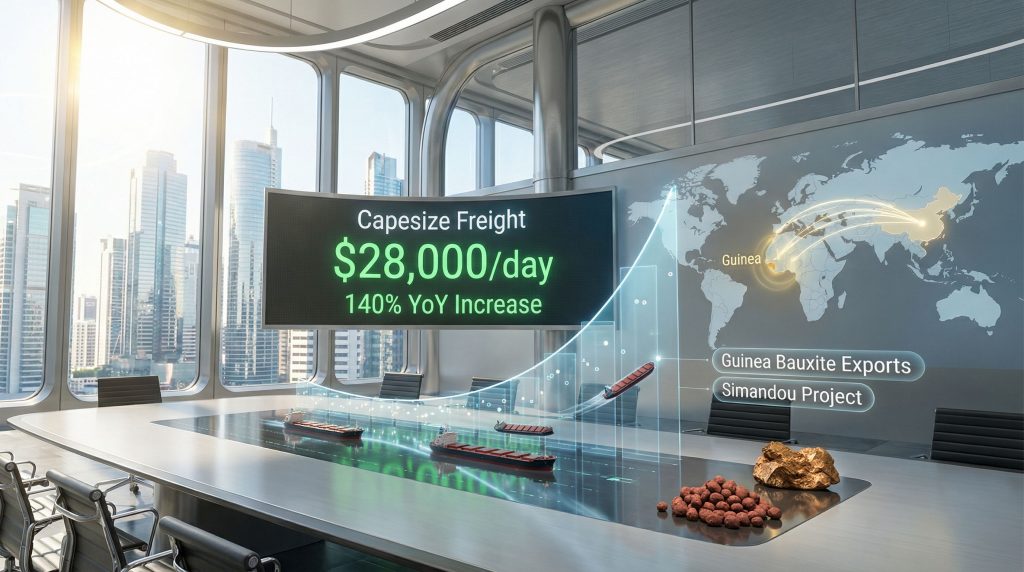
Capesize freight rates surge 2026 has become a defining characteristic of global dry bulk markets, driven by fundamental shifts in supply-demand dynamics that extend far beyond traditional seasonal patterns. The convergence of fleet constraints, evolving trade corridors, and geopolitical volatility has created market conditions that challenge conventional pricing models and force a reassessment of long-term shipping economics.
Understanding these market forces requires examining multiple interconnected variables: vessel availability, cargo flow patterns, operational cost structures, and regional demand fluctuations. Each element contributes to a complex ecosystem where minor supply disruptions can trigger exponential rate increases, fundamentally altering the economics of global commodity flows.
Supply Constraints Reshape Market Architecture
The capesize vessel supply landscape has undergone dramatic structural changes, with fleet expansion severely limited by reduced newbuilding activity and accelerated scrapping schedules. Net fleet growth remains constrained at approximately 1.9% annually, representing the lowest expansion rate in over a decade.
This supply tightness stems from multiple converging factors:
- Newbuilding order pipeline restrictions with minimal vessel completions scheduled through 2026
- Statutory survey requirements removing vessels from active trading during peak demand periods
- Accelerated maintenance cycles for aging fleet components requiring extended dry-dock periods
- Economic scrapping thresholds maintaining older, less efficient tonnage in service
The implications of this supply constraint become particularly acute during high-demand periods. When combined with concentrated cargo flows from specific regions, even modest increases in shipping requirements can overwhelm available capacity, creating the conditions for exponential rate increases.
Fleet age profiles further complicate supply dynamics. Approximately 35% of the global capesize fleet exceeds 15 years in age, requiring more frequent maintenance interventions and reducing operational reliability. This aging infrastructure creates additional supply volatility as vessels face unexpected technical delays or extended repair periods.
When big ASX news breaks, our subscribers know first
Guinea's Bauxite Export Surge Transforms Atlantic Trade
West African bauxite exports have emerged as a dominant force reshaping Atlantic freight markets, with Guinea's production representing approximately 50% of global bauxite supply. This concentration creates significant market influence, particularly given the political volatility surrounding mining operations in the region. Furthermore, the bauxite project benefits demonstrate how resource extraction initiatives can create substantial freight demand multipliers.
The transportation dynamics of Guinea bauxite exports generate substantial freight demand through several mechanisms:
Distance-Driven Rate Premiums
Guinea-to-Europe voyage distances typically span 5,500-6,500 nautical miles, while transatlantic routes to North American destinations extend 7,000-8,000 nautical miles. These extended voyages create higher tonne-mile multiplication effects, directly supporting elevated charter rates through extended vessel employment periods.
Cargo Density Considerations
Bauxite's bulk density of approximately 1.2-1.4 tonnes per cubic meter presents unique vessel utilization challenges. Unlike heavier iron ore cargoes that maximize deadweight capacity, bauxite shipments often reach volumetric limits before weight constraints, potentially reducing optimal vessel utilization but creating consistent demand for available tonnage.
Political Risk Amplification
Guinea's regulatory environment introduces significant supply volatility through unpredictable licensing decisions. The recent restart of operations following government interventions demonstrates how political factors can create sudden supply surges, overwhelming freight capacity and driving rate spikes.
Historical precedents suggest that Guinea's military government has implemented various mining sector restrictions since 2021, creating recurring cycles of supply uncertainty that freight markets struggle to price efficiently. These disruptions often coincide with seasonal demand peaks, amplifying market volatility.
Chinese Iron Ore Demand Sustains Long-Haul Requirements
China's steel production complex continues generating substantial iron ore import requirements, with port inventory management strategies creating additional freight demand volatility. Chinese terminals have accumulated record stockpile levels, suggesting sustained import activity despite broader economic uncertainties. Moreover, iron ore demand insights reveal how market dynamics influence shipping requirements across different trade routes.
The freight implications of Chinese iron ore imports operate through several channels:
Brazilian Supply Routes: Vale's production facilities maintain consistent export flows, with Brazil-to-China voyages spanning approximately 11,000-12,000 nautical miles. These ultra-long-haul routes maximize tonne-mile generation, providing fundamental support for capesize employment.
Australian Mining Output: Pilbara region operations sustain high-volume shipments across 6,500-7,500 nautical mile distances to Chinese discharge ports. The combination of large cargo parcels and extended voyage durations creates significant vessel demand.
Port Congestion Multiplication: Loading and discharge queue times at major terminals extend voyage durations, effectively reducing available fleet capacity. When combined with inventory building cycles, these operational delays amplify freight demand beyond pure cargo volume considerations.
Quality specification requirements add another dimension to freight demand. Premium iron ore grades command route selection preferences, with miners often accepting higher freight costs to secure timely delivery to specific discharge terminals, supporting rate premiums during tight market conditions. Additionally, iron ore price trends continue to influence freight market dynamics as commodity values impact transportation economics.
Simandou Project Integration Creates Long-Term Demand
The Simandou iron ore development represents a transformative addition to global seaborne trade flows, with initial cargo movements beginning commercial operations and gradual volume increases projected through 2027. This project introduces additional Guinea-to-Asia trade volumes that will support long-term freight fundamentals.
Infrastructure Development Timeline
Rail and port facilities supporting Simandou exports have reached operational capacity, enabling the commencement of commercial shipments. The project's high-grade ore characteristics position these exports competitively in Asian steel markets, creating sustainable demand for freight services.
Tonne-Mile Contribution Analysis
Additional Guinea-to-Asia flows generate substantial tonne-mile multiplication effects. Guinea-to-China voyages span approximately 8,500-9,500 nautical miles, creating significant freight demand per cargo parcel. As project volumes ramp toward full production capacity, these routes will provide structural support for capesize employment.
Logistics Internationalisation Risks
The project's vertically integrated logistics approach potentially reduces spot market vessel availability. If project developers deploy dedicated tonnage for Simandou exports, this could remove vessels from general trading, tightening supply further while maintaining freight demand through alternative cargo requirements.
Investment cycle phases influence cargo timing patterns. As infrastructure development reaches completion, the transition from project materials transportation to full iron ore export operations creates shifting freight demand profiles that markets must continuously adjust to accommodate.
Bunker Cost Amplification Drives Rate Volatility
Energy cost transmission mechanisms have become critical drivers of freight rate volatility, with Middle East geopolitical tensions creating substantial fuel price increases that flow directly through to charter rates. Bunker-to-freight correlation patterns demonstrate direct cost pass-through relationships, where fuel price increases translate proportionally to higher daily charter rates. However, this dynamic is also influenced by broader geopolitical factors, including the oil price rally and US‑China trade war impact on global energy markets.
Route Optimisation Pressures
Rising bunker costs force operators to balance vessel speed against fuel consumption, often reducing service speeds to manage operating expenses. This speed optimisation reduces effective fleet capacity by extending voyage durations, creating additional supply tightness during high-demand periods.
Netback Economics Analysis
Current market conditions have pushed delivered cost calculations to critical thresholds, with FOB pricing plus freight approaching $30 per tonne levels. At these delivered cost ranges, exporter profitability reaches breakeven margins, threatening production economics and potentially triggering supply responses.
The relationship between bunker costs and freight rates creates feedback loops in commodity markets. As freight rates increase due to fuel cost pressures, delivered commodity prices rise, potentially reducing end-user demand and creating market clearing mechanisms that balance supply-demand equilibrium through price discovery processes.
Forward Market Analysis Reveals Structural Shifts
Forward Freight Agreement (FFA) positioning indicates sustained strength expectations extending through 2026-2027, with market participants maintaining premium valuations across the forward curve. This pricing structure suggests confidence in continued supply-demand imbalances supporting elevated rate environments, with industry experts predicting continued momentum throughout the year.
Research House Projection Synthesis
| Research Institution | 2026 Average Forecast | 2027 Outlook | Primary Assumptions |
|---|---|---|---|
| Jefferies Maritime Research | $27,500/day | $30,000/day | 8% tonne-mile growth, constrained supply |
| MSI Shipping Analysis | Above historical forecasts | Sustained strength | 3% demand growth, minimal fleet additions |
| BIMCO Market Intelligence | Strong stability maintained | Continued outperformance | 2-3% demand expansion, low capacity growth |
Curve Shape Analysis
Forward curve contango patterns suggest market expectations of gradually strengthening fundamentals extending into 2027. This pricing structure indicates that market participants anticipate sustained supply constraints coinciding with steady demand growth, creating conditions supportive of higher freight rates over extended periods.
Risk premium incorporation within forward curves reflects political and operational uncertainties, particularly regarding Guinea's regulatory stability and potential supply disruptions. Markets appear to be pricing higher probability scenarios for continued West African export volatility.
The next major ASX story will hit our subscribers first
Regulatory Environment Creates Mispricing Opportunities
Guinea's political and regulatory landscape introduces significant market uncertainties that forward pricing mechanisms appear to underprice systematically. Historical patterns of government intervention in mining operations suggest higher disruption probabilities than current freight curves reflect. Analysis from shipping intelligence sources suggests these dynamics are creating substantial market volatility.
Licence Revocation Precedents
Guinea's military government has demonstrated willingness to cancel or suspend mining licences, with several precedents since 2021 affecting various commodity producers. These interventions typically occur with minimal advance warning, creating immediate supply disruptions that freight markets struggle to anticipate or price efficiently.
Export Quota Implementation Risks
Potential supply cap implementations represent another regulatory risk factor. Government officials have previously discussed resource conservation measures that could limit export volumes, particularly during periods of elevated commodity prices or political tensions.
Insurance Premium Implications
Political risk coverage costs have increased substantially for Guinea-based operations, reflecting heightened uncertainty regarding regulatory stability. These insurance premiums add to operational costs while signalling elevated disruption risks that spot freight markets may not fully incorporate.
Market participants seeking exposure to these mispricing opportunities must balance potential upside from disruption events against the costs of maintaining hedging positions over extended periods. The asymmetric risk profile suggests that systematic underpricing of Guinea-related supply risks could create strategic opportunities for informed market participants.
Downside Risk Scenarios Challenge Rate Sustainability
Despite current strength in capesize freight rates surge 2026 conditions, several risk factors could undermine rate sustainability and create significant downward pressure on market fundamentals.
Supply-Side Risk Factors
Survey Completion Timing: The potential return of vessels from maintenance periods during Q2 could flood the market with available tonnage precisely when seasonal demand patterns typically weaken. If survey schedules were accelerated during Q1 strength, the return of this capacity could overwhelm demand requirements.
Newbuilding Delivery Acceleration: Unexpected completion of vessels currently under construction could add supply faster than markets anticipate. Shipyard capacity constraints have delayed many deliveries, but resolution of these bottlenecks could release accumulated tonnage simultaneously.
Technology-Driven Efficiency Improvements: Advanced routing optimisation, fuel management systems, and predictive maintenance could increase effective fleet capacity without adding physical vessels. These productivity gains would reduce freight requirements for equivalent cargo movements.
Demand-Side Vulnerabilities
Chinese Economic Deceleration: Manufacturing slowdown scenarios could reduce raw material import requirements substantially. China's steel production remains sensitive to construction sector performance and infrastructure investment levels, both subject to policy-driven fluctuations.
Inventory Destocking Cycles: Current elevated port stockpiles could support extended periods of reduced import activity if steel producers draw down accumulated inventory rather than maintaining consistent import flows.
Alternative Transport Development: Pipeline infrastructure or enhanced rail connectivity could substitute for seaborne transportation on certain routes, permanently reducing freight demand for affected commodity flows.
Strategic Implications for Market Participants
The current market environment presents both opportunities and risks that require sophisticated strategic responses across different participant categories.
Shipowner Optimisation Strategies
Fleet Deployment Analysis: Route selection decisions carry greater impact during high-rate environments. Operators must balance immediate revenue maximisation against positioning for future opportunities, particularly given extended voyage commitments required for long-haul trades.
Contract Strategy Balancing: The optimal mix between fixed-period charters and spot market exposure depends on individual risk tolerance and market outlook confidence. Current forward curve premiums suggest some market participants favour locking in rates, while others maintain spot exposure anticipating further increases.
Maintenance Timing Coordination: Survey scheduling becomes critical during tight markets. Operators who can defer non-critical maintenance until market weakness could capture disproportionate revenue during peak periods while minimising opportunity costs during rate corrections.
Cargo Owner Risk Management
Supply Chain Diversification: Concentration risks in Guinea-sourced commodities require mitigation strategies. Developing alternative supply sources or maintaining strategic inventory could reduce exposure to political and regulatory disruptions.
Freight Budget Planning: Current rate volatility necessitates sophisticated cost forecasting approaches. Commodity trading operations must incorporate freight cost uncertainty into commercial contract structures and risk management frameworks.
Hedging Instrument Utilisation: FFA markets provide tools for managing freight cost exposure, though limited liquidity in some periods requires careful execution strategies. Basis risk between hedge instruments and actual transport requirements adds complexity to risk management decisions.
The capesize freight rates surge 2026 represents more than a cyclical upturn in shipping markets. It reflects fundamental structural changes in global trade patterns, supply chain configurations, and geopolitical risk profiles that will likely influence maritime economics for years to come. Consequently, market participants must adapt their strategic approaches to navigate this evolving landscape successfully.
Disclaimer: This analysis contains forward-looking statements and market projections that are subject to significant uncertainty. Freight rate forecasts, supply-demand projections, and political risk assessments should not be relied upon for investment decisions without independent verification. Market conditions can change rapidly, and past performance does not guarantee future results. Readers should consult qualified financial and maritime industry professionals before making commercial decisions based on this analysis.
Note: While this analysis references specific dates and market conditions, readers should verify current market data through authoritative sources such as the Baltic Exchange, Clarksons Research, and other recognised maritime market data providers, as market conditions change continuously.
Ready to Capitalise on Commodity Market Volatility?
Discovery Alert's proprietary Discovery IQ model delivers real-time alerts on significant ASX mineral discoveries, instantly empowering subscribers to identify actionable opportunities ahead of the broader market during periods of heightened commodity demand and freight volatility. Begin your 14-day free trial today and secure your market-leading advantage as global trade dynamics continue reshaping investment landscapes.