May 15, 2026
Understanding the Capital Cycle Framework in Heavy Industry
Industrial decarbonisation and capital cycles represent a fundamental shift in how businesses approach emissions reduction strategies. Rather than viewing carbon reduction as an operational challenge that can be solved through incremental improvements, successful companies recognise it as a strategic capital allocation problem that requires multi-decade planning horizons.
Heavy manufacturing sectors operate within extended asset lifecycles that create unique constraints for emissions reduction. Steel production facilities, cement plants, chemical processing operations, and metals manufacturing rely on capital-intensive infrastructure designed to operate for 30-40 years according to industry standards. This temporal reality means that investment decisions made today will determine emissions trajectories well into the future.
The framework reveals why traditional approaches to industrial emissions reduction often fall short. Unlike residential or commercial energy consumption, which can be addressed through grid improvements or equipment retrofits, industrial operations require massive, specialised infrastructure that cannot be economically replaced outside of planned replacement cycles.
Key characteristics that define industrial capital cycles include:
• Asset longevity spanning multiple decades
• High replacement costs requiring substantial capital commitment
• Technology lock-in effects that persist throughout equipment lifespan
• Limited retrofit opportunities due to technical and economic constraints
• Synchronised investment windows across interconnected systems
The implications extend beyond environmental considerations to fundamental business strategy. Companies that understand these cycles can align decarbonisation investments with natural replacement periods, achieving cost efficiencies that forced retrofits cannot match. This alignment transforms sustainability from a compliance burden into a competitive advantage.
When big ASX news breaks, our subscribers know first
Why Traditional Clean Energy Solutions Fall Short in Heavy Industry
Grid decarbonisation through renewable energy deployment addresses only a portion of industrial emissions challenges. Manufacturing operations require consistent, high-temperature processes that demand continuous power availability, creating fundamental mismatches with intermittent renewable generation patterns.
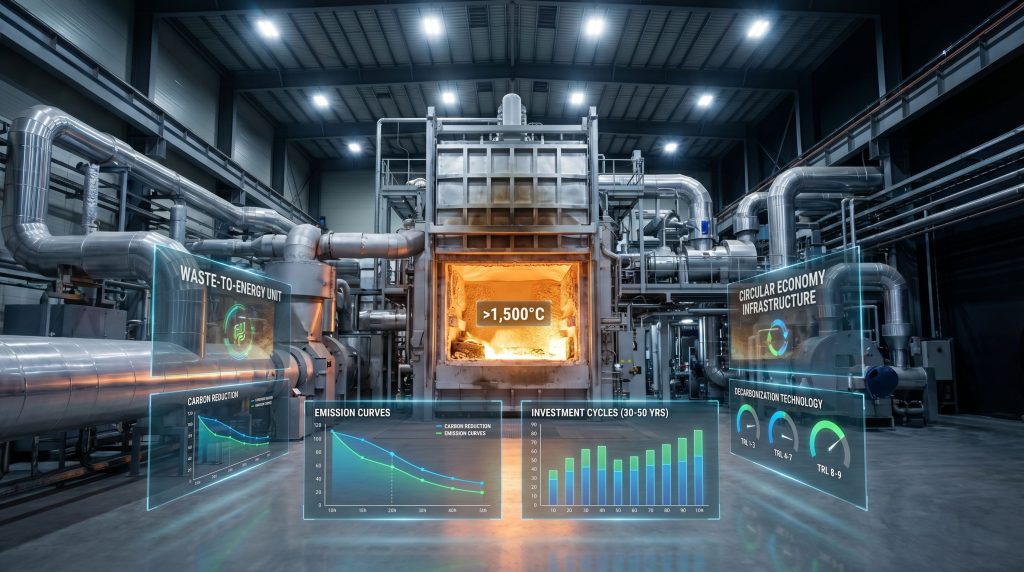
Furthermore, steel production exemplifies these constraints. Electric arc furnaces and blast furnaces operate at temperatures exceeding 1,500°C and require uninterrupted power supply to maintain production quality and equipment integrity. Production interruptions due to grid intermittency can result in significant economic losses and equipment damage.
| Industrial Requirement | Grid Solution Capability | Operational Gap |
|---|---|---|
| Continuous baseload power | Variable renewable output | Supply intermittency |
| High-temperature process heat | Electricity-based systems | Thermal conversion losses |
| Concentrated power demand | Distributed generation | Geographic mismatch |
| Long-term price certainty | Market-driven pricing | Financial planning constraints |
The challenge extends beyond technical feasibility to practical implementation. While renewable energy procurement mechanisms have become mainstream options for industrial buyers, securing clean power at the scale required by heavy industry involves complex negotiations around grid access, long-term pricing, and reliability guarantees.
Power Purchase Agreements (PPAs) and captive renewable capacity represent progress toward industrial clean energy, however fundamental questions remain unresolved. How can facilities manage grid intermittency when production cannot pause? How do companies secure tariff certainty across asset lifecycles measured in decades? These operational realities require solutions beyond renewable energy generation.
The distinction matters because it shifts the focus from waiting for utility-level solutions to developing facility-specific strategies. Rather than treating industrial decarbonisation and capital cycles as dependent on grid improvements, companies can take direct control through capital cycle management and strategic technology selection.
What Triggers Industrial Decarbonisation Investment Windows?
Capital deployment in heavy industry follows predictable patterns driven by operational necessity rather than policy timelines. Understanding these triggers enables companies to prepare for investment opportunities and avoid missing critical decision points that may not recur for years.
Primary investment catalysts include:
• Planned maintenance cycles requiring major equipment overhauls
• Capacity expansion projects driven by market demand growth
• Regulatory compliance deadlines mandating emissions performance standards
• Technology obsolescence creating competitive disadvantages
• Financial restructuring enabling balance sheet optimisation
• Asset end-of-life requiring replacement decisions
The temporal nature of these triggers creates both opportunities and risks. Investment windows open based on operational requirements, not environmental policy schedules. Missing a window when capital is ready to move often means waiting a decade or more for the next opportunity.
Maintenance cycles represent the most predictable trigger. Major furnace relinings, boiler overhauls, and mill replacements follow established schedules that can be planned years in advance. These interventions create natural decision points where technology upgrades can be incorporated without additional downtime costs.
Capacity expansion offers different dynamics. When market demand increases, companies face build-versus-retrofit decisions that can accommodate new technology adoption. Greenfield projects provide maximum flexibility for incorporating low-carbon systems, whilst brownfield expansions must work within existing infrastructure constraints.
Regulatory compliance creates external pressure independent of operational cycles. New emissions standards or carbon pricing mechanisms can force premature asset retirement or expensive retrofits if companies have not aligned their capital planning with regulatory timelines.
Investment window timing determines whether decarbonisation becomes a strategic advantage or a compliance cost. Companies that recognise and prepare for these openings achieve superior financial and environmental outcomes.
How Do Extended Asset Lifecycles Shape Decarbonisation Strategy?
Multi-decade asset lifespans require strategic planning that extends far beyond typical business planning horizons. Companies must develop frameworks that accommodate both immediate operational improvements and transformational changes that occur over complete asset replacement cycles.
Strategic timeline framework for industrial decarbonisation:
Years 0-5: Operational Optimisation
- Energy efficiency improvements
- Digital monitoring systems
- Renewable energy procurement
- Process optimisation initiatives
Years 5-15: Process Enhancement
- Waste heat recovery systems
- Advanced control systems
- Supply chain optimisation
- Circular economy integration
Years 15-30: Asset Transformation
- Major equipment replacement
- Low-carbon technology adoption
- Infrastructure modernisation
- System integration projects
Years 30+: Complete Redesign
- Facility transformation
- Breakthrough technology deployment
- Greenfield development
- Industry paradigm shifts
This phased approach recognises that different interventions are appropriate at different stages of asset lifecycles. Early-phase improvements focus on extracting maximum value from existing infrastructure while preparing for larger transitions. Later phases involve fundamental technology changes that are only economically viable during planned replacement cycles.
Furthermore, the framework also addresses stranded asset risk. Companies that plan decarbonisation investments around natural replacement cycles avoid premature retirement of productive assets. This alignment reduces total transition costs and maintains competitive positioning throughout the transformation period.
Success factors for lifecycle-aligned strategies include:
• Long-term planning that extends beyond typical business cycles
• Technology roadmapping to identify optimal intervention timing
• Financial planning that reserves capital for transformation investments
• Stakeholder alignment around multi-decade strategic objectives
• Regulatory monitoring to anticipate policy changes affecting asset economics
Which Financial Mechanisms Accelerate Industrial Capital Deployment?
Traditional project finance structures often inadequately address the unique risk profile and capital requirements of industrial decarbonisation projects. The combination of high upfront costs, long payback periods, technology uncertainty, and policy dependency requires innovative capital raising methods.
Emerging financial mechanisms for industrial decarbonisation:
| Mechanism | Primary Application | Risk Mitigation | Capital Efficiency |
|---|---|---|---|
| Blended Finance | Public-private partnerships | Shared risk exposure | Leveraged private capital |
| Green Bonds | Long-term infrastructure | Matched financing terms | Lower cost of capital |
| Carbon Contracts | Revenue stream security | Price volatility hedge | Improved project economics |
| Equipment Leasing | Technology deployment | Technology risk transfer | Reduced upfront investment |
Blended finance structures combine public and private capital to reduce individual investor risk exposure. Development finance institutions and government agencies provide risk-sharing mechanisms that enable private sector participation in high-impact projects that might otherwise lack commercial viability.
Green bonds have emerged as a significant source of long-term debt financing for sustainable infrastructure projects. The extended maturity periods available through green bond markets better match the economic characteristics of industrial assets compared to traditional corporate debt structures.
Carbon contracts provide revenue certainty that addresses one of the primary risks in decarbonisation investments. By guaranteeing carbon credit prices or providing minimum revenue floors, these mechanisms improve project economics and enable financial institutions to provide more attractive financing terms.
Equipment leasing arrangements transfer technology risk from industrial operators to specialised financing entities. This approach enables companies to adopt new technologies without bearing the full risk of technological obsolescence or performance uncertainty.
Critical financing considerations include:
• Term matching between financing duration and asset lifecycles
• Risk allocation appropriate to each party's capabilities
• Performance guarantees addressing technology and operational risks
• Regulatory protection against policy changes affecting project economics
How Does Process Circularity Impact Capital Investment Decisions?
Circular economy principles can fundamentally alter industrial capital allocation by reducing raw material dependency, creating new revenue streams from waste products, and improving overall resource efficiency. These changes affect both operating economics and required infrastructure investments.
Resource circularity represents significant opportunities for emissions reduction and cost optimisation. By designing closed-loop systems that minimise waste and maximise material utilisation, companies can reduce both their environmental impact and raw material costs.
Key circularity investment areas:
• Waste-to-energy systems converting industrial byproducts to process heat
• Material recovery infrastructure enabling closed-loop production
• Digital tracking systems optimising resource flows across operations
• Supply chain integration reducing transportation and processing requirements
Stainless steel production demonstrates circularity potential. The material can be repeatedly recycled without losing essential properties, enabling increased scrap utilisation that reduces primary raw material requirements and embedded emissions. However, achieving circularity requires value chain coordination extending beyond individual facilities.
Investment in circular systems often provides multiple benefits simultaneously. Waste heat recovery systems reduce energy costs while decreasing emissions. Material recovery infrastructure creates new revenue streams while reducing disposal costs. These synergies improve overall project economics and accelerate payback periods.
Circularity investment framework considerations:
• System integration requirements across multiple processes
• Technology compatibility with existing infrastructure
• Market development for recovered materials and energy
• Quality standards for circular inputs and outputs
• Regulatory compliance for waste processing and material recovery
The next major ASX story will hit our subscribers first
What Role Does Technology Readiness Play in Capital Allocation?
Technology maturity significantly impacts investment timing and risk profiles for industrial decarbonisation and capital cycles projects. Companies must balance the advantages of proven technologies against the transformational potential of emerging solutions while managing financial and operational risks.
Technology readiness assessment framework:
Proven Technologies (TRL 8-9):
- Energy efficiency systems
- Waste heat recovery
- Renewable energy integration
- Process optimisation tools
Emerging Technologies (TRL 6-7):
- Green hydrogen production
- Carbon capture and utilisation
- Advanced materials
- Novel process designs
Development Stage (TRL 4-5):
- Breakthrough chemistry
- Innovative equipment designs
- Integrated system solutions
- Disruptive manufacturing processes
Research Phase (TRL 1-3):
- Laboratory-scale innovations
- Theoretical improvements
- Conceptual technologies
- Academic research initiatives
Investment allocation across technology readiness levels requires portfolio management principles. Proven technologies provide immediate returns and risk mitigation, whilst emerging technologies offer competitive differentiation and transformational potential.
The challenge lies in timing technology adoption to coincide with natural investment cycles while avoiding premature commitment to unproven solutions. Early adoption carries higher risks but may provide competitive advantages if technologies succeed. Late adoption reduces risk but may result in competitive disadvantages.
Technology investment strategy considerations:
• Portfolio balance across readiness levels to manage overall risk
• Learning curve economics for emerging technologies
• Competitive positioning relative to industry evolution trends
• Scalability requirements for facility-wide implementation
• Integration complexity with existing systems and processes
How Do Regional Policy Frameworks Influence Investment Timing?
Government policies create significant economic incentives and constraints that affect the timing and economics of industrial decarbonisation investments. Understanding policy trajectories enables more effective capital planning and risk management strategies.
Carbon pricing mechanisms directly impact project economics by creating financial incentives for emissions reduction. The level and trajectory of carbon prices influence the economic attractiveness of different technology options and investment timing decisions.
Policy impact mechanisms include:
• Carbon pricing creating direct financial incentives
• Emissions standards mandating performance requirements
• Investment incentives reducing capital requirements through grants or tax credits
• Technology standards establishing minimum performance criteria
• Regulatory timelines creating compliance deadlines
Policy certainty affects investment confidence and financing availability. Long-term carbon price trajectories, stable regulatory frameworks, and predictable compliance requirements enable companies to make confident long-term investment commitments.
In addition, regional variations in policy approaches create different investment environments. Some jurisdictions emphasise market-based mechanisms like carbon pricing, whilst others focus on regulatory standards or direct financial incentives. These differences affect optimal investment strategies and technology selection.
Policy risk management strategies:
• Scenario planning across different policy trajectories
• Regulatory monitoring to anticipate policy changes
• Stakeholder engagement with policymakers and industry groups
• Flexible investment structures that can adapt to policy changes
• Geographic diversification across different regulatory environments
Which Operational Efficiency Measures Provide Immediate Returns?
While major capital investments operate on extended timelines, numerous operational improvements can generate immediate emissions reductions and cost savings. These initiatives often provide cash flow necessary to fund larger transformation projects.
High-impact efficiency measures with immediate returns:
• Process optimisation through advanced analytics and automation
• Energy management systems providing real-time consumption monitoring
• Preventive maintenance reducing energy consumption and extending asset life
• Waste heat recovery converting thermal losses to useful energy
• Digital monitoring enabling precise resource utilisation tracking
• Supply chain optimisation reducing transportation and handling emissions
Energy management systems provide particularly strong returns by identifying inefficiencies in real-time and enabling immediate corrective action. Digital monitoring across plant operations reveals optimisation opportunities that were previously invisible to operators.
Preventive maintenance programmes reduce energy consumption by ensuring equipment operates at peak efficiency whilst extending asset lifespans and reducing replacement frequency. These programmes often pay for themselves through reduced energy costs and avoided major repairs.
Waste heat recovery represents significant untapped potential in many industrial operations. Converting waste heat to useful steam or electricity reduces both energy costs and emissions while requiring relatively modest capital investment compared to major process changes.
Implementation priorities for immediate impact:
• Energy audit completion to identify highest-impact opportunities
• Digital infrastructure enabling data-driven optimisation
• Staff training on efficiency best practices and new technologies
• Performance monitoring to track improvement outcomes
• Continuous improvement processes for ongoing optimisation
How Should Companies Structure Decarbonisation Investment Portfolios?
Successful industrial decarbonisation and capital cycles management requires balanced portfolio approaches that combine short-term operational improvements with long-term transformational investments. This strategy manages risk whilst maintaining competitive positioning throughout extended transition periods.
Recommended portfolio allocation framework:
• 30% Operational Efficiency: Immediate impact, low risk, positive ROI
• 40% Proven Technologies: Medium-term deployment, moderate risk, established returns
• 20% Emerging Technologies: Long-term potential, higher risk, transformational impact
• 10% Research & Development: Future positioning, high risk, breakthrough potential
This allocation balances immediate needs with future transformation requirements. Operational efficiency investments provide cash flow to fund larger initiatives whilst proven technologies deliver predictable results with acceptable risk levels.
Emerging technology investments position companies for competitive advantages as new solutions mature. Research and development commitments ensure access to breakthrough innovations that could fundamentally change industry dynamics.
Portfolio management principles:
• Risk diversification across technology maturity levels
• Timeline alignment with natural capital replacement cycles
• Financial balance between cash-generating and capital-intensive investments
• Strategic coherence supporting overall business objectives
• Flexibility preservation to adapt as technologies and markets evolve
Regular portfolio review and rebalancing ensures investments remain aligned with changing technology landscapes, market conditions, and regulatory requirements. Companies should establish formal processes for evaluating new opportunities and retiring unsuccessful investments whilst considering investment strategy components.
What Metrics Should Guide Capital Investment Decisions?
Traditional financial metrics may inadequately capture the full value proposition of decarbonisation investments. Comprehensive evaluation frameworks must incorporate environmental, regulatory, and strategic considerations alongside conventional financial returns.
Expanded evaluation criteria for decarbonisation investments:
| Metric Category | Specific Measures | Application |
|---|---|---|
| Carbon Impact | CO2 abatement cost per tonne | Emissions reduction efficiency |
| Financial Performance | NPV, IRR, payback period | Traditional investment analysis |
| Regulatory Value | Compliance cost avoidance | Risk mitigation quantification |
| Strategic Positioning | Competitive advantage duration | Market positioning assessment |
| Operational Benefits | Efficiency improvements | Process optimisation value |
Carbon abatement cost provides standardised comparison across different decarbonisation options. This metric enables prioritisation of investments based on emissions reduction efficiency, helping companies maximise environmental impact per dollar invested.
Regulatory compliance value includes avoided future penalty costs, competitive positioning benefits from early compliance, and reduced regulatory risk exposure. These benefits often justify investments that appear marginally attractive on purely financial metrics.
Advanced evaluation considerations:
• Asset resilience under various carbon pricing scenarios
• Technology option value for future upgrade opportunities
• Stakeholder benefits including customer, investor, and community value
• System integration effects across interconnected processes
• Learning curve benefits for subsequent technology deployment
Scenario analysis across different carbon price trajectories helps evaluate investment robustness under varying policy conditions. Technologies that remain attractive across multiple scenarios provide greater strategic value than those dependent on specific policy outcomes and provide valuable energy transition insights.
Implementation framework for investment evaluation:
• Multi-criteria decision analysis incorporating all relevant factors
• Sensitivity testing across key assumptions and external conditions
• Real options valuation for investments with future expansion potential
• Portfolio-level assessment considering investment interactions and synergies
• Regular reassessment as conditions and technologies evolve
Investment decisions in industrial decarbonisation require careful consideration of multiple factors including financial returns, environmental impact, regulatory compliance, and strategic positioning. Companies should consult with qualified professionals when developing investment strategies and carefully evaluate all risks and potential outcomes.
Ready to Capitalise on the Next Major Industrial Transformation?
Discovery Alert's proprietary Discovery IQ model delivers real-time alerts on significant ASX mineral discoveries that could benefit from industrial decarbonisation trends, instantly empowering subscribers to identify actionable investment opportunities ahead of the broader market. Begin your 14-day free trial today and discover why major mineral discoveries can generate substantial returns during periods of industrial transformation.