June 4, 2026
Capital Efficiency Drivers in Modern Resource Extraction
Mining companies worldwide face unprecedented pressure to maximise returns while minimising development costs. Traditional approaches to resource extraction often require massive capital outlays for new processing infrastructure, transportation networks, and specialised equipment. However, emerging collaborative models between industry competitors suggest a fundamental shift toward optimising existing assets rather than building redundant facilities.
This transformation reflects broader economic realities affecting the global mining sector. Companies must demonstrate disciplined capital allocation to shareholders while maintaining production growth targets. The strategic imperative becomes clear: extract maximum value from current investments before committing to expensive greenfield developments.
When big ASX news breaks, our subscribers know first
What Strategic Frameworks Drive Mining Partnership Decisions?
Asset Optimisation Through Competitive Collaboration
The mining industry historically operated under strict competitive boundaries, with companies viewing neighbouring operations as threats rather than opportunities. This paradigm created significant inefficiencies, particularly in regions where multiple operators developed parallel infrastructure systems serving similar geological formations.
Modern strategic thinking challenges these assumptions by evaluating shared resource utilisation models. When two companies operate adjacent deposits with compatible ore characteristics, the economic logic of infrastructure sharing becomes compelling. Rather than duplicating wet processing facilities, transportation corridors, and support systems, collaborative approaches can unlock substantial cost savings.
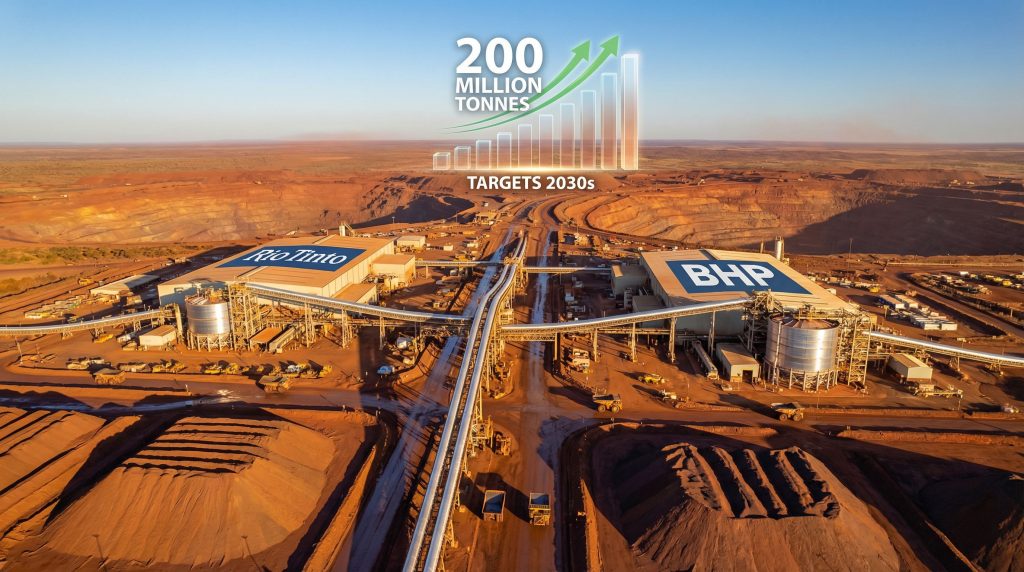
The Rio Tinto and BHP partnering on Pilbara iron ore initiative exemplifies this strategic evolution. Furthermore, by leveraging Rio Tinto's existing wet processing plants to handle both Wunbye and Yandi Lower Channel deposits, both companies can accelerate production timelines while reducing individual capital requirements.
Risk Mitigation Through Joint Development Models
Partnership structures distribute project risks across multiple entities, creating more resilient development programs. Traditional mining ventures concentrate geological, operational, and market risks within single organisations. Collaborative models allow companies to share these uncertainties while maintaining upside participation.
Key risk distribution mechanisms include:
- Geological risk sharing across multiple deposit evaluations
- Operational risk mitigation through combined expertise and resources
- Market risk reduction via diversified customer relationships
- Regulatory risk management through joint stakeholder engagement
The 200 million metric ton production target represents a scale that justifies shared infrastructure investments while providing both partners with meaningful volume commitments. In addition, understanding these industry evolution trends becomes crucial for successful partnership implementation.
How Do Infrastructure Economics Shape Collaborative Mining Strategies?
Processing Facility Utilisation Models
Wet processing plants require significant capital investment and ongoing maintenance costs. When facilities operate below capacity, unit costs increase substantially due to fixed cost absorption challenges. Conversely, optimising facility utilisation through additional feedstock can dramatically improve operational economics.
The arrangement between Rio Tinto's Yandicoogina operations and BHP's Yandi facilities creates mutual benefits through enhanced asset utilisation. Rio Tinto's existing wet plants gain additional throughput, improving cost efficiency per ton processed. BHP accesses proven processing capabilities without constructing new facilities.
| Economic Factor | Traditional Approach | Collaborative Model |
|---|---|---|
| Capital Investment | Full facility construction | Shared processing fees |
| Utilisation Rate | Variable based on single deposit | Enhanced through combined volumes |
| Operating Leverage | Limited to individual capacity | Optimised across multiple deposits |
| Risk Exposure | Full project risk | Distributed development risk |
Transportation and Logistics Synergies
Pilbara mining operations require sophisticated logistics networks connecting remote extraction sites to port facilities. When neighbouring operations coordinate transportation planning, significant efficiencies emerge through shared corridor utilisation, equipment optimisation, and scheduling coordination.
The geographic proximity of Yandicoogina and Yandi operations enables integrated logistics planning that reduces per-ton transportation costs while improving delivery reliability to customers. However, successful implementation requires careful consideration of AI in mining operations to maximise efficiency gains.
What Precedents Establish the Foundation for Mining Collaborations?
Building on the Mungadoo Pillar Success Framework
The 2023 agreement between Rio Tinto and BHP demonstrated the practical feasibility of collaborative mining arrangements in the Pilbara region. This earlier partnership addressed shared tenure boundaries that previously prevented optimal resource extraction from overlapping deposits.
Key lessons from the Mungadoo Pillar collaboration include:
- Regulatory approval processes can be navigated successfully through proper stakeholder engagement
- Technical integration between different companies' operations proves manageable with appropriate planning
- Commercial arrangements can be structured to benefit both parties while maintaining competitive independence
- Traditional Owner engagement requires coordinated approaches that respect cultural protocols
Scalability Potential for Future Projects
The success of initial collaborative ventures creates templates for expanded partnership opportunities across the Pilbara region and beyond. As companies demonstrate the viability of shared infrastructure models, additional deposit developments may incorporate similar frameworks from initial planning stages.
This progression toward collaborative development could reshape regional mining strategies, with companies evaluating partnership opportunities as standard components of project economics rather than exceptional arrangements. Furthermore, this aligns with broader critical minerals strategy initiatives across the industry.
How Do Global Market Dynamics Influence Regional Partnership Strategies?
Chinese Steel Production and Iron Ore Demand Patterns
Chinese steel production represents the dominant demand driver for Australian iron ore exports. Market dynamics in China directly influence production planning decisions across Pilbara operations. When demand patterns favour consistent, high-volume supply arrangements, collaborative production models become increasingly attractive.
The early 2030s production timeline aligns with projected Chinese infrastructure development cycles and steel demand evolution. By coordinating production from multiple deposits through shared processing facilities, both companies can better serve large-scale customer requirements while maintaining supply flexibility. Consequently, understanding iron ore demand insights becomes essential for strategic planning.
Competition from Emerging Global Suppliers
International iron ore development projects, particularly in West Africa and South America, present competitive challenges for Australian producers. These emerging suppliers often feature lower labour costs and, in some cases, higher-grade ore deposits.
Collaborative efficiency improvements help Australian operations maintain cost competitiveness while leveraging established supply chain relationships and proven operational expertise. The Rio Tinto and BHP partnering on Pilbara iron ore arrangement exemplifies this strategic response to global competitive pressures.
What Operational Mechanics Enable Successful Joint Ventures?
Study Phase Implementation and Decision Frameworks
The progression from conceptual study through order of magnitude study to final investment decision provides structured evaluation milestones that protect both companies' interests while advancing project development.
Conceptual studies establish basic technical feasibility and commercial parameters. These initial evaluations confirm ore compatibility with existing processing systems, estimate preliminary production volumes, and identify major operational requirements.
Order of magnitude studies provide detailed engineering assessments, capital requirement estimates, and operational cost projections. These comprehensive evaluations form the basis for final investment decisions and commercial agreement negotiations.
Commercial Terms and Revenue Distribution
Processing fee arrangements must balance fair compensation for facility utilisation against competitive pricing for ore processing services. The commercial framework likely incorporates multiple variables:
- Base processing fees covering operational costs and capital recovery
- Volume commitments ensuring minimum throughput levels
- Quality specifications maintaining product standards across different ore sources
- Timing flexibility accommodating operational variations and market conditions
The next major ASX story will hit our subscribers first
How Do Regional Development Goals Align with Mining Partnerships?
Western Australian Economic Impact Assessment
The 200 million metric ton production target represents significant economic activity for Western Australia's resource-dependent economy. Combined operations create employment opportunities across multiple skill levels while generating substantial royalty revenues for state and local governments.
Economic benefits extend beyond direct mining employment to include:
- Support services employment in logistics, maintenance, and professional services
- Regional business development through increased local procurement opportunities
- Infrastructure investment in transportation, utilities, and community facilities
- Government revenue generation through royalties, taxes, and fees
Traditional Owner Engagement and Benefit Distribution
Successful mining partnerships require comprehensive engagement with Traditional Owners whose ancestral connections to the land encompass both operational areas. Collaborative approaches enable coordinated consultation processes that respect cultural protocols while ensuring equitable benefit distribution.
Joint engagement strategies can provide Traditional Owner communities with:
- Enhanced economic participation through combined partnership opportunities
- Cultural heritage protection via coordinated land management approaches
- Employment and training programs spanning both operational areas
- Community benefit sharing reflecting the scale of combined operations
What Competitive Advantages Emerge from Joint Development Approaches?
Market Positioning and Customer Relations
Combined production capacity strengthens both companies' positions in customer negotiations while enabling more sophisticated supply arrangements. Large steel producers prefer reliable, high-volume suppliers capable of meeting complex delivery requirements.
The partnership structure allows both Rio Tinto and BHP to offer customers:
- Production volume certainty through coordinated development timelines
- Quality consistency via standardised processing systems
- Supply chain reliability backed by multiple deposit sources
- Flexible delivery arrangements accommodating varying customer requirements
For instance, this collaborative approach helps navigate complex geopolitical market dynamics affecting global iron ore trade.
Technology and Expertise Integration
Collaborative arrangements facilitate knowledge sharing between organisations with different technical strengths and operational experiences. This expertise exchange can accelerate innovation adoption while reducing technology development costs.
Areas for potential collaboration include:
- Processing optimisation techniques improving recovery rates and product quality
- Environmental management systems reducing operational impacts
- Safety protocols enhancing worker protection across all operations
- Digital technologies optimising logistics and equipment utilisation
How Will Partnership Models Influence Future Mining Industry Structure?
Replication Across Other Commodities and Regions
The success of Rio Tinto and BHP partnering on Pilbara iron ore could establish templates for collaborative development in other mineral sectors and geographic regions. Copper, lithium, and critical minerals projects may increasingly evaluate partnership opportunities during initial planning stages.
Key factors supporting broader adoption include:
- Capital efficiency pressures affecting all mining sectors
- Infrastructure optimisation opportunities in many mining regions
- Regulatory support for collaborative approaches that maximise resource recovery
- Investor expectations for disciplined capital allocation and operational efficiency
Regulatory Framework Evolution
Government policies increasingly favour mining approaches that optimise resource extraction while minimising environmental impacts and infrastructure duplication. Collaborative development models align with these policy objectives by reducing land disturbance and improving operational efficiency.
Future regulatory developments may include:
- Streamlined approval processes for partnership arrangements
- Tax incentives encouraging collaborative development approaches
- Infrastructure sharing requirements for certain types of mining projects
- Environmental standards favouring coordinated regional development plans
What Investment Implications Drive Shareholder Value Creation?
Capital Expenditure Reduction Through Asset Sharing
Traditional mining development requires substantial upfront investment in processing facilities, transportation infrastructure, and support systems. Partnership models significantly reduce individual company capital requirements while maintaining production growth opportunities.
For the early 2030s production timeline, this collaboration enables both companies to achieve development targets without proportional capital investment increases. Shareholders benefit from improved capital efficiency metrics and enhanced return profiles.
Production Volume Growth Without Proportional Investment
The 200 million metric ton production potential represents meaningful volume increases for both partners. However, the collaborative approach achieves this growth through optimised infrastructure utilisation rather than duplicated facility construction.
This creates favourable investment dynamics:
- Higher return on invested capital through shared development costs
- Faster production ramp-up utilising existing processing capabilities
- Reduced execution risk leveraging proven operational systems
- Enhanced cash flow generation from increased production volumes
Long-term Value Creation Through Strategic Positioning
Partnership arrangements position both companies for sustained competitive advantages in global iron ore markets. The collaboration demonstrates strategic flexibility and operational efficiency that investors increasingly value in resource sector investments.
Long-term value drivers include:
- Cost leadership development through operational optimisation
- Market share protection against international competitors
- Strategic optionality for future collaborative opportunities
- Operational resilience through diversified partnership networks
Understanding the Technical and Commercial Framework
Geological Compatibility and Processing Requirements
Successful ore processing collaboration requires compatible geological characteristics between different deposit sources. The Wunbye and Yandi Lower Channel deposits must demonstrate similar processing requirements to utilise Rio Tinto's existing wet plant infrastructure effectively.
Key technical considerations include:
- Ore grade consistency ensuring product quality standards
- Mineralogical compatibility with existing processing systems
- Moisture content management optimising wet processing efficiency
- Contamination control maintaining product specifications across multiple sources
Commercial Risk Management and Performance Metrics
Partnership agreements must establish clear performance standards and risk allocation mechanisms protecting both parties' interests. Commercial frameworks typically include detailed specifications for production volumes, quality parameters, delivery schedules, and cost-sharing arrangements.
Performance monitoring systems track:
- Production volume achievement against committed targets
- Quality specification compliance ensuring customer satisfaction
- Cost performance relative to agreed benchmarks
- Operational efficiency metrics measuring collaborative effectiveness
According to Rio Tinto's official announcement, the partnership represents a significant step forward in collaborative mining approaches. Furthermore, industry analysts at Australian Mining have highlighted the potential for this arrangement to reshape competitive dynamics across the sector.
The Rio Tinto and BHP partnering on Pilbara iron ore arrangement represents a strategic evolution in mining industry collaboration, demonstrating how competitive organisations can create mutual value through innovative partnership structures. As global mining faces increasing capital discipline requirements and operational complexity, collaborative approaches may become increasingly essential for sustainable industry development.
Disclaimer: This analysis is based on publicly available information and industry observations. Mining investments involve significant risks, and actual results may differ materially from projections or expectations. Investors should conduct independent research and consult qualified professionals before making investment decisions.
Ready to Invest in the Next Major Mineral Discovery?
Discovery Alert instantly alerts investors to significant ASX mineral discoveries using its proprietary Discovery IQ model, turning complex mineral data into actionable insights like those driving major mining partnerships. Begin your 30-day free trial today to position yourself ahead of the market and capitalise on breakthrough discoveries as they're announced.